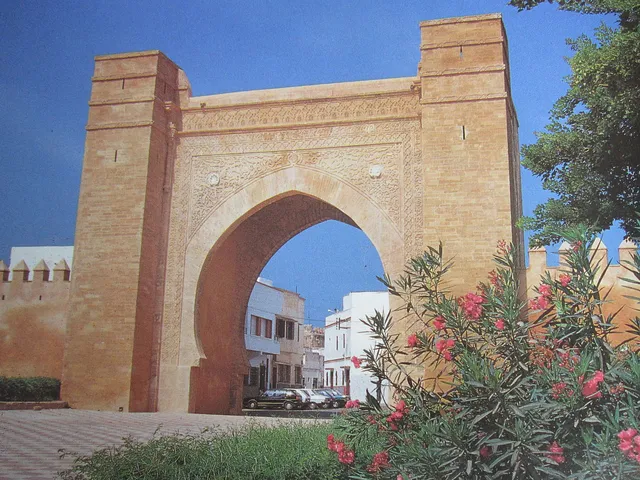
Bab el-Mrissa (Arabic: باب المريسة), also known as Bab al-Falah (Arabic: باب الفلاح), is a gate in the city of Salé, Morocco. The gate was commissioned by the Marinid sultan Abu Yusuf Yaqub ibn Abd Al-Haqq between 1270—1280. It is one of the largest as well as the oldest gates in Morocco, and the main landmarks of the city. dynasty had regained the control of the city of Salé from the Kingdom of Castile during the Battle of Salé. In the process, they created a hole on the western city wall in order to allow access to the city square. Later, a shipyard was created to place the warships, and the entrance was established as Bab el-Mrissa. According to the account of Al-Nasiri, the gate existed on the protected harbor of the city, which was used by the Marinid as a shipyard. The harbor connects the city to Bou Regregvia canal, and ships entered the harbor from the canal by passing through the arch of the gate. The gate is also known as a place where the sultan Abu Yusuf Yaqub dispatched his naval fleet to attack the city of Algeciras several times in 1285, in which joined by around 36 warships. The name "Mrissa" means muddiness, and this is because Bou Regreg and linked canal contained a lot of sands from the surrounding land, and the ships brought muddy water which disseminated in front of the gate when they were docking. Today, the scene is no longer observable due to the canal was depleted after the construction of roads connecting Rabat and Salé, as a solution to mitigate the relatively long distance and inconvenience of the canal. The designer of the gate is Muhammad bin Ali al-Ashbili, a well known Andalusian architect. The arch takes a horseshoe shape, and the peak reaches 9.60 meters high and the width has 3.50 meters long. Inside of the gate has pathways for soldiers...
Read moreDynasty: Merinid Sultan: Abou Youssouf Architect : Mohamed Ben Ali Al Ichbili Beginning of works: 1261
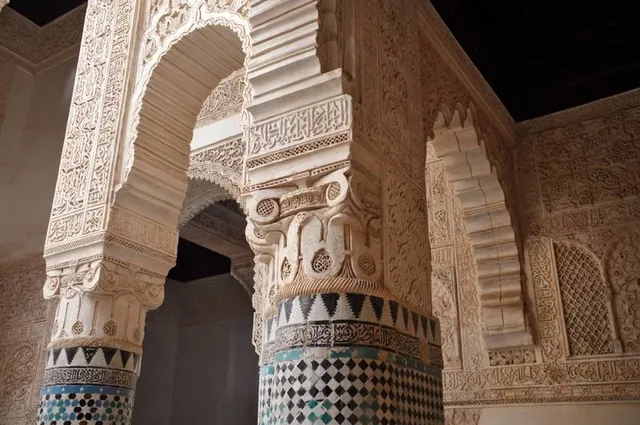
Bab Lamrissa was built under the reign of Sultan Mérinide Abou Youssouf in (658 h / 1261 JC ) by the Andalusian architect Mohamed Ibn Hajj Ichbili . For topographic and security reasons the Merinids have chosen to place the Bab Lamrissa gate far from the seafront and since the Bourgreg river was a natural barrier to protect themselves from attack. Its height reaches 30 m in the center of the arc. This historic gate is considered to be the tallest in Morocco. The main facade of the door is decorated with floral, geometric patterns and Koranic verses in Kufic letters: (Sourat As-saf): The two shells on the right and left on top of the arch, and right in the middle we can see the name of Allah, on the left side of the facade writes "Achahada". This large door was also intended to open the passage to the ships and boats built in the shipyard of the arsenal towards the Atlantic Ocean, thanks to a channel leading to the river Bourgreg. But after the Lisbon earthquake in 1755 The canal collapsed and the maritime activity fell into decline and it was in 1808 that a dahir decreed marked the end of maritime. jihad in Morocco, and that thereafter the city economy is definitely...
Read moreBab El Mrissa
A Salé, la médina est dotée de plusieurs portes majestueuses. L'une d'elles est appelée Bab El Mrissa et elle possède une histoire très intéressante. Pensez à louer une voiture à Rabat pour aller admirer cette porte hors du commun.
..................
Ce qui est aujourd'hui la médina de Salé possède une histoire riche. Construit entre 1260 et 1270, elle était à l'origine un arsenal maritime. D'ailleurs, Bab El Mrissa (l'une de ses portes d'entrée) a sa place dans l'histoire de la guerre sainte mérinide qui débuta au XIIIème siècle. Dans son Mémorial du Maroc, Mohamed Mnouni explique le fonctionnement de cette porte monumentale : « Quand un vaisseau était construit et qu'on voulait le lancer à la mer, on ouvrait le bassin de la porte nord. Quand l'eau le remplissait, on y lançait le vaisseau qui naviguait ensuite par la porte Mrissa jusqu'à atteindre le fleuve. C'est pour cela que l'arcade de cette porte se situait très haut pour permettre aux navires de passer au-dessous ».
La porte Bab El Mrissa (parfois appelée Bab Lamrissa ou Bab Mellah) est donc une porte monumentale, mais elle n'est plus une porte maritime. L'arsenal maritime ayant été ensablé il y a plusieurs siècles, la porte Bab El Mrissa ne voit plus passer que des voitures et piétons. Faisant partie de l'enceinte de la médina de Salé, elle a été classée monument historique en 1914 – tout comme le reste...
Read more