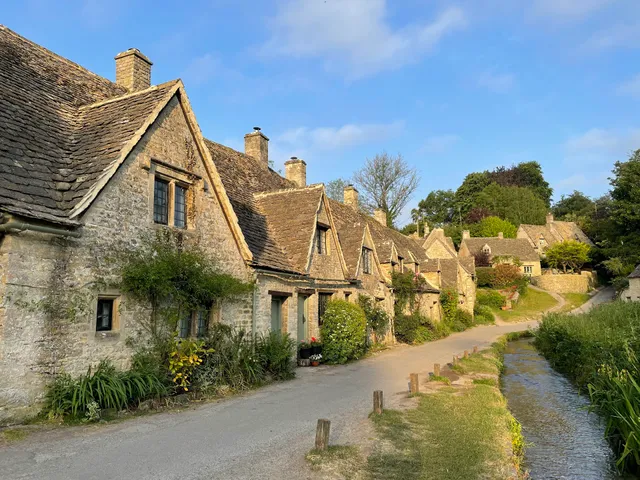
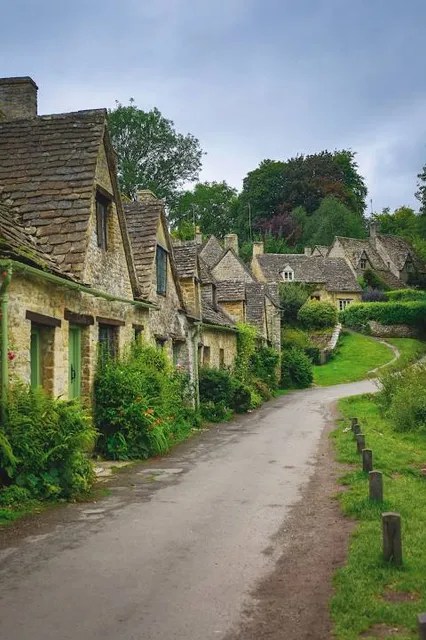
Some of you might come here and wonder what is so special about this village or this “row”. People who live in this cottages often face a lot of people flocking outside of their home which might seem odd . Stick with me I will explain. But first and foremost how to get here or where to park!?! Arlington Row is accessible from Awkward Hill in the quiet village of Bibury.
Bibury is on the eastern edge of the central Cotswolds.
Although this beautiful scenery is tucked away, there are multiple ways of getting to Arlington Row. If you are driving, the M4 and M5 will take you most of the way. While a short bus journey with one change is available from Cheltenham.
Access to Arlington Row by car is limited. So, recommend parking up in Bibury and walking across the river.
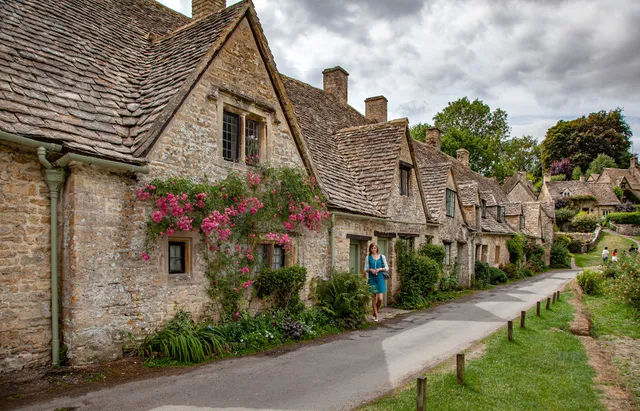
Built in 1380, Arlington Row started life as a wool store. In the 17th-century, the row of cottages was converted into weaver’s cottages.
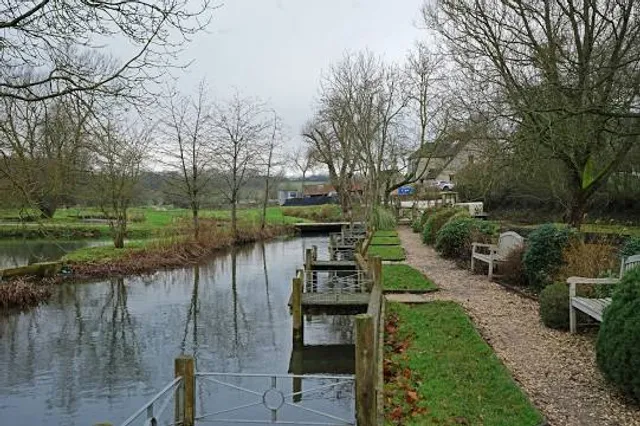
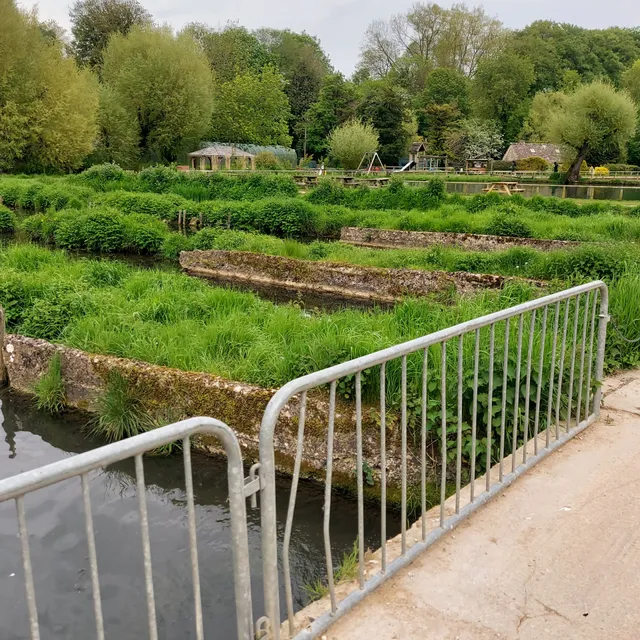
Across from the cottages is a patch of boggy meadow (Rack Isle). After the wool had been washed, it was left to dry on the Rack Isle.
Once the wool was dry, it was then sent to Arlington Mill to be processed.
In 1929, preservation was maintained by the Royal College of Arts. And the cottages were again restored by the National Trust in 1975.
The National Trust now owns all the properties along Arlington Row. All but one of these are leased out to a group of private tenants.
In 2015, a yellow car (pictured above) was parked along Arlington Row. This annoyed many tourists who thought it was spoiling their photographs. It eventually led to the car being vandalised.
It created a number of news stories and led to the Bibury resident changing the colour of his car.
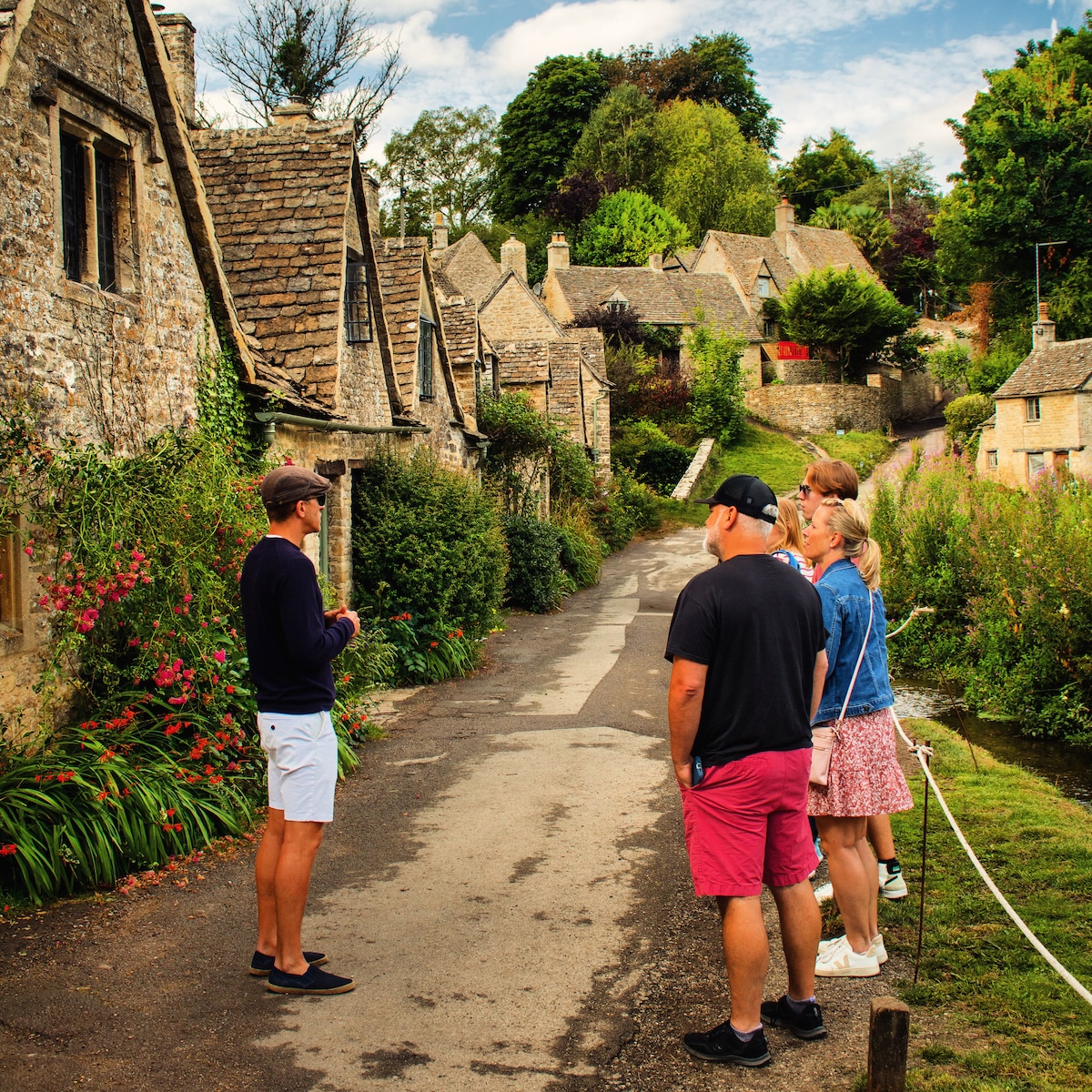
Note to visitors: While Arlington Row is a beautiful location to enjoy with the family, it is also private accommodation. Please take this into consideration when visiting.
It can be an all-around enjoyable experience for visitors and residents. Enjoy the views of the cottages from a distance. And don’t go watching people eating their dinner through the window.
For many years, Arlington Row has been one of Cotswolds most popular tourist attractions.
At the peak of summer, the tiny street attracts over 3000 visitors per day. But what makes the row so famous?
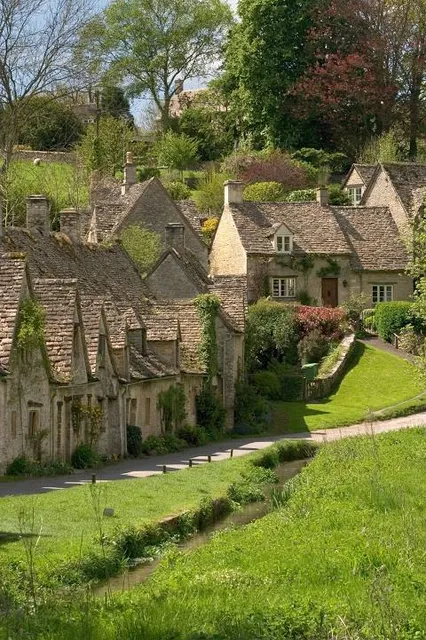
Well, it really is just the beautiful surroundings. The first thing people think of in the Cotswolds is Arlington Row. Even if you don’t know the name, you will most likely have seen a picture of the quaint row of cottages.
It is this picture-perfect scenery that has made Arlington an ideal setting for some classic favourite romantic comedies.
Arlington Row has been used for Bridget Jones Diary and Stardust. And it’s easy to see why.
The idyllic setting is the perfect setting to give viewers an instant taste of romance.
With these two films, Bibury has been host to Hollywood stars.
Bridget Jones brought Renée Zelleweger, Colin Firth, and Hugh Grant.
While Stardust introduced Claire Danes, Ian McKellen, Charlie Cox, and Henry Cavill to the beautiful...
Read moreArlington Row on Awkward Hill is a very popular site in the Cotswolds, probably one of the most photographed scenes. Some will love it. Some will say it's just some houses on a row-and it's right. I guess you'll have to see and make a choice! William Morris once described Bibury as "the most beautiful village in England". I saw it in the morning and at late afternoon with the sunset. I think seeing it illuminated at nigh seems special, but it’s better to walk around it when full light. Within the parish of Bibury, it was built in 1380 as monastic wool store and converted into a row of weavers cottages in the late 17th century. It is owned by the National Trust. If you enter the website, you will see that you can rent one of the cottages for your stay at Bibury. The wool produced there, was hung out on racks to dry after being washed, on what was known as “The Rack Isle” opposite, before being sent on to Arlington Mill for degreasing. Today, this water meadow and marshy area, which is seasonally flooded and surrounded by water from three sides, is an important habitat for water-loving plants and birds. Until the 1980s, the museum of Arlington Mill held a collection of period clothing before it was shifted to Barnsley House. The Mill is now a private residence. It was preserved by the Royal College of Arts in 1929 and restored by the National Trust in the 1970s Since 2010, this architectural conservation area is depicted on the inside cover of all United...
Read moreArlington Row is a quintessential English landmark located in Bibury, Gloucestershire, in the heart of the Cotswolds. It's often cited as one of the most beautiful streets in England.
The row consists of charming, historic stone cottages. Their origins trace back to the late 14th century (around 1380), when they were initially built as a monastic wool store. This reflects the area's historical importance in the wool trade.
In the late 17th century, these buildings underwent a transformation, being converted into weavers' cottages. They provided housing for the workers involved in producing cloth for the nearby Arlington Mill.
Architecturally, the cottages showcase the distinctive honey-colored Cotswold stone, with characteristic steeply pitched roofs and an endearing undulating roofline, contributing to their unique and picturesque appearance.
Arlington Row holds a Grade I listed building status, a testament to its outstanding architectural and historical significance. It is currently owned and maintained by the National Trust, an organization dedicated to preserving heritage sites.
While some cottages are available as holiday rentals, many remain as private residences. Its timeless beauty has not gone unnoticed, featuring in films like "Stardust" and "Bridget Jones's Diary." Notably, an image of Arlington Row was also once used on the inside cover of UK passports, underscoring its iconic status as a symbol of idyllic English...
Read more