Câte ceva despre biserica !!
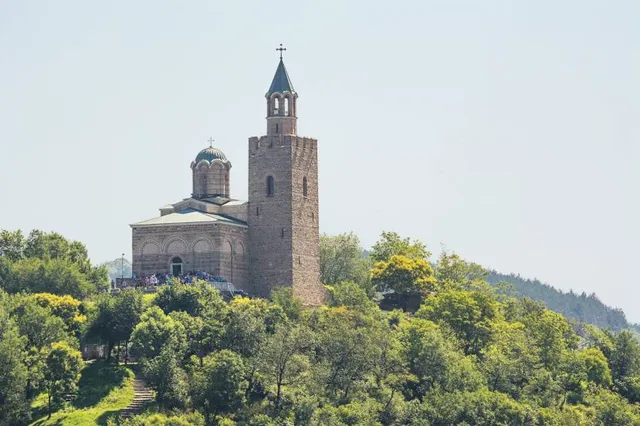
Ascension Cathedral (Veliko Tarnovo) Article Talk Language Download PDF Watch Edit For other uses, see Ascension Cathedral. The Patriarchal Cathedral of the Holy Ascension of the Lord (Bulgarian: Патриаршеска катедрала „Свето Възнесение Господне“, Patriarsheska katedrala „Sveto Vaznesenie Gospodne“) is a former Eastern Orthodox cathedral in the city of Veliko Tarnovo, in north central Bulgaria. Located on top of the fortified Tsarevets hill in the former capital of the Second Bulgarian Empire, the cathedral was the seat of the Bulgarian patriarch from its construction in the 11th–12th century to its destruction in 1393.
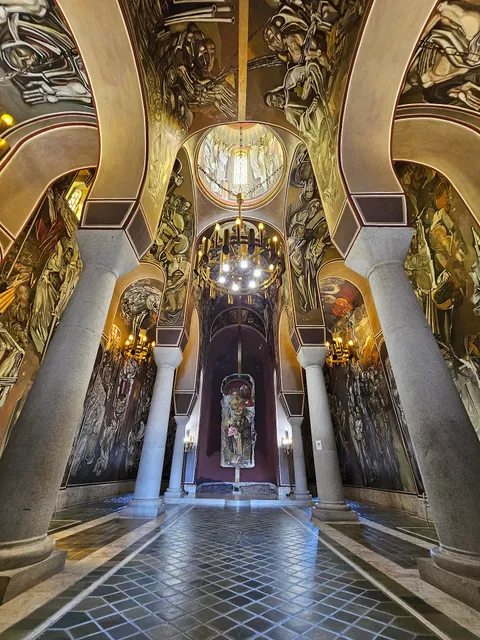
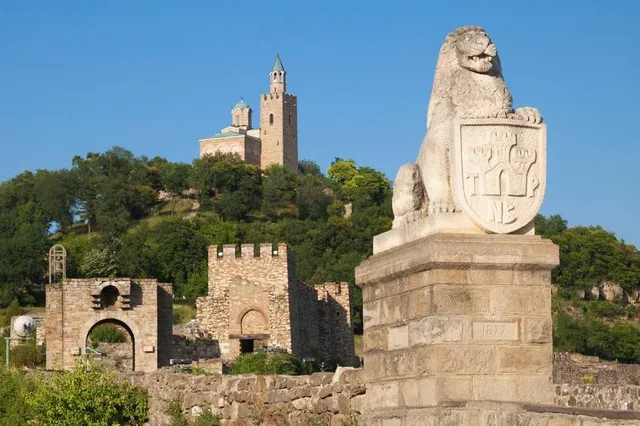
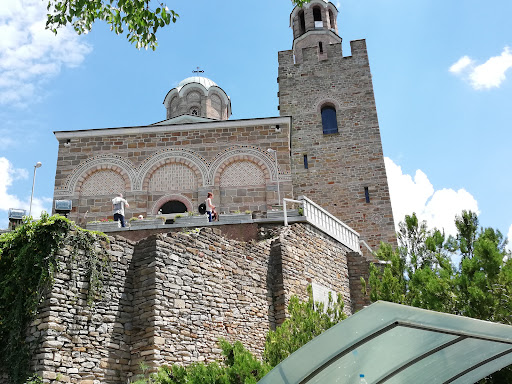
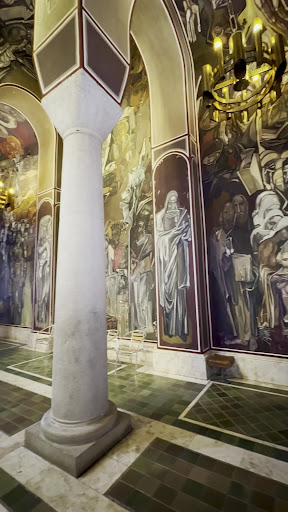
Patriarchal Cathedral of the Holy Ascension of the Lord Патриаршеска катедрала "Свето Възнесение Господне", Patriarsheska katedrala "Sveto Vaznesenie Gospodne" View of a medieval Byzantine-style church's front facade and bell tower slightly from below, with partially destroyed stone walls in the foreground The Patriarchal Cathedral of the Holy Ascension of the Lord topping the Tsarevets hill in Veliko Tarnovo MapWikimedia | © OpenStreetMap 43°4′58″N 25°39′8.3″E Country Bulgaria Denomination Eastern Orthodox Standing on top of a late Roman church, the cathedral, reconstructed in the 1970s and 1980s, follows a cross-domed plan with a bell tower and a triple apse. Richly decorated on both the exterior and interior, its internal walls now feature modern frescoes, the presence of which has meant that it has not been reconsecrated. Though not active as a Christian place of worship, it has been open for visitors since 1985.
History edit The Patriarchal Cathedral of the Holy Ascension of the Lord is not the first church building to occupy the position on the top of Tsarevets hill. It was constructed directly on top of a late Roman (early Byzantine) basilica which dates to the 5th–6th century AD. The Roman basilica may have remained in use by the local congregation during the First Bulgarian Empire, though it was no longer active by the time the construction of the current church began.1
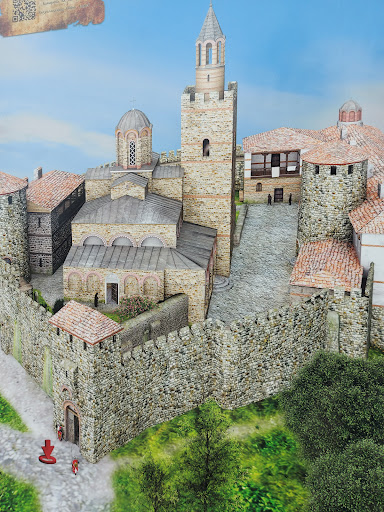
Clumsy black and white sketch of a medieval city with several towers and a large church visible The Patriarchal Cathedral as illustrated in a sketch in the 14th-century Braşov Menaion The current building of the Patriarchal Cathedral is considered by scholars to have been built in two stages. The first stage of construction was carried out in the late 11th century or the 12th century. The cathedral was initially built as a monastery church in the middle of a monastery compound, though in the early 12th century it was already the seat of the Bulgarian patriarch. The compound suffered large-scale damage caused by a fire, which necessitated the church's reconstruction in middle of the 14th century, perhaps during the rule of Tsar Ivan Alexander of Bulgaria (r. 1331–71). Besides repair and reinforcement efforts, work on the church in the 14th century also included the construction of the exonarthex and the bell tower.[1]
There are several references to the cathedral in medieval sources. The earliest reference to the church tells of the transfer of Saint Michael the Warrior's relics from the Potuka fortress to the Patriarchal Cathedral on the order of Tsar Kaloyan (r. 1197–1207).[3] The housing of a warrior saint's relics in the Patriarchal Cathedral signifies the incessant warfare against Byzantines and Latins that dominated Kaloyan's reign. In the late 14th century, the last Patriarch of Tarnovo, Saint Evtimiy, described the church as the "great patriarch's Cathedral of the Holy Ascension" in his writings.[1]
Another possible reference to the church may be in a marginal note from 1358 to a copy of the Acts of the Apostles. In the note, the copyist, one Laloe, thanks God and the "Holy and Most Glorious Ascension" for having finished his work on the book. Scholar Bistra Nikolova believes this to be an allusion to the Patriarchal Cathedral, which may have patronised the project. Alternatively, the copy could have been made at the cathedral's scriptorium, where Laloe may...
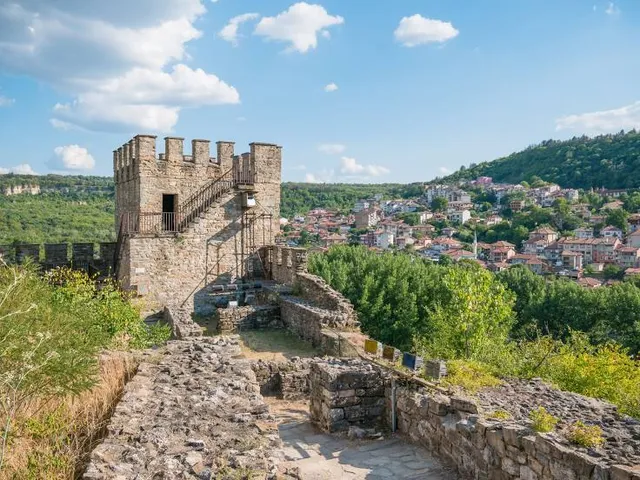
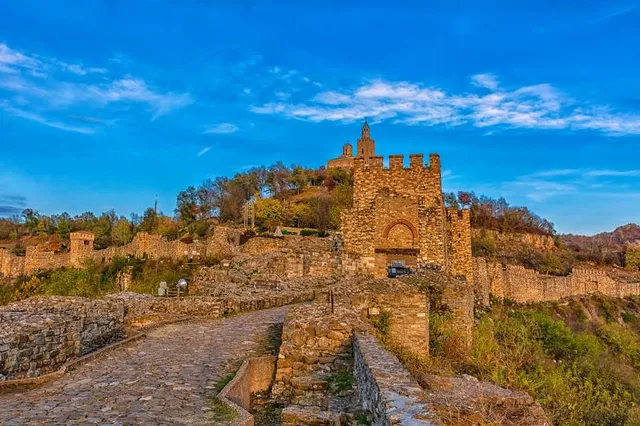
Read moreWe go up the stairs and the small cobbled hill that leads to the cathedral. The area is very rustic and well preserved. The vegetation makes the landscape even more atypical. As we advance and cross the ridge of the trees we see better and better the view over the town of Veliko. It is true that the whole ensemble is strategically located on these hills that once served the Tsar of Vlach-Bulgaria.
It was rebuilt between 1978 and 1981, when the paintings were brought to it in a modern style, specific to that period. This modern painting seems to have been the apple of discord, more precisely the cathedral loses its right to officiate services by the lack of its sanctification by the Orthodox Church. Which is why it has since become "just" a tourist attraction. The name of the Bulgarian patriarchs is written on a plaque on one of the...
Read moreCatedrala Patriarhală „Înalțarea Domnului” de pe dealul Tsarevets, cu o istorie străveche, este un loc cu o semnificație aparte în patrimoniul cultural și religios al Bulgariei. Construită pe locul unei foste bazilicii romane din secolele V-VI, catedrala a fost un loc important pentru regii bulgari și pentru viața religioasă a Imperiului Bulgar Medieval. În secolul al XI-lea, aceasta a dobândit denumirea „Înalțarea Domnului” și a rămas un simbol al puterii regale până în 1393, când cetatea Tsarevets a fost distrusă de armata otomană.
Astăzi, catedrala este o ruină restaurată, care impresionează prin măreția și istoria sa. După reconstrucția sa completă între anii 1978-1981, folosindu-se piatră și cărămidă, catedrala a dobândit aspectul actual, fiind un edificiu impunător de 26 de metri lungime și 12 metri lățime. Este un loc care pare o cetate în sine, datorită zidurilor groase care o înconjoară și a turnului clopotniță ridicat în timpul domniei Țarului Ioan Alexandru al Bulgariei, adăugând un pridvor frumos.
Una dintre cele mai fascinante trăsături ale catedralei sunt frescele și mozaicurile din interior, realizate de Teofan Sokerov în 1985, care ilustrează momente importante din istoria medievală a Bulgariei. Deși biserica nu mai este folosită pentru slujbe religioase, aceste lucrări de artă atrag un număr mare de turiști din întreaga lume. Frescele sunt caracterizate de un stil modernist, ceea ce a dus la faptul că biserica nu a fost sfințită niciodată, în ciuda tradiției de a sfinți lăcașurile de cult. Această particularitate adaugă un element de mister și intrigă, atrăgând curiozitatea vizitatorilor care vin să descopere această bijuterie a istoriei bulgare.
Accesul la catedrală se face trecând prin zidurile Cetății Tsarevets, un loc unde istoria medievală prinde viață la fiecare pas. Drumul pietruit care duce la catedrală și complexul muzeistic din apropiere oferă o atmosferă pioasă și contemplativă, completând experiența de vizitare a acestui loc emblematic...
Read more