I recently had the opportunity for an interview for a position as a scientific assistant. Prior to the interview, I was contacted by a professor who requested that I work on a task involving coding skills. This professor had previously published a paper using a simplified modeling approach to address a specific question. However, the case I worked on approached the problem from an applied science perspective, an area in which I have significant expertise.
During the interview, the professor inquired about the code I used to generate my results and mentioned there was an error. In response, I referenced a source where the implementation of the code can be found. I spent several months refining this code during my academic studies, validating it with examples from the literature. Additionally, another professor questioned a criterion I used and pointed out the effect of a particular parameter. My response aligned with the original author's explanation, shared during a video conference, though it appeared to contradict the professor’s interpretation.
A week later, I was informed that my application was rejected, citing a mismatch with the job profile. Upon reviewing the job description once again, I found it was directly related to the field in which I have experience. While I chose not to file a formal complaint, as no official protocol was followed during the interview, I couldn't help but feel that the process was somewhat arbitrary.
In hindsight, it seems that some of the professors may have been more interested in collecting students’ work and code without proper acknowledgment, and the evaluation process appeared inconsistent. If you are considering applying for a similar role, I would advise carefully reviewing expectations, setting clear milestones, and requesting a formal protocol for any research or thesis work.
It is unfortunate that the decision was communicated so quickly, and the rejection message itself was written in rather simple English, which came across as somewhat unprofessional. However, since I speak German, I was able to fully understand...
Read moreYou should better not study there. Bad teaching and most students don't even know it, because they have never experienced another university. I studied at another university after my time in Clausthal and I can confirm some rumours that other universities have a much better teaching than Clausthal.
I don't just talk about my own experience but also about what I have heard from others: There is a German language website called studycheck that collects reports from students about their experience with universities in Germany.
When You check out Clausthal on studycheck you can find some reports (from students who can compare Clausthal to other universities) saying that Clausthal offers a very bad teaching in comparison to their second university. I even know a student personally who entirely agrees with me.
The Professors in Clausthal use to describe themself as much better teachers than Professors from others universities. But this is far from reality and dangerous group thinking. Because when you read some reports from students who can compare Clausthal to other uninversities in Germany, you will recognise that bad teaching is extremely inherent at the TUC.
If you realy want to enjoy a good teaching and supervision during your time at the university, you schould realy look for...
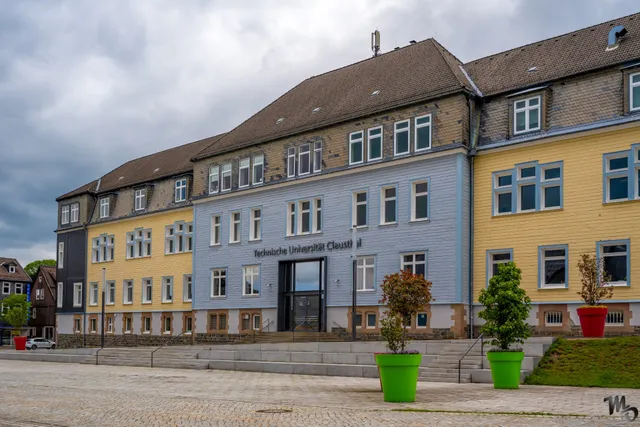
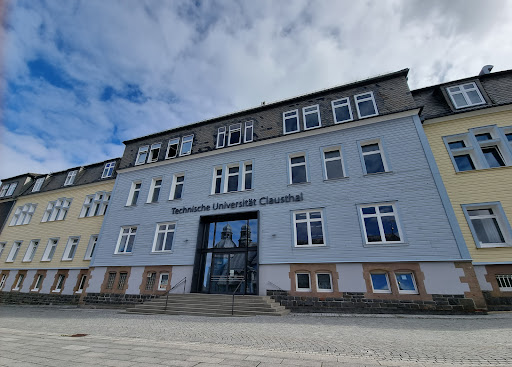
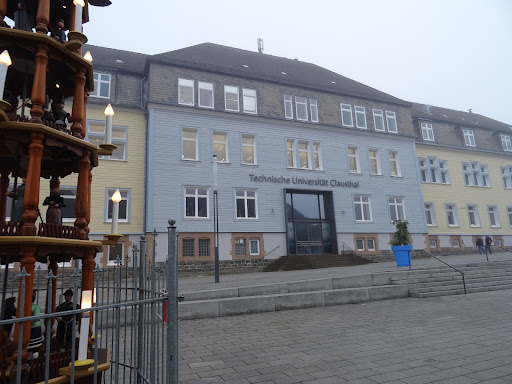
Read moreI had heard a lot about this university before, but I was genuinely surprised to find it located high up in the mountains, in a somewhat remote town—yet it’s impressively well-connected and organized. The setting alone is unique, but what really caught my eye was a beautiful glass installation right at the entrance of the main university building. It added a modern, artistic touch to a place that already feels special due to its unusual location. Definitely worth a visit if you're in the area, even just to take in...
Read more