HTML SitemapExplore
logo
Find Things to DoFind The Best Restaurants

Schleissheim palace complex — Attraction in Oberschleißheim

Name
Schleissheim palace complex
Description
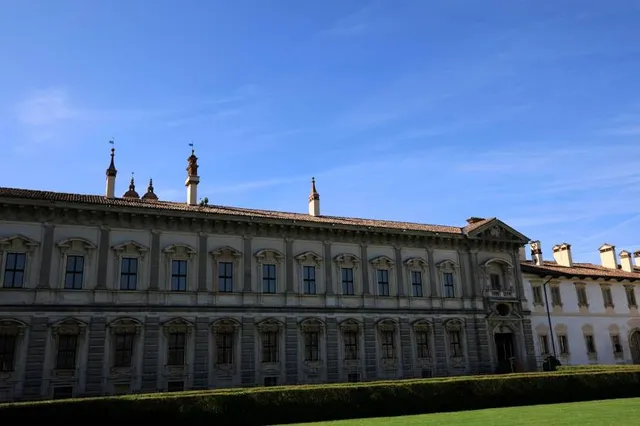
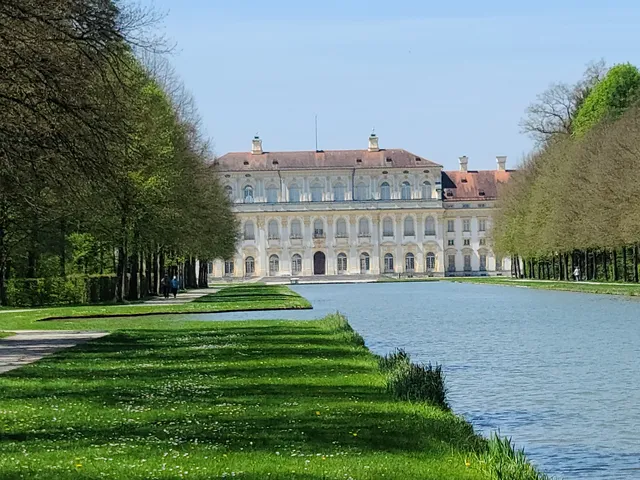
The Schleißheim Palace comprises three individual palaces in a grand Baroque park in the village of Oberschleißheim, a suburb of Munich, Bavaria, Germany. The palace was a summer residence of the Bavarian rulers of the House of Wittelsbach.
Nearby attractions
Neues Schloss Schleißheim
Neues Schloss Schleißheim, Max-Emanuel-Platz, 85764 Oberschleißheim, Germany
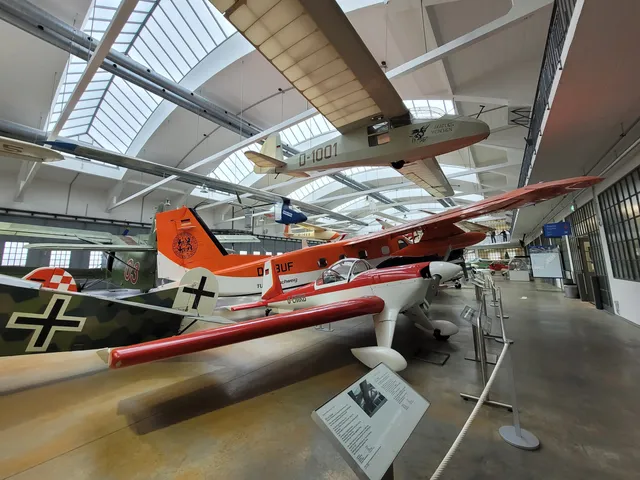
Deutsches Museum Flugwerft Schleissheim
Effnerstraße 18, 85764 Oberschleißheim, Germany
Nearby restaurants
Griechisches Restaurant - Poseidon in Oberschleißheim
Dachauer Str. 1, 85764 Oberschleißheim, Germany
Schlosswirtschaft Schleissheim
Maximilianshof 2, 85764 Oberschleißheim, Germany
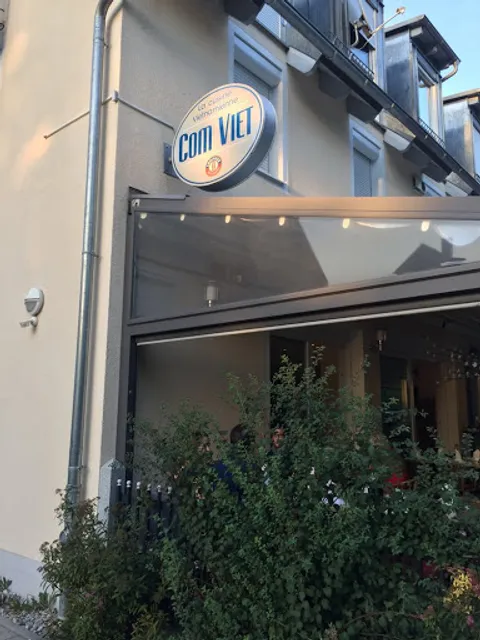
Restaurant Com Viet
Dachauer Str. 5, 85764 Oberschleißheim, Germany
Zum Phönix Trattoria Pizzeria Da Luigi
Effnerstraße 20, 85764 Oberschleißheim, Germany
Café zum Schloss
Dachauer Str. 15, 85764 Oberschleißheim, Germany
Neuen Bürgerstuben Oberschleißheim
Theodor-Heuss-Straße 29, 85764 Oberschleißheim, Germany
Osteria del Duca
Feierabendstraße 51, 85764 Oberschleißheim, Germany
Annes & Handmade
Am Stutenanger 6, 85764 Oberschleißheim, Germany
NIHAO Kitchen (Authentic Sichuan Cuisine & Dimsum)
Mittenheimer Str. 52, 85764 Oberschleißheim, Germany
Nearby hotels
Blauer Karpfen
Dachauer Str. 1, 85764 Oberschleißheim, Germany
Related posts
Keywords
Schleissheim palace complex tourism.Schleissheim palace complex hotels.Schleissheim palace complex bed and breakfast. flights to Schleissheim palace complex.Schleissheim palace complex attractions.Schleissheim palace complex restaurants.Schleissheim palace complex travel.Schleissheim palace complex travel guide.Schleissheim palace complex travel blog.Schleissheim palace complex pictures.Schleissheim palace complex photos.Schleissheim palace complex travel tips.Schleissheim palace complex maps.Schleissheim palace complex things to do.
Schleissheim palace complex things to do, attractions, restaurants, events info and trip planning
Schleissheim palace complex
GermanyBavariaOberschleißheimSchleissheim palace complex

Basic Info

Schleissheim palace complex

Max-Emanuel-Platz 1, 85764 Oberschleißheim, Germany
4.7(2.4K)
Closed
Save
spot

Ratings & Description

Info

The Schleißheim Palace comprises three individual palaces in a grand Baroque park in the village of Oberschleißheim, a suburb of Munich, Bavaria, Germany. The palace was a summer residence of the Bavarian rulers of the House of Wittelsbach.

Cultural
Outdoor
Family friendly
Accessibility
attractions: Neues Schloss Schleißheim, Deutsches Museum Flugwerft Schleissheim, restaurants: Griechisches Restaurant - Poseidon in Oberschleißheim, Schlosswirtschaft Schleissheim, Restaurant Com Viet, Zum Phönix Trattoria Pizzeria Da Luigi, Café zum Schloss, Neuen Bürgerstuben Oberschleißheim, Osteria del Duca, Annes & Handmade, NIHAO Kitchen (Authentic Sichuan Cuisine & Dimsum)
logoLearn more insights from Wanderboat AI.
Phone
+49 89 3158720
Website
schloesser-schleissheim.de
Open hoursSee all hours
Sun9 AM - 6 PMClosed

Plan your stay

hotel
Pet-friendly Hotels in Oberschleißheim
Find a cozy hotel nearby and make it a full experience.
hotel
Affordable Hotels in Oberschleißheim
Find a cozy hotel nearby and make it a full experience.
hotel
The Coolest Hotels You Haven't Heard Of (Yet)
Find a cozy hotel nearby and make it a full experience.
hotel
Trending Stays Worth the Hype in Oberschleißheim
Find a cozy hotel nearby and make it a full experience.

Reviews

Nearby attractions of Schleissheim palace complex

Neues Schloss Schleißheim

Deutsches Museum Flugwerft Schleissheim

Neues Schloss Schleißheim

Neues Schloss Schleißheim

4.7

(617)

Open 24 hours
Click for details
Deutsches Museum Flugwerft Schleissheim

Deutsches Museum Flugwerft Schleissheim

4.6

(2.4K)

Closed
Click for details

Things to do nearby

Die Legende der Titanic - Die immersive Ausstellung
Sun, Dec 7 • 7:30 PM
Arnulfstraße 195-199, München, 80634
View details
A drive through Munichs magnificent sights
Mon, Dec 8 • 8:00 AM
80331, Munich, Germany
View details
VINCENT - Zwischen Wahn und Wunder
Sun, Dec 7 • 7:30 PM
Heßstraße 132, München-Schwabing-West, 80797
View details

Nearby restaurants of Schleissheim palace complex

Griechisches Restaurant - Poseidon in Oberschleißheim

Schlosswirtschaft Schleissheim

Restaurant Com Viet

Zum Phönix Trattoria Pizzeria Da Luigi

Café zum Schloss

Neuen Bürgerstuben Oberschleißheim

Osteria del Duca

Annes & Handmade

NIHAO Kitchen (Authentic Sichuan Cuisine & Dimsum)

Griechisches Restaurant - Poseidon in Oberschleißheim

Griechisches Restaurant - Poseidon in Oberschleißheim

4.4

(643)

$$

Click for details
Schlosswirtschaft Schleissheim

Schlosswirtschaft Schleissheim

4.5

(158)

Click for details
Restaurant Com Viet

Restaurant Com Viet

4.6

(398)

Click for details
Zum Phönix Trattoria Pizzeria Da Luigi

Zum Phönix Trattoria Pizzeria Da Luigi

4.3

(368)

$

Click for details
Get the Appoverlay
Get the AppOne tap to find yournext favorite spots!
Wanderboat LogoWanderboat

Your everyday Al companion for getaway ideas

CompanyAbout Us
InformationAI Trip PlannerSitemap
SocialXInstagramTiktokLinkedin
LegalTerms of ServicePrivacy Policy

Get the app

© 2025 Wanderboat. All rights reserved.
logo

Reviews of Schleissheim palace complex

4.7
(2,409)
avatar
5.0
6y

The Schleissheim Palace comprises three individual palaces in a grand baroque park in the village of Oberschleißheim, a suburb of Munich, Bavaria, Germany. The palace was a summer residence of the Bavarian rulers of the House of Wittelsbach.

The history of Schleissheim Palace started with a renaissance country house (1598) and hermitage founded by William V close to Dachau Palace. The central gate and clock tower between both courtyards both date back to the first building period. The inner courtyard is called Maximilianshof, the outer one Wilhelmshof. Under William's son Maximilian I the buildings were extended between 1617 and 1623 by Heinrich Schön and Hans Krumpper to form the so-called Old Palace. This plan is typologically similar to the castle of Laufzorn in Oberhaching begun by Maximilian's brother Albert the year before. There, too, a free staircase leads up to the first floor, which is used as a mansion. The building, which was designed in the style of Andrea Palladio in the late renaissance, was completed in 1623.

The rooms were decorated by Peter Candid. Maximilian's son and successor Ferdinand Maria died here in 1679. After heavy destruction in the Second World War the palace with its spacious buildings was reconstructed. Most of the stucco decoration of the chapel Wilhelmskapelle has been preserved. The Old Schleissheim Palace houses today two exhibitions, one on religious culture, the other the history of Prussia. The Grand Hall in the middle of the main building today serves as foyer for the museums.

The grand park is one of the rare preserved baroque gardens in Germany. Its structure with canals and bosquet area was arranged by Zuccalli. Dominique Girard, a pupil of Le Notre, constructed the grand parterre and the cascade until 1720. Water forms since the central element in the garden. The Grand Canal in the garden center and the ditch round of Lustheim island are part of the northern Munich channel system, a system of waterways that connected also to the complex of Nymphenburg Palace.

From the Old Palace, a line of sight goes south to the Frauenkirche in Munich, which is also the end point of another line of sight of the Fürstenried Palace. The northern side channel has finally Dachau Palace as target. In the Brunnhaus (well house), which was built in 1867 north of the Old Palace by Carl von Effner, the waterwheel and the pumps are still present, the fountains are, however, now powered by...

   Read more
avatar
5.0
14w

I would like to recommend to visit so beautiful place Schleißheim Old and New Palaces, copper engraving after Mathias Disel, ca. 1722

Schleißheim palace complex was founded by Duke Wilhelm V of Bavaria (1548-1626), who in 1597 purchased the isolated moorland farm of Schleißheim with its St Margaret's Chapel for a large sum of money from the Freising Cathedral chapter. Wilhelm renounced the splendours of court life at an early stage, devoted himself to religious meditation and in 1598 finally abdicated in favour of his energetic son Maximilian. The founding of Schleißheim reflected his personal inclination towards pious contemplation.

In the period from 1598 to 1600 Wilhelm had an estate and a manor built within the complex, which was surrounded by small hermitages and forest chapels. The duke, who had no intention of altering the character of the property as a farm, extended its activities with a stud farm which supplied his stables. Schleißheim beer and Schleißheim cheese were produced. Attracted in particular by the profits from the farming business, Maximilian I (reigned 1598-1651) acquired the complex from his father in 1616 in return for a life annuity The Schleißheim park was designed in strict alignment with Lustheim and the New Palace and is one of the most important baroque gardens in Europe.

It was initially influenced by Dutch garden design, and subsequently extended by the French garden expert and waterworks engineer Dominique Gerard in the French baroque garden style. With his embroidered parterres, pools, fountains and cascades he created a unique design, the basic features of which have remained unchanged.

The ensemble consisting of the New and Old Palaces, Lustheim Palace and the extensive baroque garden is a splendid example of court architecture and garden design from the 17th and...

   Read more
avatar
5.0
7y

Very good visit, we had lunch outside in the biergarten of Schlosswirtschaft Oberschleissheim, the restaurant to the side of the old palace, it is a limited menu but the food was delicious and reasonably price. Parking was 1 euro, and on a Thursday there was plenty of parking places available. It is 8 euro to tour all 3 palaces. The old palace has been mostly rebuilt from the war, and contains a museum of figurines from around the world of the life of Jesus. The new palace is mostly an art museum with some of the original art, as well as extensive ceiling paintings in almost all the rooms. the castle of Lustheim at the far end of the property past the fountains can be a bit of a walk on a hot day, approx 1300m, but on either side are shaded walkways for these days. It houses a museum of porcelain work from different cultures/regions. There is little English translation in the Old Palace or Lustheim's Castle. The New Palace does have each of the room descriptions translated in to English, but little more then that. The New Palace has the most area/rooms for you to explore and see, the Old Palace rooms seems to be modernized with the rebuild, and you are limited to the center front area of the palace where the museum is contained. You are also limited in the Castle of Lusthiem to the museum areas only, but the rooms seem to be mostly in their original layout. A great visit and beautiful property to...

   Read more
Page 1 of 7
Previous
Next

Posts

Me 1974Me 1974
The Schleissheim Palace comprises three individual palaces in a grand baroque park in the village of Oberschleißheim, a suburb of Munich, Bavaria, Germany. The palace was a summer residence of the Bavarian rulers of the House of Wittelsbach. The history of Schleissheim Palace started with a renaissance country house (1598) and hermitage founded by William V close to Dachau Palace. The central gate and clock tower between both courtyards both date back to the first building period. The inner courtyard is called Maximilianshof, the outer one Wilhelmshof. Under William's son Maximilian I the buildings were extended between 1617 and 1623 by Heinrich Schön and Hans Krumpper to form the so-called Old Palace. This plan is typologically similar to the castle of Laufzorn in Oberhaching begun by Maximilian's brother Albert the year before. There, too, a free staircase leads up to the first floor, which is used as a mansion. The building, which was designed in the style of Andrea Palladio in the late renaissance, was completed in 1623. The rooms were decorated by Peter Candid. Maximilian's son and successor Ferdinand Maria died here in 1679. After heavy destruction in the Second World War the palace with its spacious buildings was reconstructed. Most of the stucco decoration of the chapel Wilhelmskapelle has been preserved. The Old Schleissheim Palace houses today two exhibitions, one on religious culture, the other the history of Prussia. The Grand Hall in the middle of the main building today serves as foyer for the museums. The grand park is one of the rare preserved baroque gardens in Germany. Its structure with canals and bosquet area was arranged by Zuccalli. Dominique Girard, a pupil of Le Notre, constructed the grand parterre and the cascade until 1720. Water forms since the central element in the garden. The Grand Canal in the garden center and the ditch round of Lustheim island are part of the northern Munich channel system, a system of waterways that connected also to the complex of Nymphenburg Palace. From the Old Palace, a line of sight goes south to the Frauenkirche in Munich, which is also the end point of another line of sight of the Fürstenried Palace. The northern side channel has finally Dachau Palace as target. In the Brunnhaus (well house), which was built in 1867 north of the Old Palace by Carl von Effner, the waterwheel and the pumps are still present, the fountains are, however, now powered by electric pumps.
NaaNaa Travels นักชิม นักเที่ยว กินเที่ยวกับNaaNaa TravelsNaaNaa Travels นักชิม นักเที่ยว กินเที่ยวกับNaaNaa Travels
I would like to recommend to visit so beautiful place Schleißheim Old and New Palaces, copper engraving after Mathias Disel, ca. 1722 Schleißheim palace complex was founded by Duke Wilhelm V of Bavaria (1548-1626), who in 1597 purchased the isolated moorland farm of Schleißheim with its St Margaret's Chapel for a large sum of money from the Freising Cathedral chapter. Wilhelm renounced the splendours of court life at an early stage, devoted himself to religious meditation and in 1598 finally abdicated in favour of his energetic son Maximilian. The founding of Schleißheim reflected his personal inclination towards pious contemplation. In the period from 1598 to 1600 Wilhelm had an estate and a manor built within the complex, which was surrounded by small hermitages and forest chapels. The duke, who had no intention of altering the character of the property as a farm, extended its activities with a stud farm which supplied his stables. Schleißheim beer and Schleißheim cheese were produced. Attracted in particular by the profits from the farming business, Maximilian I (reigned 1598-1651) acquired the complex from his father in 1616 in return for a life annuity The Schleißheim park was designed in strict alignment with Lustheim and the New Palace and is one of the most important baroque gardens in Europe. It was initially influenced by Dutch garden design, and subsequently extended by the French garden expert and waterworks engineer Dominique Gerard in the French baroque garden style. With his embroidered parterres, pools, fountains and cascades he created a unique design, the basic features of which have remained unchanged. The ensemble consisting of the New and Old Palaces, Lustheim Palace and the extensive baroque garden is a splendid example of court architecture and garden design from the 17th and 18th centuries.
Shahid HussainShahid Hussain
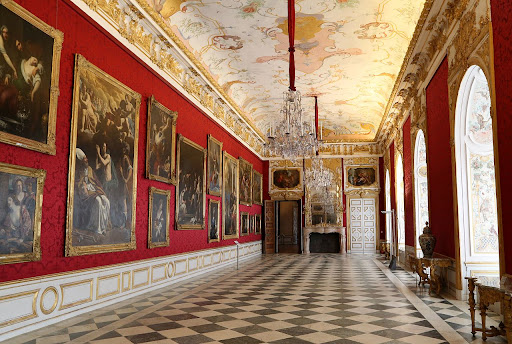
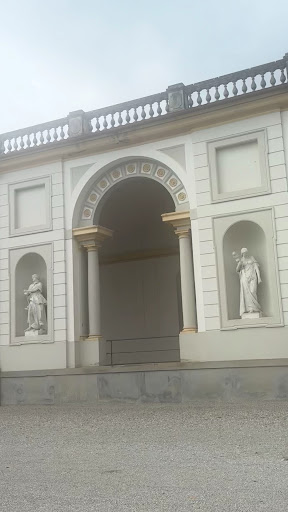
The Scheisseium Palace Complex in Munich is a remarkable fusion of historical grandeur and modern architectural ingenuity. Though lesser-known, it offers a stunning array of Baroque and Neo-Classical elements, blending seamlessly into its surroundings. The gardens are beautifully landscaped, providing a serene environment, while the interiors showcase lavish décor and intricate artwork. A key highlight is the striking central courtyard, surrounded by elegant arcades and sculptures. Visitors appreciate the quiet atmosphere, away from the city's more crowded attractions. Overall, it’s an underrated gem for those interested in architecture and peaceful exploration. It is always pleasure to visit this place.
See more posts
See more posts
hotel
Find your stay

Pet-friendly Hotels in Oberschleißheim

Find a cozy hotel nearby and make it a full experience.

The Schleissheim Palace comprises three individual palaces in a grand baroque park in the village of Oberschleißheim, a suburb of Munich, Bavaria, Germany. The palace was a summer residence of the Bavarian rulers of the House of Wittelsbach. The history of Schleissheim Palace started with a renaissance country house (1598) and hermitage founded by William V close to Dachau Palace. The central gate and clock tower between both courtyards both date back to the first building period. The inner courtyard is called Maximilianshof, the outer one Wilhelmshof. Under William's son Maximilian I the buildings were extended between 1617 and 1623 by Heinrich Schön and Hans Krumpper to form the so-called Old Palace. This plan is typologically similar to the castle of Laufzorn in Oberhaching begun by Maximilian's brother Albert the year before. There, too, a free staircase leads up to the first floor, which is used as a mansion. The building, which was designed in the style of Andrea Palladio in the late renaissance, was completed in 1623. The rooms were decorated by Peter Candid. Maximilian's son and successor Ferdinand Maria died here in 1679. After heavy destruction in the Second World War the palace with its spacious buildings was reconstructed. Most of the stucco decoration of the chapel Wilhelmskapelle has been preserved. The Old Schleissheim Palace houses today two exhibitions, one on religious culture, the other the history of Prussia. The Grand Hall in the middle of the main building today serves as foyer for the museums. The grand park is one of the rare preserved baroque gardens in Germany. Its structure with canals and bosquet area was arranged by Zuccalli. Dominique Girard, a pupil of Le Notre, constructed the grand parterre and the cascade until 1720. Water forms since the central element in the garden. The Grand Canal in the garden center and the ditch round of Lustheim island are part of the northern Munich channel system, a system of waterways that connected also to the complex of Nymphenburg Palace. From the Old Palace, a line of sight goes south to the Frauenkirche in Munich, which is also the end point of another line of sight of the Fürstenried Palace. The northern side channel has finally Dachau Palace as target. In the Brunnhaus (well house), which was built in 1867 north of the Old Palace by Carl von Effner, the waterwheel and the pumps are still present, the fountains are, however, now powered by electric pumps.
Me 1974

Me 1974

hotel
Find your stay

Affordable Hotels in Oberschleißheim

Find a cozy hotel nearby and make it a full experience.

Get the Appoverlay
Get the AppOne tap to find yournext favorite spots!
I would like to recommend to visit so beautiful place Schleißheim Old and New Palaces, copper engraving after Mathias Disel, ca. 1722 Schleißheim palace complex was founded by Duke Wilhelm V of Bavaria (1548-1626), who in 1597 purchased the isolated moorland farm of Schleißheim with its St Margaret's Chapel for a large sum of money from the Freising Cathedral chapter. Wilhelm renounced the splendours of court life at an early stage, devoted himself to religious meditation and in 1598 finally abdicated in favour of his energetic son Maximilian. The founding of Schleißheim reflected his personal inclination towards pious contemplation. In the period from 1598 to 1600 Wilhelm had an estate and a manor built within the complex, which was surrounded by small hermitages and forest chapels. The duke, who had no intention of altering the character of the property as a farm, extended its activities with a stud farm which supplied his stables. Schleißheim beer and Schleißheim cheese were produced. Attracted in particular by the profits from the farming business, Maximilian I (reigned 1598-1651) acquired the complex from his father in 1616 in return for a life annuity The Schleißheim park was designed in strict alignment with Lustheim and the New Palace and is one of the most important baroque gardens in Europe. It was initially influenced by Dutch garden design, and subsequently extended by the French garden expert and waterworks engineer Dominique Gerard in the French baroque garden style. With his embroidered parterres, pools, fountains and cascades he created a unique design, the basic features of which have remained unchanged. The ensemble consisting of the New and Old Palaces, Lustheim Palace and the extensive baroque garden is a splendid example of court architecture and garden design from the 17th and 18th centuries.
NaaNaa Travels นักชิม นักเที่ยว กินเที่ยวกับNaaNaa Travels

NaaNaa Travels นักชิม นักเที่ยว กินเที่ยวกับNaaNaa Travels

hotel
Find your stay

The Coolest Hotels You Haven't Heard Of (Yet)

Find a cozy hotel nearby and make it a full experience.

hotel
Find your stay

Trending Stays Worth the Hype in Oberschleißheim

Find a cozy hotel nearby and make it a full experience.

The Scheisseium Palace Complex in Munich is a remarkable fusion of historical grandeur and modern architectural ingenuity. Though lesser-known, it offers a stunning array of Baroque and Neo-Classical elements, blending seamlessly into its surroundings. The gardens are beautifully landscaped, providing a serene environment, while the interiors showcase lavish décor and intricate artwork. A key highlight is the striking central courtyard, surrounded by elegant arcades and sculptures. Visitors appreciate the quiet atmosphere, away from the city's more crowded attractions. Overall, it’s an underrated gem for those interested in architecture and peaceful exploration. It is always pleasure to visit this place.
Shahid Hussain

Shahid Hussain

See more posts
See more posts