The entrance ticket currently costs €13.50, with an additional €2.50 for the audio guide and €1.50 for admission to the viewing platform. Parking costs €1 per hour or €5 for the whole day.
There are lots of information panels in the museum, so the length of your visit will depend mainly on how much you want to read them. There is also a cinema where a documentary is shown. My visit, during which I only read a small part of the panels, lasted 2½ hours.
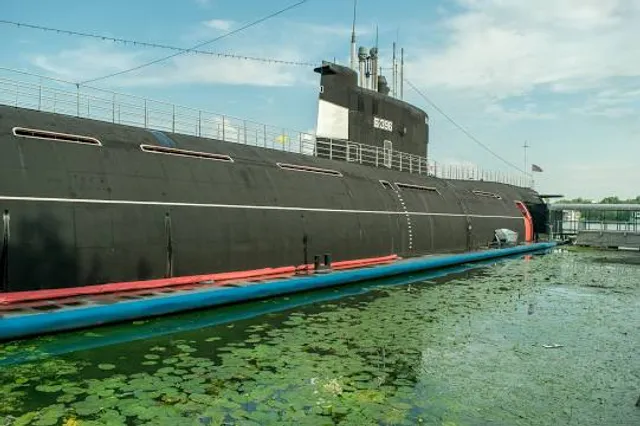
In addition to this, you can take a walk along the harbor docks and visit the interior of a submarine abandoned here by the Soviet Union and a German military ship; there is also a museum particularly aimed at children.
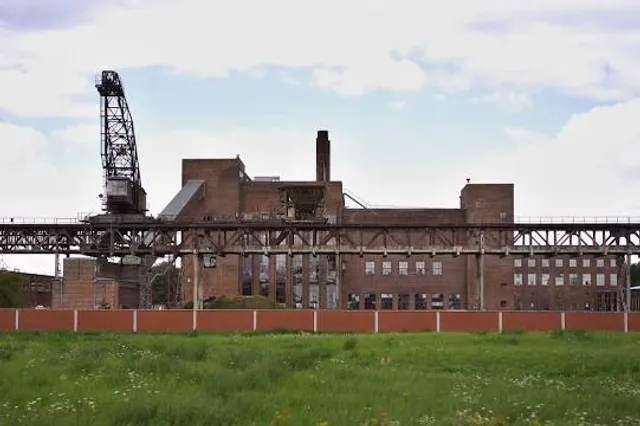
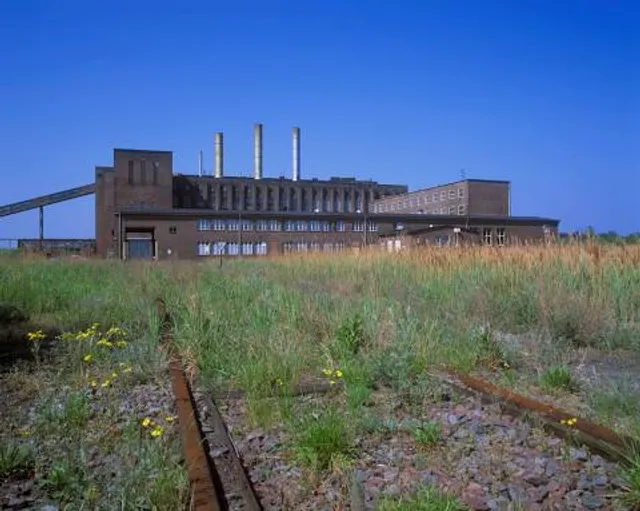
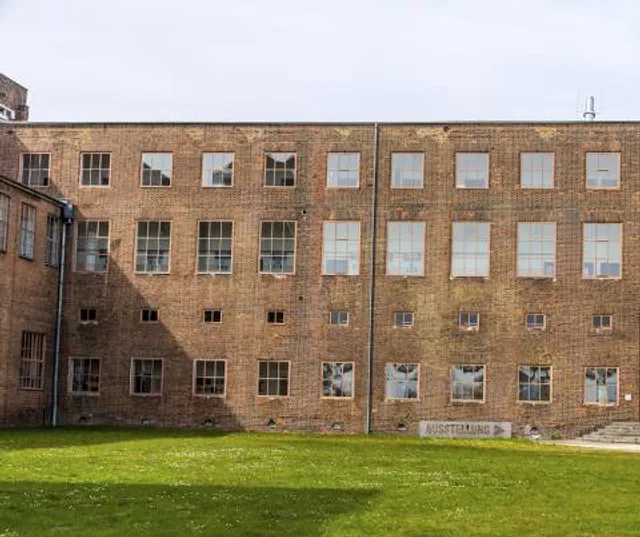
All the large buildings and missile launch pads have been destroyed, with the sole exception of the power station, which remained in operation until 1990 and was then converted into this museum.
Once upon a time, there was a quiet fishing and farming village with about 500 inhabitants, who certainly never imagined that in the future it would become one of the most important places in a world war and for the conquest of the Moon.
Due to its isolation and geographical characteristics, in 1935 Peenemünde was identified as the ideal location for secret missile research, and by 1937 it had already been transformed into a small town.
Scientists working on two separate projects were brought together there: the first was the Fielser flying bomb, renamed V-1 (“Vergeltungswaffen 1”), of which about 30,000 were produced.
The second was the Aggregat missile, which was designed in 10 different versions; almost 5,800 units of the Aggregat 4, renamed V-2, were mass-produced.
Upon discovering the existence of the secret base, the British RAF decided to destroy it completely with an attack carried out by 596 bombers on the night of August 17-18, 1943, but some of the targets were missed and the concentration camps where prisoners assigned to forced labor lived were also hit. Weapons production was moved to less vulnerable locations, but in 1944 there were three more bombings.
In February 1945, the Third Reich military demolished what they considered important to prevent it from falling into the hands of the advancing Soviet troops, who conquered the base three months later. In turn, under international agreements, the Soviet military dismantled or transported what was left to the USSR, saving the power plant and the airport.
The missiles that had not been launched became spoils of war, and the scientists who did not die in the bombings went to work in the research centers of the victorious nations.
Wernher von Braun, the brilliant mind who designed the V-2 rockets, had been appointed major in the SS even though he had devoted himself solely to scientific work. Nevertheless, in 1944 he was arrested by the Gestapo for crimes against the state, but given his importance to the project, he was rehabilitated and allowed to return to lead it.
At the end of the war, SS troops were ordered to kill him, but he managed to escape by crossing Germany with false documents to surrender to the Americans.
In the United States, Von Braun, together with other German scientists from the Aggregat project and US scientists, designed the Jupiter-C rocket that put the first American satellite into Earth orbit. They then built the Saturn V rocket, which, as part of the Apollo program, enabled man to reach the Moon.
Thanks to its beautiful beach, Peenemünde has become a seaside resort, with remnants of World War II scattered across a vast area. Only with a guided tour can you access the fenced-off area where the “Prüfstand VII” launch base...
Read moreThe app doesn't work because they don't monitor if it's compatible with the latest Android version.
Parking for the whole day costs 15 (!) Euros on the official open air car park of the museum. Once you go the rest of the way by foot to the technical museum you realize that on the left hand side you could have parked for 2 euros the whole day! But that's too late because you've already parked your car on the official car park.
Complaining about this at the cashier of the museum results in her saying that she's never seen the other car park. As she goes past there every day for work and doesn't see that, does she also not know, for instance, where her right hand is?
Also at the entrance they do not tell you about their documentary film screenings about the historical site at fixed hours. So after several hours of visiting the interesting Museum, you end up passing the cinema door and see what interesting films you could have watched, had you known, but the screening of which is over by now.
They have a magnificent panoramic platform on top of the power station with a view of the whole island of Usedom, which specifically makes it possible to understand the geography of the historic site. However, the lift taking you up there is broken and to make up for it they've also blocked the stairs leading up to the platform. So thank you for nothing!
My advice: If you just want to see a V2 rocket, go to the Deutsches...
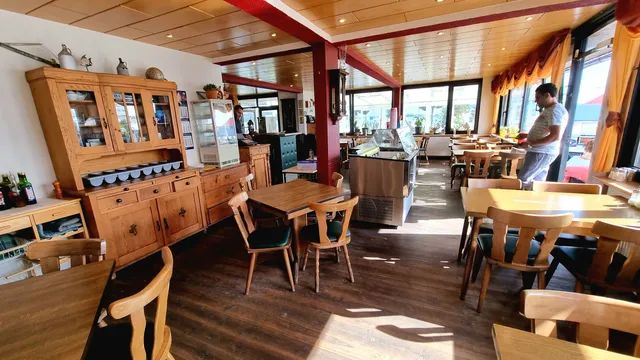
Read moreFascinating historical museum. Both the V1 and V2 rockets were developed here on Peenemunde and are now recorded in this museum. The Audio Guide was only a few Euros more and I thought it was worth it. Some of the content is the same as the information boards, but it acts as a guide and provides additional information. The information boards are in German with good summaries in English and Polish. The commentary is sensitive and balanced, bringing out the dilemma of science being used for humanity and misused for aggression. The museum has some external exhibits, but mostly it is housed in the large building of the Power Station. Allow 3-4 hours for a visit. There isn't a cafe inside the museum, only a vending machine for hot drinks and another for chocolate bars. There is a small gift shop in the ticket office. The museum covers the fascinating history, from the first rockets of the early 1900s, through 1930s and WWII in detail including of course, the development of the extensive Peenemunde site. It also represents what the conditions were like for; the slaves, forced labour, professional scientists and military staffs. Finally covering the successive development of missiles and space rockets. It is recommended for anyone interested in the development of rockets and how they changed the world we live in...
Read more