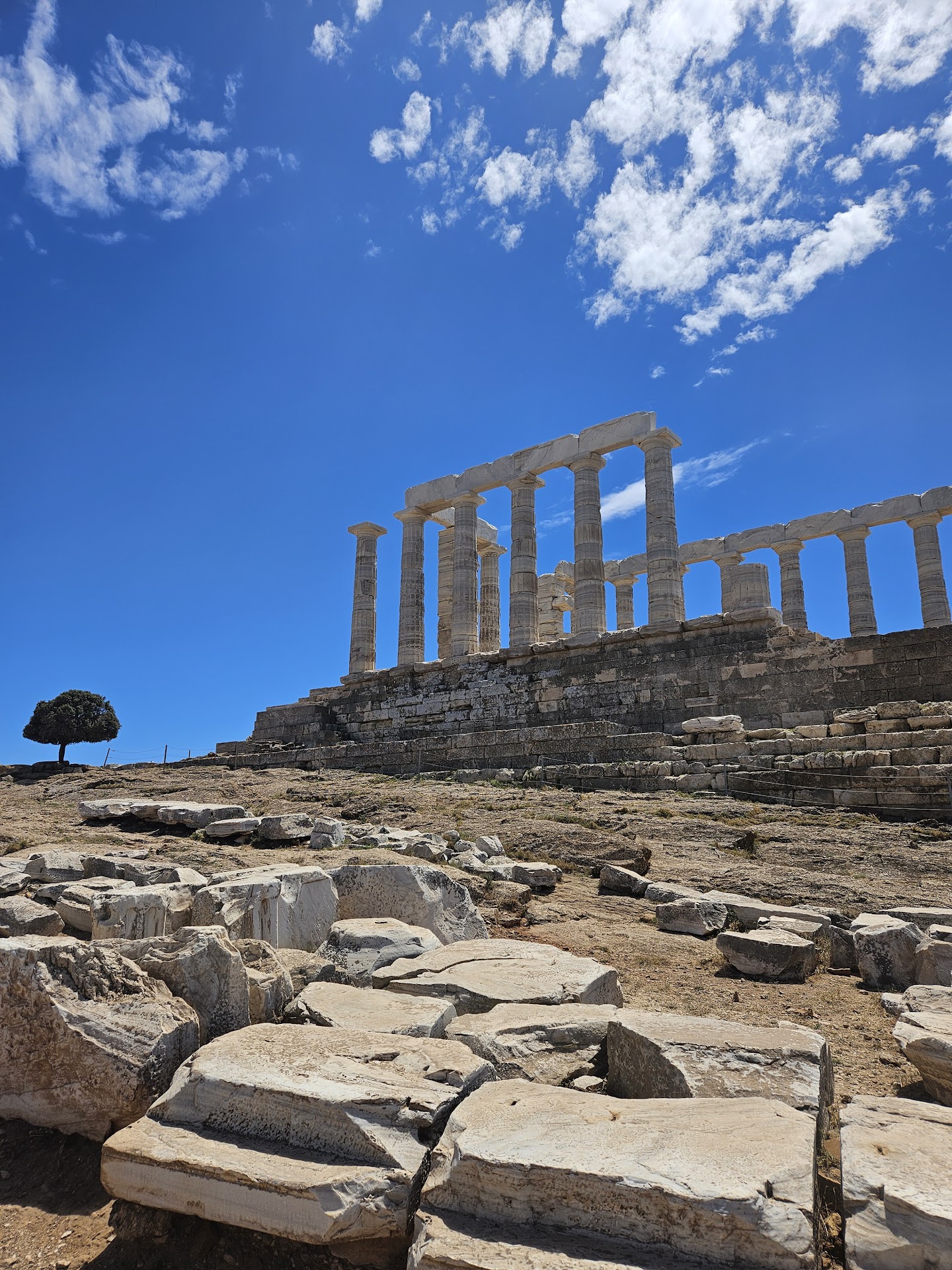
What can I say that hasn't been said about one of the marvels of this world. I'm going to give you some facts instead.
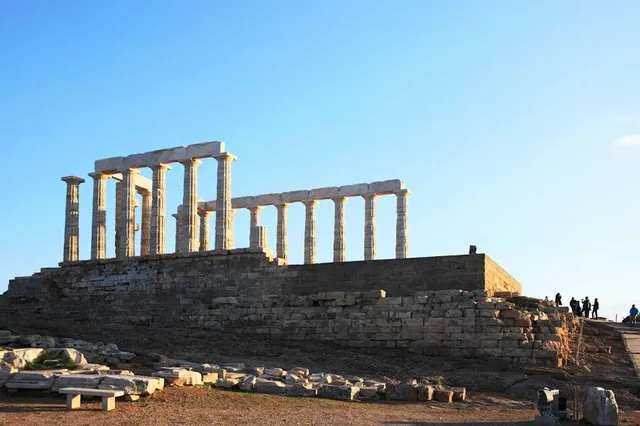
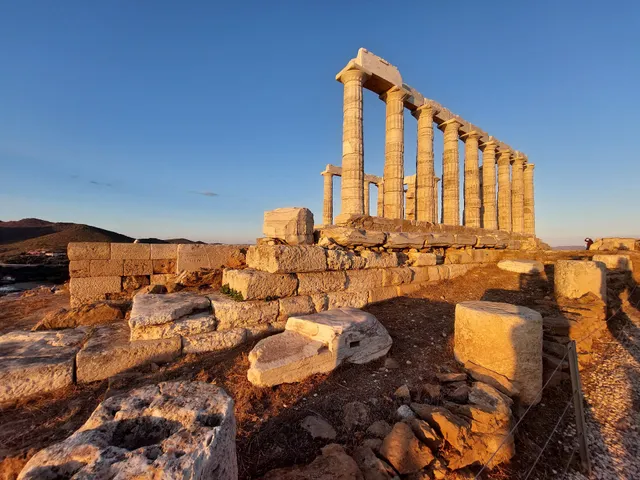
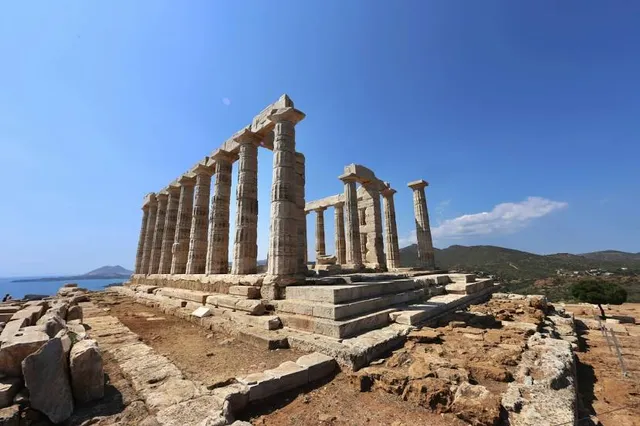
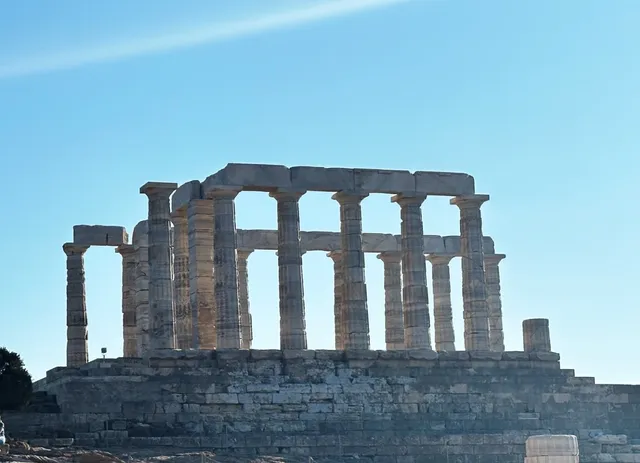
The Temple of Poseidon is not directly in Athens, but it's a very popular and significant archaeological site located about 70 kilometers southeast of the city, at Cape Sounion, on the southernmost tip of the Attica peninsula. It was built in honor of Poseidon, the Olympian god of the sea, which was fitting given its prominent coastal location. Perched on a rocky cliff about 65 meters above the Aegean Sea, it offered breathtaking views and served as a vital navigational beacon for ancient Greek sailors, being the first Athenian landmark they saw upon returning from sea and the last they saw when departing. It also acted as a watchtower for guarding the passage to Piraeus, Athens' port. It is a prime example of Doric architecture, known for its simplicity and harmonious proportions. It was constructed entirely of local white marble from Agrilesa. Originally, it had 34 Doric columns (6 on the short sides and 13 on the long sides). Today, only 16 remain standing, with four of them re-erected in the 20th century. Notably, the columns have 16 flutes instead of the usual 20, a feature also seen in other seaside temples. It is considered one of the three temples forming the "Sacred Triangle" of antiquity, along with the Parthenon in Athens and the Temple of Aphaia on Aegina Island. The famous British poet and Grecophile, Lord Byron, was so captivated by the site that he famously carved his name into one of the temple's columns in the early 19th century. The site has evidence of habitation dating back to 2800 BC and was considered holy grounds by ancient historians like Homer and Herodotus. Athenians held a deep emotional connection to this spot as it marked the visible boundary of their land when sailing into the Aegean. It is particularly renowned for its spectacular sunset views over the Aegean Sea, attracting many visitors.
If you want awe and wonder, come to the temple of Poseidon. The temple is truly magnificent, I'm so happy and blessed to have had the opportunity...
Read moreAlthough the columns at the Temple of Poseidon appear to be gleaming white from a distance in the full sun, when you get closer you can see that they are made of gray-veined marble, quarried from the Agrileza valley 2 km (1 mile) north of the cape, and have 16 flutings rather than the usual 20. Climb the rocky path and beyond the scanty remains of an ancient propylon (gateway), you enter the temple compound. On your left is the temenos (precinct) of Poseidon; on your right, a stoa (arcade) and rooms. The temple itself (now roped off) was commissioned by Pericles, the leader of Greece's golden age. It was probably designed by Ictinus, the same architect who helped design the Temple of Hephaistos in the ancient Agora of Athens, and was built between 444 and 440 BC. The people here were considered Athenian citizens, the sanctuary was Athenian, and Poseidon occupied a position second only to Athena herself. The badly preserved frieze on the temple's east side is thought to have depicted the fight between the two gods to become patron of Athens.
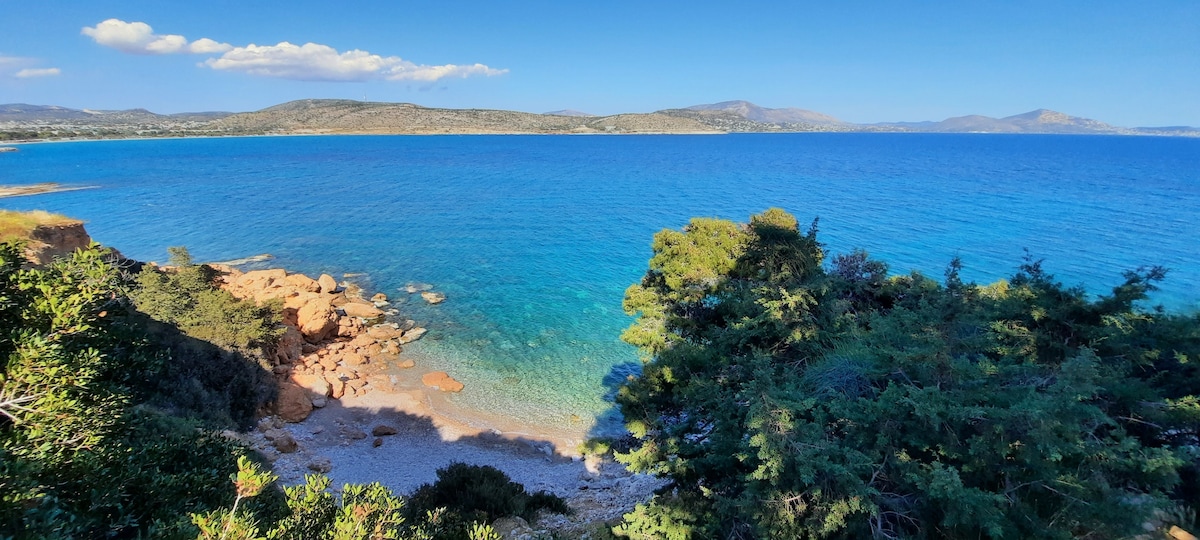
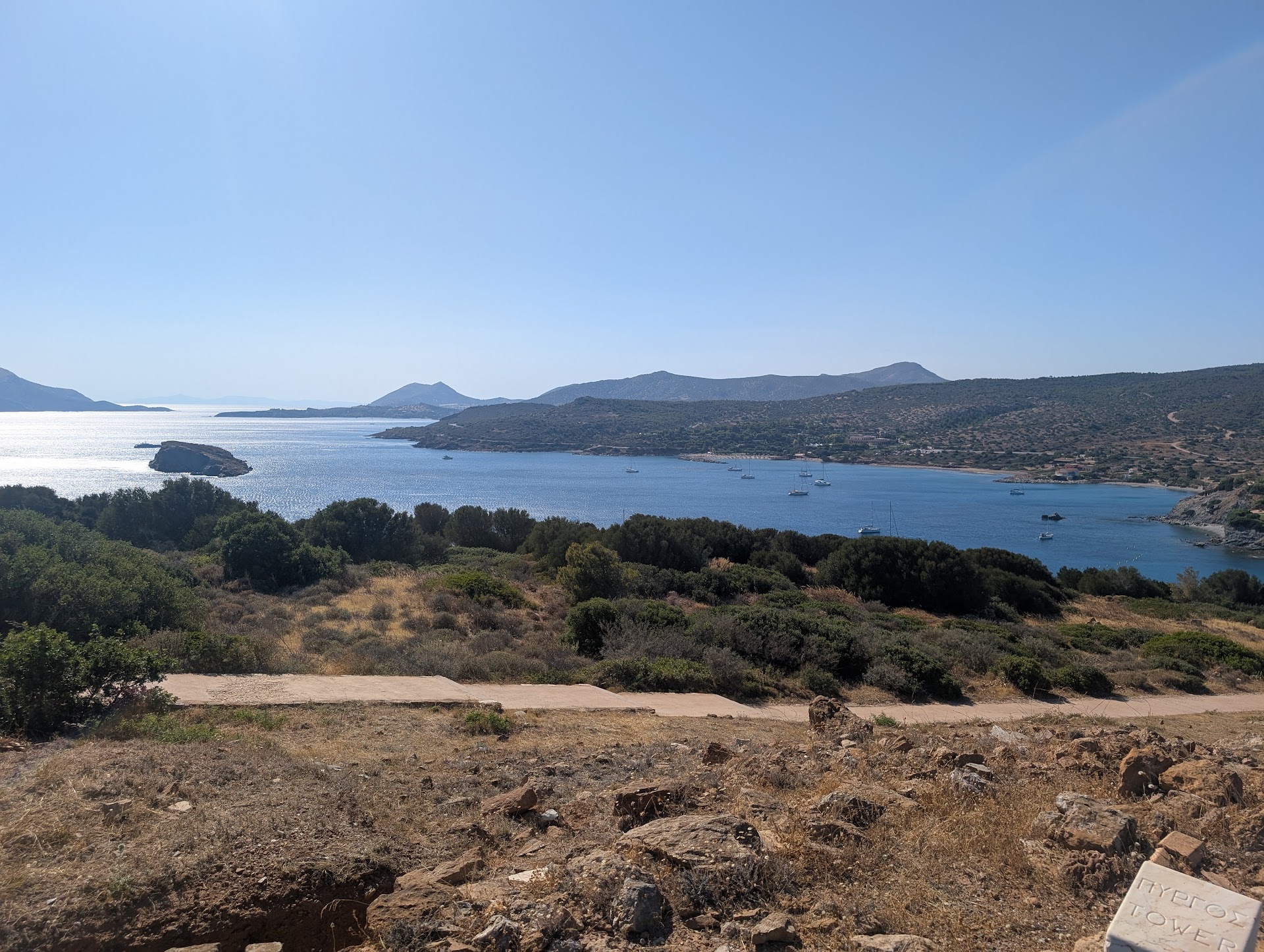
The temple was built on the site of an earlier cult to Poseidon. Two colossal statues of youths, carved more than a century before the temple's construction (perhaps votives to the god), were discovered in early excavations. Both now reside at the National Archaeological Museum in Athens. The 15 Doric columns that remain stand sentinel over the Aegean, visible from miles away. Lord Byron had a penchant for carving his name on ancient monuments, and you can see it and other graffiti on the right corner pillar of the portico. The view from the summit is breathtaking. In the slanting light of the late-afternoon sun, the landmasses to the west stand out in sharp profile: the bulk of Aegina backed by the mountains of the Peloponnese. To the east, on a clear day, one can spot the Cycladic islands of Kea, Kythnos, and Serifos. On the land side, the slopes of the acropolis retain traces of the...
Read moreVisiting the Temple of Poseidon in February was nothing short of magical. The journey to Cape Sounion, where the temple stands, is picturesque, with the sea on one side and rugged cliffs on the other, offering breathtaking views that are even more serene during the off-season.
The Temple itself, perched on the edge of the cliff with the endless expanse of the Aegean Sea in the background, provides an awe-inspiring sight. The architecture, despite its ancient wear, speaks volumes of the grandeur of Greek mythology and history. The cooler February air added a mystical touch to the visit, with fewer crowds allowing for a more intimate experience with this historical gem.
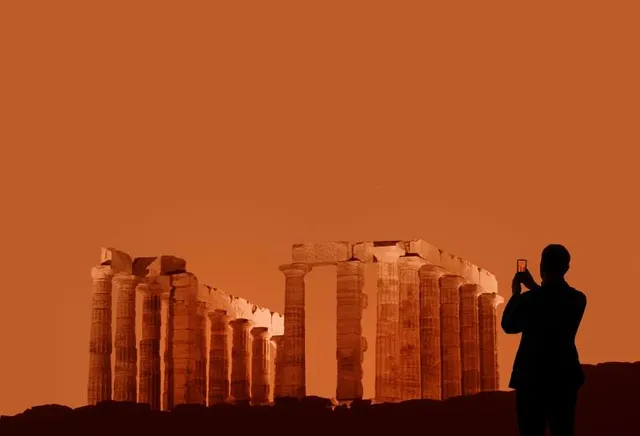
The sunset here is legendary, and experiencing it in February was particularly special. The sun dips into the sea, painting the sky in hues of orange and pink, reflecting off the marble columns, creating an unforgettable scene. It felt like a private moment with history, the gods, and nature.
The site is well-maintained, with informative plaques that enrich your understanding of the ruins. The staff was friendly and knowledgeable, ready to share insights or a story about Poseidon's dominion over the sea.
For those who love history, mythology, or just a beautiful, quiet place to reflect, visiting the Temple of Poseidon in February is highly recommended. It's a testament to ancient ingenuity and beauty, offering peace and inspiration in equal measure.
A truly 5-star experience - don't miss it if you're in Greece during the...
Read more