Today's column is a random collection of true stories about famous scientists, mostly taken from The Human Side of Scientists, by RE Oesper (Univ. Cincinnati, 1975).
Andre-Marie Ampere (1775- 1836) was a French physicist and mathematician. He derived a formula describing the interaction between two electrical currents.
As an adult Ampere was plagued by absent-mindedness. One day while concentrating on a mathematical problem, he came on a stationary cab in the street. The back of the cab was a convenient blackboard and, whipping out a piece of chalk, he covered it with calculations. However, after a bit the cab moved off and Ampere watched helplessly as his solution sped away.
Svante A Arrhenius (1859-1927), a famous Swedish chemist, won the Nobel prize in 1903 and pointed to the warming effect of carbon dioxide in the atmosphere.
Arrhenius was a jolly fat figure and did not impress visually as a man devoted to intellectual endeavours. Once, at a scientific congress, he went to the hotel where the professors were holding a social affair. He checked in his coat and proceeded towards the professors' room. The cloakroom attendant ran after him and pointed to another room saying, "Excuse me sir, you are headed for the wrong room. The butchers are holding their party in that other room."
Stephen M Babcock (1843-1931) was an American agricultural chemist. He once worked on the analysis of feeds for dairy herds.
One day he showed his boss two sets of analyses and asked, "'Which of those materials would be the best ration for a dairy cow?" The boss said, "'I cannot see any significant difference between them."
"Neither can I," said Babcock, "but one is the ration fed to the cow and the other is the excrement that came out."
Niels Bohr (1885-1962) was an eminent Danish physicist, awarded the Nobel Prize in 1922. On one occasion he was pondering a dilemma - whether to accept either of two theories about a phenomenon, or a mixture of the two. Both theories seemed correct, yet they were markedly different. He said the situation reminded him of the boy who asked the shopkeeper for a penny's worth of mixed candy. The man handed over two pieces of candy and said, "Here is what your money will buy. You can do the mixing yourself
Bohr was awarded a gold medal with the Nobel Prize. He took an active part in the resistance when the Nazis invaded Denmark. When he had to flee Denmark in 1943, he dissolved the medal in acid and hid the bottle. On his return to Copenhagen he retrieved the bottle, precipitated the gold and had the medal recast.
Robert Wilhelm Bunsen (1811-1899) was an outstanding German chemist. His most practical contribution was devising the gas burner that bears his name. He refused to take out patents on his inventions, believing that scientists should not become wealthy through their discoveries.
In his youth, Bunsen liked mountain-climbing but, as he aged, he developed an easier approach to climbing. He would, with his companions, select a peak. Then, near the starting point, he would pick a shady tree and tell his party to go on without him.
He would sit in the shade, light a cigar, burn a hole in his handkerchief and, drawing the cloth over his face as a protection against insects, he would insert his cigar through the hole and smoke and doze until his companions returned.
Henry Cavendish (1731-1810) was an eminent English chemist and physicist. He inherited great wealth but had little appreciation of it. His banker once told him that a vast sum lay idle in his account, which bothered the banker. Cavendish replied that if the sum of money was a burden, he would remove it from the bank.
The banker shyly suggested that part of the funds be placed in safe securities. Cavendish angrily replied, "Proceed as you wish, but do not dare to return and bother me further with such affairs; otherwise I will remove my funds from your care."
Cavendish seemed afraid of women. The maids in his house were instructed to stay out of his sight or be dismissed, and he communicated with his housekeeper by leaving...
Read moreWonderful place for visit with family and friends in Patna. Entry ticket is Rs 100 per person. The Museum Fully Air-conditioned so you may visit in pick summer also. There is 2 section one for kids and another is historical. There is one theatre also where informative movie about the museum and history of Bihar runs every hour for free. Highly recommended.
This museum mostly contains modern artworks and a few exhibits that were found in and around of Patliputra. Most of its contents have now been moved to the new Museum. There is a wildlife and minerals sections which is quite unique. The park situation outside offers a soothing and scenic view. A good place to spend few hours with friends and family especially children. Entry fee is quite low and separate passes are required for mobile photography. A good museum altogether. But my advice is that you have to be sure of what you want when you are visiting this place. I visited this place last in 1995 and back then there was only one museum in Patna. With Bihar museum around, you have to have some interest in specifics displayed here to come and visit this place. I came here to see the Natural History part as it has a rare Fossil of a 200million old tree which is not something that you will find in a regular museum in India. I am a Fossil enthusiast and this place is therefore great for me. You have to have your pic. Nevertheless, a good Victorian architecture building to see and enjoy on a sunny day in Winter. Do visit once. :) This is a good place to visit with family and kids. It has long garden with green grass. Also, this is a very clean place where you will feel good & fresh with own circle.
The museum have some out standing collections of living kind such as animals, tree, painting, and more.
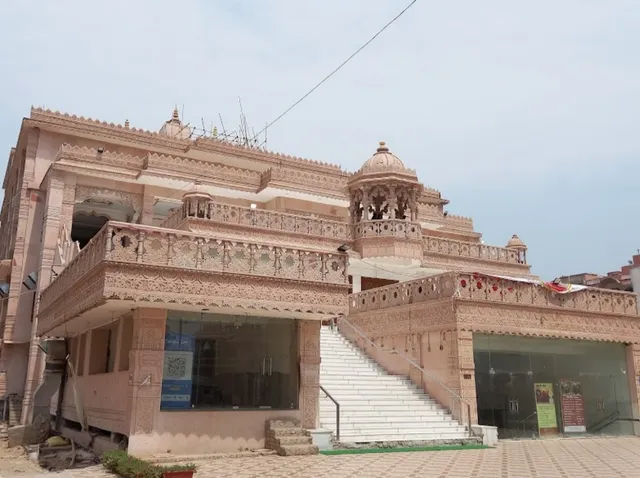
The architecture is also so beautiful and you feel like, you are in a palace. And its affordable too.
You can buy a ticket for adults 15rs only. If you are looking for photography inside the museum then you can collect an extra ticket for your cam, mobile, professional camera etc just only 100rs. Only for Indians!😊
If you are planning for an outing in the city with kids I will recommend to visit...
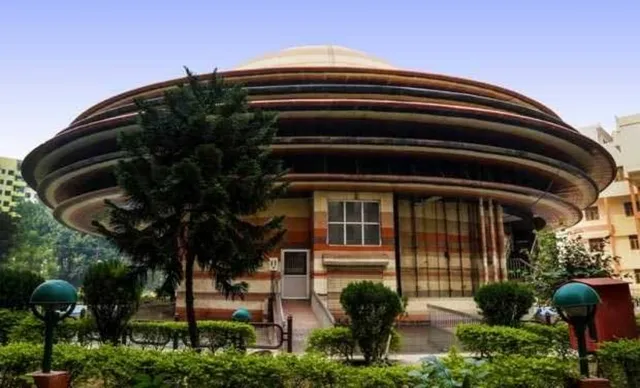
Read morePatna Museum is the state museum of the Indian state of Bihar. Started on 3 April 1917 during the British Raj to house the historical artefacts found in the vicinity of Patna,35] it is in the style of Mughal and Rajput architecture and is known locally as the Jadu Ghar. The Museum was constructed by the British to conserve and display the historical artifacts found in the vicinity of the state capital. The concept of having a museum arose in 1912, after Bihar and Bengal were separated. Patna Museum started functioning in 1915 from the commissioner's bungalow, on the campus of A. N. Sinha Institute.
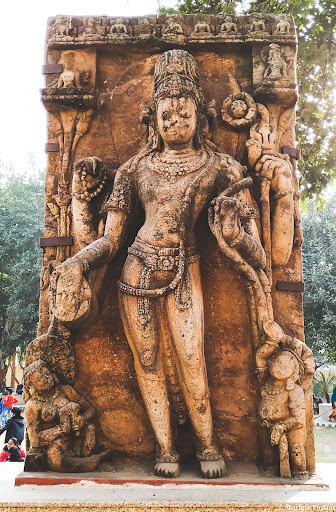
The artifacts were then shifted to new rooms at the Patna High Court building before being taken to the present building in 1929. The land that was selected for the museum, in 1925, was on Patna-Gaya road (now Budh Marg). The two-storeyed building, designed by Rai Bahadur Bishnu Swarup, was completed in 1928.[6 It was opened as the first museum of Bihar and Orissa Province by then Governor of Bihar and Orissa, Sir Hugh Lansdown Stephenson. Items on display in the multipurpose museum include archaeological objects, coins, art objects, paintings, instruments, textiles, paintings, thankas, bronze images and sculptures and terra cotta images by Hindu and Buddhist artists.[1] It has a rare collection of British-period paintings depicting day-to-day life, as well as a fine collection related to the first President of India, Rajendra Prasad. It also houses a World War I cannon.[8]
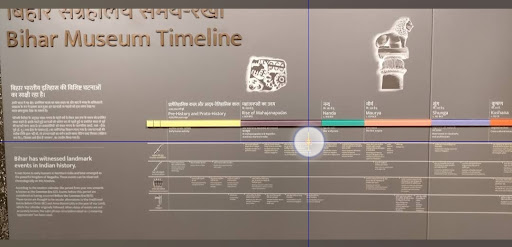
The fossil of a tree said to be more than 200 million years old is on display,[1] as is a casket — unearthed in 1958 by archaeologist, A. S. Altekar, at the Relic Stupa of Vaishali — said to contain the sacred ashes (relics) of Gautama Buddha.[9] A Didarganj Yakshi statue, discovered on a Ganges riverbank in 1917, was the museum's most prized collection,[1] which was later shifted to Bihar Museum. The artefacts from ancient India era to 1764 are kept in Bihar Museum[10] and those of post-1764 period are kept at Patna Museum.[11]
Beginning November 2009, a project was started to build a replacement museum in Patna to enable the display of larger...
Read more