It was set up in Santiniketan in 1942, which remains on the shores of the River Kopai in West Bengal's Birbhum District.
Santiniketan houses the global college of Viswa Bharati, the establishment of which was laid by Gurudev Rabindranath Tagore as a stage where the way of life of the east would meet the west. The recollections of this Nobel Laureate with his own relics, books, photos and voice records are altogether shown in Rabindra Bhavan. There is additionally a general area committed to the letters, depictions by different prominent craftsmen, where even the first original copies of Tagore's compositions are protected appropriately. Admission to the historical center is free.
Top 9 Places To Visit In Bolpur
Here is a list of tourist places in Bolpur where you can head to on your vacation. From ashrams to mela, you will find several places to explore. So, keep scrolling and check them out!
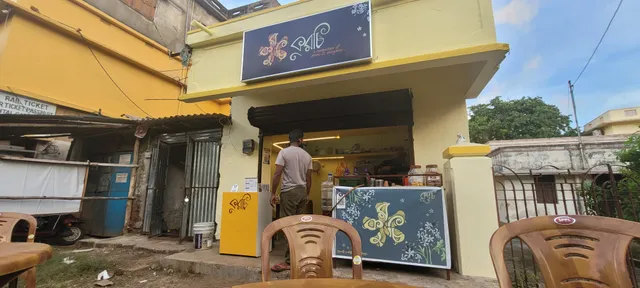
Khoai Mela: Shop Your Heart Out Khoai Mela is a very popular fair in Santiniketan. People from far away places and even foreign tourists flock in huge numbers to visit this fair. The fair is organised under the sky in the shade of trees and is one of the best places to visit in Bolpur. Artists of various kinds attend this fair, setting their stalls on the ground. There is a wide variety of handmade goods that you can get here ranging from hand made notebooks to earrings and clothes for men and women to multiple toys made of forest products for the kids. You can also get a wide range of home decor items made from forest products here. Apart from these, different varieties of furniture made from bamboo are available here. If you get tired of shopping then you can try out the local delicacies which are sold here like Pati Sapta and Mishti Doi. This fair happens only on Saturdays.
Location: Prantik Entry fee: Free Timings: 2 PM – 6 PM
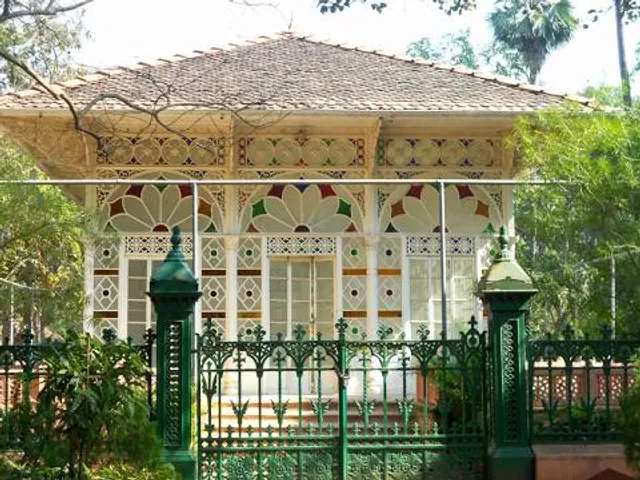
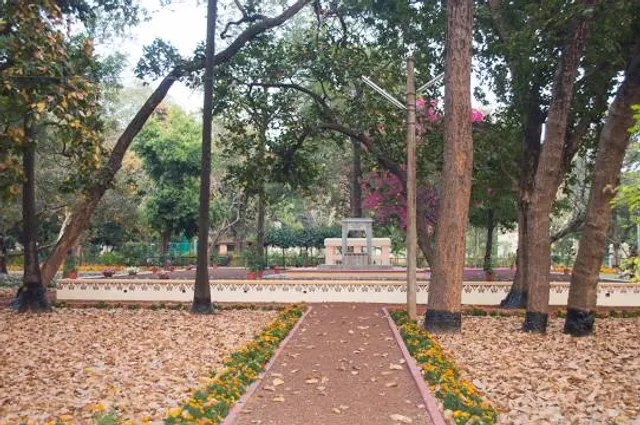
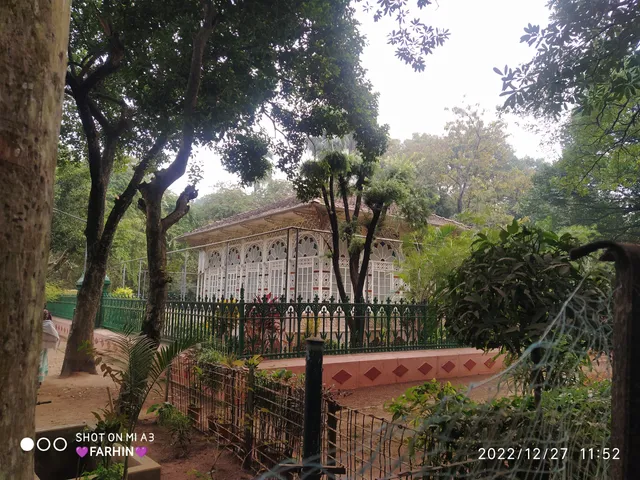
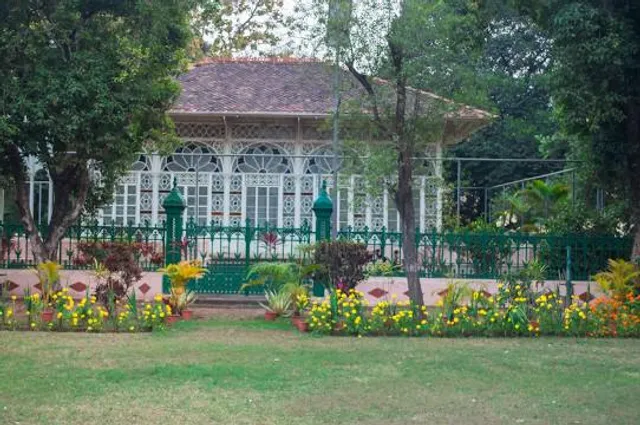
Upasna Ghar: Visit The Amazing Prayer Hall The Upasna Ghar or the prayer hall is situated on the Campus of Visva Bharati University. It is one of the most beautiful places to visit in Bolpur. Upasna Ghar is made from Belgian Glass. It is such m 21 la beautiful building that will leave you awestruck with its beauty. Upasna Ghae is popularly known as Kanch Mandir because its walls are made up of glass along with marble steps build on each side making it one of the most beautiful places to visit in Bolpur. Visitors are allowed to see the building, but only from the outside every day of the week except for Wednesday. It was made by the father of Rabindranath Tagore in the year 1863. Services are offered in the evening during which candles are lit all around the prayer hall. At this period, the building is engulfed in the flickering light of the candles and the view that one gets is truly amazing. The prayer hall is surrounded by gardens from all sides. These well-maintained gardens keep blooming with colorful flowers.
Location: Visva Bharati University Campus Entry fee: Free Timings: Always open but visit preferably in the morning.
Tagore’s Ashram: Get The Glimpse Of His Life
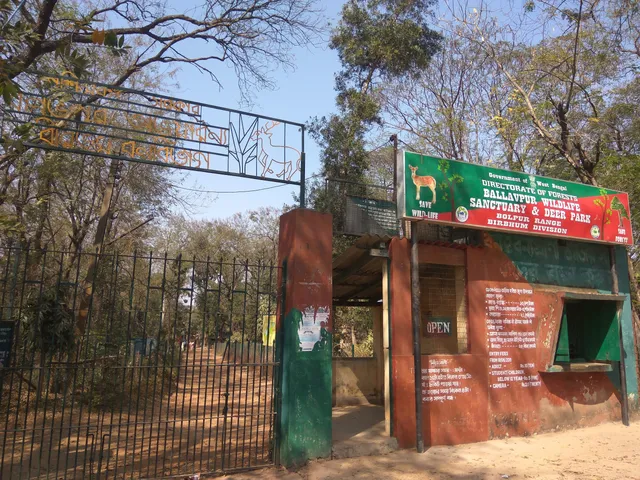
Poush Mela: Relive The Childhood Days Chhatimtala: Perfect Meditation Spot Kankalitala: Explore The Place On Cycle Uttarayan Complex: Go Down The Lane Of Tagore Amar Kutir: The Local Art And Craft Center Ballavpur Wildlife Sanctuary & Deer Park: An Encounter...
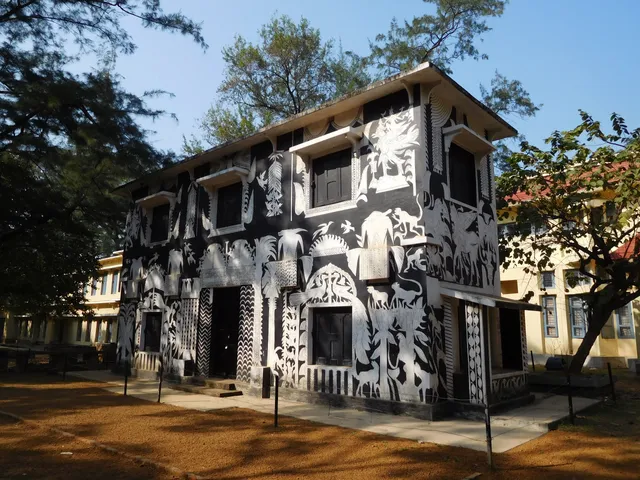
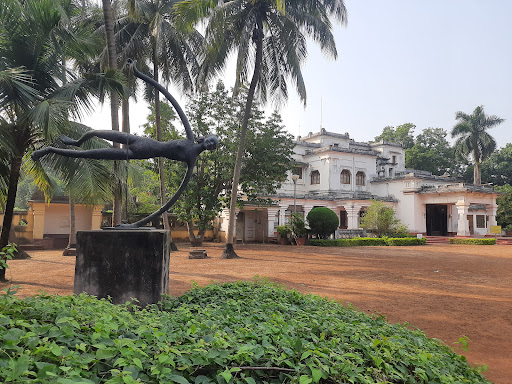
Read moreEstablished in 1942 shortly after Tagore’s death, Rabindra Bhavan serves as both a museum and a research center. It’s part of the Uttarayan Complex, which includes five homes where Tagore lived at different times—Udayana, Konarka, Shyamali, Punascha, and Udichi—each reflecting his evolving architectural tastes and personal philosophy. The museum itself, housed in a building called "Bichitra," was constructed by Tagore’s son, Rathindranath, and opened to the public in 1961. It preserves Tagore’s personal belongings, offering an intimate look into his multifaceted contributions as a poet, playwright, artist, philosopher, and educator.
Exhibits The museum boasts an extensive collection: Manuscripts and Letters: Over 700 original manuscripts, including handwritten works and correspondences with luminaries like Einstein, Gandhi, and Freud.
Paintings: Around 1,580 of Tagore’s own artworks, plus 554 by other artists like Nandalal Bose and Abanindranath Tagore.
Photographs: Over 11,380 images capturing Tagore’s life, family, and global interactions.
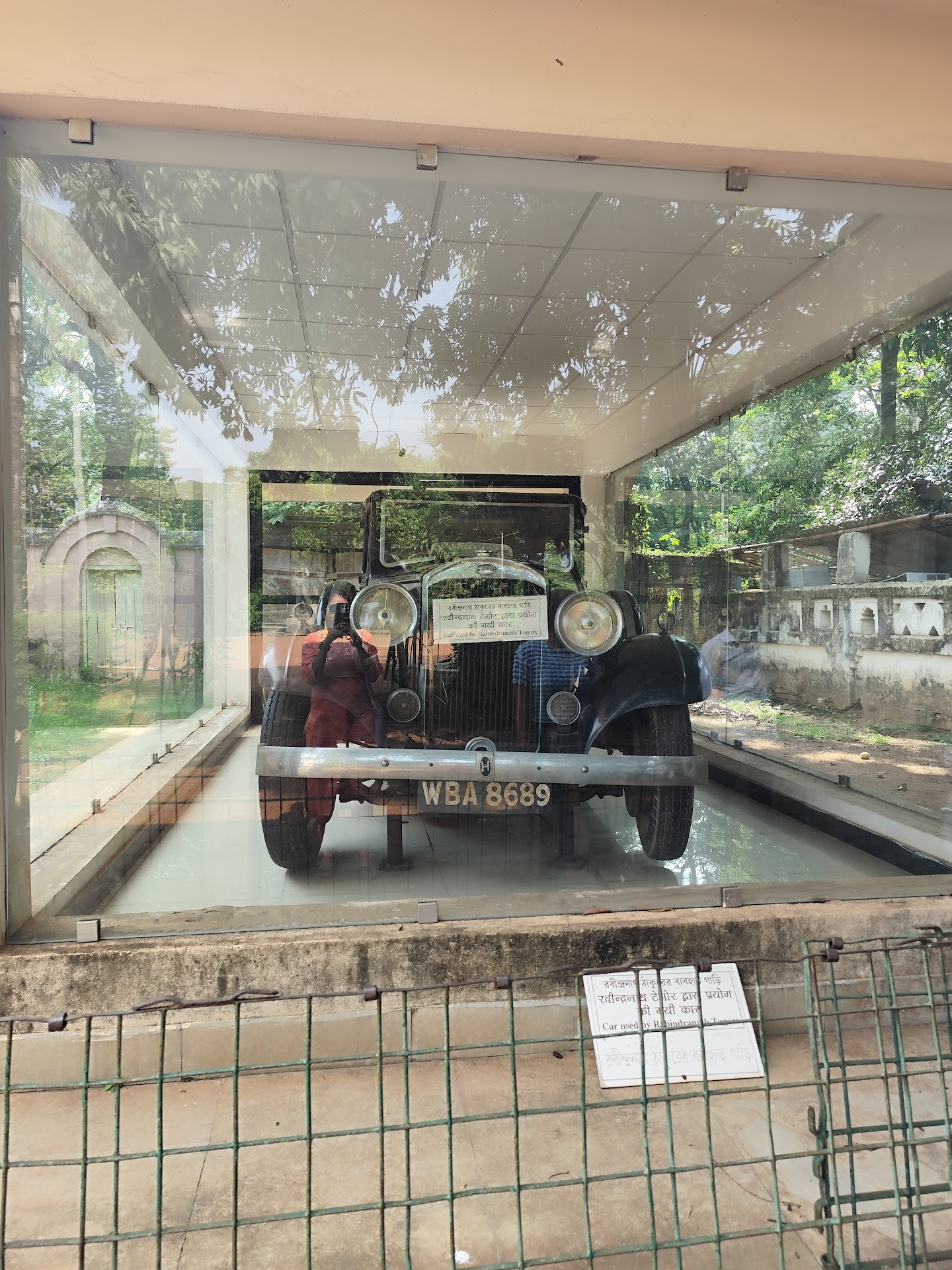
Personal Items: Furniture, his iconic car (a 1930s Humber), a Nobel Prize medallion replica (the original was stolen in 2004), and everyday objects like his pens and spectacles.
Curios and Honors: 3,855 curios, 52 statues, and a collection of certificates and awards, including his 1913 Nobel Prize citation.
The air-conditioned galleries also feature an art section on the ground floor, showcasing Tagore’s family history and Bengal’s cultural heritage. The serene ambiance, thick-walled architecture, and greenery outside enhance the experience.
Visitor Information Entry Fee: As of recent updates, the fee is Rs. 100 per adult, Rs. 20 for students with ID, and Rs. 300 for foreign nationals. Children under 5 enter free. (Note: Your November 2024 visit to Surul Rajbari mentioned a Rs. 10 fee, but Rabindra Bhavan’s pricing aligns with its status as a major attraction.)
Timings: Open Tuesday to Sunday, 10:00 AM to 5:00 PM, with a lunch break from 1:00 PM to 1:30 PM. Closed on Wednesdays and some public holidays (e.g., Republic Day, Holi, Diwali).
Photography: Allowed outside the museum and in the Uttarayan Complex, but prohibited inside the galleries to protect artifacts. No flash or selfies permitted.
Location and Access Distance: About 2-3 km from Bolpur railway station, 160 km from Kolkata.
How to Reach: Take a toto (e-rickshaw) from Bolpur station (Rs. 30 shared, Rs. 100-150 private) or drive via NH 114. The nearest airport is Kolkata’s Netaji Subhas Chandra Bose International, followed by a 3.5-4 hour train or car journey.
Best Time: Winter (November-February) for pleasant weather, aligning with your November visit. Festivals like Poush Mela (December) or Basanta Utsav (Holi) add vibrancy but draw crowds.
Why Visit? Rabindra Bhavan is more than a museum—it’s a pilgrimage for Tagore admirers, offering a deep dive into his genius and Santiniketan’s ethos of blending education, art, and nature. The preserved homes, like Shyamali (a mud house experiment) and Udayana (for distinguished guests), reflect Tagore’s innovative spirit. It’s a must-see alongside nearby attractions like Prakriti Bhavan or Ballavpur...
Read moreFounded in July 1942, just a year after the Poet"s death, Rabindra-Bhavana is an important component of Visva-Bharati. It is, in fact, the focal point of the University. This Bhavana includes among its treasures a very major part of Tagore"s manuscripts, correspondences, paintings and sketches. The poet"s personal library is here and various objects used by him, his voice-recordings and thousands of photograph taken of him at different times and places and the many gifts, honours and addresses which he received from different parts of the world have enriched the Bhavana"s archival holdings.
Archives
The holding in the archives section include several hundred manuscript volumes and files of the works of Rabindranath in Bengali and English. Detailed description of all items in the archives is provided in the Catalogue-in-progress. 1018 volumes of manuscripts, correspondences(1471 files) and other materials may be consulted by bonafide scholars in the original or in microfilm in the archives section with the approval of the Director, Rabindra-Bhavana.
Library
The library has over 40000 volumes of books and over 12000 bound journals. It also includes in its collection the personal library of Rabindranath. Different editions of the Poet"s works, books on and translated works of Rabindranath form the core of this library. A valuable section is the Pamphlet Collection which includes programme souvenirs of Rabindranath"s plays, various monographs, old and rare bulletins published by Visva-Bharati.
Museum
The museum housed in the Bhavana, comprising of a permanent display section and the five homes lived in by Tagore, collectively referred to as the Uttarayan Complex, attracts thousands of visitors. The architecture of the houses, the interior decoration, the pieces of furniture strewn about the rooms bring to life the persona of Tagore. This unit of Rabindra-Bhavana has 1580 original paintings of Rabindranath and 554 by others. The photograph collection (11380), the curio collection (3855) and 52 statues. The collection of addresses and certificates also form important sections of this unit. A detailed and descriptive list of the paintings and their items in the museum unit has been serially published in the Catalogue-in-progress. An important aspect of Bhavana activities is to mount exhibitions in "Vichitra". Drawing upon its own rich collection of photographs and other memorabilia, exhibitions depicting different themes from the poet"s life, are held regularly...
Read more