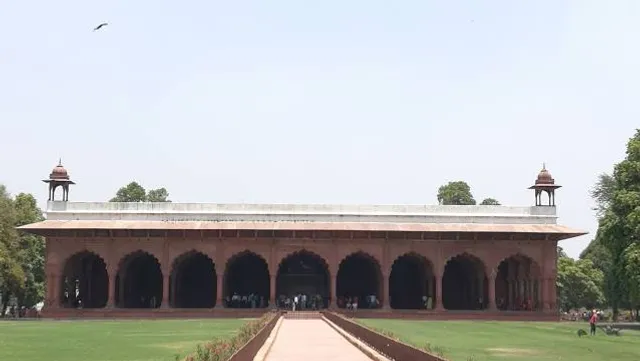
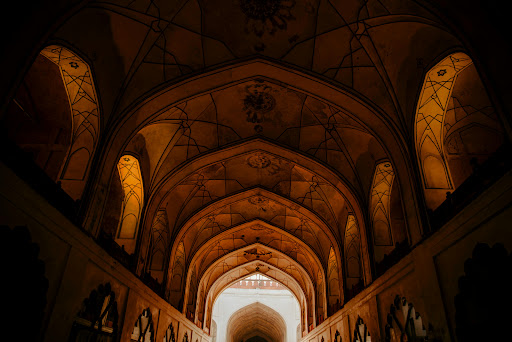
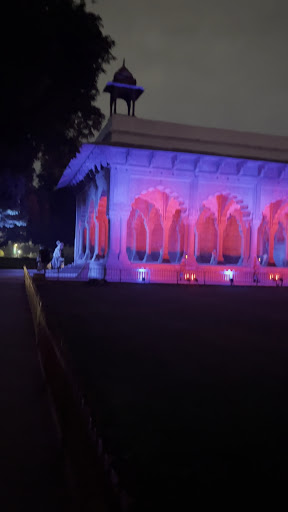
The Diwan-i-Am (Hall of Public Audience) is a significant part of the Red Fort in Delhi, India. It served as a space where the Mughal emperors, particularly Shah Jahan, would meet with the general public and hear their grievances or requests.
Key Features:-
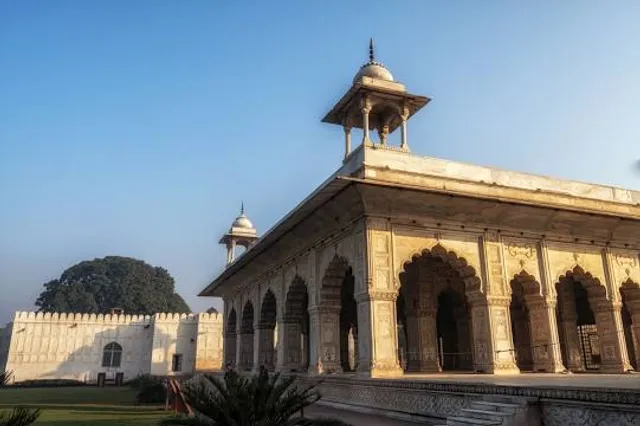
Architecture: The Diwan-i-Am is an open hall with a flat roof, supported by elegant sandstone pillars. The hall's design reflects a blend of Persian, Indian, and Timurid architecture, showcasing the grandeur and sophistication of the Mughal era.
Structure: The hall is divided into three sections and has a raised platform or throne (called the jharokha) at the back where the emperor would sit. The central marble canopy, intricately carved and inlaid with semi-precious stones, marked the place where the emperor’s throne was positioned.
Location within Red Fort: The Diwan-i-Am is located near the entrance of the Red Fort and was a space open to the public, unlike the Diwan-i-Khas (Hall of Private Audience), which was reserved for private meetings with nobles and dignitaries.
History:-
Built by Shah Jahan: The hall was constructed between 1639 and 1648 by Emperor Shah Jahan during the peak of the Mughal Empire. It was used for official state functions, including addressing public petitions, administering justice, and making important proclamations.
Symbol of Justice: The Diwan-i-Am represented the Mughal tradition of public justice and the ruler’s connection with his subjects. It was a powerful symbol of the emperor's role as the supreme arbiter of justice.
Reviews and Visitor Experience:
Pros: Visitors are often impressed by the hall’s grandeur, the fine craftsmanship of the marble throne, and its historical significance as a place where Mughal emperors interacted with their subjects. It’s an important part of the Red Fort complex, which is a UNESCO World Heritage Site.
Cons: The hall itself may not be as visually striking as some of the more ornate structures in the Red Fort (like the Diwan-i-Khas or the Moti Masjid), but it is valuable for its historical importance.
Why Popular:
Cultural Significance: The Diwan-i-Am is crucial to understanding Mughal governance and architecture, offering insights into the relationship between the emperor and the public.
Best for: History enthusiasts, architecture lovers, and tourists visiting the Red Fort who want to explore the different aspects of Mughal-era architecture and governance.
Fun Fact:
The Persian poet Firdausi's famous lines, "If there is a paradise on Earth, it is here, it is here, it is here," were inscribed in a hall in the Red Fort, showing the Mughal fascination with beauty and opulence. The Diwan-i-Am, though not as elaborate as other sections, represents the power and grandeur of the Mughal rule.
Visiting the Diwan-i-Am is an essential part of exploring the vast and historically rich Red Fort complex in Delhi, a monument that holds immense cultural and architectural value in...
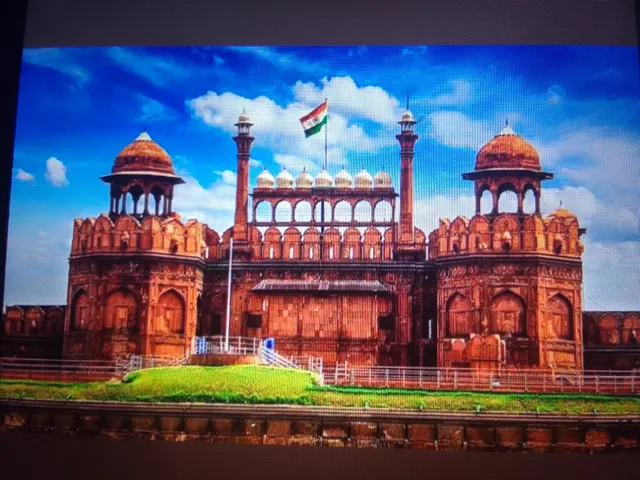
Read moreDiwan I Aam as the name suggested is the meeting place of Mughal Emperor with the common people to sort out their grievances. It is a hall, open in three sides and backed by set of rooms. The chair of Emperor or the Singhasana is still there in a glass room. There are some grass fields also there on which you can sit. This was the public audience hall area of the Mughal Emperors dating back to the 1650's. The Emperor sat on his high throne and heard applications from the public and hand down his rulings in the matter. There was a secret viewing area behind the throne were the ladies watched proceedings . Very interesting part of the Red Fort. As is known, "the fifth Mughal ruler, Shah Jahan, claiming that the streets of Agra were too narrow for imperial processions, moved the capital to Delhi, returning to the seat of Islamic conquest" (Catherine B. Asher, 1993). This shift was providential for the Agra Fort, which has survived until today relatively well preserved, while the Red Fort in Delhi (a more important city, and since 1912 also the capital of British India) has suffered much more restructuring. and destruction due to re-use phenomena. This is also seen by the Diwan-i-Am of Delhi, which, although relatively well preserved in its basic structures, suffered because the Red Fort was a place of British military garrison: the military had other priorities that the heritage preservation. Of course, knowing that this is a Diwan-i-Am, that is "public hearing room", we are able, despite the ravages of time, to place the practice of Mughal public hearings in its proper context, as a fundamental moment of their ruling: the Shah shows itself to the people both because he has this a duty towards it, and because doing so he manifests its own semi-divine nature. And we can in turn insert the Diwan-i-Am into the general tradition / topography of the Mughal imperial palaces, masterfully described (once again) by Catherine B. Asher: breaking with the Timurid tradition from which the Mughal rulers came (Asher cites in this regard the case of Samarqand), and instead adapting to the Indian tradition that preceded them, “most Mughal palaces are on the edge of a river or lake and at the same time at the earth of the city”. Always in accordance with the Indian tradition, despite the central position these Mughal palaces ensure privacy - as well as security - through the walls (which the Timuridi palaces, being out of town, mostly didn't have them). Sunday 11th February and we visited The Red Fort and this building was one of the highlights of this amazing historic building.
This stunning tall red stone building with its scalloped high archways is the place where Shah Jahan received the general public and heard their grievances.
The throne area is now behind glass to protect the structure.
Well worth a visit while...
Read moreVisiting Diwan-i-Aam in Delhi was an absolute delight! As a history enthusiast, I had heard fascinating stories about this iconic structure, and I couldn't wait to explore it in person. Let me tell you, it exceeded all my expectations.
Upon entering the premises, I was immediately struck by the grandeur of the architecture. The majestic red sandstone walls and intricately carved columns were a testament to the rich Mughal heritage. The attention to detail was simply awe-inspiring, showcasing the mastery of the craftsmen who worked on this marvel.
The knowledgeable and friendly staff at Diwan-i-Aam added to the experience. They greeted me warmly and provided a brief but insightful introduction to the history of the place. Their passion for the subject was evident, and it made the visit all the more engaging.
Exploring the Diwan-i-Aam itself was like stepping back in time. The spacious hall, adorned with elegant arches and decorated with exquisite motifs, transported me to the days when it served as the royal court for the Mughal emperors. It was easy to imagine the grand assemblies and important deliberations that took place within those walls.
What truly stood out to me was the audio guide provided. It was informative, well-paced, and expertly narrated, breathing life into the history and significance of Diwan-i-Aam. The audio guide enhanced my understanding of the architecture, the purpose of the hall, and the cultural context surrounding it. I highly recommend making use of this resource.
The atmosphere within Diwan-i-Aam was serene and tranquil. Despite being a popular tourist spot, it never felt crowded, allowing me to appreciate the beauty and ambiance at my own pace. The spacious courtyard outside was a perfect spot for contemplation, and the surrounding gardens added a touch of tranquility.
If you have a keen interest in history or appreciate stunning architecture, a visit to Diwan-i-Aam is a must. The experience is truly enriching, and it offers a glimpse into Delhi's glorious past. Whether you're a local or a tourist, this historical gem should be on your itinerary.
Overall, my visit to Diwan-i-Aam was an unforgettable experience. I left with a deeper appreciation for the cultural heritage of Delhi and a desire to explore more of its historical treasures. I highly recommend this place to everyone, and I can't wait to return to delve further into India's...
Read more