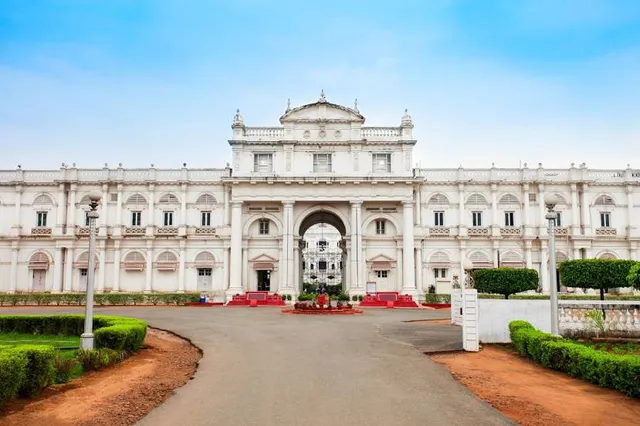
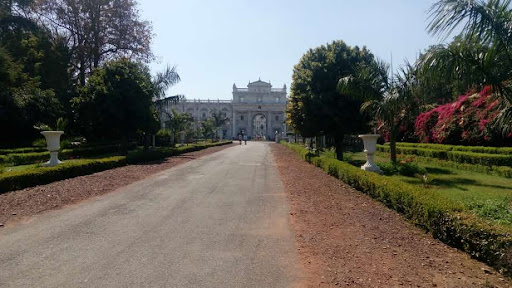
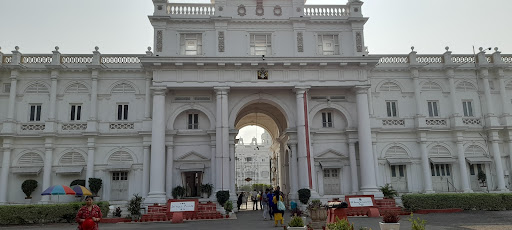
It is a fine example of European architecture, designed and built by Sir Michael Filose.[2] A combination of architectural styles, the first storey is Tuscan, the second Italian-Doric and the third Corinthian. The area of the Jai Vilas palace is 124,771 square feet and it is known for its large Durbar Hall. The interior of the Durbar Hall is decorated with gilt and gold furnishings and adorned with a huge carpet and gigantic chandeliers. It is 100 feet long, 50 feet wide and 41 feet in height. The palace was described by Sir William Howard Russell in 1877[3]
The Palace covers an area of 124,771 square feet, exclusive of the inner square, which is 321 by 321% feet. The building is double-storied, and the wings and turrets are three- and five-storied. Its total length is 106 feet. The first story is Tuscan, second Italian Doric, and the third Corinthian order of architecture. The interior of the Reception-room is 97 feet 8 inches long by 50 feet broad, and it is 41 feet in height. The roof is arched with stone slabs 21 feet long, which enabled the architect to make the ribs prominent. They rest at each end on double Corinthian columns, which form a colonnade round the interior. The interior and exterior of the Palace form a combination of arcades and colonnades. Upwards of 300,000 leaves of gold were‘used to decorate the Reception-hall. The Grand Staircase-room is roofed with stone slabs 30 feet long; the room opposite to it is roofed in the same way. This room was used for dancing. The length of each of these rooms is 50 feet. The Grand Drawing-room, one of the finest saloons in the world, is hung with wonderful chandeliers, and decorated with enormous mirrors. The Prince's bedstead, washing service, and bath were of solid silver. The cost of the Palace was a little above 1,100,000 rupees. But the garden-walls, iron railings, gardens, furniture, glass, grand staircase, chandeliers, etc, cost about 500,000 rupees more. The area of the garden is about one square mile; there are several waterfalls and a number of fountains in it.[3]
A large room preserves the desk and photographs of Madhavrao Scindia, who served as the Railway Minister of India. Many of the rooms, including drawing rooms, bed rooms and bath rooms, have been preserved just as they were lavishly decorated for the royal family.[4] The royal kitchen, with its furnaces, pots, china etc have been preserved. Supposedly, eight elephants were suspended from the durbar (royal court) hall ceiling to check it could cope with two 12.5m-high, 3.5-tonne chandeliers with 250 light bulbs, said to be the...
Read moreJai Vilas Palace, located in Gwalior, India, is a magnificent architectural marvel that beautifully combines European and Indian architectural styles. Constructed in the late 19th century by Maharaja Jayaji Rao Scindia of the Maratha Empire, this opulent palace stands as a testament to the grandeur and affluence of the Scindia dynasty.
The architecture of Jai Vilas Palace is a striking blend of Italian, Tuscan, and Corinthian styles, featuring ornate domes, imposing columns, and intricately designed interiors. The imposing structure sprawls across an area of around 75 acres and is divided into several sections, each showcasing a different aspect of the era's grandeur.
The most famous part of the palace is the Durbar Hall, an extravagant space adorned with gold furnishings, Belgian chandeliers that weigh several tons, and intricately designed carpets. The hall houses two of the world's largest chandeliers, each weighing over three tons and boasting stunning crystal work.
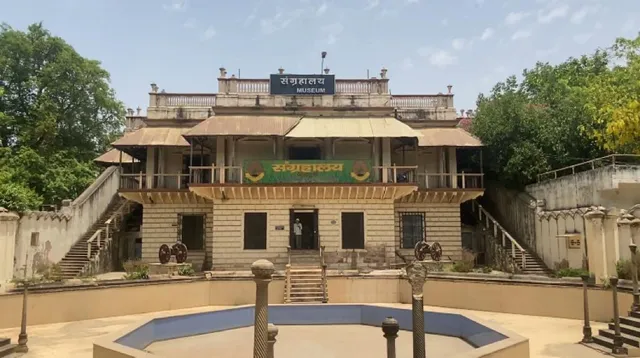
Visitors can explore the palace's museum, which exhibits a fascinating collection of antiques, artifacts, and memorabilia, including weaponry, royal carriages, rare coins, and exquisite silver and gold items. The museum also features a display of the world's largest pair of chandeliers mentioned earlier.
Jai Vilas Palace offers guided tours that take visitors through the various rooms and halls, narrating the rich history and cultural significance of each space. The ticket prices for entry to the palace usually include the guided tour, providing visitors with an immersive experience into the opulent lifestyle of the Scindia royalty.
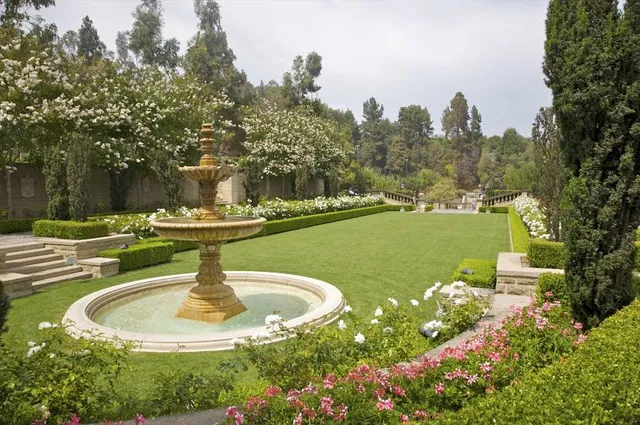
The palace grounds are meticulously landscaped, adorned with lush gardens, fountains, and marble pathways, adding to the overall grandeur of the complex. Visitors can also witness the grandeur of the royal lifestyle by viewing the vintage cars and Rolls Royces that are on display within the palace premises.
Additionally, the palace serves as the residence of the Scindia family, preserving its historical and cultural legacy while continuing to play a vital role in contemporary Indian royalty.
Exploring Jai Vilas Palace offers a glimpse into the lavish lifestyle of Indian royalty and serves as a significant cultural and historical landmark, attracting tourists and history enthusiasts from...
Read moreJai Vilas Palace in Gwalior, a remarkable example of European architecture, was designed and constructed in the 19th century by Lt. Col. Sir Michael Filose (1832–1925), the Chief Secretary and Director of Public Instruction of Gwalior. The palace, built in a blend of Mughal and Medieval architectural styles, serves as a royal residence for the Scindia family, who originated from Maharashtra and settled in Gwalior during their rule.
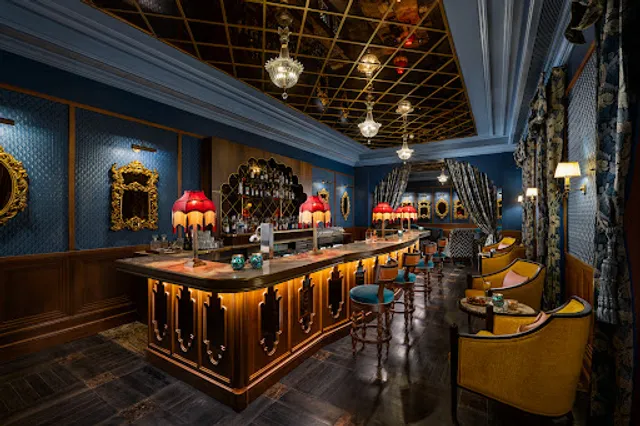
With 440 rooms, the palace showcases Italian design and grandeur. While a significant portion of the property has been converted into a museum, another part is used as a private residence by the Scindia family. A section of the property has also been transformed into a five-star hotel operated by the Tata Group, known as Tata Usha Kiran.
The museum, spread across 40 rooms, offers an extensive collection of artifacts, paintings, dresses, crockery, utensils, chariots, palanquins, and other items showcasing the royal lifestyle. Notable exhibits include the second-largest pair of chandeliers in the world, weighing three and a half tons each, and a silver train with cut-glass carriages used to serve meals in the dining hall.
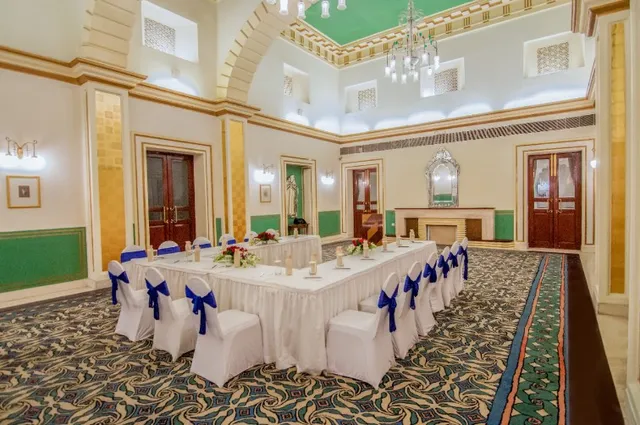
The Durbar Hall, with its intricate detailing and massive chandeliers, stands out as a highlight, reflecting the opulence of the palace. Visitors can also explore a gallery showcasing various types of early firearms, adding an informative touch for history enthusiasts.
Although the museum is well-laid out, some areas show signs of aging and could benefit from better maintenance and signage. Entry is priced at ₹300, which is relatively high compared to other attractions in Madhya Pradesh. Visitors must leave their bags, including water bottles, at the entrance, where lockers are provided.
The palace's surrounding gardens enhance its charm, providing a serene and picturesque setting. Overall, Jai Vilas Palace offers a fascinating glimpse into the Scindias' opulent lifestyle and the history of India before independence. It is a must-visit for history buffs and anyone interested in exploring the grandeur of...
Read more