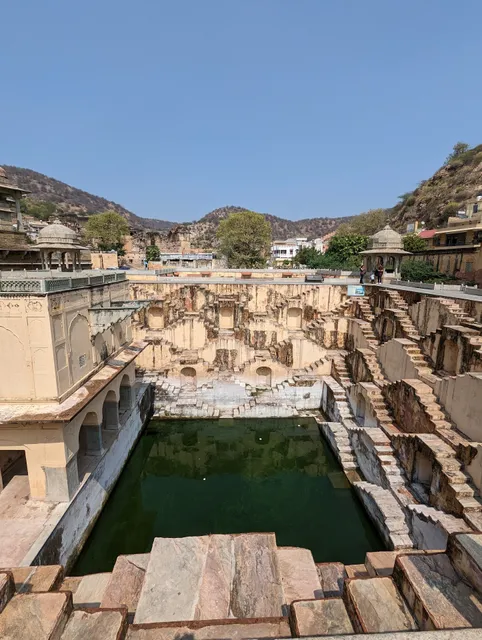
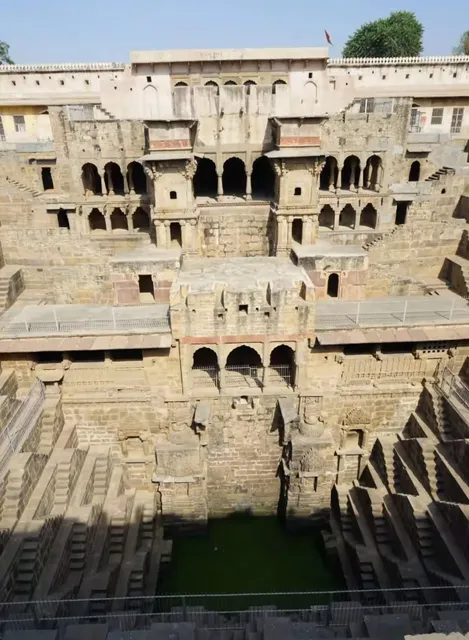
Amer Stepwell, also known as Panna Meena Ka Kund, is a remarkable historical structure that reflects the architectural and cultural ingenuity of the past. Here's a detailed review of Amer Stepwell:
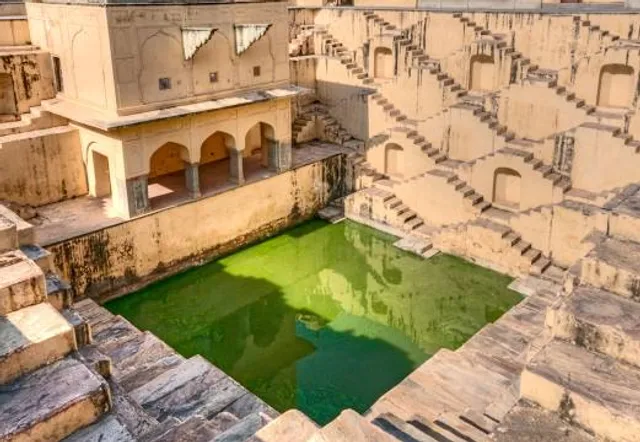
Architectural Brilliance: Amer Stepwell is an architectural marvel that showcases the intricate craftsmanship and engineering prowess of the era in which it was built. Its multi-level design features symmetrical steps, balconies, and galleries that create a visually striking and harmonious composition.
Function and Purpose: The stepwell served both utilitarian and cultural purposes. Stepwells were primarily designed to store and provide access to water, especially during the arid months. In addition to this essential function, they also served as social hubs, offering a cool and tranquil space for people to gather, rest, and socialize.
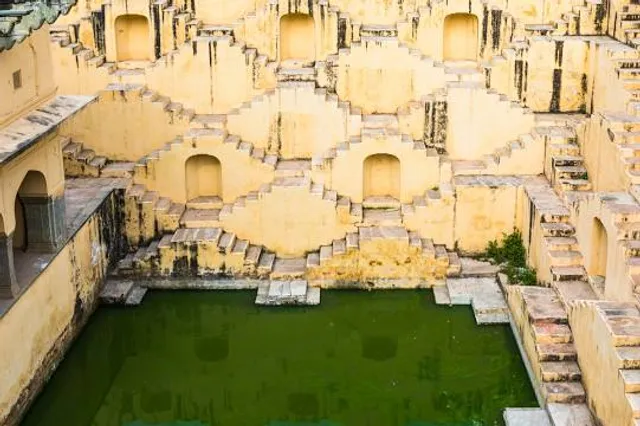
Symmetry and Aesthetics: The meticulous symmetry of Amer Stepwell is one of its most captivating features. The repetitive patterns of steps, arches, and niches create a sense of rhythm and visual harmony. The intricate carvings and ornamentation on the walls further enhance its aesthetic appeal.
Geometric Precision: The stepwell's design follows a geometric precision that not only adds to its visual allure but also highlights the mathematical understanding of the architects and artisans who constructed it.
Photography Opportunities: For photography enthusiasts, Amer Stepwell offers a wealth of opportunities to capture stunning shots. The interplay of light and shadow on the steps and walls, as well as the symmetrical patterns, make it a captivating subject to photograph.
Historical Significance: Amer Stepwell provides insights into the historical importance of water management in Rajasthan's arid climate. It also offers a glimpse into the daily lives of the people who depended on these wells for their water needs.
Visitor Experience: Visiting Amer Stepwell offers a unique experience that combines exploration with appreciation for historical architecture. As you descend the steps into the well, you'll not only gain a deeper understanding of its design but also feel a sense of connection to the past.
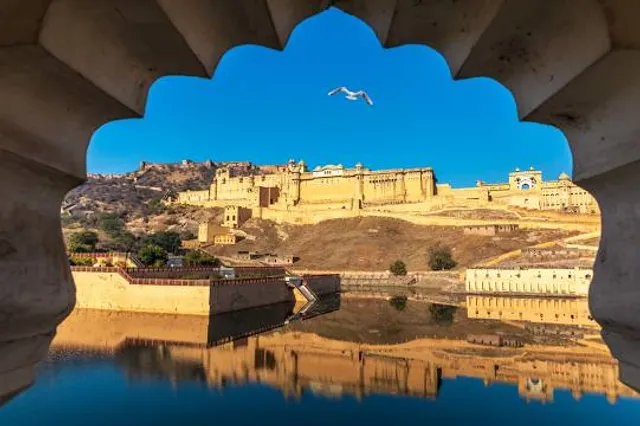
Accessibility and Location: Amer Stepwell is conveniently located near Amer Fort, one of Jaipur's prominent attractions. Its proximity to the fort makes it an accessible and rewarding addition to your itinerary.
Cultural Heritage: Amer Stepwell is a testament to the cultural heritage and architectural traditions of the region. It provides a link to the historical practices of water conservation and community gathering that were integral to the lifestyle of that time.
Preservation Efforts: While the stepwell is a testament to the past, its preservation efforts today ensure that future generations can appreciate its beauty and historical significance. It's heartening to see initiatives aimed at maintaining these heritage sites for posterity.
In conclusion, Amer Stepwell is more than just a historical structure; it's a glimpse into the past, a lesson in architectural excellence, and a window into the cultural practices of the region. Its symmetrical beauty, historical context, and photography potential make it a must-visit for those exploring the rich heritage...
Read moreIn the northern Indian states of Rajasthan and Gujarat, the problem of water is a profound one. At the edge of the Thar desert, the area sees torrential seasonal monsoons, and then watches the water disappear almost immediately. With summers routinely over 100 degrees, and silty soil that would not hold water in ponds, a practical solution was needed for locals and travelers along the local trade routes.
In the first century, the slippery shores of the major rivers were tamed by the construction of ghats, long, shallow sets of stairs and landings. The same approach was applied to the construction of a new kind of well.
The earliest stepwells most likely date to about 550, but the most famous were built in medieval times. It is estimated that over 3,000 stepwells were built in the two northern states. Although many have fallen into disrepair, were silted in at some point in antiquity, or were filled in with trash in the modern era, hundreds of wells still exist. In New Delhialone, there are more than 30.
Chand Baori in Abhaneri, near Jaipur, Rajasthan, is among the largest, if not the largest, of the stepwells. It is also perhaps the most visually spectacular: Chand Baori is a deep four-sided structure with an immense temple on one face. Some 3,500 Escher-esqe terraced steps march down the other three sides 13 stories to a depth of 100 feet. The construction dates to the 10th century, and is dedicated to Harshat Mata, goddess of joy and happiness.
Water plays a special part in Hindu mythology, as a boundary between heaven and earth known as tirtha. As manmade tirtha, the stepwells became not only sources of drinking water, but cool sanctuaries for bathing, prayer, and meditation. The wells are called by many names. In Hindu they are baori, baoli, baudi, bawdi, or bavadi. In Gujarati, spoken in Gujarat, they are commonly called vav.
The architecture of the wells varies by type and by location, and when they were built. Two common types are a step pond, with a large open top and graduated sides meeting at a relatively shallow depth. The stepwell type usually incorporates a narrow shaft, protected from direct sunlight by a full or partial roof, ending in a deeper, rounded well-end. Temples and resting areas with beautiful carvings are built into many of the wells. In their prime, many of them were painted in bright colors of lime-based paint, and now traces of ancient colors cling to dark corners.
The use and conditions of stepwells began to decline in the years of the British Raj, who were horrified by the unsanitary conditions of these drinking water bathing spots. They began to install pumps and pipes, and eventually outlawed the use of stepwells in some places.
The remaining stepwells are in varying states of preservation, and some have gone dry. Local kids seem to find the ones with water to be terrific diving spots, which seems...
Read moreTucked away in the heart of the old Amber city, the Amer Stepwells (Panna Meena ka Kund) are a quiet yet striking reminder of how advanced and sustainable ancient Indian engineering truly was. These geometric stepwells were designed not just for water conservation, but as places of gathering, rest, and reflection—especially during the intense Rajasthani summers.
As you stand before the kund, the symmetrical crisscross of steps feels almost hypnotic, showcasing a kind of beauty that lies in precision and purpose. It’s not just architecture—it’s function meeting form in the most graceful way.
What makes this place even more special is its setting. Surrounding the stepwell is a harmonious blend of the old and the evolving new—Amber’s living heritage still intact in its narrow lanes, faded walls, and quiet whispers of history.
Just beside the kund stands a temple dedicated to Lord Shiva, believed to be the spiritual foundation behind the very name “Amer” or “Ambikeshwar,” derived from “Ambikeshwar Mahadev”—the ancient Shiva temple nestled close by. Many locals believe that no visit to Amber is truly complete without offering prayers here.
Take your time around the stepwell, then wander into the old town—you’ll discover hidden courtyards, forgotten archways, and a city that continues to live in the shadow of its majestic past. Amer is not just a destination; it’s an...
Read more