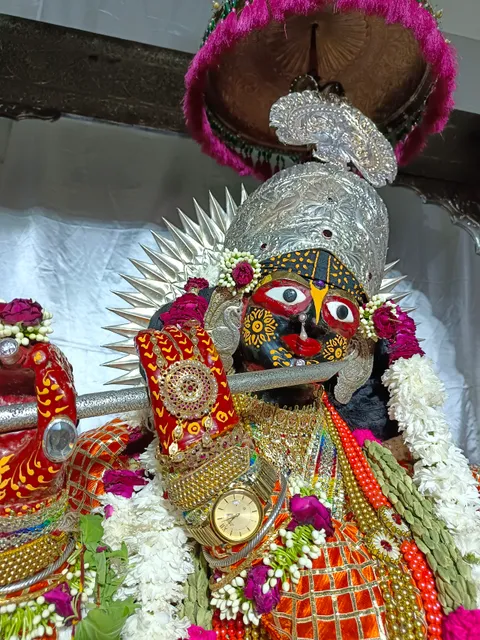
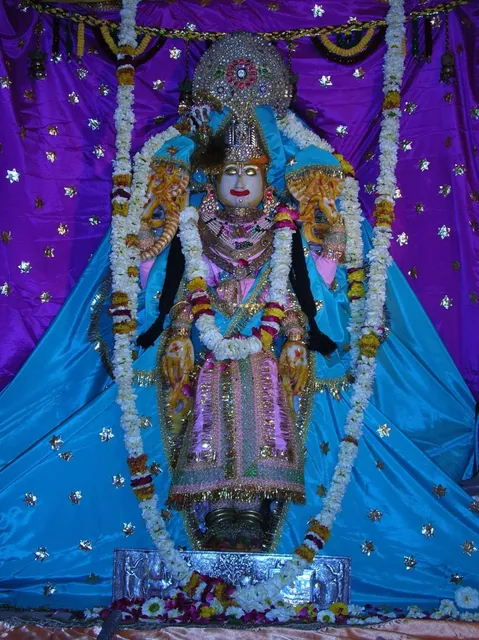
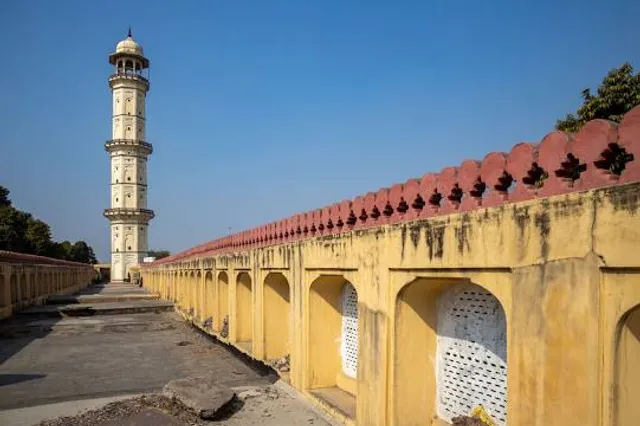
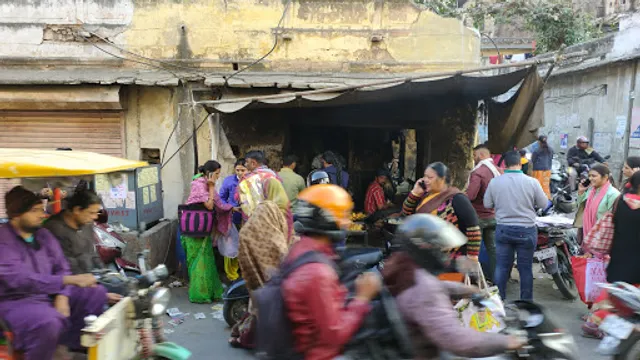
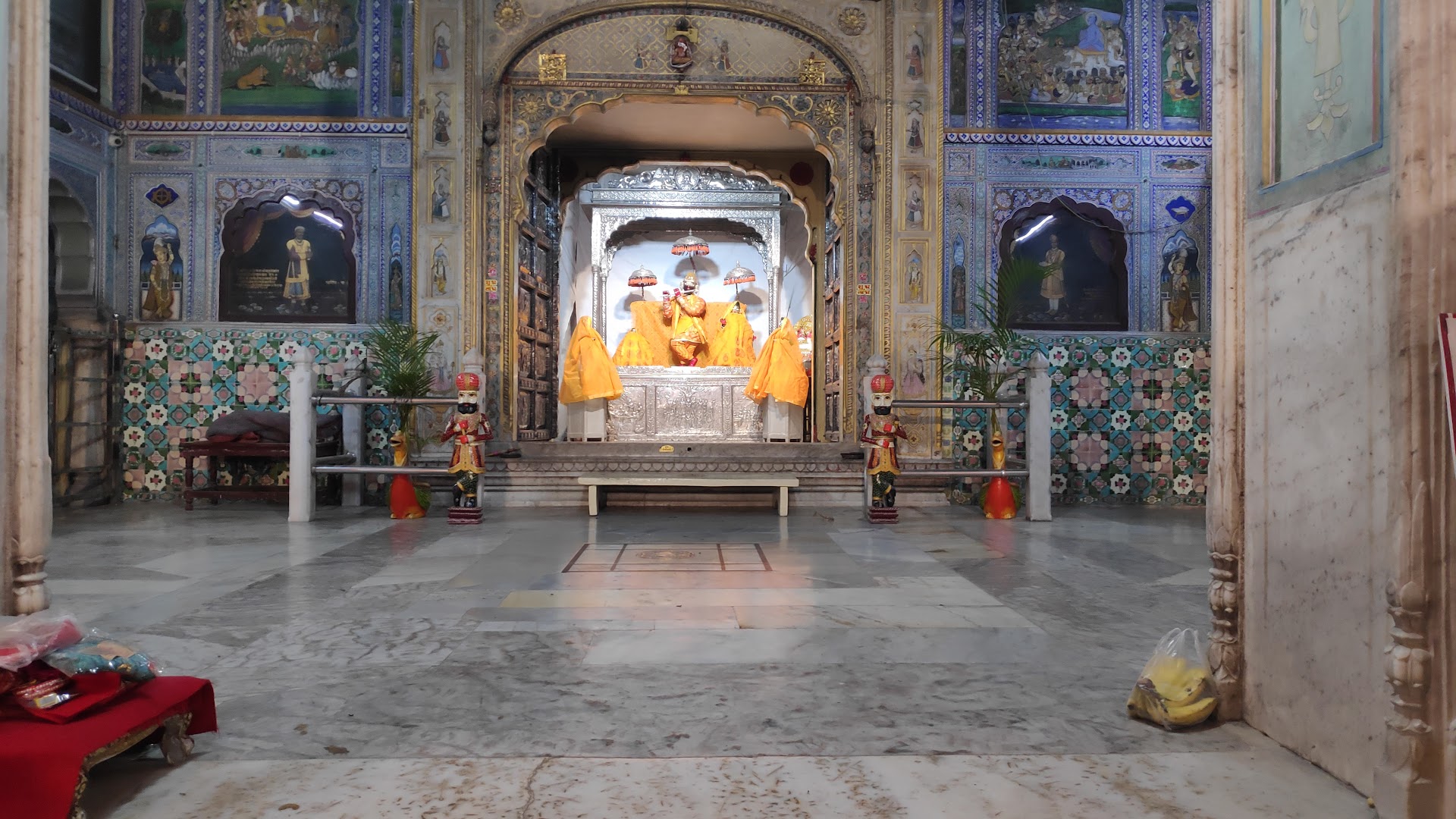
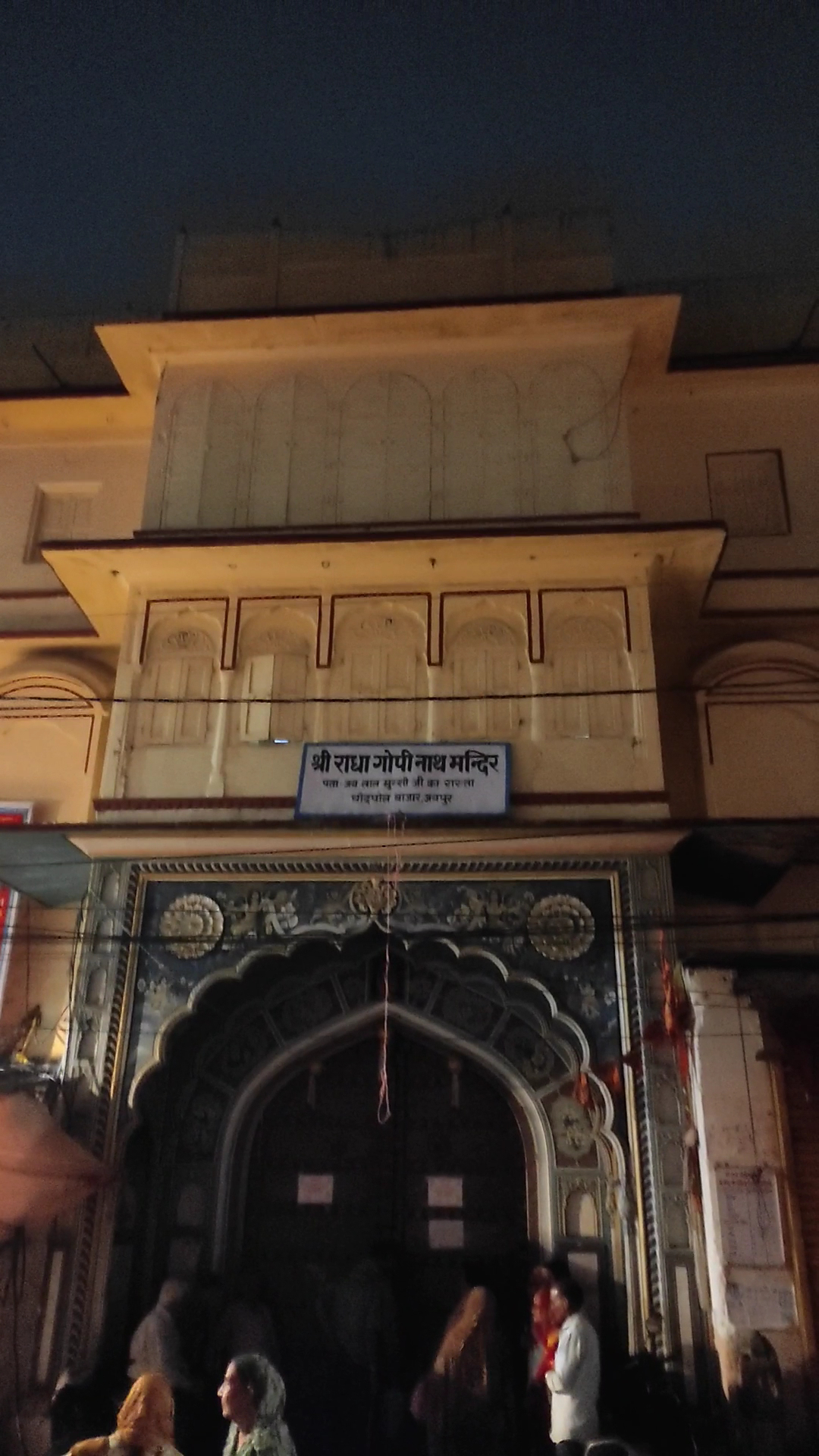
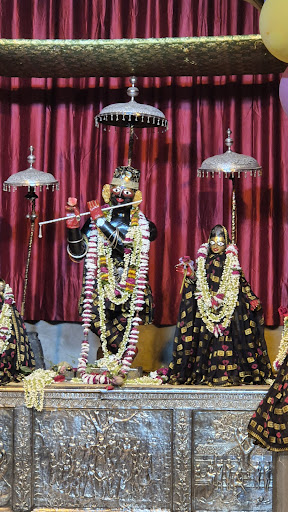
The Shri Radha Gopinath Ji Temple in Jaipur is a revered Hindu temple dedicated to Lord Krishna (Gopinath) and his consort, Radha. It is one of the prominent temples in the city, known for its spiritual ambience, intricate architecture, and historical significance.
Key Features of Shri Radha Gopinath Ji Temple:
Deities: The temple is primarily dedicated to Lord Krishna through Gopinath and his eternal consort, Radha. The idols of Radha and Gopinath are beautifully adorned and are the central attraction of the temple.
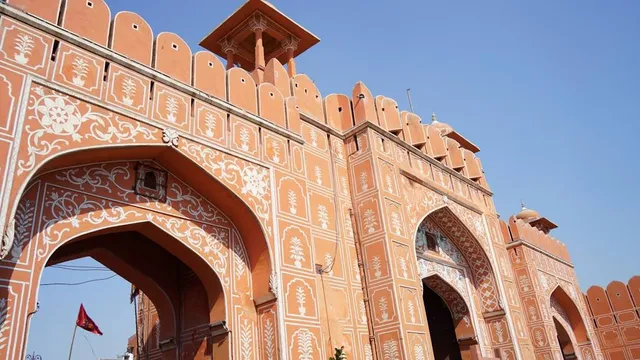
Architecture: The temple boasts traditional Rajasthani architecture, with intricate carvings and detailed frescoes that depict scenes from the life of Lord Krishna. The craftsmanship reflects the rich cultural heritage of Jaipur and Rajasthan.
Historical Significance: The temple has a deep historical and cultural connection with the region. It is believed that the idol of Gopinath was brought to Jaipur from Vrindavan, the land of Lord Krishna, by devotees seeking refuge from the invasion of Mughal forces.
Religious Importance: The Shri Radha Gopinath Ji Temple is a centre for Vaishnavism, a major Hindu tradition that worships Lord Vishnu and his avatars, particularly Krishna. The temple is a pilgrimage site for devotees who offer prayers and seek blessings.
Festivals and Celebrations: The temple is particularly vibrant during festivals such as Janmashtami (the birth of Lord Krishna), Radhashtami (the birth of Radha), and Holi. These festivals are celebrated with great enthusiasm, attracting thousands of devotees. The temple is beautifully decorated, and special rituals, kirtans (devotional songs), and dance performances are held.
Daily Rituals: The temple conducts daily rituals (pujas) with utmost devotion. The day starts with Mangala Aarti (early morning prayers) and includes several prayers, bhajans (devotional songs), and offerings to the deities. The Sandhya Aarti (evening prayers) is particularly significant and draws many devotees.
Location and Accessibility: Situated in Jaipur, the capital city of Rajasthan, the temple is easily accessible by road. It is a must-visit for those exploring the spiritual and cultural heritage of the region.
Visiting the Temple: Dress Code: Visitors are expected to dress modestly, covering their shoulders and knees as a mark of respect. Timings: The temple is usually open from early morning till late evening, with specific times for different rituals and aarti (worship ceremonies). Offerings: Devotees often bring offerings such as flowers, sweets, and fruits, which are offered to the deities during the rituals.
The Shri Radha Gopinath Ji Temple is not just a place of worship but also a cultural landmark in Jaipur, embodying the devotion and artistic heritage of the region. It is a serene place where visitors can experience peace and spiritual fulfilment amidst...
Read moreWhen visiting the Govind Dev Ji Temple in Jaipur, Rajasthan, travelers should consider several facts and points to enhance their experience:
Historical Significance: Govind Dev Ji Temple is one of the most important temples in Jaipur, known for its historical and cultural significance. It's dedicated to Lord Krishna and is an integral part of the City Palace complex.
Architectural Marvel: The temple showcases magnificent Rajasthani architecture, featuring intricately carved marble and vibrant paintings. Visitors can admire the detailed craftsmanship and design elements.
Religious Rituals: The temple is a hub of religious activities, especially during festivals like Janmashtami (Lord Krishna's birthday) and Holi. Travelers can witness various rituals, including Aarti and Bhog offered to the deity.
Dress Code: Since it's a religious site, visitors are expected to dress modestly and respectfully. Avoid wearing revealing clothes and make sure to cover your shoulders and knees.
Photography Restrictions: Some areas of the temple might have restrictions on photography. Respect the rules and regulations regarding photography to maintain the sanctity of the place.
Crowd Management: Govind Dev Ji Temple attracts a large number of devotees, especially during festivals and auspicious days. Plan your visit accordingly to avoid long queues and crowded spaces.
Prasad: Don't forget to partake in the Prasad offered at the temple. It's considered auspicious and is distributed among devotees after the rituals.
Surrounding Attractions: While visiting the temple, travelers can explore other attractions within the City Palace complex, such as the Chandra Mahal, Mubarak Mahal, and the Palace Museum.
Timing: The temple follows specific opening and closing timings. Make sure to check the timings beforehand to plan your visit accordingly.
Respect Local Customs: Always respect local customs and traditions while visiting the temple. Remove your shoes before entering the inner sanctum, maintain silence, and avoid any behavior that might disrupt the peaceful atmosphere.
By keeping these facts and points in mind, travelers can have a fulfilling and culturally enriching experience when visiting the Govind Dev Ji Temple in...
Read more"Close to the famous Vaṁśīvaṭa, on the bank of the Yamunā in Sri Vrindavan, Śrī Paramānanda Bhaṭṭācarya and Madhu Paṇḍita used to worship Śrī Rādhā-Kṛṣṇa Yugala with extreme renunciation. Once, the current of the Yamunā cut into her bank and a very beautiful deity of Śrī Gopīnātha was revealed from under the sand. In the morning, when the devotee Paramānanda came to the Yamunā to bathe, he found this exceptional deity who stole his heart. He entrusted the service of Śrī Gopīnātha to Śrī Madhu Paṇḍita. First, Śrī Gopīnātha resided near Vaṁśīvaṭa, but later on a magnificent new temple was constructed elsewhere and His service and worship continued there. Once, Nityānanda Prabhu’s wife Jāhnavā Ṭhākurāṇī came to Vṛndāvana. As she was having darśana of Śrī Rādhā-Gopīnātha, she thought that the deity of Rādhikā was too small and that‚ if Rādhikā had been a little taller, the Couple would look much more beautiful. Jāhnavā Ṭhākurāṇī returned to her residence after beholding the evening ceremony. That night, in a dream, Śrī Gopīnātha asked Jāhnavā to arrange for a taller deity of Rādhikā. She received similar instructions from Śrīmatī Rādhikā, and had a deity of Her made that was a more appropriate size for the deity of Gopīnātha. The book Bhakta-māla describes that at the time of Jāhnavā Ṭhākurānī’s disappearance, she revealed her own deity and established herself in it. She instructed the priests to install the deity of her in the chamber of Śrī Gopīnātha. When this deity arrived at the temple of Gopīnātha in Vṛndāvana, the priests hesitated to install her along side Śrī Gopinātha. At that time, Gopīnāthajī Himself instructed the priests, “Do not hesitate. This is My beloved Anaṅga Mañjarī. Place her on My left and Rādhikā on My right.” And so it came to be that Jāhnavā stands on Śrī Gopīnātha’s left side and Rādhikā stands on His right. During the oppression of Aurangzeb, the original deities of Gopīnāthajī, Rādhikā and Jāhnavā also proceeded to Jaipura together with other deities. The pratibhū-vigrahas now preside in the temple built by Nandakumāra Vasu in Vrindavan. Jāhnavā Ṭhākurānī is seated on the left side of Gopīnātha, and Lalitā Sakhī and a small deity of Rādhikā are seated on His right."
Excerpt from the book 'Sri Vraja-mandal Parikrama' by Srila Bhaktivedanta Narayana...
Read more