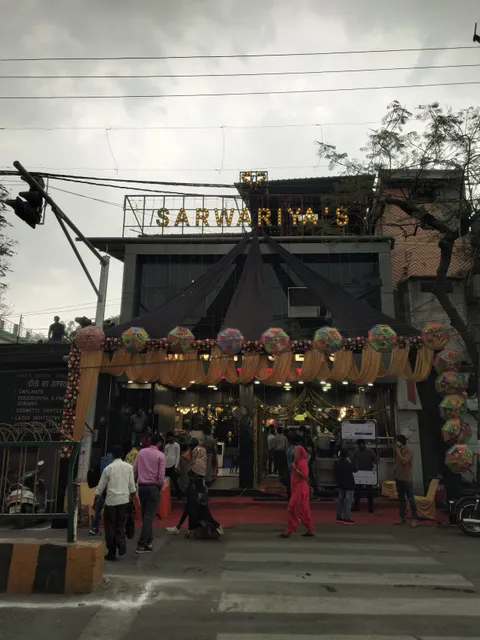
Jhansi is well connected to all other major towns in Uttar Pradesh by road and railway networks. The National Highways Development Project has supported development of Jhansi. Jhansi is also being developed as the defense corridor by the NDA government which will boost the economy of the city and the region at the same time. Srinagar to Kanyakumari north–south corridor passes closely to Jhansi as does the east–west corridor; consequently there has been a sudden rush of infrastructure and real estate development in the city. Jhansi was adjudged the third cleanest city of Uttar Pradesh and the fastest moving city in the North Zone in Swachh Survekshan 2018 rankings. A greenfield airport development has been planned.7] On 28 August 2015, Jhansi was selected among 98 cities for smart city initiative by Government of India.[8[10]
HistoryEdit

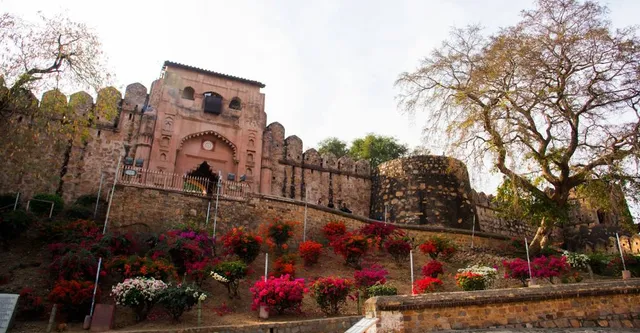
Jhansi Fort, 1900
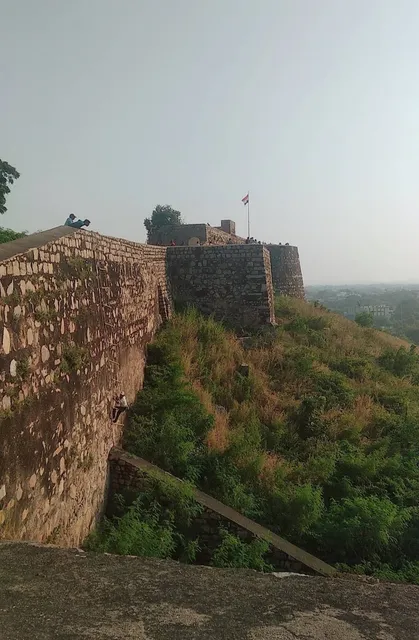
During ancient times, Jhansi was a stronghold of the Chandela Rajput kings and was known as Balwant Nagar. However, it lost importance in the 11th century after the decline of the Chandela dynasty. It rose in prominence in the 17th century when Raja Bir Singh Deo of Orchha State constructed the Jhansi Fort in 1613.[11]
Jhansi came under the Maratha Empire in 1729 when Maharaja Chattrasal offered Jhansi and some other parts of his state to the Maratha Peshwa Baji Rao I as a mark of gratitude for having helped him in defeating the Nawaf of Farrukhabad Muhammad Khan Bangash who had attacked Maharaja Chattrasal's kingdom.[11]
In the 18th century, the town of Jhansi served as the capital of a Maratha province and later the Princely State of Jhansi from 1804 till 1858, when the territory became a part of British India.[11]
After the independence of India, Jhansi was included in the state of Uttar Pradesh
Geography and climateEdit
Jhansi is located at 25.4333 N 78.5833 E. It has an average elevation of 284 metres (935 feet).[12] Jhansi lies on the plateau of central India, an area dominated by rocky relief and minerals underneath the soil. The city has a natural slope in the north as it is on the south western border of the vast Tarai plains of Uttar Pradesh and the elevation rises on the south. The land is suitable for species of citrus fruit and crops include wheat, pulses, peas, and oilseeds. The region relies heavily on Monsoon the rains for irrigation purposes. Under an ambitious canal project (the Rajghat canal), the government is constructing a network of canals for irrigation in Jhansi and Lalitpur and some part of Madhya Pradesh. The trade in agricultural products (including grain and oilseeds) is of great economic importance.[13] The city is also a centre of brassware manufacture.[14]

A view of Jhansi from the hill of Sipri)
ClimateEdit
See also: Climate of Madhya Pradesh
Being on a rocky plateau, Jhansi experiences extreme temperatures. Winter begins in October with the retreat of the southwest monsoon (Jhansi does not experience any rainfall from the Northeast Monsoon) and peaks in mid-December. Temperatures are about 4 °C or 39.2 °F minimum and 21 °C or 69.8 °F maximum. Spring arrives by the end of February and is a short-lived phase of transition. Summer begins by April and summer temperatures can peak at 47 °C or 116.6 °F in May. The rainy season starts by the third week of June (although this is variable year to year), while the monsoon rains gradually weaken in September and end before the last week of September. In the rainy season, the average daily high temperature hovers around 36 °C or 96.8 °F with high humidity. The average rainfall for the city is about 850 millimetres or 33 inches per year, occurring almost entirely within the three-and-a-half months of the Southwest Monsoon. In summer Jhansi experiences temperatures as high as 45 to 47 °C (113.0 to 116.6 °F) degrees while in winter the temperatures can fall as low as 0 to 1 °C (32.0 to 33.8 °F) as recorded in...
Read moreHaving Archeological Ornaments Of Bundelkhand Region. At a distance of 3 km from Jhansi Junction, Rani Jhansi Museum is a museum located inside the Fort of Jhansi. It is one of the important museums in Jhansi and also among the must visit places in Jhansi.
Rani Jhansi Museum or Government Museum is not only gives an insight in to the history and heritage of Jhansi but also throws light on the history and culture of the Bundelkhand region. Dedicated to Rani Lakshmi Bai of Jhansi, this museum has an exclusive gallery on Rani Laxmi Bai and is a unique attraction. This section consists of lots of her armoury items and photographs, depicting her life since childhood.
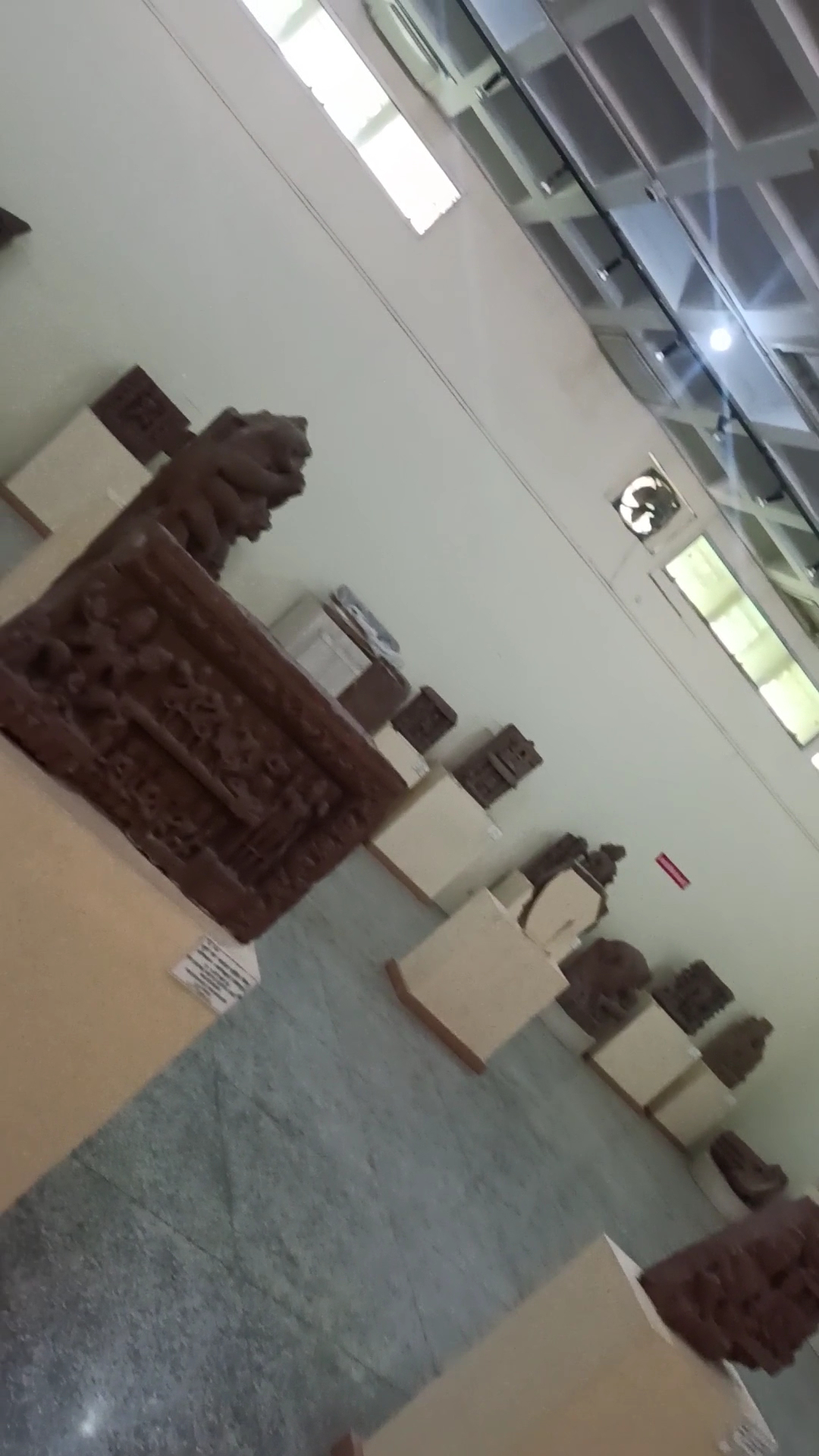
It is also an important source to know about the life and times of the Chandela rulers. The Jhansi Museum houses weapons, statues, dresses and photographs that belong to the Chandela dynasty. The museum also houses a separate picture gallery that is dedicated to Gupta Kings. In fact, the picture gallery of the Gupta period is one of the highlights of this museum. Apart from that, the museum also houses numerous terracotta structures, bronze statues, manuscripts, paintings and coins.
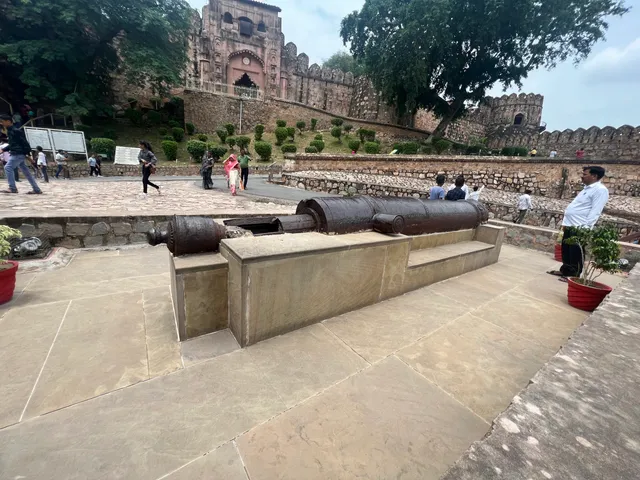
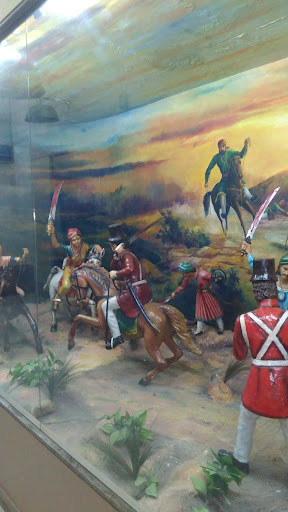
There is a separate gallery for weapons, which has an impressive collection of weaponry and arsenals used by Chandela Kings, Bundela rulers and the British. Some of the weapons used by Rani Lakshmi Bai and other fighters during the Sepoy Mutiny of 1857 are also kept here. There are paintings of many historical events & personalities in past history of India.
Timings: 10 AM to 5 PM, Closed on Mondays & Second Saturdays
Entry Fee: Rs. 5 for Indians, Rs. 25 for foreigners & Rs....
Read moreAt a distance of 3 km from Jhansi Junction, Rani Jhansi Museum is a museum located inside the Fort of Jhansi. It is one of the important museums in Jhansi and also among the must visit places in Jhansi..
Rani Jhansi Museum or Government Museum is not only gives an insight in to the history and heritage of Jhansi but also throws light on the history and culture of the Bundelkhand region. Dedicated to Rani Lakshmi Bai of Jhansi, this museum has an exclusive gallery on Rani Laxmi Bai and is a unique attraction. This section consists of lots of her armoury items and photographs, depicting her life since childhood.
It is also an important source to know about the life and times of the Chandela rulers. The Jhansi Museum houses weapons, statues, dresses and photographs that belong to the Chandela dynasty. The museum also houses a separate picture gallery that is dedicated to Gupta Kings. In fact, the picture gallery of the Gupta period is one of the highlights of this museum. Apart from that, the museum also houses numerous terracotta structures, bronze statues, manuscripts, paintings and coins.
There is a separate gallery for weapons, which has an impressive collection of weaponry and arsenals used by Chandela Kings, Bundela rulers and the British. Some of the weapons used by Rani Lakshmi Bai and other fighters during the Sepoy Mutiny of 1857 are also kept here. There are paintings of many historical events & personalities in past history of India.
Timings: 10 AM to 5 PM, Closed on Mondays & Second Saturdays
Entry Fee: Rs. 5 for Indians, Rs. 25 for...
Read more