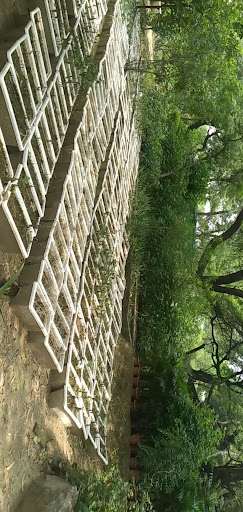
Delhi Ridge, sometimes simply called The Ridge, is a ridge in the National Capital Territory of Delhi in India.1] The ridge is a northern extension of the ancient Aravalli Range, some 1500 million years old (compared to just 50 million for the Himalaya).[2 The ridge consists of quartziterocks and extends from the Southeast at Tughlaqabad, near the Bhatti mines, branching out in places and tapering off in the north near Wazirabad on the west bank of the river Yamuna,4] covering a distance of about 35 kilometres.[5] develop as Biodiversity Park by the Delhi Development Authority.
The New Delhi or Central Ridge was made into a Reserved Forest in 1914 and stretches from just south of Sadar Bazaar to Dhaula Kuan. It extends over 864 hectares, but some bits have been nibbled away.
The Mehrauli or South-Central Ridge is centred on "Sanjay Vana", near JNU and Vasant Kunj, and encompasses 633 hectares. Large chunks have been encroached and built upon.
The Tughlaqabad or Southern Ridge sprawls across 6200 hectares and includes the Asola Bhatti Wildlife Sanctuary. This is the least urban of the 4 segments of the Ridge, but a lot of it is village-owned or privately owned farmland.
History
In 1993, parts of north Delhi, central Delhi, south West Delhi and south Delhi covering 7,777 hectares was declared a reserve forest. Thereafter in 1994 and 1996, a major part of the ridge was notified by the Government, thus stopping all construction.[8
Over the years, pressures of urban development, have seen forests of Delhi ridge under threat. In many areas, landscaped public parks, and public housing have come up, plus the area also faces dumping of construction waste.[10]
Aravalli Biodiversity Park, South Central Ride... The Aravalli Biodiversity Park[11] is an area spreading over 692 acres (2.80 km2) on the South Central Delhi Ridge within the Aravalli Range. The area is confined by JNU, the Mehrauli - Mahipalpur road, NH-8, Vasant Kunj, Masoodpur and the Palam road and the southern boundary of Vasant Vihar, Delhi. Delhi Development Authority and University of Delhi, under the joint Biodiversity Parks Programme, maintain the area. Every year a substantial amount of money is spent in restoration, development and maintenance.
The land under Aravalli Biodiversity Park was once a site for mining. Martha Shinde (Scindias) had a mining lease for the 2.3 km² area. They plundered out whatever they could. For years Shinde exploited forest resources including minerals, mica, sand, stone, rocks and water. Land, which once was covered with a dense forest, soon turned into pits and hillocks. A systematic planting program is carried out and every year native trees and bushes are planted to remove unwanted weeds, i.e. Prosopis juliflora. Scientists from the Centre for Environmental Management of Degraded Ecosystems, University of Delhihave so far got over 10 ecosystems reintroduced with over 40 biotic communities. Portions of Aravalli, which come under Gujarat, are covered with natural dense forest. However, the land on which Aravalli Biodiversity Park is being developed, was devoid of such natural growth of forest due to extensive mining of the area. The Centre for Environment Management & Degraded Ecosystem (Delhi University) works closely with Delhi Development Authority and has plans to revive native flora and fauna of Aravalli hill ranges. The planting of native species like dhau (Anogeissus pendula), babul (Acacia nilotica), kair (Capparis decidua), and dhak (Butea monosperma) has been carried out. A rangeland with native grasses has been developed. A conservatory of butterflies, orchidarium and fernery has...
Read moreThe Northern Ridge (Kamla Nehru Ridge) spreads across 122.00 hectares near Delhi University, north Campus. Based on the topographical features and the divides formed by public roads that pass through the Ridge, the Northern Ridgeis divided into 6 segments (zones).
The Ridge is highly weathered resulting in undulating topography with many high and low points. Consequently, the Ridge has flat hill tops, shallow valleys and gentle slopes. The Ridge is fragmented due to City Roads that traverses through the Ridge in criss cross manner and infested by a Mexican weed- Prosopis juliflora, commonly known as Kabuli Kikar or Vilayati Kikar, which was introduced by British Colonial Government for greening the Ridge. Within 150 years of introduction on the Ridge it has eliminated many native plant and animal species. The major objective is to bring back the pristine native forest communities of Aravalli Hill Ranges that once thrived in the Ridge. Canopy Opening method and cut rootstock method have been used for the management of Prosopis juliflora. To allow the saplings planted to grow, small canopy gaps have been created by pruning dead branchlets of the invasive alien Prosopis juliflora, which as per International Conventions, and recommendations of FAO, has to be eradicated. Lantana, another noxious alien species, which is being eradicated from protected areas, has been removed to create space on the ground. With opening of the canopy, native plants get abundant sunlight for their growth and survival and slowly they out-compete the Prosopis juliflora.
The approach involving the creation of small canopy gaps and removal of weedy species from the ground for allowing the growth of saplings of native tree species is novel and simulates the natural ecological succession process, the end product of which is the original ecosystems. Restoration of biodiversity at KNR has started with re-introduction of various plant species that once existed here. This includes various species of herbs, shrubs, trees and grasses. So far, total 9876 native plants have been planted at KNR.
The hill-tops and slopes with boulders are being developed into Tropical Dry Deciduous Forest with species such as Acacia senegal, Acacia catechu, Acacia modesta, Prosopis cineraria, Holoptelia integrifolia, Lannea coromandelica, Sterculia urens, Butea monosperma, Nyctanthus arbor-tristis, Wrightia tinctoria, Aegle marmelos and Cassia fistula.
Some of the ditches where moisture is abundant are planted with Mixed Dry Deciduous Forest species such as Bauhinia variegata, Albizia lebbeck, Syzygium cumini, Emblica officinalis, Mitragyna parviflora, Terminalia belerica, Terminalia arjuna, Terminalia tomentosa, Erythrina indica, Ficus racemosa, Ficus virens etc. Some of the areas have been vegetated with Anogeissus Dominated Community species such as Anogeissus pendula, Anogeissus sericea along with Wrightia tinctoria, Cassia fistula, Ficus virens etc. The areas all along the boundary wall of the KNR have been planted with bamboo- Dendrocalamus strictus. During the monsoon, seeds of Cenchrus ciliaris have been broadcasted to enrich and extend the...
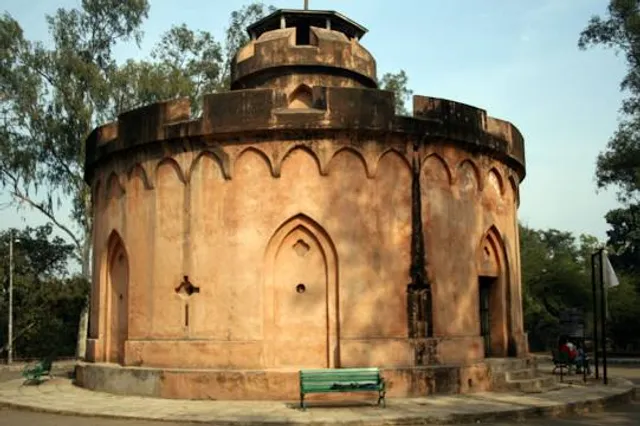
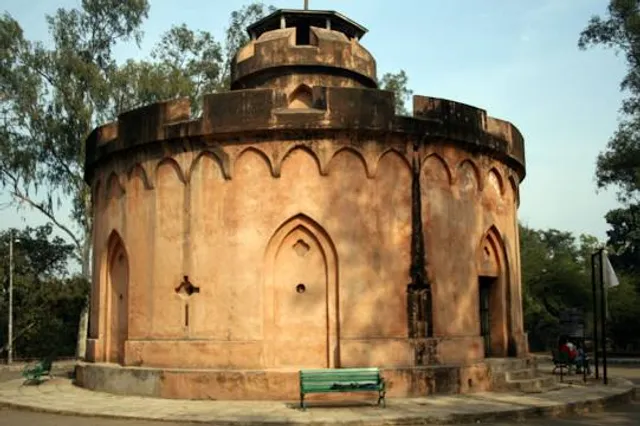
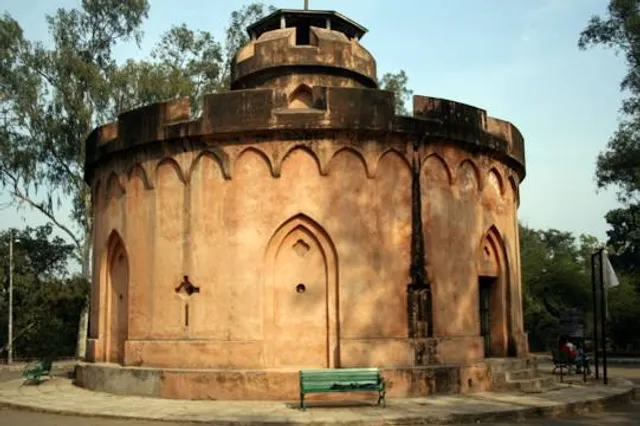
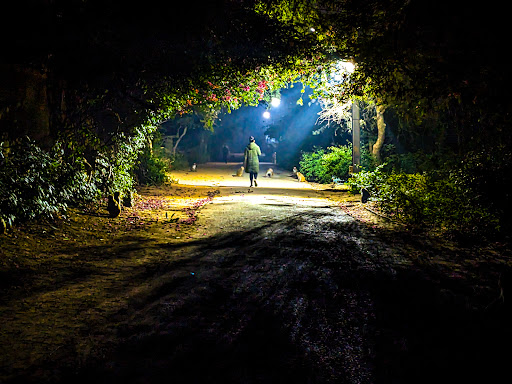
Read moreNorth Delhi’s Ridge area, today, a haven for walkers and wild life, has several interesting historical places tucked away in different corners. Some of these, including the Chauburja Mosque and the Guard house go back two centuries and have stood the test of time. You could be a nature lover, a history buff, a bird lover, you would find plenty to attract you to this patch of Delhi’s lungs.
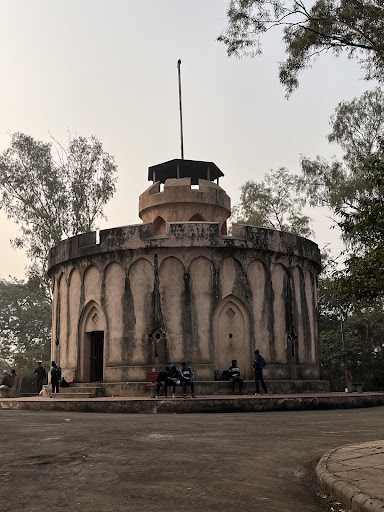
Flagstaff Tower Described as ‘bare, a stony furnace in the hot weather, and a mirror of heat for civilians and soldiers on either side’ by noted historian Percival Spear, the Flagstaff Tower, happens to be a prominent landmark in the Kamla Nehru Ridge. It is the highest point of the ridge and hence the best place to give you a sbird’s eye view of the surrounding area. The tower was built around 1828 by the British as a signal tower and sepoys were permanently stationed here to keep a watch on the northern expanse. At this point of time, a majority of Delhi’s population was contained within the precincts of the walled city. The monument played a major role during the uprising of 1857. The tower was renovated in the late 1990s and became more pedestrian friendly once this part of the ridge was made a motor-free zone.
Khooni Khan Jheel Going by its dramatic name, this little pond should be an abode of the darker spirits. Instead, you will find ducks and cranes dipping into its cool waters and enjoying the shelter. Nevertheless, the Khooni Khan Jheel enjoys this very distinctive name owing to the role it played during the pre-1947 years. Since the North Delhi Ridge was an ideal place to provide cover to lurking enemies, it was also a place where intermittent battles and altercations broke out between a sepoy and an invader. Invariably, the unsuspecting waters of the pond became a dumping ground for many a body. The best way to go to the Jheel is from the St. Stephen’s side and not the Raj Pur Road entrance. Although the latter is a shorter way, it has many turns that require one to be well acquainted with the area. Some signages are also up at certain points to help one navigate.
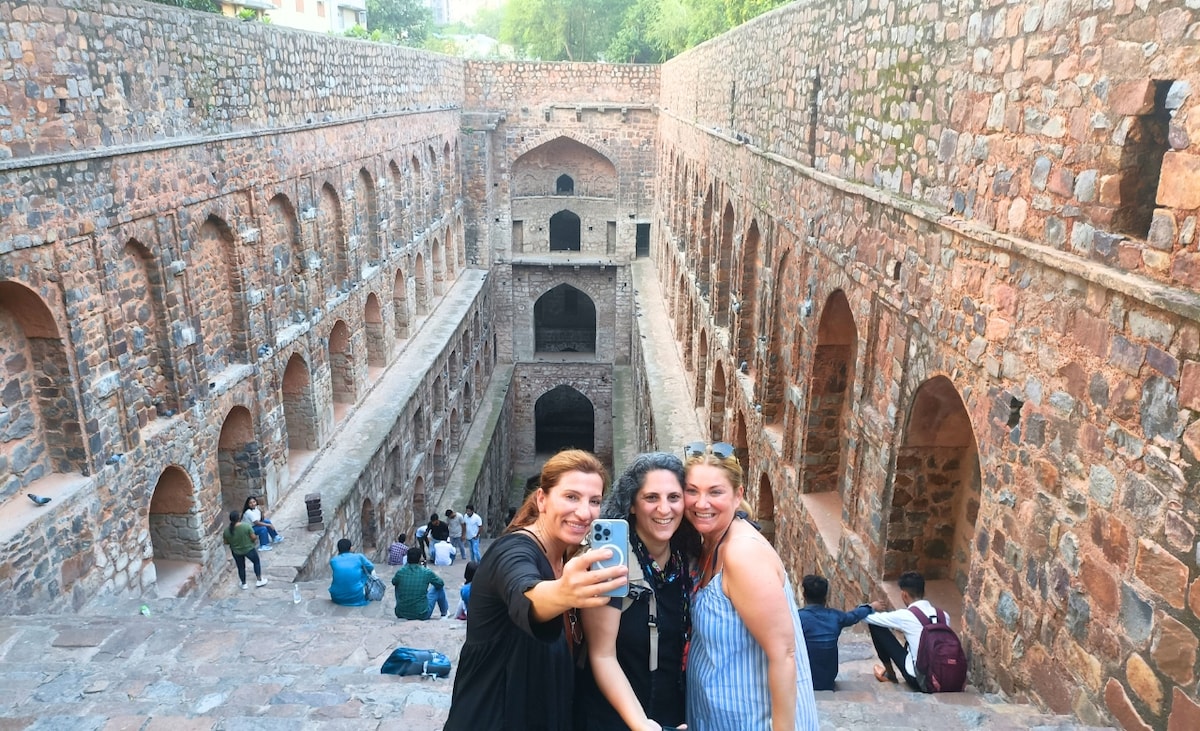
Chauburja Mosque To the south east of the Flagstaff Tower lies the Chauburja Mosque. This 14th century mosque was built by Feroze Shah Tughlaq. The mosque, a guard house and the remains of a 14th century baoli in the vicinity indicate that this area continued to play an important role even in the era preceding the colonia rule. The structure, however, is dilapidated and is in bad...
Read more