Cochin Tirumala Devaswom, also called Gosripuram is the biggest and most important socio-religious institution of Gowda Saraswat Brahmins of Kerala, India. The temple is situated at Cherlai in the heart of Mattancherry town in Cochin area which is one of the earliest settlements of GSBs in Kerala. The temple was established in the later half of the 16th century. The history of GSBs in Kerala is inter-woven with that of this temple and its Venkateswara idol.
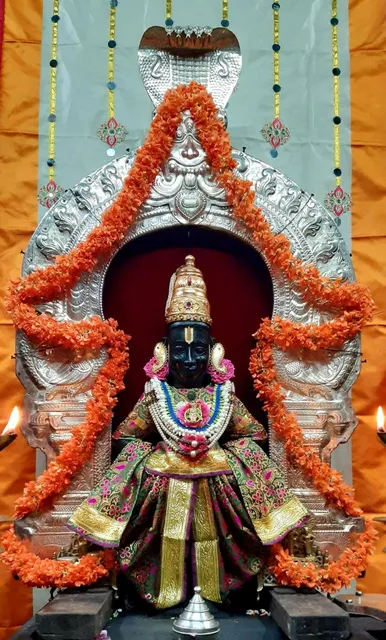
The main idol of Venkateswara, his consorts, Sreedevi and Bhoodevi on his either sides and he is placed on the top of the Simhasan. Utsav Murti with consorts in the middle step, Utsav Lakshmi at the lower step and Saligrama are on the lowest step.
There are four sub-temple or shrines inside the temple premises, there are temples dedicated to Goddess Mahalakshmi, Hanuman, Garuda and Vigneshwara. Vrindavan of Shri Sukrathindra Thirtha Swamiji (samadhi 1949 A.D, 19th Madathipathi of Kashi Math) is located here. A Naga Yakshi pedestal is situated on the southwest corner of the main temple next to the Vighneswara Temple.
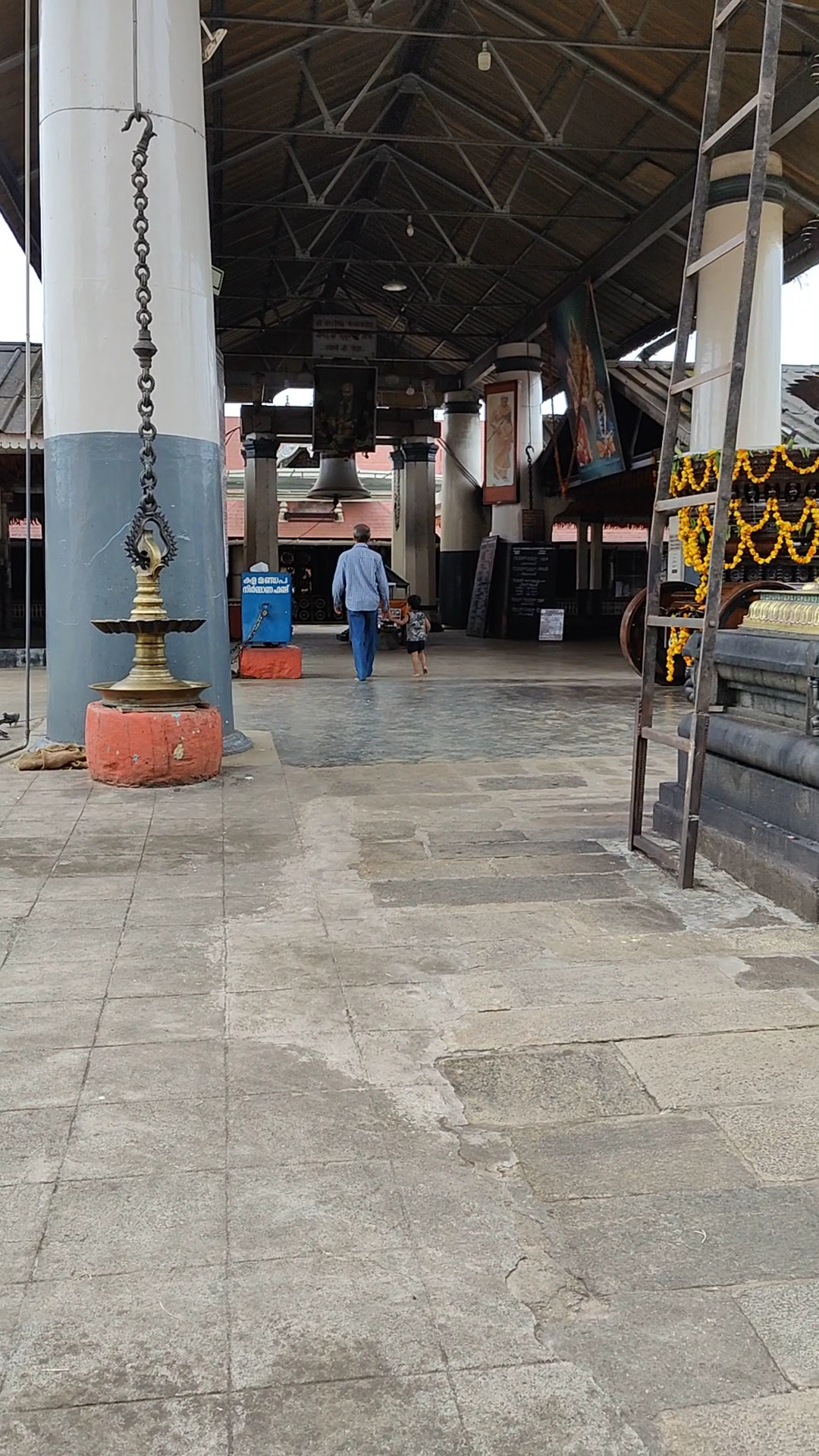
Outside the temple yard, there are statues of the Vijayanagara king Saluva Narasimha Deva Raya and Swami Vijayendra Theertha of Kumbhakona Math, as well as a temple tank Outside the temple. A notable feature of the temple is its huge bronze bell, about four feet in diameter and six feet in height. In earlier centuries, the chiming of the bell could be heard even in areas far from the temple.
Besides these upakovils, There are other temples working under Cochin Thirumala devaswom (CTD). they are -
Manja bhagavati temple, also known as Sindhura bhagavati temple in the same locality dedicated to goddess Mahishasura Mardhini. This temple is popularly called 'Uppu' bhagavati temple as the devotees offer salt (uppu (ഉപ്പ്) in Malayalam) in front of this temple. It is believed that, by offering salt and pepper, any severe diseases affected to anyone recovers soon. [1] Udyaneshwar Temple, dedicated to lord Siva located at the North east corner of CTD.[2] Navagraha Temple, located at the North east corner of CTD.[3] Kuladevatha Makalakshmi Temple, located at the North west corner of CTD.[4] Sri Venkatachalapathi Temple, Karnakodam, located at the heart of Ernakulam district, near International Stadium, Kochi.
The presiding deity here is Venkatachalapathy. In 1568, with the fall of the Vijayanagara Empire and coercive conversions to Christianity by the Portuguese, the Gowda Saraswatha Brahmins migrated from Goa to Kochi. During their migration, Swami Vijayendra Teertha of Kumbhakona Math brought the idol of Venkatachalapathy to Kochi. The majority of households living around the temple belong to the GSB community.
In 1599, a temple, which was to be plundered many times, was built to house the idol. The Portuguese destroyed the temple in 1662, but it was reconstructed, in 1663, during the Dutch reign. In 1719, the idol disappeared mysteriously and was later found on a beach. It was kept at the Dutch Governor's residence for a while and then restored to the temple.
In 1791, when the temple was plundered again, the idol was kept in Alappuzha for many years. In 1853, it was brought back to the temple.
Gowda Saraswata Brahmins (Locally known as Konkanies) since their forefathers came and settled down in cochin during 1560 A.D from Goa, In fear of the mass conversion policy brought up by...
Read moreBeneath the surface of this temple lies a tale filled with intrigue and mystery. Many years ago, during a festive occasion, the temple arranged a grand feast where numerous people from the local community participated. However, an unfortunate incident occurred when a snake accidentally slithered into the hot, boiling payasam (a traditional dessert made with milk and rice) and died. Unaware of this incident, people continued enjoying their meal, including the payasam. After the feast, as individuals began their journeys back home, the cook discovered the presence of the snake in the payasam and promptly informed the volunteers. The volunteers swiftly made an announcement, advising everyone to remain inside the temple premises. Following the announcement, the deity, Lord Vekantramana, was ceremonially bathed in the very payasam that held the snake's lifeless body. Through prayers and rituals, the people inside the temple remained unharmed. However, sadly, those who had left the temple grounds met an unfortunate end. Each and every individual from the locality knows this tale and it is said that the god here is powerful and strong The festival spans over eight days and follows a sequence of events:
1st day: The festival begins with the hoisting of a flag, signaling the start of the celebrations.
2nd and 3rd days: The deity remains inside the temple and takes pradhakshins (circumambulations) around the temple premises.
4th to 6th days: The deity, accompanied by Mata Lakshmi, ventures outside the temple. They visit the houses of the local community, where people eagerly await their arrival. Each household prepares fruits and arathi (a ritualistic offering of light) on a table, and the deity and Mata Lakshmi visit each individual's table.
7th day: A special event called Nayattu takes place, where the deity, accompanied by Mata Lakshmi, embarks on a symbolic hunting expedition. They travel to another nearby Shiva temple and stay there, while Mata Lakshmi returns home. During this hunting ritual, devotees believe that the deity fulfills their wishes.
8th day: Known as Arattu, this marks the final day of the festival. The deity, accompanied by Mata Lakshmi, proceeds to a pond near the temple and stays there for a while. Then, the deity takes a bath in the pond before returning to the temple. Upon their arrival, they are welcomed by Garuda, a mythical bird, and an arathi ceremony is performed. It is believed that when the deity sits on Garuda during the arathi, any wish made at that moment will be fulfilled The scene when God sits on...
Read moreCochin Tirumala Devaswom is the largest Gowda Saraswat Brahmin Temple in India. Whether you are a resident of Kochi, a tourist, a student, etc, your trip to Kochi is incomplete without visiting this one of a kind temple.
There is ample parking adjacent to the temple on all four sides.
As soon as you reach the entrance, you will get an idea of what a massive temple this is. Once you step inside, I'm sure your mouth will open in awe of this popular, beautiful and divine temple.
In the morning, the Temple opens at 5:30 a.m. and closes at 1:00 p.m. for the afternoon. Once again, the temple opens at 6:00 p.m. in the evening and closes at 9:15 p.m. During, Araat or the Festival Days, the timings are different.
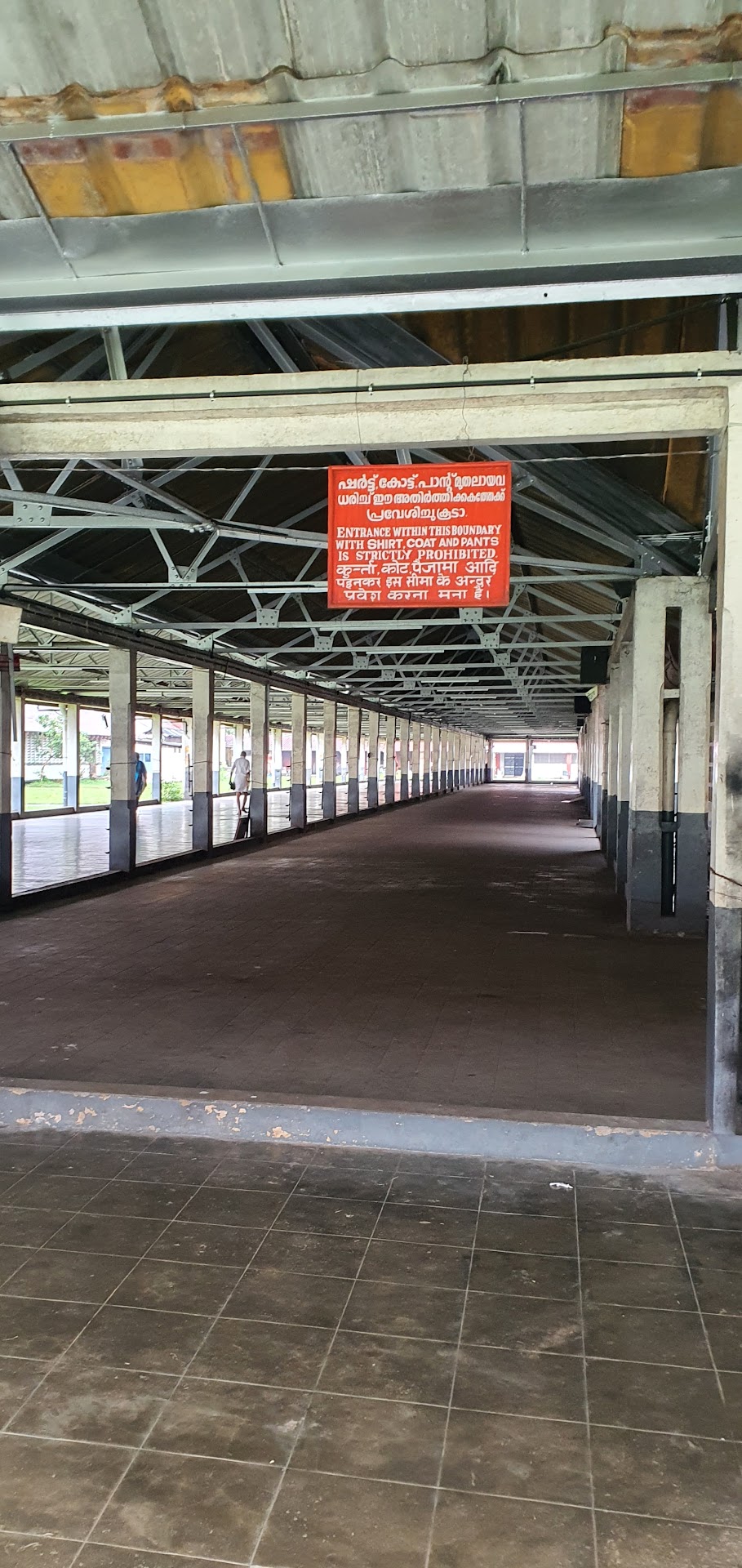
The Devotees have to follow a very strict dress code while visiting the temple. The Ladies must wear a Saree or Salwar Kameez. The Men must remove their shirts and wear a vesti while taking the inner rounds. If they wear their shirt and pant, they are allowed to take only the outer rounds.
Once you visit this Temple, you will feel a sense of peace and divinity. Actually, you will hardly hear anyone talking as everyone will be in a deep sense of meditation while praying to the Deities. The sound of the temple bell can be heard throughout your visit.
There are various pujas that the Devotees can perform at Cochin Tirumala Devaswom. If you want more information on the list, timings, dates, etc , all you have to do is visit the Temple Office and they will help you.
The Prasad being offered is healthy and tasty too. One who is fortunate to eat it will feel extremely blessed after savouring each bite.
The Temple Pond is located diagonal to the Temple's Main Entrance.
So the next time you are visiting Mattancherry, please ensure you visit this temple which is famous all around the world for its architecture, rich history and feeling of divine bliss after your initial darshan. Trust me, you will want to visit in the future and tell others about...
Read more