SRI MAHADEVA TEMPLE, Vaikom, Kottayam, Kerala, India
As per legend , Khara Asura placed a Shiva Linga on his right hand at vaikom , another Shiva Lingam on his left hand at Ettumanoor and one by his neck at Kaduthuruthy. Even to this day, it is believed that the Linga carried on the neck of Khara was Kadathuruthy. The distance from Vaikom to Kadathuruthy and from there to Ettumanoor is almost equal. Getting the darshan of all these three Lingas on the same day is considered a great boon, equal to the Shiva Darshan at Kailas which is the abode of the Lord.
One day Sri Parasurama saw a Shiva Linga emerging from water emitting heavenly rays. Then he understood that it was the Shiva Linga placed by Khara. Sri Parasurama thought that, the holiest and noblest Shiva Chaitanya could be a refuge for the devoted who wish to attain Moksha. He constructed a Linga here with his prayers and recitation of Shiva Manthras. Pleased by his devotion, the Lord Shiva appeared with his consort Parvathi before Parasurama. He was pleased that the Linga was consecrated with the manthras by Parasurama – the incarnation of Vishnu, his greatest devotee. Lord Shiva told Parasurama that he would stay as Shaiva-Vaishnava Chaithanya granting Moksha to devotees.
Full of joy, Parasurama performed Shiva Linga pooja there for some days. Then he himself built a temple and entrusted a noble brahman of Taruna village, to whom he taught the pooja manthras. Parasurama donated the temple with the Linga to brahmins and disappeared. It is the belief that all rites and customs in this Indian temple is planned and fixed by Parasurama himself.
The Vaikom temple was owned by one hundred and eight families. The owners were divided into two groups and when one group joined the ruler’s side, their disputes and quarrels increased. One day a section of the divided group came to the Hindu temple at noon with their chief among them, Njallal Namboothiri , who was prepared to stop the noon-time pooja. At that time the Nivedya was to be placed in the western side of the Namaskara Mandapa. There was an entrance in the western courtyard. Njallal Namboothiri after keeping his apron (Randam Mundu) above the western door came near the Nivedyas and spat the remains of his betel chewing on the Nivedya. The pooja was fouled. Returning, taking his apron from the door top, a poisonous snake bit him. He crawled outside to the western direction and died. The western door of the temple courtyard automatically closed and a voice announced that the door would remain shut. The door remains closed to this day to show the wrath of the great Lord against the disruption of his poojas.
Years ago a saint man named Vyaghrapada prayed to God Shiva for years. After many years, Shiva and his wife Parvathi appeared in front of him. It is believed that god Shiva appeared in front of him on the day of Krishna Ashtami. So as a memory of this, Vaikathashtami is celebrated. It is the festival extending for 12 days. 12th day is Vaikathashtami.
It is believed that the ‘Vyaghralayesha’ Shiva gives his blessings to the devotees in three Bhavas or forms in the morning, noon, and evening in this holy temple in India.
In the morning till Pantheeradi pooja, he assumes the form of Shri Dhakshinamoorthy – the guru of gurus venerated by all of the gods, maharshis, asuras, yakshas, kinnaras, and all living creatures in all the worlds. He grants wisdom, knowledge and understanding.
In the noon time upto the Madhyahna pooja, he assumes the Bhava of Kiratha Moorthi who gave Pashupathastra to his noblest devotee Arjuna. Then he grants success in all endeavours and removes all obstacles – ‘Sarvakarya Jayam’ and ‘Sarva Vighnopa Santhi’, to the Bhakthas.
In the evening Lord Shiva or the Vaikkathappan assumes the Bhava of ‘Shakti Panchakshari’- the benign Lord of Kailash – Jagath Pitha with his consort Jagath Matha Parvathi, sons Ganapathi and Subramanya all seated in a very happy and gracious mood. Then he grants all worldy pleasures and all what devotees...
Read moreVaikom SreeMahadeva temple is one among the most famous Siva temple in Kerala at Vaikom, Kottayam Dist. It belongs to one among the great 108 Siva temples in India.
Main deity: Mahadevan facing east. Deity is worshipped for his three characters at morning as Dakshinamoorthy, noon time as Kirathamoorthi and evening as Sambasivan with Devi Parvathi.
Subdeities: Inside Nalambalam, Kannimmoola Ganapathi, out side Nalambalam, Panachickal Bhagavathi, Nagadevatha.
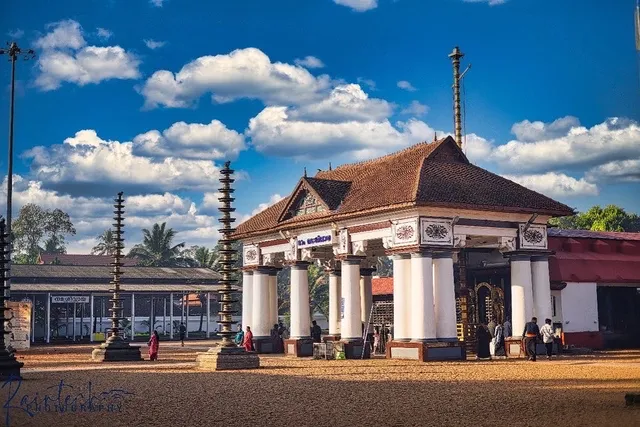
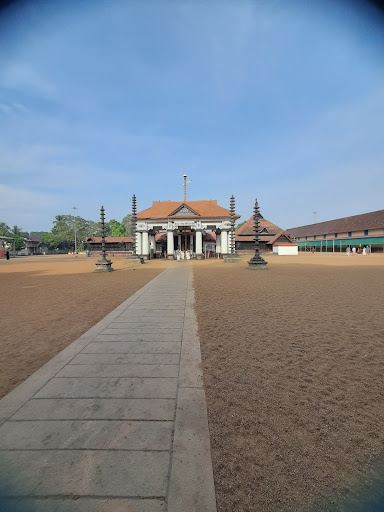
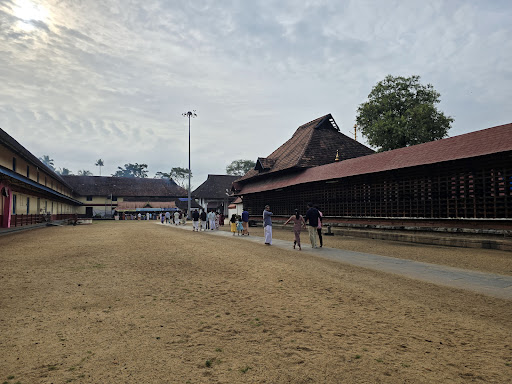
Temple: Area of the temple compound is around 8Acres and temple structure is typical to kerala style Architecture with copper sheets roofing. Shrine/Sreekovil is very large, round in shape having 108 roof supporting wooden beams (kazhukkol). The Sreekovil is constructed as two concentric rooms having entrance with six steps respectively.
Golden flag mast is of 64feet height.
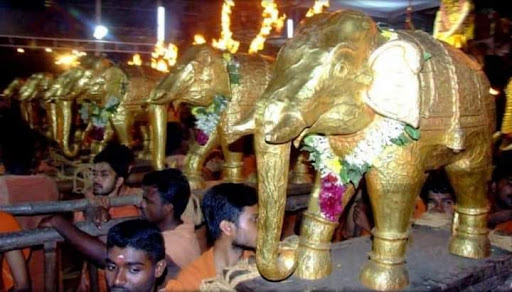
Festival: 13 days Ashtami vilakku festival is celebrated during the month Vrichigam. It is belived that on Krishnashtami day, the great Sage Vyakhrapada maharshi got blessed with the visual appearance of Lord Siva and Devi. Hence on Ashtami day, darsan of the Deity/Idol within 3 Nazhika (84 Mnts) of Sun rise is very special as it is believed the same time that Sree Vyakhrapada maharshi had darsan of Lord Siva. Krishnashtami on month Kumbham also is celebrated as festival but with less importance than of Vrichigam. Sivarathri is celebrated as usual to all other Siva temples. Vadakkupurathu pattu is a famous festival celebrated once in 12 years related to Kodungalloor Bhagavathi and it is believed that Goddess will be present during this 12days festival occasion at Vaikom. This 12days festival once in twelve years is celebrated from Karthika day of month Meenam.
The Deity of the nearby temple at Udayanapuram is Lord Subramonian, the son of Siva and some special rituals and functions together for these two Dieties during the festival celebration are highly spiritual, devotional and emotional to the devotees.
History/Mythology: A great Sage, Khara maharshi had brought three Sivalingas from Chidambaram and placed one at Vaikom with the help of another great Sage SreeVyakhrapada maharshi. The other two sivalingas were placed at Kaduthuruthi and Ettumanoor to build-up temples there also respectively. Hence the devotees are considering to visit these three temples in a single day stretch for fullfillment of their spiritual desires.
Another myth about this Vyakhrapada maharshi is that he had the darsan (visual appearance) of SreeParameswaran and Devi inside the temple compound while he was worshipping the Sivalinga during initial periods. And now this place under a banyan tree near the east gopuram of the temple is marked as a memorial of Vyakhrapada maharshi.
It is believed that Lord Parasurama also involed for building up of this temple and finalizing its rituals, systems and festivals.
As per another mythology, Sree Villuvamangalam Swamiyar once visited this temple and seen the Deity Lord Siva was having the great lunch of this temple along with other devotees. This spot inside the Nalambalam near to north entrance is considered as a sacred place now and known as 'Manyasthanam'.
Travel: Vaikom is a small town centered to this famous temple in Kottayam district. It is by the side of Kottayam-Ernakulam State Highway, around 33kms from Ernakulam and 41kms from Kottayam. West side of the temple is Vembanadu lake facilitating boat services from various places. Public transport facilty is available mainly with Private and KSRTC buses. A small Railway station for Passenger Trains is available near to Vaikom town. Facility: Devaswom Vehicle parking facility and washrooms are available near...
Read moreThe Vaikom Mahadeva Temple, located in Vaikom in the Kottayam district of Kerala, India, is one of the most prominent and revered Hindu temples dedicated to Lord Shiva. It holds significant historical, cultural, and religious importance, especially among devotees of Lord Shiva in Kerala. Here is a review of the temple based on various factors:
Historical and Religious Significance:
The Vaikom Mahadeva Temple is believed to be more than 2,000 years old, with a rich history rooted in Hindu mythology and local folklore. According to tradition, the temple is associated with the great saint and poet, Adi Shankaracharya.
The temple is also famous for its connection to the Vaikom Satyagraha (1924-1925), a pivotal movement in the Indian independence struggle aimed at securing the right for lower-caste people to enter Hindu temples. This movement played an important role in the social reform of Kerala and the eradication of untouchability.
Architecture:
The temple is an excellent example of traditional Kerala temple architecture, with a wooden structure and intricate carvings. The sanctum sanctorum (the innermost part of the temple) houses the main deity, Lord Shiva, in the form of a lingam.
The temple complex is large and beautifully designed with a peaceful atmosphere, featuring multiple shrines, courtyards, and a majestic tower (shikhara) at the entrance.
Religious Practices and Festivals:
The temple is known for its spiritual significance and regular rituals, including the "Poojas" (prayers) and the "Abhishekam" (ritual bathing of the deity). Devotees from all parts of Kerala visit the temple for blessings.
Major festivals celebrated here include Maha Shivaratri, which draws large crowds, as well as other important Hindu festivals like Vishu and Onam. During these festivals, the temple is beautifully illuminated, and various cultural programs are organized.
The "Shiva Pradakshina" (circumambulation) around the temple is a significant ritual practiced by devotees to seek blessings.
Accessibility and Facilities:
The temple is easily accessible by road, and the Vaikom bus station is nearby, making it convenient for pilgrims. The nearest railway station is also within a reasonable distance.
There are basic amenities like parking and drinking water available for visitors. However, there are limited accommodations within the temple premises, so visitors might need to look for nearby hotels for a longer stay.
Atmosphere and Peacefulness:
The temple exudes a calm and serene atmosphere, with its lush green surroundings and the sound of temple bells adding to the peaceful ambiance.
Visitors often report feeling a deep sense of spiritual connection and...
Read more