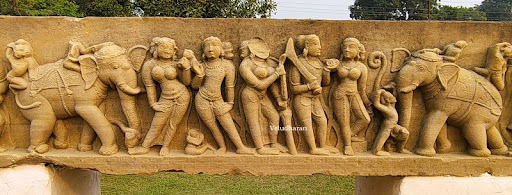
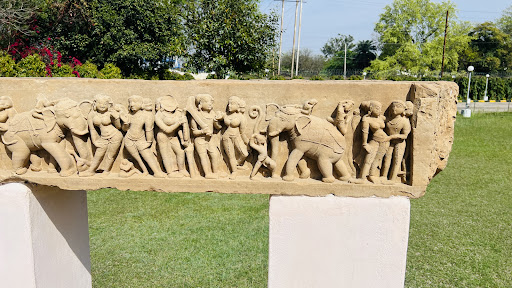
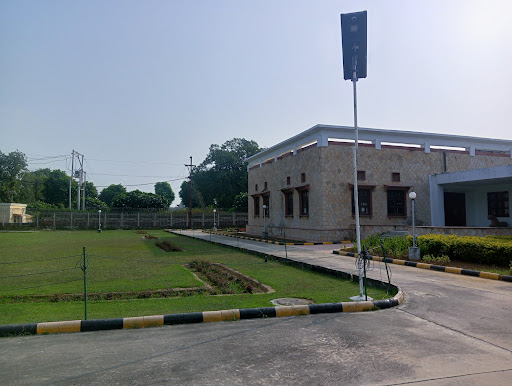
HISTORICAL BACKGROUND The monumental group of Khajuraho was brought to light by T.S Burt, a British engineer in 1838, and then work was carried out in detail by the study of Alexander Cunningham, between 1852 and 1863. It is believed that the nomenclature of Khajuraho is due to one of its gate which was ornamented with two golden Khajur trees (date palm) as per one tradition. A recent study highlight that celestial nymph has a scorpion (Khajur) on her thigh which mark the passion, possibly therefore the place was named Khajur-Vahaka or Khajuraho. During the Janapada time, the region was part of the Vatsa kingdom and then it came under the Mauryan supremacy which is known from Asokan rock edict at Gujjara in Datia district. However prior to Chandella the region has witnessed the rule of Kushanas, Nagas, Vakatakas, Imperial Guptas, and the Pratiharas. According to Chandellas and other contemporary records, the land was known as jejakbhukti or jejakabhukti, with a few derivative variants like jejahuti, jajhauti and jijhauti in Chandellas times. Mahoba inscription delineate the genealogy of Chandella dynasty and refers that the kingdom has been named after king Jeja. The earliest inscription of king Dhanga dated to 954 CE suggests the occupation of Khajuraho by the Chandella rulers. Alberuni in 1022 CE speak of the region as Jajahuti. The Madanpur inscription dated to 1182 CE refers the territory as Jajakabhukti or Jajakamandala. THE MUSEUM With keen interest and initiative of W.E. Jardine, the then political agent of Bundelkhand, the loose sculptures and other cultural edifices were collected from the ruined temples and preserved in an enclosure by means of which laid the foundation of museum in the year 1910. This thoughtful collection confined to be known as Jardine Museum. However, the present museum was conceptualized in 1952 after the Archaeological Survey of India took over charge and named it as Archaeological Museum. The preserved and display antiquities are primarily associated with the Chandella's, a powerful medieval dynasty who predominantly ruled over the region around Khajuraho anciently known as Kharjura-Vahaka and was religious capital city. The nucleus of the museum was a large collection of Brahmanical, Hindu, Jaina, and Buddhist sculptures and architectural parts of the temples. A good number of well carved sculptures are exhibited in the present museum, in a modern display concept. The New museum building is constructed near circuit house to display more number of antiquities. It consists of six galleries proposed for sculptures and architectural member. The antiquities are ranging from 9th to 12th Century CE, and throws significant light on social-cultural aspect...
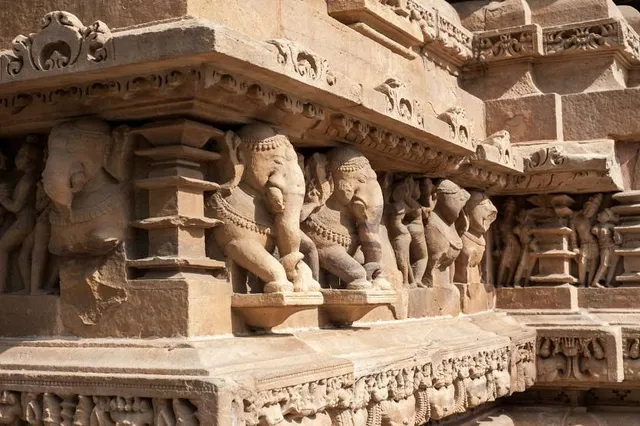
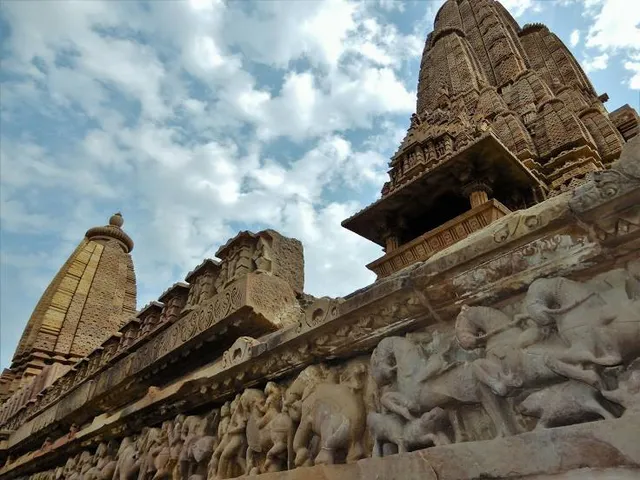
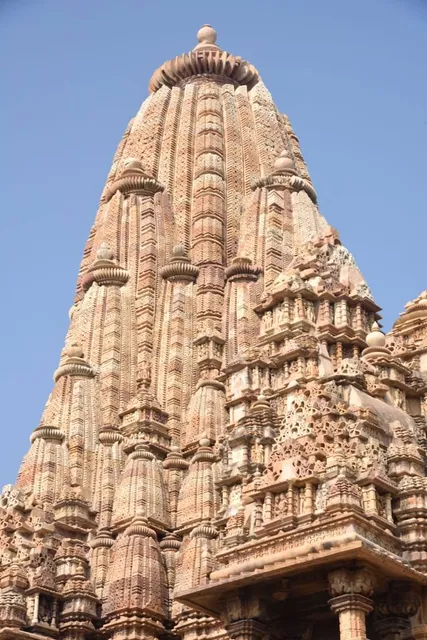
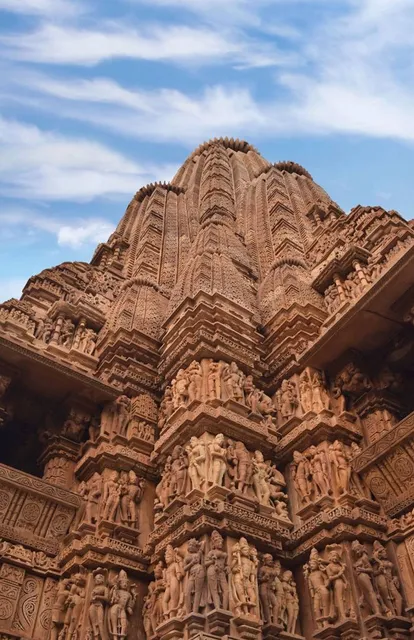
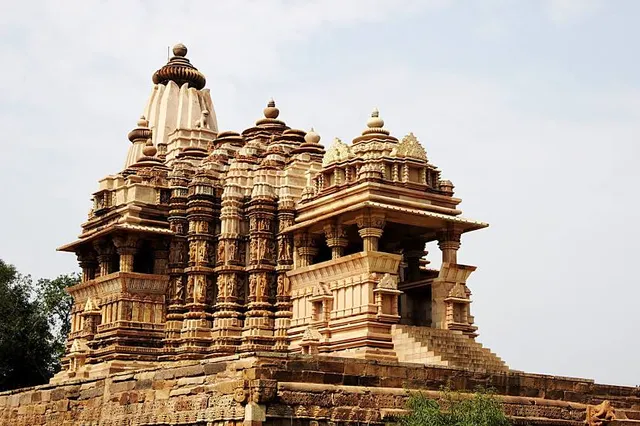
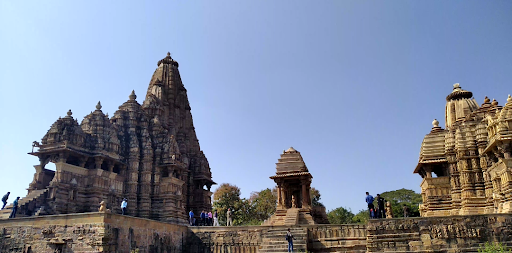
Read moreThe Khajuraho group of monuments was built during the rule of the Chandela dynasty. The building activity started almost immediately after the rise of their power, throughout their kingdom to be later known as Bundelkhand.[9]Most temples were built during the reigns of the Hindu kings Yashovarman and Dhanga. Yashovarman's legacy is best exhibited by The Lakshmana Temple. Vishvanatha temple best highlights King Dhanga's reign.[10]:22 The largest and currently most famous surviving temple is Kandariya Mahadeva built in the reign of King Vidyadhara.[11] The temple inscriptions suggest many of the currently surviving temples were complete between 970 and 1030 CE, with further temples completed during the following decades.[6]
The Khajuraho temples were built about 35 miles from the medieval city of Mahoba,[12]the capital of the Chandela dynasty, in the Kalinjar region. In ancient and medieval literature, their kingdom has been referred to as Jijhoti, Jejahoti, Chih-chi-to and Jejakabhukti.[13]
Khajuraho was mentioned by Abu Rihan-al-Biruni, the Persian historian who accompanied Mahmud of Ghazni in his raid of Kalinjar in 1022 CE; he mentions Khajuraho as the capital of Jajahuti.[14] The raid was unsuccessful, and a peace accord was reached when the Hindu king agreed to pay a ransom to Mahmud of Ghazni to end the attack and leave.[13]
Khajuraho temples were in active use through the end of the 12th century. This changed in the 13th century; after the army of Delhi Sultanate, under the command of the Muslim Sultan Qutb-ud-din Aibak, attacked and seized the Chandela kingdom. About a century later, Ibn Battuta, the Moroccan traveller in his memoirs about his stay in India from 1335 to 1342 CE, mentioned visiting Khajuraho temples, calling...
Read moreपुरातत्व संग्रहालय को एक महत्वपूर्ण खजुराहो पर्यटक आकर्षण माना जाता है। जैसा कि हम जानते हैं कि खजुराहो मध्य भारत के मध्य प्रदेश के छतरपुर जिले का एक कस्बा है। खजुराहो मंदिर अपनी कला और मूर्तियों के लिए प्रसिद्ध हैं। खजुराहो में मंदिरों के आसपास के क्षेत्र में इसके तीन संग्रहालय भी हैं। एएसआई मंदिरों के पश्चिमी समूह में मातंगेश्वर मंदिर के पास पुरातात्विक संग्रहालय का रखरखाव करता है, आदिवासी जनजातीय और लोक कला संग्रहालय चंदेला सांस्कृतिक परिसर में है और साहू शांतिप्रसाद जैन कला संघराय मंदिरों के पूर्वी समूह के पास है। धुबेला संग्रहालय झाँसी - खजुराहो मार्ग पर है और बुंदेला राजवंश से संबंधित मकान हैं। पुरातत्व संग्रहालय (एएसआई),मंदिरों के पश्चिमी समूह के मंदिरों के टिकट के पश्चिमी समूह के मातंगेश्वर मंदिर के पास खजुराहो से मूर्तियों का एक छोटा लेकिन सुव्यवस्थित संग्रह है, जो एएसआई संग्रहालय का प्रवेश टिकट भी है। यह संग्रहालय चंदेला सांस्कृतिक परिसर में स्थित है। आदिवासी जनजातीय और लोक कला संग्रहालय मंदिरों से एक रंगीन परिवर्तन करता है। यह मध्यप्रदेश की जीवंत आदिवासी संस्कृति की झलक देता है।
महाशय
उन जगहों पर संग्रहालय स्थापित करना आम बात है जहाँ खुदाई का काम किया गया है। इस तरह के काम के दौरान, उनकी बहुत सी चीजें खोजी जाती हैं और उन्हें संरक्षित करने और ठीक से दिखाने की आवश्यकता होती है। संग्रहालय उस आधार उद्देश्य को पूरा करता है। इसी इरादे से खजुराहो संग्रहालय की स्थापना हुई। इसने संग्रहालय की गतिविधियों में सार्वजनिक भागीदारी के संबंध में जन आंदोलन को बढ़ावा देने के लिए पेशेवरों और जनता के साथ बातचीत करने का अवसर दिया। इस तरह की जगह पर जाने से संग्रहालय के साथ-साथ पुरातात्विक कार्यों के लिए उचित नैतिक और वैज्ञानिक दृष्टिकोण को बढ़ावा मिलता है। संग्रहालय विकास और पुरातात्विक अनुसंधान के लिए उचित प्रबंधन और नए विचारों को बढ़ावा देने में मदद करता है।
संग्रहालय इतिहास
खजुराहो संग्रहालय के इतिहास के बारे में पढ़ें। We Jardine कला और मूर्तियों का शौकीन था। वे उस समय के बुंदेलखंड के राजनीतिक एजेंट थे। ढीली मूर्तियां और अन्य सांस्कृतिक अवशेष खंडहर मंदिरों से एकत्र किए गए थे और एक बाड़े में संरक्षित किए गए थे जिसने वर्ष 1910 में संग्रहालय की नींव रखी थी। यह विचारशील संग्रह अभी भी जार्डिन संग्रहालय के रूप में जाना जाता है। हालाँकि, भारतीय पुरातत्व सर्वेक्षण द्वारा अपना कार्यभार संभालने के बाद 1952 में बाजार परिसर के पास मौजूद संग्रहालय को पुरातत्व सर्वेक्षण के नाम से जाना जाता है, जो कि जनता के लिए खुला संग्रहालय है। वर्तमान संग्रहालय 1967 में स्थापित किया गया था और इसमें पांच दीर्घाएं शामिल हैं, जिनमें जैन, ब्राह्मण और बौद्ध धर्म की प्रतीकात्मक मूर्तियां हैं। वर्तमान संग्रहालय में एक अच्छी संख्या में नक्काशीदार मूर्तियां आधुनिक प्रदर्शन अवधारणा में प्रदर्शित हैं।इसमें पाँच दीर्घाएँ, एक वरदान और द्वार हैं। दीर्घाओं को मुख्य हॉल और वरदाह प्रदर्शन, जैन गैलरी, वैष्णव गैलरी, विविध गैलरी, शिव गैलरी के नाम से जाना जाता है। संग्रहालय में तीन हजार से अधिक मूर्तियां और वास्तुशिल्प सदस्य हैं जिनमें से लगभग 110 लोग प्रदर्शन पर हैं। पुरावशेष 9 से 12 वीं शताब्दी के हैं। ई। जो क्षेत्र के सामाजिक-सांस्कृतिक पहलू पर महत्वपूर्ण प्रकाश डालते हैं। प्रदर्शित अवधि का टुकड़ा मुख्य रूप से चंदेल्ला के एक शक्तिशाली मध्ययुगीन राजवंश से जुड़ा हुआ है, जो खजुराहो के आसपास के क्षेत्र पर शासन करता था, जिसे पूर्व काल की धार्मिक राजधानी खरजुरा-वाका के रूप में जाना जाता था। पुरातत्व संग्रहालय, खजुराहो में विभिन्न संप्रदायों की मूर्तियों सहित 3424 पंजीकृत पुरावशेष हैं, जिनमें सेवा, वैष्णव, सकत पंथ और जैन चित्र महत्वपूर्ण हैं।खगोलीय अप्सरा जैसी धर्मनिरपेक्ष वस्तु; सामाजिक जीवन और कामुक और कामुक जोड़ों को दर्शाने वाले दृश्य भी सामान्य आगंतुकों का ध्यान आकर्षित करते हैं।
संग्रहालय टाइमिंग
खजुराहो दौरे के दौरान, पर्यटक खजुराहो के मंदिरों और खजुराहो संग्रहालय की यात्रा कर सकते हैं। : उपलब्ध जानकारी के अनुसार, खजुराहो संग्रहालय समय विवरण नीचे दिया गया है आगंतुक समय : 08:00 पूर्वाह्न शाम 5:00 बजे तक पर बंद हर शुक्रवार। भारतीय, सार्क और बिम्सटेक देश नागरिकों के लिए प्रवेश शुल्क = 10.00 रुपये प्रति व्यक्ति प्रति आवागमन अन्य देश नागरिकों के लिए प्रवेश शुल्क = 250.00 रुपये प्रति व्यक्ति...
Read more