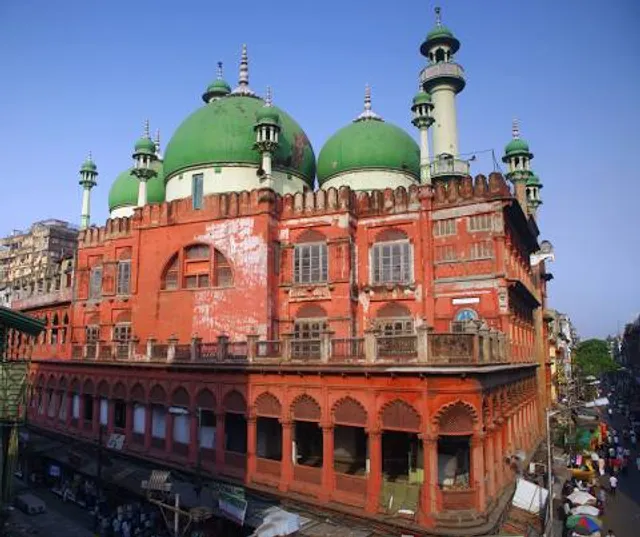
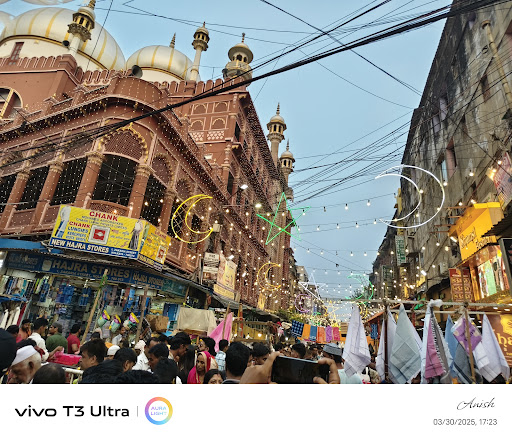
The mosque was built as an imitation of the mausoleum of Mughal Emperor Akbar at Sikandra, Agra by Kutchi Memon Jamat, a small community of Sunni Muslim community from Kutch.13
The Nakhoda Musjid the largest Muslim Mosque in West Bengal and eastern India has a long history. Before 1854 there used to be two different mosques at the present site. Haji Zakariah who was (Kutchi) Cutchi Memon merchant and business tycoon in those days was a regular musallee (devotee). The Cutchi Memon are a Muslim community who came to Calcutta round 1823 onwards. Haji Zakaria was the leader of other Sunni Muslim community who inhabited the surrounding areas of the present musjid. The mosque was named Nakhoda meaning Mariner.2
Reconstruction work started in 1926 and was completed in 1935. All the prominent Cutchi memons of Calcutta contributed for the new mosque but Abdul Rahim Osman was the biggest donor. The total cost incurred for the construction was 1,500,000 Indian rupees in 1926. The contract for rebuilding the musjid was given to Mackintosh Burn & Co., a British engineering company.The mosque's prayer hall has a capacity of 10,000.
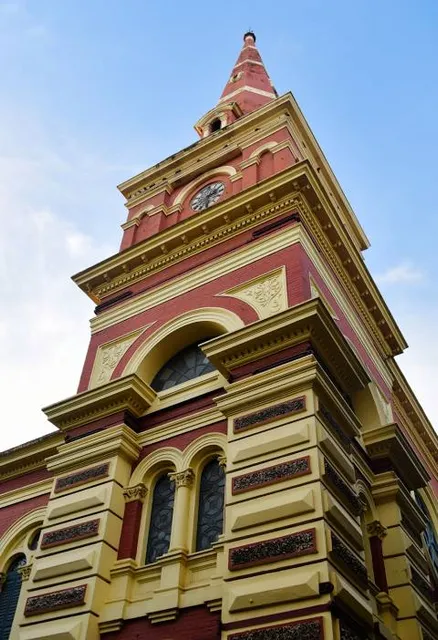
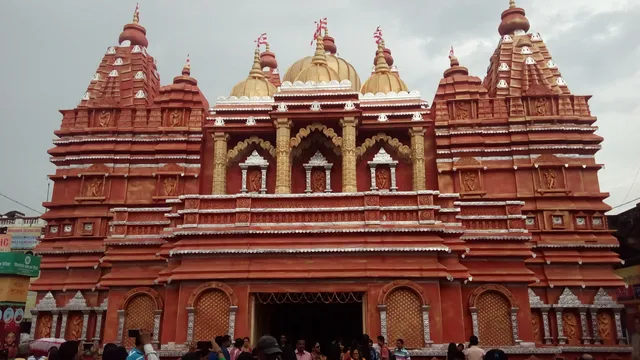
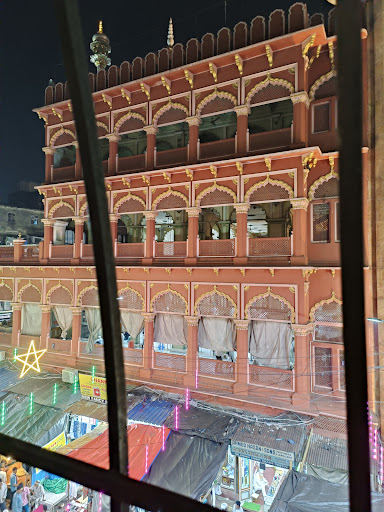
The masjid has three domes and two minarets which are 151 feet high. There are an additional 25 smaller minarets which range from 100 feet to 117 feet high.
The gateway is an ersatz of the Buland Darwaza at Fatehpur Sikri. For this purpose granite stones were brought from Tolepur. Inside is a superb exhibition of exquisite ornamentation and artistic extravaganza.The Nakhoda Musjid the largest Muslim Mosque in West Bengal and eastern India has a long history. Before 1854, there used to be two different mosques at the present site. Haji Zakariah who was (Kutchi) Cutchi Memon[6] merchant and business tycoon in those days was a regular musallee (devotee). The Cutchi Memon are a Muslim community who came to Calcutta round 1823 onwards.
Haji Zakaria was the leader of other Sunni Muslim community who in inhabitant the surrounding areas of the present musjid. The Cutchi Memons are a trading community and many of them had shipping business. Haji Zakariah who was the head of the community himself had 99 ships and was a landlord with several properties. He was also known as the king of sugar business and this can he confirmed by the dad family who still stay at Central Avenue, Kolkata.
Haji Zakariah was a great philanthropist and religious person. He took over the management of the two mosques and also purchased the land between the two mosques. He then built a huge mosque with his own money which became known as The Nakhoda Musjid. Nakhoda in Persian means sailor and he was in shipping business. He also established the Zakaria Madrassa and purchased four buildings for the benefit of Cutchi Memon. Hajee Zakariah along with Hajee Wahidana his cousin, business partner and very close friend also purchased the Maniktalla Burial Ground at 248 A, B, and C, Achariya Parfulla Chandra Road, Kolkata. There is a Bibi Jitan musjid and dargah also in the burial grounds. It is a private burial ground for Cutchi Memon only but other communities are also allowed burials after taking permission from the trustees. Maulana Khairuddin, his wife and family members are buried here.
Hajee Zakariah also helped in building the Hafiz Jamal Masjid in Sundarya Patti (Rabindra Sarani) and also contributed in the construction of Naher-e-Zubeda in Madinah Sharif. He was the sole trustee/ Mutawalli of the...
Read moreThe Nakhoda Musjid the largest Muslim Mosque in West Bengal and eastern India has a long history. Before 1854, there used to be two different mosques at the present site. Haji Zakariah who was (Kutchi) Cutchi Memon[6] merchant and business tycoon in those days was a regular musallee (devotee). The Cutchi Memon are a Muslim community who came to Calcutta round 1823 onwards.
Haji Zakaria was the leader of other Sunni Muslim community who in inhabitant the surrounding areas of the present musjid. The Cutchi Memons are a trading community and many of them had shipping business. Haji Zakariah who was the head of the community himself had 99 ships and was a landlord with several properties. He was also known as the king of sugar business and this can he confirmed by the dad family who still stay at Central Avenue, Kolkata.
Haji Zakariah was a great philanthropist and religious person. He took over the management of the two mosques and also purchased the land between the two mosques. He then built a huge mosque with his own money which became known as The Nakhoda Musjid. Nakhoda in Persian means sailor and he was in shipping business. He also established the Zakaria Madrassa and purchased four buildings for the benefit of Cutchi Memon. Hajee Zakariah along with Hajee Wahidana his cousin, business partner and very close friend also purchased the Maniktalla Burial Ground at 248 A, B, and C, Achariya Parfulla Chandra Road, Kolkata. There is a Bibi Jitan musjid and dargah also in the burial grounds. It is a private burial ground for Cutchi Memon only but other communities are also allowed burials after taking permission from the trustees. Maulana Khairuddin, his wife and family members are buried here.
Hajee Zakariah also helped in building the Hafiz Jamal Masjid in Sundarya Patti (Rabindra Sarani) and also contributed in the construction of Naher-e-Zubeda in Madinah Sharif. He was the sole trustee/ Mutawalli of the Zakaria Musjid also known as Nakhoda Musjid. During this period many Arabs from Egypt, Iraq and Madinah used to come to India. Haji Zakaria appointed these Arab Imam at Nakhoda Musjid another prominent person who was very close to Haji Zakariah and Maulana Khairuddin (father of the first education minister of Indian), Maulana Abul Kalam Azad. Maulana Khairuddin used to give Vaaiz / bayan at The Nakhoda Musjid and sometimes did the Emamt also. Haji Zakariah died in 1865 and his son Haji Noor Mohammed Zakariah stepped into his shoe and continued to play the role of his father. He contributed generously in building the Calcutta...
Read moreNakhoda Masjid, located in Kolkata, India, is an architectural gem that boasts rich history and cultural significance. This majestic mosque stands as a testament to the city's diverse heritage and religious harmony.
Stepping into the courtyard of Nakhoda Masjid evokes a sense of awe and tranquility. The intricate architecture, adorned with beautiful domes, towering minarets, and intricate designs, showcases the fine craftsmanship of its builders. The red sandstone structure, combined with white marble detailing, creates a mesmerizing sight, especially when illuminated during prayer times or festivals.
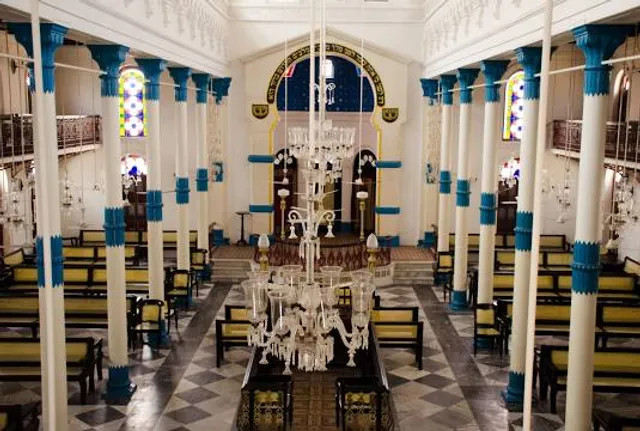
As one enters the prayer hall, the grandeur of the interior continues to captivate. The vast hall adorned with chandeliers, Persian carpets, and Arabic calligraphy on the walls exudes a sense of serenity. The central mihrab, intricately designed and beautifully embellished, serves as the focal point for prayers, drawing worshippers towards it.
Visitors of all backgrounds are welcome to admire the mosque's architectural splendor and soak in its peaceful ambiance. The atmosphere is serene, fostering a sense of unity and spirituality, where individuals can find solace irrespective of their beliefs.
The mosque not only serves as a place of worship but also plays a crucial role in the community. It hosts various cultural events, religious gatherings, and charitable activities, further solidifying its importance in the lives of the locals.
However, the experience might be slightly affected by the crowd during peak prayer times, especially during Fridays and religious festivals. The mosque attracts devotees from various parts of the city, leading to congestion in and around the premises.
Moreover, while the mosque holds significant historical value, maintenance and restoration efforts could enhance its preservation for future generations. Some areas show signs of wear and tear, requiring attention to maintain its grandeur.
In conclusion, Nakhoda Masjid stands as a symbol of Kolkata's rich cultural heritage and religious tolerance. Its stunning architecture, serene ambiance, and role in the community make it a must-visit for those interested in history, architecture, or seeking a peaceful place for contemplation. Despite minor drawbacks related to crowd management and maintenance, the mosque's beauty and cultural importance make it a noteworthy destination for visitors seeking a glimpse into Kolkata's diverse history and...
Read more