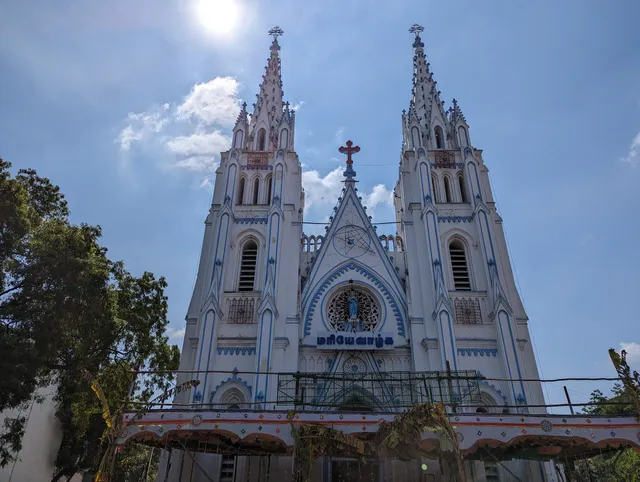
Madurai, Tamil Nadu and is dedicated to Goddess Parvati (also known as Meenakshi) and her husband Lord Shiva. Madurai is the second biggest city of India and is also one of the oldest cities of the world.
A dip in the Golden Lotus tank, situated in the temple, is considered auspicious and is usually taken before visiting the main shrine of the God and Goddess. As per a legend, the pond was created by Lord Shiva and is even older than the temple.
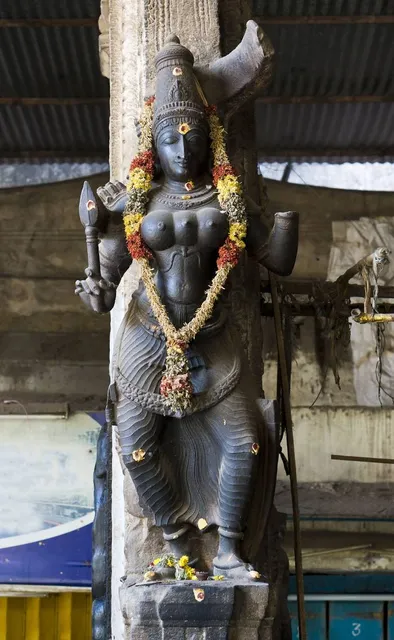
The temple has a hall, which consists of 985 pillars; each pillar is intricately carved with distinct figurines. The 12th century colorful temple was among the thirty nominees of the 'New Seven Wonders of the World'. Madurai is a major city in the Indian state of Tamil Nadu. It is the cultural capital of Tamil Nadu and the administrative headquarters of Madurai District, which is governed by the Madurai Municipal Corporation established in 1 November 1866. As of the 2011 census, it is the third largest metropolis in Tamil Nadu after Chennai and Coimbatore in terms of population and 27th largest urban agglomeration in India.7] Located on the banks of River Vaigai, Madurai has been a major settlement for two millennia and has a documented history of more than 2500 years.[8 It is often referred to as "Thoonga Nagaram", meaning "the city that never sleeps".10]
Madurai is closely associated with the Tamil language. The third Tamil Sangam, a major congregation of Tamil scholars, is said to have been held in the city. The recorded history of the city goes back to the 3rd century BCE, being mentioned by Megasthenes, the Greek ambassador to the Mauryan Empire, and Kautilya, a minister of the Mauryan emperor Chandragupta Maurya. Signs of human settlements and Roman trade links dating back to 300 BCE are evident from excavations by Archeological Survey of India in Manalur.[9[12] The city is believed to be of significant antiquity and has been ruled, at different times, by the Pandyan Kingdom, Chola Empire, Madurai Sultanate, Vijayanagar Empire, Madurai Nayaks, Carnatic kingdom, and the British East India Company's British Raj. The city has a number of historical monuments, with the Koodal Azhagar temple, Meenakshi Temple and the Thirumalai Nayakkar Mahal being the most prominent.
Madurai is an important industrial and educational hub in South Tamil Nadu. The city is home to various automobile, rubber, chemical and granite manufacturing industries.[13] Madurai has important government educational institutes such as the Madurai Medical College, Homeopathic Medical College,[14] Madurai Law College, Agricultural College and Research Institute and All India Institute of Medical Sciences, Madurai. The city covers an area of 147.97 km2 (57.13 sq mi) and had a population of 1,470,755 in 2011.[15] The city is also the seat of a bench of the Madras High Court.[b]
It is one of the few towns and cities in List of AMRUT Smart cities in Tamil Nadu selected for AMRUT Schemes [16] from central government and the developmental activities are taken care by government of Tamil Nadu.[17]
Etymology According to Iravatham Mahadevan, a 2nd-century BCE Tamil-Brahmi inscription refers to the city as matiray, an Old Tamil word meaning a "walled city".[18]
Madurai is one of the many temple towns in the state which is named after the groves, clusters or forests dominated by a particular variety of a tree or shrub and the same variety of tree or shrub sheltering the presiding deity. The region is believed to have been covered with Kadamba forest and hence called Kadambavanam.[19] The city is referred by various names including "Madurai", "Koodal", "Malligai Maanagar", "Naanmadakoodal" and "Thirualavai". It is believed that Madurai is the derivative of the word Marutham, which refers to the type of landscape of the Sangam age. A town in the neighbouring Dindigul district is called Vada Madurai (North Madurai) and another in Sivagangai district is called Manamadurai. The different names by which the city has been referred to historically are listed in the 7th-century poem...
Read moreMeenakshi Amman Temple, Madurai – A Spiritual and Architectural Wonder
Meenakshi Amman Temple, located in the heart of Madurai, Tamil Nadu, is one of India’s most iconic and revered temples. Dedicated to Goddess Meenakshi (a form of Parvati) and Lord Sundareswarar (a form of Shiva), this ancient temple stands as a symbol of spiritual devotion, architectural brilliance, and cultural heritage. Visiting the Meenakshi Temple is a transformative experience for pilgrims, history buffs, and art lovers alike.
Architectural Grandeur
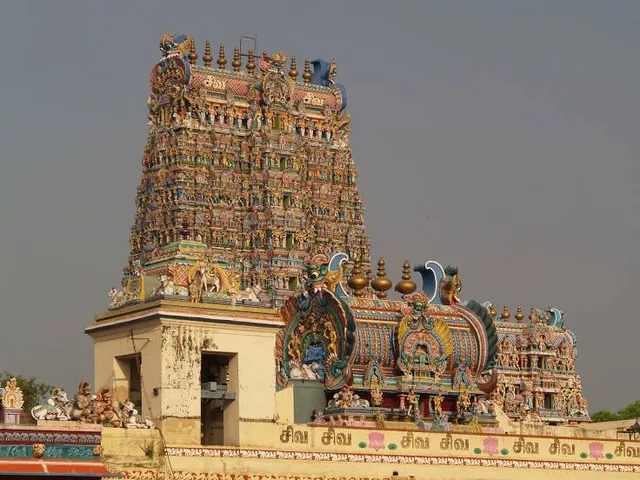
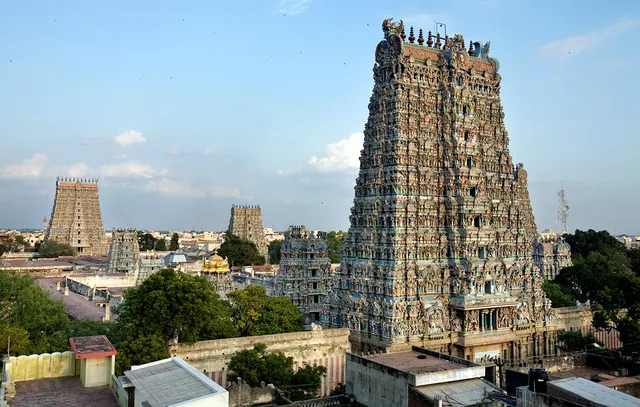
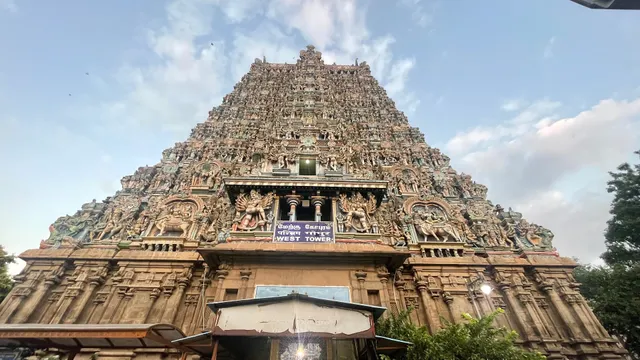
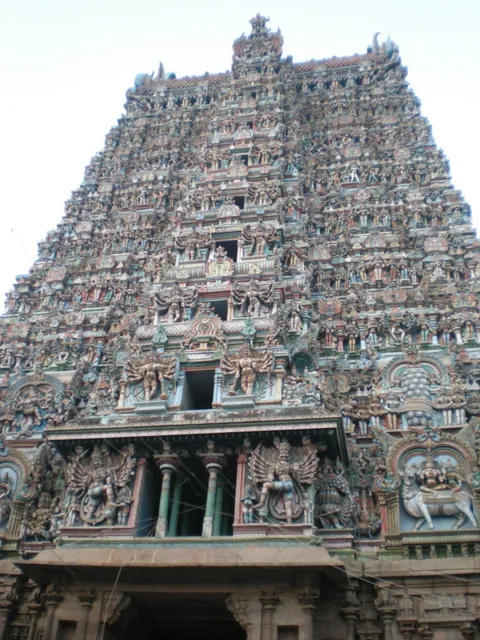
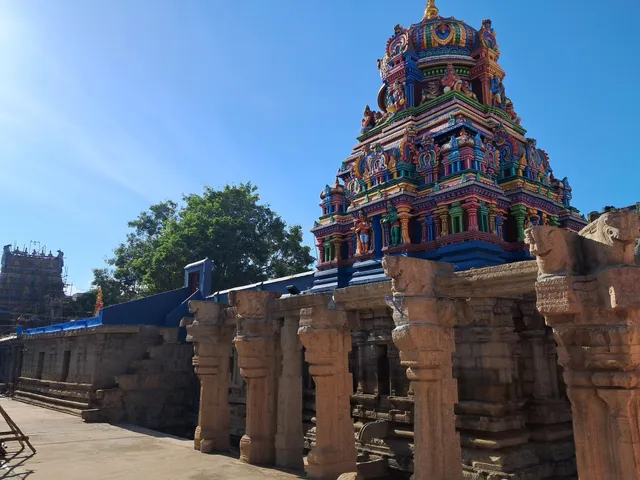
The first thing that strikes visitors is the sheer size and grandeur of the temple complex. Spanning over 14 acres, the temple’s towering gopurams (gateway towers) dominate Madurai’s skyline. The temple has 14 gopurams, the tallest of which reaches about 170 feet. These gopurams are intricately adorned with thousands of colorful, detailed carvings of gods, goddesses, mythical creatures, and celestial beings. The craftsmanship displayed on each tower is awe-inspiring, with a multitude of vivid sculptures that are a treat for the eyes.
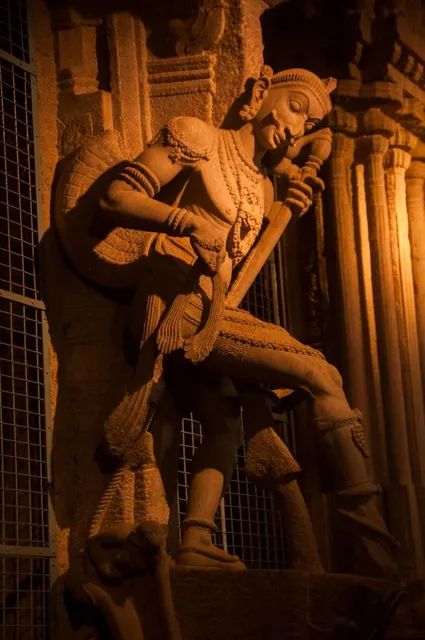
Inside the temple, the intricacy continues with beautifully carved pillars, detailed murals, and sculptures that showcase the remarkable artistry of the Nayak dynasty, under whose reign the temple flourished in the 16th century. Every corner of the temple is a testament to Tamil architecture, making it one of the finest examples of Dravidian style.
Spiritual Experience
For devotees, the temple holds immense religious significance. Goddess Meenakshi is believed to be the reigning deity of Madurai, and many pilgrims visit to seek her blessings, particularly for marital harmony, fertility, and prosperity. The atmosphere inside the temple is filled with a palpable sense of devotion. The chanting of mantras, the ringing of temple bells, and the scent of incense contribute to the profound spiritual ambiance.
The highlight of the spiritual experience is witnessing the rituals, especially the Meenakshi Thirukalyanam (the celestial wedding of Meenakshi and Sundareswarar), which is performed with great pomp and devotion. Pilgrims also partake in the darshan (viewing) of the deities in their majestic sanctums, where the idols are ornately decorated with flowers, jewels, and vibrant silk.
The Thousand Pillar Hall
One of the most captivating parts of the temple is the Thousand Pillar Hall (Ayiram Kaal Mandapam). This majestic hall is not just an architectural marvel but also an art gallery, showcasing sculptures that are a testament to the skill of ancient artisans. The pillars are adorned with stunning carvings that depict various gods, goddesses, and mythological scenes. As you walk through this hall, you are immersed in the historical and cultural grandeur of Tamil Nadu.
Tank of the Golden Lotus
Another noteworthy feature is the Potramarai Kulam or Tank of the Golden Lotus, located within the temple complex. It is a serene body of water believed to have divine significance. The legend associated with the tank states that it was once used to judge the worth of literary works by floating manuscripts on its surface—those that sank were deemed unworthy. This tank adds a peaceful touch to the bustling temple atmosphere and is surrounded by pillared corridors with sculptures.
Cultural Significance
Beyond its religious importance, Meenakshi Amman Temple serves as a cultural hub. It hosts numerous festivals throughout the year, the most famous being the Meenakshi Tirukalyanam during the Chithirai Festival. This festival attracts millions of devotees and tourists alike, who come to witness the vibrant processions, traditional music, and dance performances.
Conclusion
Meenakshi Amman Temple is not just a place of worship; it is a celebration of art, culture, and spirituality. Whether you are drawn by faith, history, or the temple’s stunning architecture, the experience is bound to leave a lasting impression. Walking through its halls, taking in the rich carvings, and observing centuries-old rituals makes for a deeply...
Read moreI happened to visit this historic temple for the second time. It is dedicated to Goddess Meenakshi (a form of Parvati) and Lord Sundareswarar (Shiva), is not just a spiritual centre but a symbol of ancient Tamil culture and architectural brilliance! It is located in Madurai – the cultural capital of Tamil Nadu on the southern banks of Vaigai River. Though currently under renovation hopefully by next year it should be completed. The temple is famous for its Golden Lotus Tank, where devotees were allowed to take a ritual dip. It’s a serene spot within the temple complex, adding to the peaceful atmosphere. There are several gates to enter and exit the temple, with the main entrances being the East and South gates. It’s advisable to enter from the South side to experience the full grandeur of the temple. The temple is surrounded by a bustling market selling religious items, souvenirs, and local handicrafts, adding to the vibrant charm of the visit. To make the most of this temple I would suggest hiring a guide.
How to Reach Madurai Airport is around 10 km from the temple, with regular flights connecting it to major cities like Chennai and Bengaluru. Madurai Junction is the nearest railway station, which is just 2 km away from the temple, and there are plenty of buses and taxis available to take you to the temple.
Best Time to Visit The temple is open from 5:00 AM to 12:30 PM and from 4:00 PM to 09:00 PM, making it ideal to visit early in the morning or late in the evening to avoid heavy crowds. The temple is especially crowded during festivals like Meenakshi Thirukalyanam (the celestial wedding of Meenakshi and Sundareswarar) which falls in the Tamil month of Chithirai, which corresponds to April and May in the Gregorian calendar, so it’s best to plan your visit during the off-peak times for a more relaxed experience.
Scams to Watch Out For While the temple is safe, tourists should be cautious of people offering to guide you for a fee or promising special rituals for a price. Always be sure of the pricing and avoid being lured into unnecessary purchases.
Dress Code The dress code is simple but important to respect the temple’s sanctity. Men are expected to wear traditional attire like dhoti or lungi. Women should wear a saree or a salwar kameez. Western clothes are not allowed inside the temple, so make sure to dress modestly.
Lockers and Convenience Lockers are available at the temple for storing your footwear (available for free), mobile phones (₹10/-) and handbags and luggage (₹20/-). There are also plenty of facilities like drinking water stations and restrooms to make your visit more comfortable.
Entry Tickets The temple has free entry for all visitors. However, there are special entry tickets available for ₹50/- for Goddess Meenakshi Temple & ₹50/- for Lord Sundareswarar Temple for those who wish to skip the regular queues and get quicker access to the temple. The temple also has started a museum within the temple complex that showcases artifacts and temple history, with entry priced at a very nominal cost.
Aarti and Rituals The morning Abhishekam (ritual bath) for Lord Sundareswarar at 05:30 A.M. is a beautiful sight to behold, and the evening Aarti at around 09:00 P.M. is dedicated to Goddess Meenakshi is equally mesmerizing. The atmosphere during these rituals is spiritual and uplifting, with hundreds of devotees singing hymns and prayers in devotion.
Architecture It is a stunning example of Dravidian architecture. The temple complex is home to 14 grand gopurams (gateway towers) adorned with vibrant sculptures of gods, goddesses, and mythological creatures. The South Tower is the tallest, standing at 170 feet. The temples' corridors are lined with intricately carved pillars, halls, and the main sanctum is a treat for anyone interested in art and history.
History and Significance The temple has a rich history, built by the Pandya dynasty more than 2,500 years ago. The temple is significant not only for its architectural beauty but also as a place of deep...
Read more