HTML SitemapExplore
logo
Find Things to DoFind The Best Restaurants

Thiba Palace — Attraction in Maharashtra

Name
Thiba Palace
Description
Nearby attractions
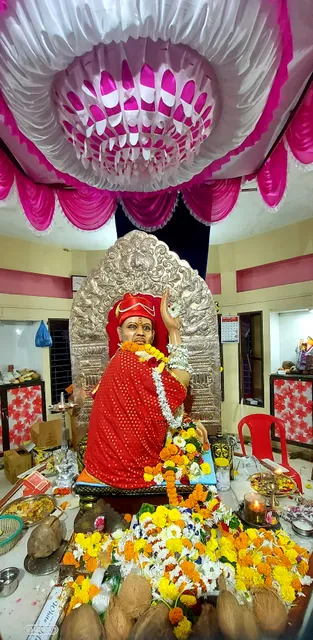
Shree Gajanan Maharaj Mandir, Ratnagiri.
Near Power Hosue, Nachane Rd, Ratnagiri, Maharashtra 415639, India
Nearby restaurants
Parampara Food Works
Bungalow no 18, Khatib colony, Thiba Palace, Road, Hindu Colony, Abhyudhya Nagar, Ratnagiri, Maharashtra 415612, India
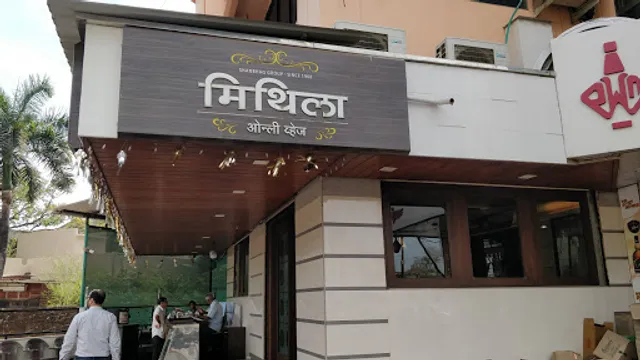
Mithila Only Veg
Shanbhag Plaza, Maruti Mandir, Abhyudhya Nagar, Ratnagiri, Maharashtra 415612, India
Hotel Viva Executive
NH204, Maruti Mandir, Circle, Ratnagiri, Maharashtra 415639, India
Hotel Gopal
X8R6+5M7, Maruti Mandir Op. Shivaji Stadium, Ratnagiri, Maharashtra 415639, India
Hotel Amantran
Juna mal naka, opp. Gandhi Petrol Pump, near Vihar Deluxe Hotel, Sanmitra Nagar, Ratnagiri, Maharashtra 415612, India
Drive Inn Carnival
DYS Plaza,, Maruti Mandir, Ratnagiri, Maharashtra 415639, India
Flavours Veg. Restaurant & Bakery
Shop no. 16/17, Parasmani building, K. C, Jain Nagar, Maruti Mandir, Ratnagiri, Maharashtra 415612, India
The Clove Wine n Dine
First Floor, Ashirwad Complex, beside Wellness Medical, Maruti Mandir, State Bank Colony, Ratnagiri, Maharashtra 415639, India
SAGOTI FISH & SEAFOOD RESTAURANT
Shop No.04, Aashirwad Complex, Near Wellness Forever, Maruti Mandir, Ratnagiri, Maharashtra 415639, India
Nearby hotels
Hotel Landmark
Thiba Palace, Road, Abhyudhya Nagar, Ratnagiri, Maharashtra 415612, India
The Mango Villas
624 B/5, Nachane Rd, opposite M.S.E.B Office, Balkrishna Nagar, Ratnagiri, Maharashtra 415639, India
Sushegad Holiday Home
Limaye, Karekar Wadi Rd, Karle Village, Karla, Maharashtra 415612, India
Aasra Lodge
Second Floor, Babusheth Sansare Complex, Maruti Mandir, Ratnagiri, Maharashtra 415612, India
Hotel Vihar Deluxe
870, Main Road, Sanmitra Nagar, Ratnagiri, Maharashtra 415612, India
Hotel Alpha
Behind Swaroopanand Commercial Complex, Near, Maruti Mandir, Ratnagiri, Maharashtra 415612, India
THE PARIVAR STAY
Shop No.155/315C, Parivar Building, Nachane Rd, near Power House, Maruti Mandir, Nachane, Ratnagiri, Maharashtra 415639, India
Shriramkrupa Homestay
near Hotel Alpha Malnaka, Ratnagiri, Maharashtra 415612, India
Related posts
Keywords
Thiba Palace tourism.Thiba Palace hotels.Thiba Palace bed and breakfast. flights to Thiba Palace.Thiba Palace attractions.Thiba Palace restaurants.Thiba Palace travel.Thiba Palace travel guide.Thiba Palace travel blog.Thiba Palace pictures.Thiba Palace photos.Thiba Palace travel tips.Thiba Palace maps.Thiba Palace things to do.
Thiba Palace things to do, attractions, restaurants, events info and trip planning
Thiba Palace
IndiaMaharashtraThiba Palace

Basic Info

Thiba Palace

X8M6+9JR, Abhyudhya Nagar, Ratnagiri, Maharashtra 415612, India
4.1(1.7K)
Open 24 hours
Save
spot

Ratings & Description

Info

Cultural
Outdoor
Family friendly
attractions: Shree Gajanan Maharaj Mandir, Ratnagiri., restaurants: Parampara Food Works, Mithila Only Veg, Hotel Viva Executive, Hotel Gopal, Hotel Amantran, Drive Inn Carnival, Flavours Veg. Restaurant & Bakery, The Clove Wine n Dine, SAGOTI FISH & SEAFOOD RESTAURANT
logoLearn more insights from Wanderboat AI.

Plan your stay

hotel
Pet-friendly Hotels in Maharashtra
Find a cozy hotel nearby and make it a full experience.
hotel
Affordable Hotels in Maharashtra
Find a cozy hotel nearby and make it a full experience.
hotel
The Coolest Hotels You Haven't Heard Of (Yet)
Find a cozy hotel nearby and make it a full experience.
hotel
Trending Stays Worth the Hype in Maharashtra
Find a cozy hotel nearby and make it a full experience.

Reviews

Nearby attractions of Thiba Palace

Shree Gajanan Maharaj Mandir, Ratnagiri.

Shree Gajanan Maharaj Mandir, Ratnagiri.

Shree Gajanan Maharaj Mandir, Ratnagiri.

4.7

(45)

Open 24 hours
Click for details

Nearby restaurants of Thiba Palace

Parampara Food Works

Mithila Only Veg

Hotel Viva Executive

Hotel Gopal

Hotel Amantran

Drive Inn Carnival

Flavours Veg. Restaurant & Bakery

The Clove Wine n Dine

SAGOTI FISH & SEAFOOD RESTAURANT

Parampara Food Works

Parampara Food Works

4.2

(236)

Click for details
Mithila Only Veg

Mithila Only Veg

4.2

(1.8K)

Click for details
Hotel Viva Executive

Hotel Viva Executive

4.2

(600)

$$$

Click for details
Hotel Gopal

Hotel Gopal

4.2

(677)

Click for details
Get the Appoverlay
Get the AppOne tap to find yournext favorite spots!
Wanderboat LogoWanderboat

Your everyday Al companion for getaway ideas

CompanyAbout Us
InformationAI Trip PlannerSitemap
SocialXInstagramTiktokLinkedin
LegalTerms of ServicePrivacy Policy

Get the app

© 2025 Wanderboat. All rights reserved.
logo

Posts

Nilesh PednekarNilesh Pednekar
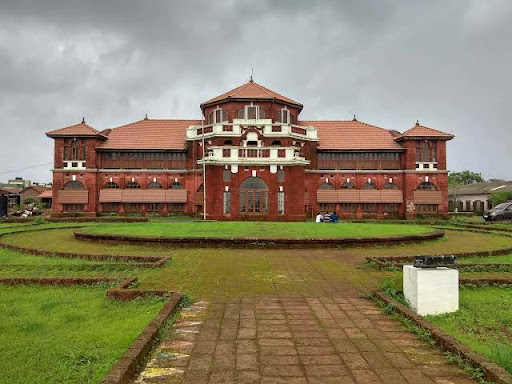
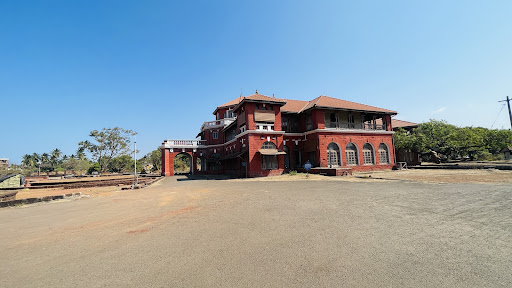
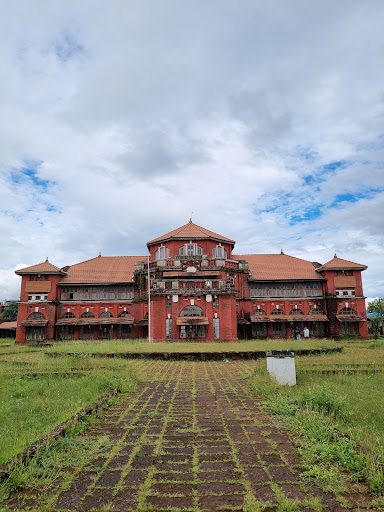
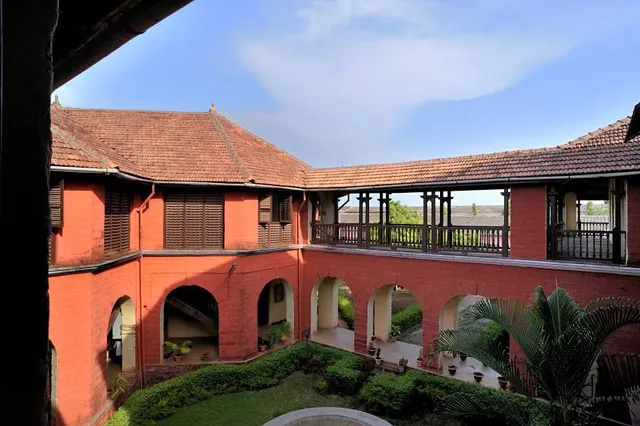
Thibaw Palace, a significant attraction in Ratnagiri, is preserved by the Archaeological Survey of India (ASI) and stands merely 2 km from the bus stand. Accessible by cab or auto, this heritage palace, constructed during the British era, has a compelling history. Built to house King Thibaw of Burma, who was under house arrest from 1910 until his demise, the palace tells a tale of political intrigue. Thibaw, the last ruler of the Konbaung dynasty, had a tumultuous reign marked by conflicts with the British, ultimately resulting in his capture and exile to India. Following their victory in the third Burmese war, the English took King Thibaw and his family captive, bringing them to India. Initially in exile in Madras, the family later found residence in Ratnagiri, where a palace was erected at a cost of one lakh seventy thousand rupees in 1910. The palace, sprawling over 27 acres, is a three-storied architectural marvel made of Laterite and Lava rock. Adorned with semi-circular wooden windows of Burmese teak featuring intricate designs, the structure boasts of amazing carvings that please the eye. Divided into three blocks, the palace has projecting corridors on the upper floors, adding to its beauty. A central courtyard with a fountain enhances ventilation, while airy connecting passages with open arches and sloping roofs made of wooden frames contribute to the spacious feel. Throughout the palace, Burmese teak reflects the influence of Burmese architecture. On the first floor, a dancing hall with marble flooring is a notable feature. Additionally, a Buddha idol brought to India by King Thibaw is installed behind the palace. The palace's bifurcated Burmese-style wooden staircases were extensively used by the royal family and visiting British officers, some of which are currently under repair. While the once-vast garden layout echoes colonial and Burmese traditions, the lack of greenery in recent times is lamentable. The palace, now also home to an Archaeological Museum, showcases artifacts used by the exiled king on the ground floor, while the upper floor hosts an art exhibition. Previously serving as a government office and a sub-center for Bombay University, the palace comes to life during the annual arts festival in January, adorned with lights and decorations. Visitors should note that the palace closes at 5 PM, with Mondays designated as a holiday. For a spectacular evening view, the Thiba Palace point in Jijamata Garden is recommended, providing a panoramic sight of Someshwar Creek, Bhatye Bridge, and the Arabian Sea.
Sanket SawantSanket Sawant
The Thiba Palace in Ratnagiri offers a unique opportunity to step back in time. Here's a breakdown of what to expect: Historical Significance: Built in the early 20th century, the palace served as a residence for the exiled Burmese King Thibaw and his queen. Exploring the architecture and learning about this period in history can be quite interesting. Mixed Reviews on Exhibits: The palace houses a museum with various artifacts. While some reviews find the collection lacking, others appreciate the glimpse into local history and Burmese culture. Architectural Appeal: The colonial-style architecture of the palace itself is quite attractive and worth a look. Things to Consider: Limited Hours and Closures: Be sure to check the opening hours before your visit, as the palace can be closed on specific days or for renovations. Limited Information: Detailed descriptions of the exhibits might be lacking, so consider hiring a guide for a more enriching experience. Photography Restrictions: Photography is not allowed inside the palace, which can be a disappointment for some visitors. Overall, the Thiba Palace offers a chance to learn about a fascinating period in history and admire some colonial architecture. However, be prepared for potentially limited exhibits, lack of photography permission, and the possibility of closures. If you're managing your expectations and have an interest in local history, it can be a worthwhile visit.
Tejaswini KTejaswini K
Do read 'The king in exile' by Sudha Shah. And then visit this place.. Thiba palace was built by British Government to keep the former king of Brahmadesh (Now Myanmar) Thabba Min in house arrest. It was built in the year 1910. Until 1916, the king and queen of Myanmar lived in this palace. Now there is a museum in this palace. Some of the things used by King Thibaw are still preserved in this palace. The palace is a beautifully constructed three storied structure with sloping roofs. Semi-circular wooden windows with beautiful carvings are the main attraction of this structure. There is a dancing hall with marble floor on the first floor. One Buddha idol is installed at the back side of the palace. This idol was brought to India by king Thibaw. One can have a mesmerizing view of Someshwar creek, Bhatye Bridge and Arabian Sea from this point. This place is also famous for the beautiful Sunset. The place is closed until further notice as of in january 2021 due to pandemic.
See more posts
See more posts
hotel
Find your stay

Pet-friendly Hotels in Maharashtra

Find a cozy hotel nearby and make it a full experience.

Thibaw Palace, a significant attraction in Ratnagiri, is preserved by the Archaeological Survey of India (ASI) and stands merely 2 km from the bus stand. Accessible by cab or auto, this heritage palace, constructed during the British era, has a compelling history. Built to house King Thibaw of Burma, who was under house arrest from 1910 until his demise, the palace tells a tale of political intrigue. Thibaw, the last ruler of the Konbaung dynasty, had a tumultuous reign marked by conflicts with the British, ultimately resulting in his capture and exile to India. Following their victory in the third Burmese war, the English took King Thibaw and his family captive, bringing them to India. Initially in exile in Madras, the family later found residence in Ratnagiri, where a palace was erected at a cost of one lakh seventy thousand rupees in 1910. The palace, sprawling over 27 acres, is a three-storied architectural marvel made of Laterite and Lava rock. Adorned with semi-circular wooden windows of Burmese teak featuring intricate designs, the structure boasts of amazing carvings that please the eye. Divided into three blocks, the palace has projecting corridors on the upper floors, adding to its beauty. A central courtyard with a fountain enhances ventilation, while airy connecting passages with open arches and sloping roofs made of wooden frames contribute to the spacious feel. Throughout the palace, Burmese teak reflects the influence of Burmese architecture. On the first floor, a dancing hall with marble flooring is a notable feature. Additionally, a Buddha idol brought to India by King Thibaw is installed behind the palace. The palace's bifurcated Burmese-style wooden staircases were extensively used by the royal family and visiting British officers, some of which are currently under repair. While the once-vast garden layout echoes colonial and Burmese traditions, the lack of greenery in recent times is lamentable. The palace, now also home to an Archaeological Museum, showcases artifacts used by the exiled king on the ground floor, while the upper floor hosts an art exhibition. Previously serving as a government office and a sub-center for Bombay University, the palace comes to life during the annual arts festival in January, adorned with lights and decorations. Visitors should note that the palace closes at 5 PM, with Mondays designated as a holiday. For a spectacular evening view, the Thiba Palace point in Jijamata Garden is recommended, providing a panoramic sight of Someshwar Creek, Bhatye Bridge, and the Arabian Sea.
Nilesh Pednekar

Nilesh Pednekar

hotel
Find your stay

Affordable Hotels in Maharashtra

Find a cozy hotel nearby and make it a full experience.

Get the Appoverlay
Get the AppOne tap to find yournext favorite spots!
The Thiba Palace in Ratnagiri offers a unique opportunity to step back in time. Here's a breakdown of what to expect: Historical Significance: Built in the early 20th century, the palace served as a residence for the exiled Burmese King Thibaw and his queen. Exploring the architecture and learning about this period in history can be quite interesting. Mixed Reviews on Exhibits: The palace houses a museum with various artifacts. While some reviews find the collection lacking, others appreciate the glimpse into local history and Burmese culture. Architectural Appeal: The colonial-style architecture of the palace itself is quite attractive and worth a look. Things to Consider: Limited Hours and Closures: Be sure to check the opening hours before your visit, as the palace can be closed on specific days or for renovations. Limited Information: Detailed descriptions of the exhibits might be lacking, so consider hiring a guide for a more enriching experience. Photography Restrictions: Photography is not allowed inside the palace, which can be a disappointment for some visitors. Overall, the Thiba Palace offers a chance to learn about a fascinating period in history and admire some colonial architecture. However, be prepared for potentially limited exhibits, lack of photography permission, and the possibility of closures. If you're managing your expectations and have an interest in local history, it can be a worthwhile visit.
Sanket Sawant

Sanket Sawant

hotel
Find your stay

The Coolest Hotels You Haven't Heard Of (Yet)

Find a cozy hotel nearby and make it a full experience.

hotel
Find your stay

Trending Stays Worth the Hype in Maharashtra

Find a cozy hotel nearby and make it a full experience.

Do read 'The king in exile' by Sudha Shah. And then visit this place.. Thiba palace was built by British Government to keep the former king of Brahmadesh (Now Myanmar) Thabba Min in house arrest. It was built in the year 1910. Until 1916, the king and queen of Myanmar lived in this palace. Now there is a museum in this palace. Some of the things used by King Thibaw are still preserved in this palace. The palace is a beautifully constructed three storied structure with sloping roofs. Semi-circular wooden windows with beautiful carvings are the main attraction of this structure. There is a dancing hall with marble floor on the first floor. One Buddha idol is installed at the back side of the palace. This idol was brought to India by king Thibaw. One can have a mesmerizing view of Someshwar creek, Bhatye Bridge and Arabian Sea from this point. This place is also famous for the beautiful Sunset. The place is closed until further notice as of in january 2021 due to pandemic.
Tejaswini K

Tejaswini K

See more posts
See more posts

Reviews of Thiba Palace

4.1
(1,658)
avatar
5.0
1y

Thibaw Palace, a significant attraction in Ratnagiri, is preserved by the Archaeological Survey of India (ASI) and stands merely 2 km from the bus stand. Accessible by cab or auto, this heritage palace, constructed during the British era, has a compelling history.

Built to house King Thibaw of Burma, who was under house arrest from 1910 until his demise, the palace tells a tale of political intrigue. Thibaw, the last ruler of the Konbaung dynasty, had a tumultuous reign marked by conflicts with the British, ultimately resulting in his capture and exile to India.

Following their victory in the third Burmese war, the English took King Thibaw and his family captive, bringing them to India. Initially in exile in Madras, the family later found residence in Ratnagiri, where a palace was erected at a cost of one lakh seventy thousand rupees in 1910.

The palace, sprawling over 27 acres, is a three-storied architectural marvel made of Laterite and Lava rock. Adorned with semi-circular wooden windows of Burmese teak featuring intricate designs, the structure boasts of amazing carvings that please the eye. Divided into three blocks, the palace has projecting corridors on the upper floors, adding to its beauty.

A central courtyard with a fountain enhances ventilation, while airy connecting passages with open arches and sloping roofs made of wooden frames contribute to the spacious feel. Throughout the palace, Burmese teak reflects the influence of Burmese architecture.

On the first floor, a dancing hall with marble flooring is a notable feature. Additionally, a Buddha idol brought to India by King Thibaw is installed behind the palace. The palace's bifurcated Burmese-style wooden staircases were extensively used by the royal family and visiting British officers, some of which are currently under repair.

While the once-vast garden layout echoes colonial and Burmese traditions, the lack of greenery in recent times is lamentable. The palace, now also home to an Archaeological Museum, showcases artifacts used by the exiled king on the ground floor, while the upper floor hosts an art exhibition. Previously serving as a government office and a sub-center for Bombay University, the palace comes to life during the annual arts festival in January, adorned with lights and decorations.

Visitors should note that the palace closes at 5 PM, with Mondays designated as a holiday. For a spectacular evening view, the Thiba Palace point in Jijamata Garden is recommended, providing a panoramic sight of Someshwar Creek, Bhatye Bridge, and the...

   Read more
avatar
4.0
43w

Thibaw, King of Burma, now called as Myanmar, was a unique personality. He achieved Padhamarakyaw - a highest degree in Pali language. He was the only king in entire Myanmar history to achieve this degree. He had great respect and love for Buddhist religion and monks. British defeated Thibaw and captured him on 28 Nov. 1885. Apprehensive of a possible revolt from loyal followers of Thibaw, the British took him along with his family first to Madras and then to Ratnagiri (the then british ruled India). First he was provided an accommodation in rental bunglow. But as the space was inadequate, the site for palace was selected be Thibaw's choice, south of Kolhapur Road.

British government sanctioned Rs. One lakh 25 thousand for the construction of the Palace. During the same period Thibaw also constructed a Buddha Temple in Ratnagiri. The construction work of the palace began in 1906. Thibaw took great interest in planning and executing the construction. Thibaw visited the site almost daily, to supervise the work, to which the British did not object. Thus, planning and construction of this palace took entirely according to Thibaw's ideas and under his own supervision.

Hence, on this palace built in laterite stone in lime morter and teakwood, an influence of Burmese architecture is seen to large extent. Thibaw inhabited this palace in 1910. His wife Su Paya Gale and Thibaw himself took their last breath in the same palace respectively on 25 January 1912 and 16 December 1916. Their tombs are situated at Shivajinagar in Ratnagiri. Thibaw Palace is now a State Protected Monument of Maharashtra.

(Source of this information is the information mentioned in the Thibaw Palace.)

Directorate of Archaeology and Museums of Maharashtra State has started Regional Museum in Thibaw Palace. Old sculptures (from 10th to 20th century) made from stones and other old things are portrayed here. This museum open on all days except Monday. Time : 10 AM to 5.30 PM. Entry fee : Rs....

   Read more
avatar
5.0
3y

Thiba Palace in Ratnagiri is a mesmerizing testament to history, offering visitors a remarkable glimpse into the lives of the royal family. From the moment you step foot in the palace, you are transported back in time, surrounded by regal architecture and a captivating atmosphere.

The palace, once the residence of the exiled King Thibaw of Burma, boasts an impressive blend of Burmese and Indian architectural styles. The intricate carvings, vibrant colors, and elegant designs make every corner of the palace a visual treat. The attention to detail is exquisite, leaving visitors in awe of the craftsmanship.

As you explore the palace, you will come across beautifully preserved rooms that once hosted royalty. From the opulent living quarters to the grand Durbar Hall, each space tells a story of its own. The exhibits display a range of artifacts, including furniture, photographs, and personal belongings, providing a deeper understanding of the palace’s historical significance.

The palace’s serene surroundings, with well-maintained gardens and tranquil pathways, add to the overall charm of the place. It’s the perfect setting for a leisurely stroll or a moment of reflection amidst the rich heritage.

The staff at Thiba Palace are knowledgeable and enthusiastic, sharing interesting anecdotes and historical facts about the palace and its royal inhabitants. Their passion for preserving the cultural heritage shines through, making the visit even more engaging and informative.

The entry fee for the palace is reasonable, considering the value and uniqueness of the experience. It’s worth mentioning that the palace also houses a small museum that further enriches the visit, providing additional insights into the history and culture of the region.

In conclusion, Thiba Palace is a hidden gem in Ratnagiri, offering a captivating journey into the past. The stunning architecture, well-preserved artifacts, and informative...

   Read more
Page 1 of 7
Previous
Next