HTML SitemapExplore
logo
Find Things to DoFind The Best Restaurants

Mandapeshwar Caves — Attraction in Mumbai

Name
Mandapeshwar Caves
Description
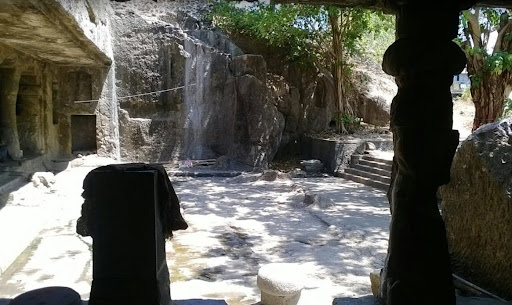
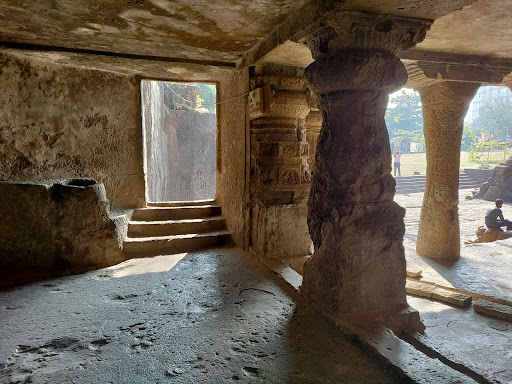
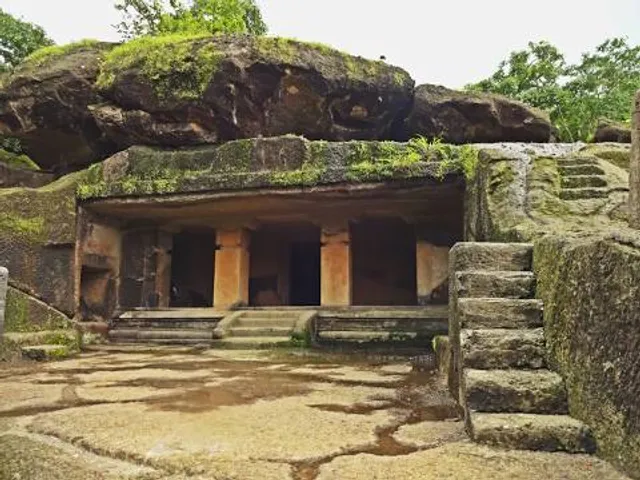
The Mandapeshwar Caves is an 8th Century rock-cut shrine dedicated to Shiva located near Mount Poinsur in Borivali, a suburb of Mumbai in Maharashtra, India. The caves were originally Buddhist viharas. These 6th century caves are located in a corner of Borivali- an otherwise northern suburb of Mumbai.
Nearby attractions
Bhataladevi Temple
Sai Pooja Prajna Education Centre, Near, Bharucha Rd, opp. Gogri General Store, Maratha Colony, Dahisar East, Mumbai, Maharashtra 400068, India
Nearby restaurants
Hotel Aashirwad - I.C. Colony
opp. I.C Church, I C Colony, Borivali West, Mumbai, Maharashtra 400103, India
Chhotu's Kitchen
Shop No. 19, Jaya Milk Bar, LIC Shopping Center, Vallabh Nagar, Borivali West, Mumbai, Maharashtra 400103, India
Al-Falah Shawarma
Shop No.7, Besides Chocolate Point, Ami Kalash Apt, Fish Market, opposite Yes Bank, near Good Flippin, I C Colony, Borivali West, Mumbai, Maharashtra 400103, India
Majestic NX Fine Dining
Rakesh Apartments, LIC Colony Rd, Vallabh Nagar, Borivali, Mumbai, Maharashtra 400103, India
Konkan Kinara
SHOP NO 04 & 05, REGENT CHSL, opp. KARNATAKA BANK LTD, LIC Colony, Borivali West, Mumbai, Maharashtra 400103, India
SCHUMANIA BAR & RESTAURANT
Shop # 8/9,10, El Plaza Apartments, opposite Citizen co op bank, I C Colony, Borivali, Mumbai, Maharashtra 400103, India
GOOD FLIPPIN' BURGERS®
Shop 5,6 &7, Audumbar Chaaya, IC Colony Rd, I C Colony, Maryland Complex, Borivali West, Mumbai, Maharashtra 400103, India
LEGACY BY SAROJ
Regent CHS, 4&5, opp. Karnataka Bank, LIC Colony, Borivali West, Mumbai, Maharashtra 400103, India
Shawarma House Express
Shop No 1, lopez manor, next to vienna bakery, I C Colony, Borivali West, Mumbai, Maharashtra 400103, India
Uncle's Corner - A Family Restaurant
Shop No. 1 & 1A, Church Way Co-op. Socity, IC Colony Rd, I C Colony, Borivali, Mumbai, Maharashtra 400103, India
Nearby hotels
Vala Janu Hotel
Rakesh Apartments, LIC Colony Rd, Vallabh Nagar, Borivali West, Mumbai, Maharashtra 400103, India
Aqua stone Hotel lodging
5, Bharucha Rd, near Kaveri Jewellers, Bhatt Chawl, Maratha Colony, Dahisar East, Mumbai, Maharashtra 400068, India
Related posts
Keywords
Mandapeshwar Caves tourism.Mandapeshwar Caves hotels.Mandapeshwar Caves bed and breakfast. flights to Mandapeshwar Caves.Mandapeshwar Caves attractions.Mandapeshwar Caves restaurants.Mandapeshwar Caves travel.Mandapeshwar Caves travel guide.Mandapeshwar Caves travel blog.Mandapeshwar Caves pictures.Mandapeshwar Caves photos.Mandapeshwar Caves travel tips.Mandapeshwar Caves maps.Mandapeshwar Caves things to do.
Mandapeshwar Caves things to do, attractions, restaurants, events info and trip planning
Mandapeshwar Caves
IndiaMaharashtraMumbaiMandapeshwar Caves

Basic Info

Mandapeshwar Caves

6VW3+2F6, Shivaji Nagar Colony, Marian Colony, Borivali West, Mumbai, Maharashtra 400103, India
4.2(1.3K)
Open 24 hours
Save
spot

Ratings & Description

Info

The Mandapeshwar Caves is an 8th Century rock-cut shrine dedicated to Shiva located near Mount Poinsur in Borivali, a suburb of Mumbai in Maharashtra, India. The caves were originally Buddhist viharas. These 6th century caves are located in a corner of Borivali- an otherwise northern suburb of Mumbai.

Cultural
Outdoor
Family friendly
attractions: Bhataladevi Temple, restaurants: Hotel Aashirwad - I.C. Colony, Chhotu's Kitchen, Al-Falah Shawarma, Majestic NX Fine Dining, Konkan Kinara, SCHUMANIA BAR & RESTAURANT, GOOD FLIPPIN' BURGERS®, LEGACY BY SAROJ, Shawarma House Express, Uncle's Corner - A Family Restaurant
logoLearn more insights from Wanderboat AI.

Plan your stay

hotel
Pet-friendly Hotels in Mumbai
Find a cozy hotel nearby and make it a full experience.

hotel
Affordable Hotels in Mumbai
Find a cozy hotel nearby and make it a full experience.

hotel
The Coolest Hotels You Haven't Heard Of (Yet)
Find a cozy hotel nearby and make it a full experience.

hotel
Trending Stays Worth the Hype in Mumbai
Find a cozy hotel nearby and make it a full experience.

Reviews

Nearby attractions of Mandapeshwar Caves

Bhataladevi Temple

Bhataladevi Temple

Bhataladevi Temple

4.6

(297)

Open 24 hours
Click for details

Things to do nearby

Dharavi Slum Tour
Dharavi Slum Tour
Mon, Dec 8 • 4:00 PM
Mumbai, Maharashtra, 400016, India
View details
Candlelight: Tribute to A.R. Rahman
Sun, Dec 14 • 5:00 PM
1/136, Doctor Elijah Moses Road, Gandhi Nagar, Upper Worli, Worli, Mumbai, 400018
View details
Explore Mumbais night life in an Aircon Car
Mon, Dec 8 • 8:00 PM
Mumbai, Maharashtra, 400047, India
View details

Nearby restaurants of Mandapeshwar Caves

Hotel Aashirwad - I.C. Colony

Chhotu's Kitchen

Al-Falah Shawarma

Majestic NX Fine Dining

Konkan Kinara

SCHUMANIA BAR & RESTAURANT

GOOD FLIPPIN' BURGERS®

LEGACY BY SAROJ

Shawarma House Express

Uncle's Corner - A Family Restaurant

Hotel Aashirwad - I.C. Colony

Hotel Aashirwad - I.C. Colony

3.8

(555)

$

Click for details
Chhotu's Kitchen

Chhotu's Kitchen

4.0

(1.2K)

Click for details
Al-Falah Shawarma

Al-Falah Shawarma

4.0

(808)

Click for details
Majestic NX Fine Dining

Majestic NX Fine Dining

4.1

(720)

$$

Click for details
Get the Appoverlay
Get the AppOne tap to find yournext favorite spots!
Wanderboat LogoWanderboat

Your everyday Al companion for getaway ideas

CompanyAbout Us
InformationAI Trip PlannerSitemap
SocialXInstagramTiktokLinkedin
LegalTerms of ServicePrivacy Policy

Get the app

© 2025 Wanderboat. All rights reserved.
logo

Posts

KB RoyKB Roy
Mandapeshwar Caves in Mumbai are an ancient rock-cut site with a rich and complex history, located in Borivali near Mount Poinsur. Dating back to the 6th-8th century, these caves were originally created as Buddhist monastic retreats and later became Hindu shrines dedicated to Lord Shiva. The word "Mandapeshwar" means "Hall of the Lord". Historical Significance The caves are believed to be 1500-1600 years old, with their construction attributed to Buddhist monks who sought quiet places along trade routes for meditation and missionary work. Over time, the caves underwent numerous transformations due to invasions and changes in ruling powers, including the Marathas, Portuguese, and British. Evidence of these shifts remains in the cave’s features, such as a cross carved by the Portuguese when the site was converted into a chapel, and the ruins of the old Immaculate Conception Church (built in 1544) above the cave complex. After the Maratha reconquest, worship of the Hindu deities resumed, with a Shiva Linga and Ganapati idol celebrated inside the cave. Architecture and Sculptures Mandapeshwar Caves showcase classic rock-cut architecture, similar in style to other Mumbai caves such as Elephanta and Jogeshwari. The complex consists of a pillared forecourt, main hall, side chambers, and sanctum sanctorum. The central sanctum houses a Shiva Linga, worshipped even today, and a small Nandi placed at the entrance. Sculptures depict mythological stories and Hindu deities: Shiva as Nataraja, Sadashiva, Ardhanarishvara, Ganesha, Brahma, Vishnu, and a notable panel showing the marriage of Shiva and Parvati. The caves have suffered considerable damage due to neglect and the impact of various regimes, leaving many sculptures defaced or destroyed. Current Status Mandapeshwar Caves are a protected archaeological heritage site managed by the Archaeological Survey of India, but concerns about maintenance and cleanliness have been raised by recent visitors and reviewers. The location is easily accessible from Borivali and Dahisar stations and is open to devotees and history enthusiasts. There is no entry fee, but photography is generally prohibited inside. The caves are especially crowded during festivals like Maha Shivratri and Tripurari Poornima. Visiting Experience Visitors note a serene ambiance and spiritual energy, despite the lack of tourist infrastructure and some neglected surroundings. The site holds great interest for lovers of ancient Indian architecture, history, and those curious about Mumbai’s hidden historical gems. Mandapeshwar Caves serve as a microcosm of Mumbai’s multicultural history, reflecting its Buddhist origins, Hindu sanctity, and layers of Christian influence by Portuguese and British colonial powers.
Asis ChatterjeeAsis Chatterjee
Mandapeshwar cave, situated in the busy suburb Dahisar (West) of Mumbai, is an extraordinary place with strong historical connection. This cave-temple, dedicated to Lord Shiva, has a colourful history. It was an ancient Hindu cave-temple which was converted into a Christian shrine by the Portuguese in the 16th century CE. They built a church on top of the hill in which the cave is located. But in the first half of the 18th century, Marhattas defeated the Portuguese and reconverted it into a Hindu temple. Again in the later half of the 18th century, the British defeated the Marhattas and again it was converted into a part of the church. Only after the independence, the cave temple was restored to the old glory. The church is now situated on an adjacent plot of land. The cave-shrine is situated in a park like area inside a boundary, and is protected by ASI. Inside, there is a garden in front, and beyond the garden is the low hill with the rock-cut cave in the lower part of the hill. The rock-cut cave has several chambers and majestic pillars cut from the rocks . On entering the central cave, there is a verandah beyond which is the sanctum. In the verandah there is stone statue of Nandi the Bull, the Vahana (vehicle of Lord Shiva) in sitting posture facing the Shivalingam inside the sanctum. There a broken piece of stone statue, which looks like the rear portion of an ox in sitting posture. Probably it was the original Nandi statue. Inside the sanctum, there are two Shivalingams, one old and one comparatively new. Both are said to be the aniconic form of Lord Shiva, called here as "Mandapeshwar". The associated cave chambers on right and left side of the main cave are empty now. On the right of the main temple there is a cave, cut in the rocks in the same pattern - a verandah in front and a big chamber inside. On the right wall of the verandah is a magnificent high relief statue of Shiva in His anthropoid "Nataraja" form. Though this sculpture is partly damaged, still the exquisite Nataraja statue with accompanying "Gana"-s and other celestial figures. On top of the hill there is the old church built by the Portuguese in a ruined stage.
Vedprakash YadavVedprakash Yadav
. Here are some of the reasons why I highly recommend a visit: 1. **Historical Significance**: These rock-cut caves date back to around 8th century AD, belonging to the ancient Shiva cult. Exploring these caves gives you a sense of Mumbai's deep-rooted history. 2. **Architectural Marvel**: The intricate carvings and sculptures within the caves are a testament to the artistic skills of the craftsmen of that era. The stunning basalt rock architecture is awe-inspiring. 3. **Spiritual Aura**: The main cave houses a beautiful idol of Lord Shiva, adding to the spiritual ambiance. It's a place where you can find tranquility and connect with your inner self. 4. **Natural Surroundings**: Surrounded by lush greenery and situated on a hill, the caves provide a peaceful environment away from the city's chaos. It's a great spot for a peaceful walk and some contemplation. 5. **Photography Paradise**: Photographers will love the unique angles and lighting conditions the caves offer. You can capture both the intricate details inside the caves and the panoramic views from the hill. 6. **Educational Experience**: For students and history buffs, a visit here is like stepping into a history book. The inscriptions and carvings offer insights into the life and culture of ancient India. 7. **Accessibility**: Mandapeshwar Caves are easily accessible by public transport, making it convenient for locals and tourists alike. 8. **Free Entry**: It's amazing that such a historical site doesn't charge an entry fee, making it accessible to everyone. Overall, Mandapeshwar Caves are a hidden gem in Mumbai, offering a unique blend of history, spirituality, and natural beauty. Whether you're a history enthusiast, a photographer, or simply looking for a serene escape within the city, these caves are a must-visit destination.
See more posts
See more posts
hotel
Find your stay

Pet-friendly Hotels in Mumbai

Find a cozy hotel nearby and make it a full experience.

Mandapeshwar Caves in Mumbai are an ancient rock-cut site with a rich and complex history, located in Borivali near Mount Poinsur. Dating back to the 6th-8th century, these caves were originally created as Buddhist monastic retreats and later became Hindu shrines dedicated to Lord Shiva. The word "Mandapeshwar" means "Hall of the Lord". Historical Significance The caves are believed to be 1500-1600 years old, with their construction attributed to Buddhist monks who sought quiet places along trade routes for meditation and missionary work. Over time, the caves underwent numerous transformations due to invasions and changes in ruling powers, including the Marathas, Portuguese, and British. Evidence of these shifts remains in the cave’s features, such as a cross carved by the Portuguese when the site was converted into a chapel, and the ruins of the old Immaculate Conception Church (built in 1544) above the cave complex. After the Maratha reconquest, worship of the Hindu deities resumed, with a Shiva Linga and Ganapati idol celebrated inside the cave. Architecture and Sculptures Mandapeshwar Caves showcase classic rock-cut architecture, similar in style to other Mumbai caves such as Elephanta and Jogeshwari. The complex consists of a pillared forecourt, main hall, side chambers, and sanctum sanctorum. The central sanctum houses a Shiva Linga, worshipped even today, and a small Nandi placed at the entrance. Sculptures depict mythological stories and Hindu deities: Shiva as Nataraja, Sadashiva, Ardhanarishvara, Ganesha, Brahma, Vishnu, and a notable panel showing the marriage of Shiva and Parvati. The caves have suffered considerable damage due to neglect and the impact of various regimes, leaving many sculptures defaced or destroyed. Current Status Mandapeshwar Caves are a protected archaeological heritage site managed by the Archaeological Survey of India, but concerns about maintenance and cleanliness have been raised by recent visitors and reviewers. The location is easily accessible from Borivali and Dahisar stations and is open to devotees and history enthusiasts. There is no entry fee, but photography is generally prohibited inside. The caves are especially crowded during festivals like Maha Shivratri and Tripurari Poornima. Visiting Experience Visitors note a serene ambiance and spiritual energy, despite the lack of tourist infrastructure and some neglected surroundings. The site holds great interest for lovers of ancient Indian architecture, history, and those curious about Mumbai’s hidden historical gems. Mandapeshwar Caves serve as a microcosm of Mumbai’s multicultural history, reflecting its Buddhist origins, Hindu sanctity, and layers of Christian influence by Portuguese and British colonial powers.
KB Roy

KB Roy

hotel
Find your stay

Affordable Hotels in Mumbai

Find a cozy hotel nearby and make it a full experience.

Get the Appoverlay
Get the AppOne tap to find yournext favorite spots!
Mandapeshwar cave, situated in the busy suburb Dahisar (West) of Mumbai, is an extraordinary place with strong historical connection. This cave-temple, dedicated to Lord Shiva, has a colourful history. It was an ancient Hindu cave-temple which was converted into a Christian shrine by the Portuguese in the 16th century CE. They built a church on top of the hill in which the cave is located. But in the first half of the 18th century, Marhattas defeated the Portuguese and reconverted it into a Hindu temple. Again in the later half of the 18th century, the British defeated the Marhattas and again it was converted into a part of the church. Only after the independence, the cave temple was restored to the old glory. The church is now situated on an adjacent plot of land. The cave-shrine is situated in a park like area inside a boundary, and is protected by ASI. Inside, there is a garden in front, and beyond the garden is the low hill with the rock-cut cave in the lower part of the hill. The rock-cut cave has several chambers and majestic pillars cut from the rocks . On entering the central cave, there is a verandah beyond which is the sanctum. In the verandah there is stone statue of Nandi the Bull, the Vahana (vehicle of Lord Shiva) in sitting posture facing the Shivalingam inside the sanctum. There a broken piece of stone statue, which looks like the rear portion of an ox in sitting posture. Probably it was the original Nandi statue. Inside the sanctum, there are two Shivalingams, one old and one comparatively new. Both are said to be the aniconic form of Lord Shiva, called here as "Mandapeshwar". The associated cave chambers on right and left side of the main cave are empty now. On the right of the main temple there is a cave, cut in the rocks in the same pattern - a verandah in front and a big chamber inside. On the right wall of the verandah is a magnificent high relief statue of Shiva in His anthropoid "Nataraja" form. Though this sculpture is partly damaged, still the exquisite Nataraja statue with accompanying "Gana"-s and other celestial figures. On top of the hill there is the old church built by the Portuguese in a ruined stage.
Asis Chatterjee

Asis Chatterjee

hotel
Find your stay

The Coolest Hotels You Haven't Heard Of (Yet)

Find a cozy hotel nearby and make it a full experience.

hotel
Find your stay

Trending Stays Worth the Hype in Mumbai

Find a cozy hotel nearby and make it a full experience.

. Here are some of the reasons why I highly recommend a visit: 1. **Historical Significance**: These rock-cut caves date back to around 8th century AD, belonging to the ancient Shiva cult. Exploring these caves gives you a sense of Mumbai's deep-rooted history. 2. **Architectural Marvel**: The intricate carvings and sculptures within the caves are a testament to the artistic skills of the craftsmen of that era. The stunning basalt rock architecture is awe-inspiring. 3. **Spiritual Aura**: The main cave houses a beautiful idol of Lord Shiva, adding to the spiritual ambiance. It's a place where you can find tranquility and connect with your inner self. 4. **Natural Surroundings**: Surrounded by lush greenery and situated on a hill, the caves provide a peaceful environment away from the city's chaos. It's a great spot for a peaceful walk and some contemplation. 5. **Photography Paradise**: Photographers will love the unique angles and lighting conditions the caves offer. You can capture both the intricate details inside the caves and the panoramic views from the hill. 6. **Educational Experience**: For students and history buffs, a visit here is like stepping into a history book. The inscriptions and carvings offer insights into the life and culture of ancient India. 7. **Accessibility**: Mandapeshwar Caves are easily accessible by public transport, making it convenient for locals and tourists alike. 8. **Free Entry**: It's amazing that such a historical site doesn't charge an entry fee, making it accessible to everyone. Overall, Mandapeshwar Caves are a hidden gem in Mumbai, offering a unique blend of history, spirituality, and natural beauty. Whether you're a history enthusiast, a photographer, or simply looking for a serene escape within the city, these caves are a must-visit destination.
Vedprakash Yadav

Vedprakash Yadav

See more posts
See more posts

Reviews of Mandapeshwar Caves

4.2
(1,252)
avatar
4.0
1y

Mandapeshwar Caves are a lesser-known yet historically significant site located in the Borivali suburb of Mumbai. These ancient rock-cut caves have a fascinating history that intertwines with the religious and cultural developments of the region.

Key Highlights:

Historical Background: The Mandapeshwar Caves date back to the 8th century and are believed to have been carved by Buddhist monks. However, they later became associated with Hinduism, particularly with the worship of Lord Shiva. The name "Mandapeshwar" translates to "Hall of the Lord" and reflects the cave's role as a place of worship. Over the centuries, the caves have seen transformations in their use, including being converted into a Christian chapel during the Portuguese colonial period.

Architectural Features: The caves are smaller compared to other famous rock-cut caves in Maharashtra, like Elephanta or Ajanta, but they are rich in detailed carvings and sculptures. The main attraction is a large statue of Lord Shiva in his Nataraja (cosmic dancer) form, surrounded by other deities and mythological scenes. The carvings showcase the artisans' skill and the influence of the Chalukya and Rashtrakuta architectural styles. Another significant sculpture is the Shiva Lingam in the sanctum sanctorum, which continues to be a place of worship for locals.

Cultural and Religious Significance: The Mandapeshwar Caves are a symbol of the religious and cultural shifts that occurred in the region. The caves were initially Buddhist, then became Hindu, and later were used as a Christian chapel by the Portuguese before being reclaimed as a Hindu site. The caves thus reflect a confluence of different religious practices over the centuries, making them a unique cultural landmark.

Location and Surroundings: The caves are situated in Borivali, close to the more famous Kanheri Caves. They are relatively easy to access from Borivali railway station and are located in a quiet residential area, providing a peaceful retreat from the city’s hustle and bustle. The surroundings are lush and green, particularly during the monsoon season, which adds to the serene atmosphere of the site.

Current Condition and Visitor Experience: The Mandapeshwar Caves are not as well-maintained or visited as other historical sites in Mumbai, which can be both a positive and a negative. On one hand, it allows for a more tranquil and uncrowded visit; on the other hand, some parts of the caves have suffered from neglect and natural wear over time. Visitors often appreciate the sense of history and the relatively untouched nature of the caves, but they also note that better conservation efforts are needed to preserve the site for future generations.

Visitor Feedback: Positive: Visitors who appreciate history and ancient architecture find the Mandapeshwar Caves to be a hidden gem. The calm and serene environment, coupled with the impressive carvings, makes it a worthwhile visit, especially for those interested in exploring less crowded sites.

Challenges: The caves may not be as well-maintained as other tourist attractions, and some visitors feel that the lack of proper signage and information can make it difficult to fully appreciate the site's historical significance. The approach to the caves might also seem less prominent, given their location in a residential area.

Overall: The Mandapeshwar Caves are a fascinating site for those interested in the ancient history and religious diversity of Mumbai. While they may not be as famous as other cave temples in the region, they offer a unique glimpse into the past and provide a peaceful, off-the-beaten-path experience for history enthusiasts and curious...

   Read more
avatar
5.0
6y

The Mandapeshwar Caves (Marathi: मंडपेश्वर गुहा) is an 8th Century rock-cut shrine near Mount Poinsur in Borivali, a suburb of Mumbai in Maharashtra, India. The caves were originally Buddhist viharas, before being occupied by the Brahmans. The caves are believed to have been built approximately 1500 to 1600 years ago,[1] nearly around the same time as Jogeshwari caves (which were built between 520-550 CE)

The caves were originally cut by Buddhist monks. Most of the early rock-cut temples and rock-art in India was created by Buddhist monks. The monks were the missionaries of the revolutionary message of the Buddha and the best places to spread the new message where the nodes of trade routes. Maharashtra and many of its hills in the Western Ghats fit their purpose. The monks would dig out prayer halls or chaitya-grihas in the caves, while building votive stupas and dwelling places for themselves. Here they would meditate and influence the passing traders and anyone else who happened by. The hills around Mumbai were at the juncture of the sea trade routes. During the occupation of the Kanhneri caves, the Buddhist monks found another location where they created a hall of paintings. The cave was created by the Buddhist monks and then they hired travelling Persians to paint.

The name of the cave Mandapeshwar means Hall of the Lord.

The sculptures in these caves are estimated to have been carved out at the same period as of those seen in the more splendid Jogeshwari Caves. It contained the largest Mandapa and a prominent Garbagriha.

This cave has seen through time, World war (when the soldiers used it), General people used to stay, Initial Portuguese used it as a place of prayer. These caves were witness to a series of invasions in the surrounding areas by different rulers and each time the caves were used for a different reason, sometimes even for things like housing by the armies or sometimes by refugees. During this period the monolithic paintings were badly defaced. After the invasion of the marathas in this area in the year 1739, for years this area was deserted.

Somewhere in time the caves were again discovered, it under the protection of Indian Archaeology Society.

Most of what can be seen on the walls now are just broken down remains which are sad reminders of its glorious past. The church (IC Church) and its graveyard are situated above the cave precincts. There are ruins of an old structure above the caves. These ruins belonged to a much older church built in 1544. This ruins is also under protection of Indian Archaeology Society.

There are four rock-cut shrines in Mumbai: Elephanta Caves, Jogeshwari Caves, Mahakali Caves, Mandapeshwar Caves. All four caves have the same sculptures. The sculptures at Mandapeshwar were created beginning in the late Gupta Empire, or some time after. Elephanta Island was designated a UNESCO World Heritage Site in 1987 to preserve the artwork.[citation needed]

Mandpeshwer caves have sculptures of Nataraja, Sadashiva and a splendid sculpture of Ardhanarishvara. It also has Ganesha, Brahma and Vishnu statuettes. These works depicted the mythical tales of the Hindu gods and goddesses. Even today an elaborate sculpture representing the marriage of Shiva with Parvati may be viewed from the large square window at the south end of these caves. The caves are declared as an archaeological heritage site and therefore are...

   Read more
avatar
4.0
3y

The caves are believed to have been built approximately 1500 to 1600 years ago,[1] nearly around the same time as Jogeshwari caves (which were built between 520-550 CE).[4]

The caves were originally cut by Buddhist monks.[2] Most of the early rock-cut temples and rock-art in India was created by Buddhist monks. The monks were the missionaries of the revolutionary message of the Buddha and the best places to spread the new message where the nodes of trade routes. Maharashtra and many of its hills in the Western Ghats fit their purpose. The monks would dig out prayer halls or chaitya-grihas in the caves, while building votive stupas and dwelling places for themselves. Here they would meditate and influence the passing traders and anyone else who happened by. The hills around Mumbai were at the juncture of the sea trade routes. During the occupation of the Kanhneri caves, the Buddhist monks found another location where they created a hall of paintings. The cave was created by the Buddhist monks and then they hired travelling Persians to paint.

The sculptures in these caves are estimated to have been carved out at the same period as of those seen in the Jogeshwari Caves. It contained the largest Mandapa and a prominent Garbagriha.

This cave has seen through time, World war (when the soldiers used it), General people used to stay, Initial Portuguese used it as a place of prayer. These caves were witness to a series of invasions in the surrounding areas by different rulers and each time the caves were used for a different reason, sometimes even for things like housing by the armies or sometimes by refugees. During this period the monolithic paintings were defaced. After the invasion of the marathas in this area in the year 1739, for years the area was deserted.

Somewhere in time the caves were again discovered, it was under the protection of Indian Archaeology Society.

Most of what can be seen on the walls now are destroyed remains. The church (IC Church) and its graveyard are situated above the cave precincts. There are ruins of an old structure above the caves. These ruins belonged to a much older church built in 1544. This ruins is also under protection of Indian Archaeology Society.

There are four rock-cut shrines in Mumbai: Elephanta Caves, Jogeshwari Caves, Mahakali Caves, Mandapeshwar Caves. All four caves have the same sculptures. The sculptures at Mandapeshwar were created beginning in the late Gupta Empire, or some time after. Elephanta Island was designated a UNESCO World Heritage Site in 1987 to preserve the artwork.[citation needed]

Mandpeshwer caves have sculptures of Nataraja, Sadashiva and a sculpture of Ardhanarishvara. It also has Ganesha, Brahma and Vishnu statuettes. These works depicted the mythical tales of the Hindu gods and goddesses. Even today an elaborate sculpture representing the marriage of Shiva with Parvati may be viewed from the large square window at the south end of these caves. The caves are declared as an archaeological heritage site and therefore are protected...

   Read more
Page 1 of 7
Previous
Next