Deekshabhoomi stands as an enduring testament to the power of faith, revolution, and resilience. Located in Nagpur, Maharashtra, this sacred site is not just a geographical landmark but a profound symbol of social transformation and spiritual awakening. As one of the most significant Buddhist sites in India, Deekshabhoomi holds a special place in the hearts of millions, particularly followers of Dr. Babasaheb Ambedkar, whose life and teachings continue to inspire generations worldwide.
On October 14, 1956, Dr. Ambedkar, a visionary leader and social reformer, million of his followers, embraced Buddhism at Deekshabhoomi. This pivotal moment in Indian history marked the rejection of the oppressive caste system and the embrace of equality, justice, and dignity. The significance of this moment cannot be overstated. It was not just a religious conversion but a powerful political act—a bold statement against discrimination and inequality. Dr. Ambedkar's decision to convert to Buddhism was deeply rooted in his belief in liberty, fraternity, and equality. By embracing Buddhism, he sought to empower the marginalized sections of society and establish a society based on human dignity.
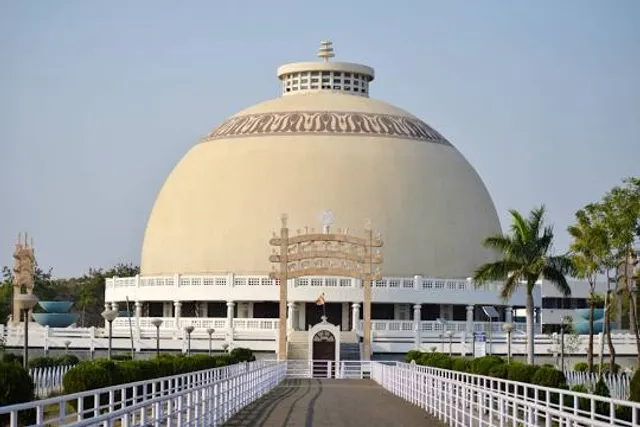
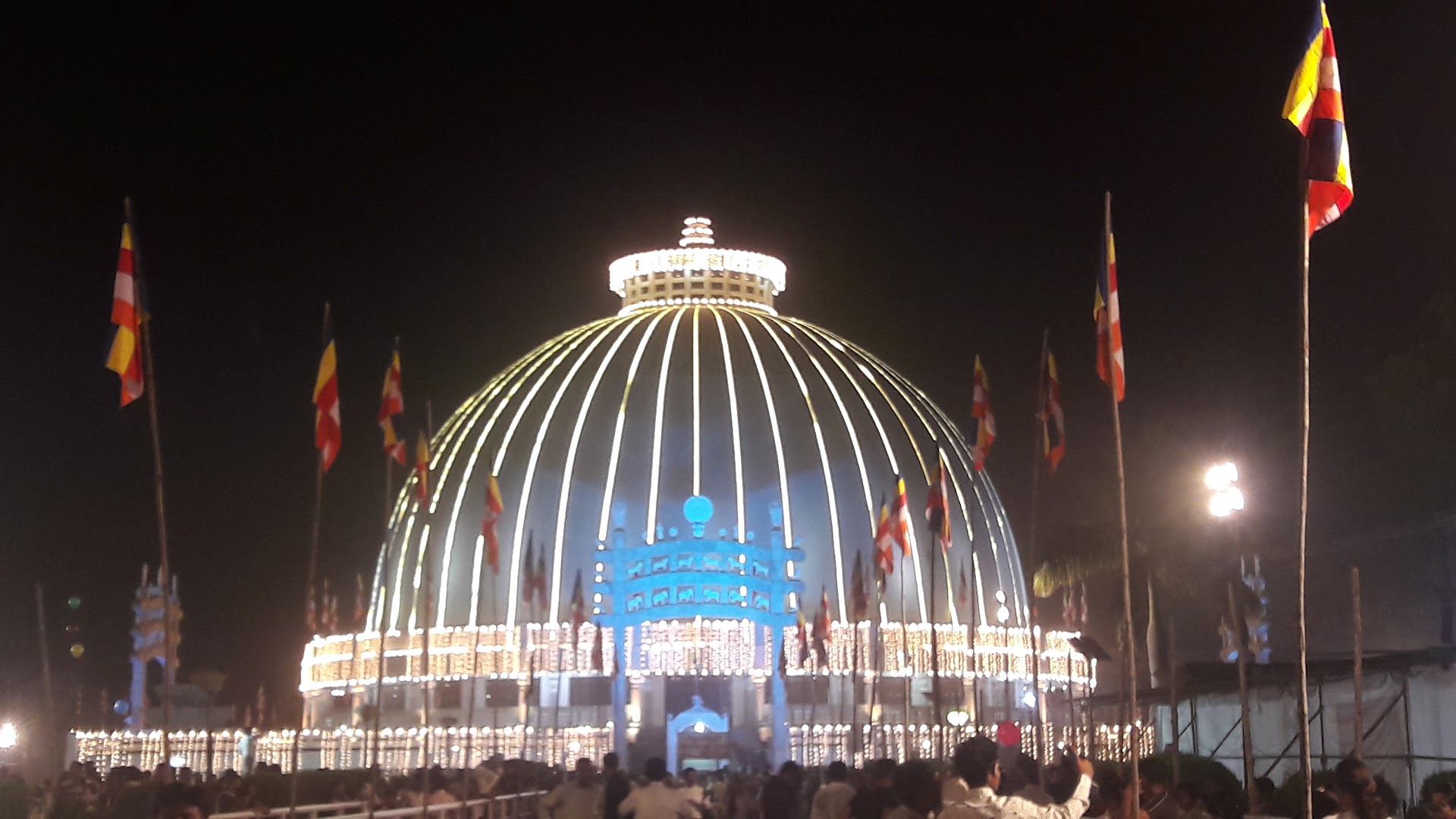
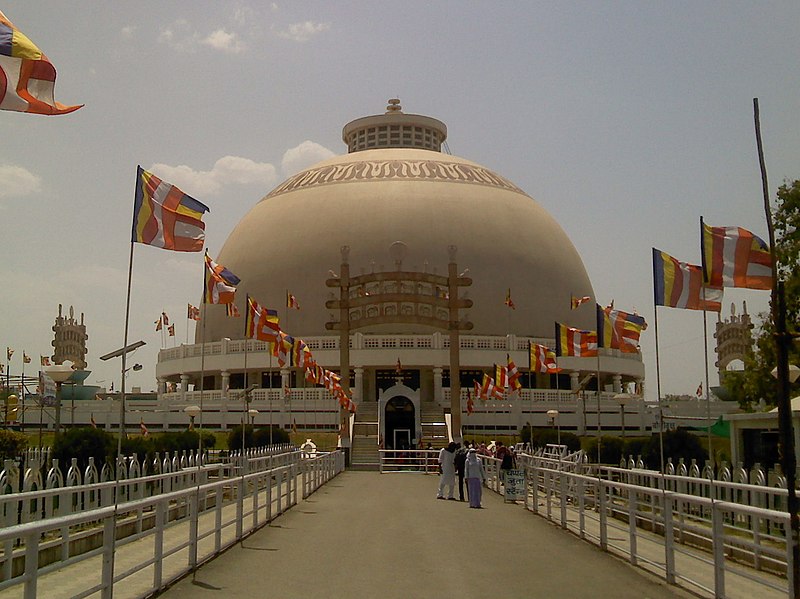
The Deekshabhoomi Stupa, a majestic and serene monument, stands as the centerpiece of this hallowed ground. The stupa, which houses a replica of the Buddha's relics, represents the ideals of Buddhism—peace, compassion, and wisdom. The architecture of Deekshabhoomi is awe-inspiring. Its large dome, which symbolizes the cosmic order, is surrounded by meticulously landscaped gardens, enhancing the feeling of tranquility. The stupa itself is a beacon of hope, peace, and social justice, evoking reverence in all who visit.
Deekshabhoomi is not merely a pilgrimage site for Buddhists; it is a monument to social justice. It is a place where the oppressed found solace and strength, and where the struggle for dignity was publicly recognized. Every year, thousands of visitors—Buddhists, social activists, and admirers of Dr. Ambedkar—flock to Deekshabhoomi to pay homage to his vision of an egalitarian society. It is a space where spirituality and social reform intersect, making it a truly attractive and knowledgeable site for anyone seeking to understand Dr. Ambedkar’s ideology, the Buddhist way of life, and the battle for human rights and equality.
The importance of Deekshabhoomi extends far beyond religious significance. It stands as a beacon of empowerment for marginalized communities, a place where the ideals of Dr. Ambedkar continue to inspire movements for social justice and equality. Every inch of the space reminds visitors of the profound philosophical and ethical principles upon which it was established. From its peaceful atmosphere to its embodiment of Dr. Ambedkar's principles of social and religious equality, Deekshabhoomi serves as a powerful reminder of the need for unity and respect for all humans, irrespective of caste, creed, or religion.
Deekshabhoomi is not just a historical site—it is a living, breathing testament to the ongoing struggle for equality, human rights, and dignity. It is a place where the ideals of Dr. Babasaheb Ambedkar are immortalized, reminding us of his powerful belief that “Educate, Agitate, and Organize.” His life and work continue to echo through the halls of this sacred place, urging us to uphold the values of justice, liberty,...
Read moreDikshabhoomi is such peacfull place it's a one in Nagpur,Deekshabhoomi is a sacred monument of Navayana Buddhism located where the architect of the Indian Constitution, B. R. Ambedkar,2] converted to Buddhism with approximately 600,000 followers on Ashok Vijaya Dashami [3] on 14 October 1956.[4Ambedkar's conversion to Buddhism is deeply significant for millions of people in India.6]
Deekshabhoomi
Deekshabhoomi Stupa
Wikimedia | © OpenStreetMap
General informationTypeReligious and historical monumentArchitectural styleStupaLocationNagpur, Maharashtra, IndiaAddressCentral Nagpur[1]Coordinates21°7′41″N 79°4′1″EConstruction startedJuly 1978Inaugurated18 December 2001Design and constructionArchitectSheo Dan Mal, Shashi Sharma
22 vows given by Ambedkar at Deekshabhoomi
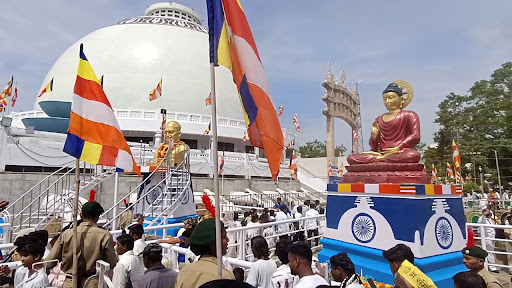
Deekshabhoomi is in Nagpur, Maharashtra, a location regarded as a pilgrimage center of Buddhism in India. Millions of pilgrims visit Deekshabhoomi every year,[7] especially on Dhamma Chakra Pravartan Din ("Mass Conversion Ceremony Day")[8] and 14 October, the memorial day when Ambedkar converted to Buddhism here. His final religious act was to embrace Buddhism.[7] Today, the largest stupa in Asia is erected in his memory at the site.[9]
Deeksha literally means 'act of ordaining'[10]and bhoomi means the 'ground'.[11]Deekshabhoomi means the ground where people got ordained as Buddhist. This religious mass conversion at one place was the first ever of its kind in history.[2]Deekshabhoomi is one of two places of considered to be of great importance in the life of Ambedkar, the other being Chaitya Bhoomi in Mumbai.[12]
Ambedkar had declared in 1935 that although he was born as a Hindu, he would not die as one,[13] as conversion was the solution to abandon the caste system.[14] After this declaration and having extensively and exhaustively studied the doctrines of all the major world religions, Ambedkar would choose Buddhism for himself and his followers.[14]
Buddhism was 2,550 years old in 1956, so it was a notable year of celebration for the Buddhist religious world globally and 14 October was the traditional date of conversion of Emperor Ashoka, the great Indian Buddhist Monarch and the day is celebrated as Ashok Vijaya Dashmi.[15] He selected Nagpur for his conversion ceremony, as he explained in his speech at that occasion, because Nagpur was the homeland of 'Nag' people who embraced Buddhism, supported it with great efforts in its early period, and propagated it throughout India.[16 Ground near the Ramdaspeth area in Nagpur was selected for the ceremony.
On 14 October 1956, Ambedkar and his wife took the oath of Three Jewels and Five Precepts from the Burmese monkMahasthavir Chandramani from Kushinagar.18 Ambedkar then gave the oath of Three Jewels, Five Precepts, and 22 Vows to his thousands of followers.[18] In this way, Nagpur became the birthplace of Neo Buddhist movement.[20]
Ambedkar died on 6 December 1956, one and a half months after the Deeksha ceremony. However, this ceremonial conversion continued after his death, converting 15-20 million by March 1959.[21] After his death the 'Dr. Babasaheb Ambedkar Smarak Samiti' (Dr. Babasaheb Ambedkar Memorial committee) was organized for the management of Deekshabhoomi. The committee decided to build a stupa at the place as a monument of that ceremony and a mass conversion of people...
Read moreDeekshabhoomi (also spelled Dikshabhumi or Deeksha Bhoomi) is a monumental Buddhist site in Nagpur, Maharashtra, India. It holds immense religious, historical, and social significance, particularly for followers of Navayana Buddhism and the Ambedkarite movement.
Historical Significance Deekshabhoomi is the site where Dr. B. R. Ambedkar, the chief architect of the Indian Constitution and a prominent social reformer, embraced Buddhism along with approximately 400,000 of his followers on October 14, 1956, a day celebrated as Dhammachakra Pravartan Din or the Day of the Buddhist Conversion.
This mass conversion was a landmark event in Indian history, symbolizing a rejection of the caste system and a quest for social equality and justice. It marked the revival of Buddhism in India, empowering marginalized communities, especially Dalits, by providing them with a new social and religious identity.
The conversion ceremony was led by Dr. Ambedkar and presided over by Bhante Chandramani, the senior-most Buddhist monk in India at the time.
Architectural Features The centerpiece of Deekshabhoomi is a grand stupa, inspired by the famous Sanchi Stupa built during Emperor Ashoka's reign. It is considered one of the largest hollow stupas in the world and the largest in Asia.
The stupa is constructed from Dhaulpur sandstone, marble, and granite, with a dome rising to a height of 120 feet. It can accommodate more than 5,000 people at a time.
The complex also includes a memorial hall, a museum dedicated to Dr. Ambedkar's life and teachings, meditation halls, and a chaitya hall for religious gatherings.
The stupa and its surroundings are designed to create a serene and contemplative environment, reflecting traditional Buddhist architectural elements and symbolism.
Cultural and Social Importance Deekshabhoomi is not only a religious site but also a symbol of social justice, equality, and liberation from caste oppression. It is a pilgrimage destination for Buddhists and Ambedkarites from across India and the world.
Every year, millions of people visit Deekshabhoomi, especially during October, to commemorate Dr. Ambedkar's conversion and participate in mass celebrations and rituals.
The site is recognized as a "prernabhoomi" (inspiring land) for social revolution and continues to inspire movements for equality and human rights in India.
Location and Accessibility Deekshabhoomi is located on South Ambazari Road in the Abhyankar Nagar area of Nagpur, Maharashtra.
The monument was inaugurated on December 18, 2001, and has since become one of the major tourist attractions and pilgrimage centers in India.
Deekshabhoomi stands as a powerful reminder of India's ongoing struggle for social justice and the enduring legacy of Dr. B. R. Ambedkar in shaping a more...
Read more