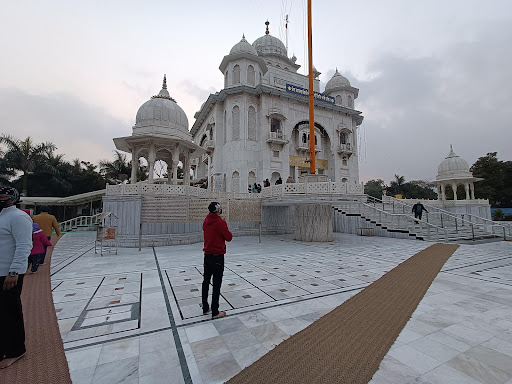
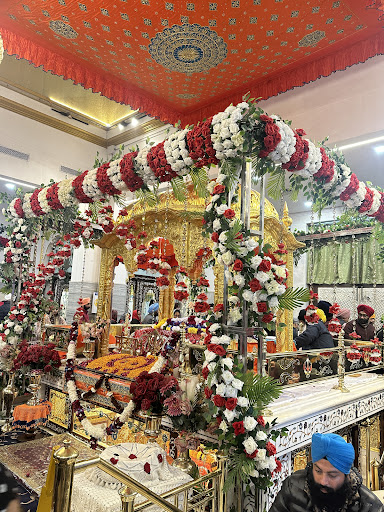
Atmosphere is so good and also peaceful place.
Rakab Ganj Sahib Gurudwara, located near the Parliament House in New Delhi, is a significant and revered Sikh shrine with deep historical and spiritual importance. It commemorates the martyrdom of Guru Tegh Bahadur Sahib Ji, the ninth Sikh Guru, who sacrificed his life to protect religious freedom and defend the rights of Hindus being persecuted by the Mughal emperor Aurangzeb in 1675.
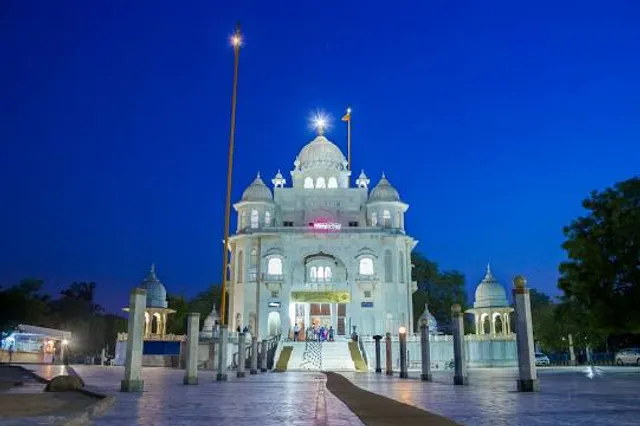
The Gurudwara is built on the site where Guru Tegh Bahadur's body was cremated after his execution. It stands as a symbol of courage, religious tolerance, and the unwavering commitment to justice. The serene atmosphere of Rakab Ganj Sahib, with its peaceful surroundings and beautiful architecture, offers a place for reflection and spiritual solace.
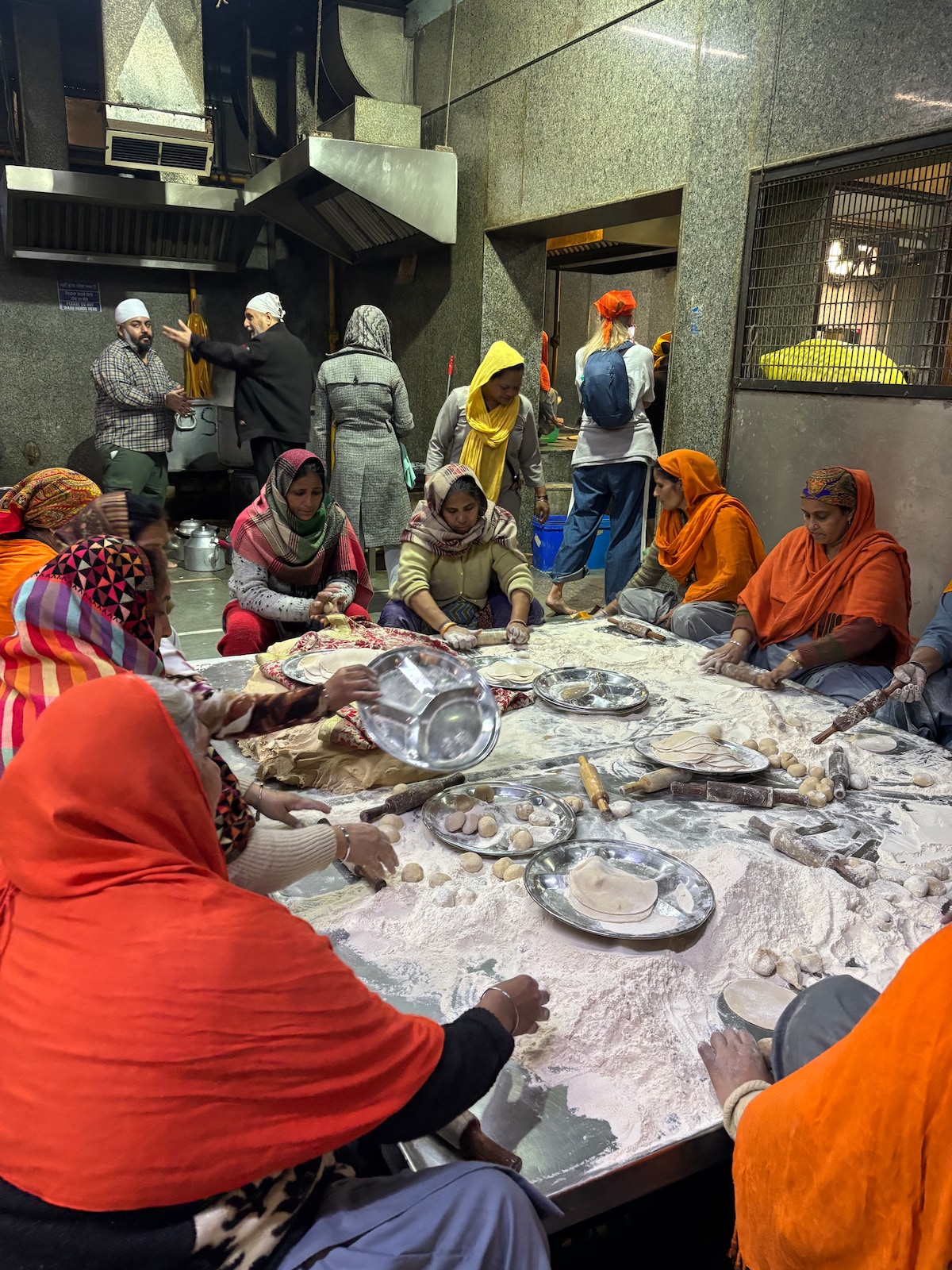
The Gurudwara is renowned for its emphasis on community service and the tradition of Langar (free community meals), which serves as a reminder of the Sikh principle of selfless service and equality. People from all walks of life are welcomed, and the Langar is open to anyone in need, regardless of background or belief.
Rakab Ganj Sahib Gurudwara also holds regular prayers and hymns, where the recitation of Gurbani fills the air, creating a sense of peace and spiritual connection. It remains an important center for Sikhs in Delhi, inspiring visitors with its message of peace, justice, and equality.
Rakab Ganj Sahib Gurudwara holds a place of great reverence in the Sikh community, both for its historical significance and its spiritual atmosphere. Located in the heart of New Delhi, the Gurudwara is not just a site of worship but also a powerful symbol of sacrifice and the enduring Sikh values of justice and religious freedom. The Gurudwara is dedicated to Guru Tegh Bahadur Sahib Ji, the ninth Sikh Guru, who gave his life in 1675 to protect the religious freedom of Hindus against the oppressive policies of the Mughal emperor Aurangzeb.
After his martyrdom, Guru Tegh Bahadur's body was brought to the site where the Gurudwara now stands, and it is here that his cremation took place. The sacred space serves as a reminder of his courage and selflessness in standing up for the rights of others, regardless of their religion. This makes Rakab Ganj Sahib not just a historical landmark but also a spiritual beacon for those who seek justice, truth, and the defense of human rights.
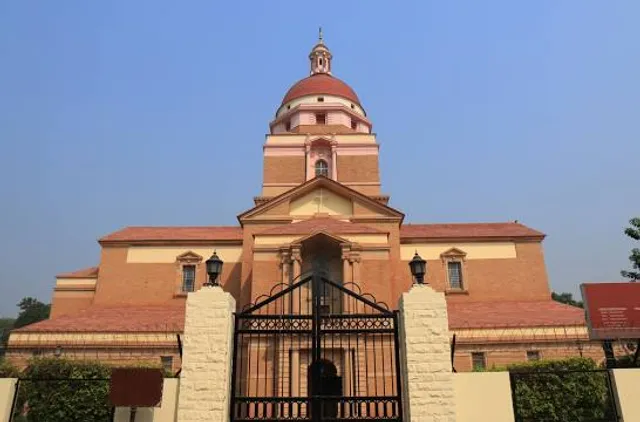
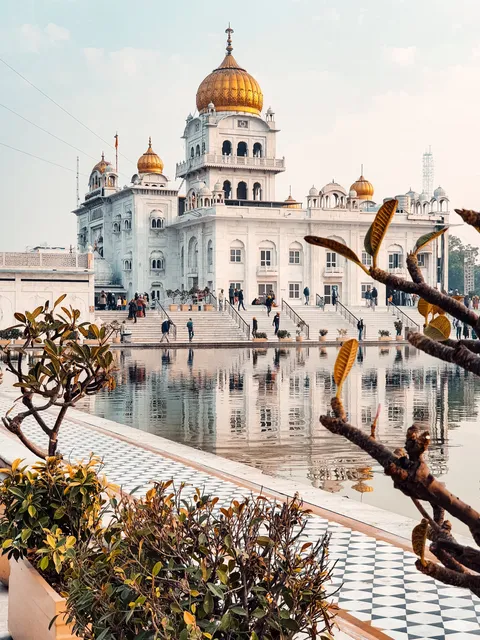
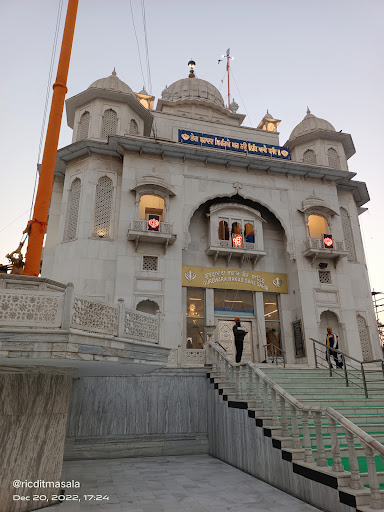
The Gurudwara’s architecture is simple yet elegant, with a white marble structure and a golden dome, symbolizing purity and divine presence. Inside, the holy atmosphere is enhanced by the continuous recitation of the Guru Granth Sahib, the central scripture of Sikhism. Visitors often come to experience peace, connect with the divine, and seek blessings.
One of the most notable aspects of Rakab Ganj Sahib is its commitment to service through the Langar (community kitchen), where free meals are served to all, regardless of their social or religious background. This practice of selfless service, a key principle of Sikhism, exemplifies the Gurudwara’s role in promoting equality, unity, and compassion.
In addition to its spiritual and religious functions, Rakab Ganj Sahib Gurudwara is also an important center for Sikh cultural activities, hosting regular prayers, events, and observances, especially during significant occasions like Guru Tegh Bahadur’s martyrdom day. Its open, welcoming environment reflects the inclusive nature of Sikhism, offering a place of peace, reflection, and hope to people from all...
Read moreFull of peace and soul soothing.. It's a highly important sikh religious Gurudwara sahib and also all Indians brother and sister must visit this place being courtesy or thanks to god to for saving (India's Biggest Religion-Hinduism).
His body cremated here and he was martyred to save Hindu religion by Aurangzeb On 24 November 1675 at Chandni Chowk, Delhi, India) This was an extremely important event in Sikh history that had a profound impact on the future direction of Sikhism, the religion of the Sikhs. Guru Tegh Bahadar, the ninth Sikh Guru undertook the supreme sacrifice for the protection of the most fundamental of human rights - the right of a person to freely practice his or her religion without interference or hindrance. In the modern times we tend to take this freedom for granted – but in 1675, millions of people were denied this basic right. There was forced conversion of religion; many thousands were killed for refusing to change their religion.
To give ones life for a cause is a difficult and highly challenging undertaking. Many in past human history have given their lives for their own personal reason; however, what is astonishing in the case of the ninth Sikh Guru is the fact that the Guru was not protecting the right of his "own people" called the Sikhs to practise their religion but instead the rights of the non-Sikhs, the peace-loving people from Kashmir.
These people from Kashmir were very respected Hindus pundits (scholars) who were being threatened with conversion to Islam, under the threat of death by the "Muslim" Emperor, Aurangzeb. In 1669, the Mughal ruler Aurangzeb departed from the policy of tolerance practised by his predecessors and unleashed instead a policy of religious persecution against non-Muslims. This caused large-scale demoralisation, fear and panic among the people. The commitment by the Sikh Guru to protect and support the liberty of all the people of a country was unprecedented. This type of supreme sacrifice had never previously been recorded in human history. On May 25, 1675 in answer to an appeal of a large group of revered Kashmiri Pandits, Guru Tegh Bahadur made the momentous decision that has forever changed the level of moral commitment, dedication and sacrifice required by followers of God. The Guru made this critical decision to risk laying down his life if necessary to protect the right of the Hindus to follow their religion freely without interference or duress.
Theekar fore dilees sir, Prabh par kiyo payan, Tegh Bahadur si kriya, Kari na kinhoo aan. Tegh Bahadur ke chalat, Bhayo jagat main sog. Hai hai hai sab jag bhayo, Jai jai jai sur log.
He burst the bonds of mortal clay And went on to the abode of God. No one ever performed an act as noble As did Tegh Bahadur.
With the departure of Tegh Bahadur The world was stricken with sorrow. A wail of horror rent the earth, A victor's welcome by the dwellers of heaven.
🙏 Pranam duniya ki sab se badi shahidi ko jiska jikar Indian history mein bahut rare hain aur jiski importance sabse...
Read moreBest place to forget your stress and problems
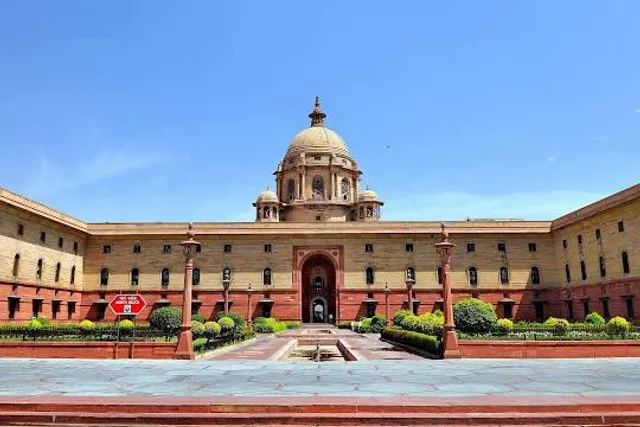
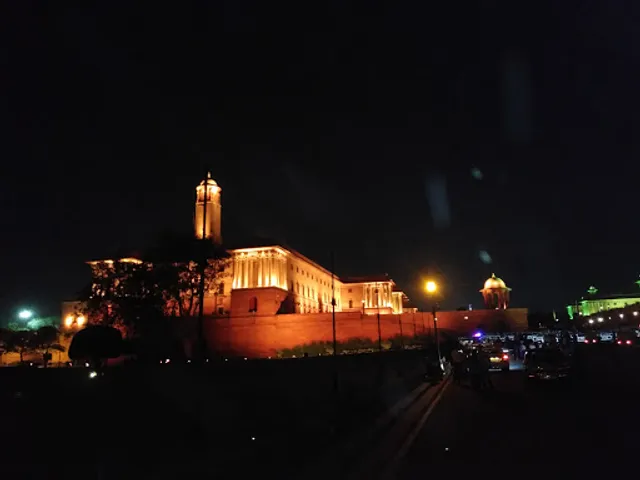
Gurudwara rakab ganj saheb is Located right behind the North Block and Parliament, the historic Rakab Ganj Gurdwara denotes the seat of power for Sikhs in Delhi. It is here that the beheaded body of the ninth Sikh Guru Teg Bahadur was cremated in 1675. The office of the cash-rich Delhi Sikh Gurdwara Management Committee (DSGMC) sits in one corner of the sprawling central Delhi complex.
The original shrine is almost 230 years old and part of the notified heritage structures in Delhi. Now, the Gurdwara has a marble facade and is the place from where Sikh matters of Delhi are decided even as Sis Ganj and Bangla Sahib top the list of revered shrines. The Sarai is often used by the devout to stay for a few days. The Sikh belief resonated at its best during the trust vote in Parliament in July 2008. As the debate heated up in Parliament to decide the fate of Manmohan Singh, the first Sikh Prime Minister, a round-the-clock path (prayer) for the PM was conducted at Rakab Ganj. Ironically, the Gurdwara loudspeaker had then broadcast the prayers, forming a soothing backdrop to those politically charged days.
As of today, the biggest issue is the construction of a multi-level underground parking facility which was stopped in April 2012 following a Delhi High Court directive. The inadequate parking facility cropped up during a prayer meeting for the slain Ponty Chadha. Roads were jammed for kilometers as thousands turned up in their cars to pay last respects.
A public interest litigation filed by the Sikh Forum for Service and Justice had been taken up by the court. The NDMC had rejected the proposal for redevelopment of the premises, including a three-level underground parking facility. The civic body mentioned 23 reasons for rejecting the DSGMC plan.
The shrine’s history is related to Guru Teg Bahadur. A disciple of the Guru, Lakhi Shah Vanjara hid his body in haystacks and cotton bales and ‘sped off’ on a bullock cart from Chandni Chowk. Since then, Rakab Ganj has evoked deep feelings among the Sikhs. It was at this spot that Lakhi Shah Vanjara and his eight sons placed the body of the Guru on a pile of sandalwood and set fire to their entire house to avoid suspicion of the Mughals, who had beheaded him.
In 1783, the Sikh Army defeated the Mughals. The Sikhs wanted a Gurdwara in memory of the Guru in village Raisina (now part of the President’s Estate).
The Sikh Review edition of 1980 said, “A copper urn containing the mortal remains of the ninth Sikh Guru was found at the site. The Wazir gave orders for demolition of the mosque and construction of Gurdwara.”
The name Rakab is derived from the Persian word ‘Rukab’ meaning stirrups (foot rests) attached to the saddle of horse riders. Dr H.S. Singha, in his book ‘Sikh Studies’, explains, “They (Lakhi Shah) used to live in a colony of stirrup makers, hence the name Rakab ganj saheb.
Waheguru ji ka khalsa Waheguru ji ki fateh Dhan dhan shri guru Teg...
Read more