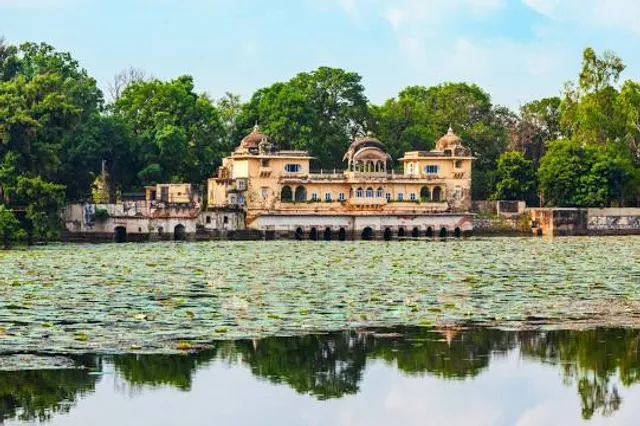
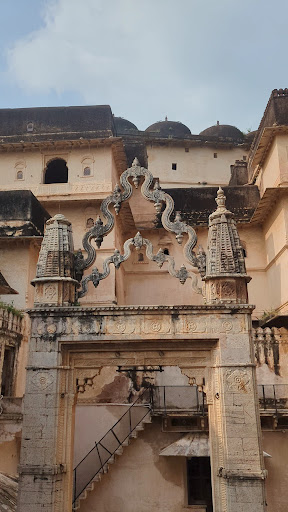
Garh Palace, Bundi – A Regal Echo of Rajasthan's Glorious Past Built by: Rao Raja Ratan Singh and his successors. Entry Fee: Indian Nationals - ₹80 to ₹100 Foreign Nationals - ₹500 to ₹600
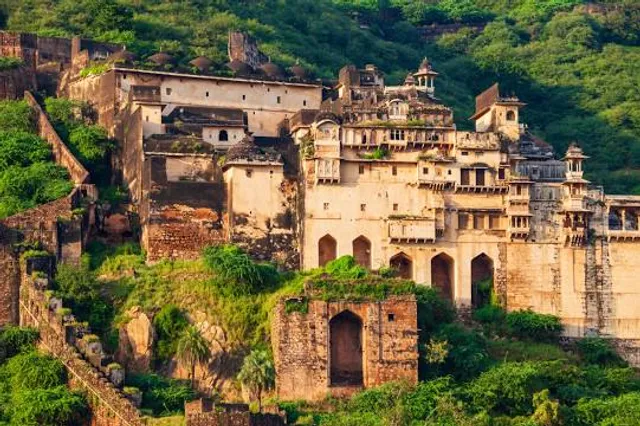
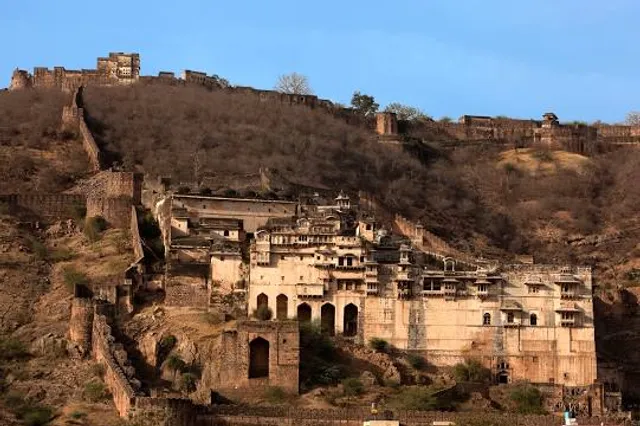
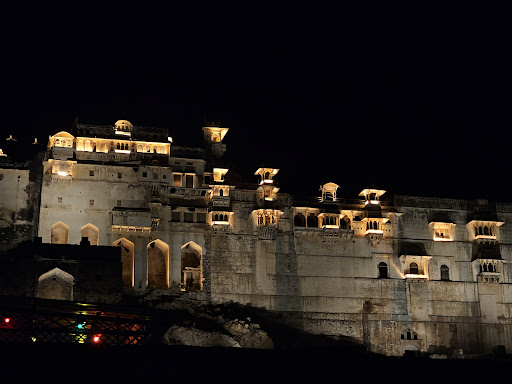
Architecture – A Rajput Marvel Garh Palace reflects the finest traditions of Rajput Architecture. Tall sandstone walls, intricately carved pillars, multilevel courtyards, and beautifully arched gateways define its structure. Unlike other palaces that lean heavily on symmetry, Garh Palace flows with the natural slope of the hill, making it unique and organically majestic.
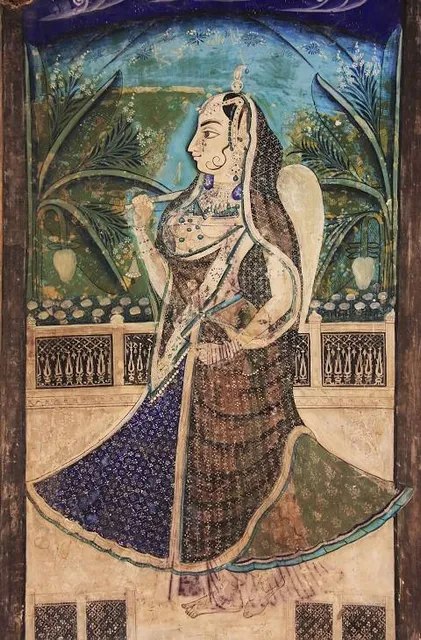
Chitrashala – The Soul of the Palace The heart of Garh Palace lies in its Chitrashala (Hall of Paintings). This section is a painter’s paradise and a connoisseur’s delight. The walls and ceilings are adorned with vibrant miniature paintings depicting scenes from: A. The life of Lord Krishna – his raas-leela, childhood pranks, and divine plays.
B. Romantic tales of Radha-Krishna and Rajasthani women.
C. Royal court scenes, festivals, monsoon celebrations, and more.
These paintings, primarily done in hues of blue and green, are still intact and untouched by time or modern restoration, giving them an authentic aura.
Palatial Sections – Each with a Story Badal Mahal (Palace of Clouds): Built at a height, it gives the feeling of living amidst clouds.
Phool Mahal (Palace of Flowers): Used for private moments, decorated with floral patterns.
Chhatra Mahal: Richly adorned with frescoes and mirror work, reflecting royal taste.
Ratan Daulat: A stable complex built with strategic design, showing the military wisdom of the rulers.
Cultural and Historical Importance Garh Palace was not merely a royal residence. It was a center of art, literature, and governance. The Maharanas of Bundi patronized artists, poets, and scholars, making the palace a cultural hub during its golden age. Even today, the spiritual and royal vibration can be felt in its silent corridors.
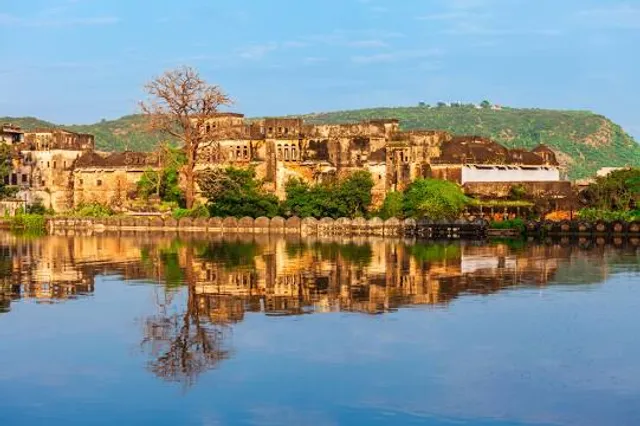
Atmosphere and Experience Climbing up the sloping pathways to the palace feels like ascending into history. The peaceful ambiance, chirping birds, and occasional breeze whisper tales of valor and romance. The view of Bundi city below, with its blue houses and serene lake, adds magic to the experience.
Conclusion: Garh Palace is not just to be seen—it is to be felt. It captures the soul of Bundi with its silent grace and artistic depth. For lovers of history, art, and royal India, this palace is a must-visit gem.
Travel Tip: Visit early in the morning or late afternoon for better light and fewer crowds. Don't miss the Chitrashala, and if possible, hire a local guide to uncover...
Read moreNice!Thirty-six kilometres from Kota, in Rajasthan, lies the majestic small town of Bundi. Dotted with numerous magnificent forts and palaces all around, this town transports one back in the pages of history, to the age of valiant Kings, dazzling Queens and fairy tales.
The Garh Palace, the jewel in the crown of Bundi, has a number of petite palaces encircling the central majestic residence, built by various rulers down the pathways of history. Most of these palaces, built during the 17th and 18th centuries, carry innumerable tales of love, valour and sacrifice etched on their walls. The Garh Palace is a fine example of exquisite Rajput architecture, housing some of the most amazing Bundi frescoes. The palaces inside the royal fort of Bundi are elaborately decorated with vibrant paintings that beautifully depict scenes from daily life in the court of Bundi as well as vivid scenes from traditional literary and religious texts. The illustrations are testimony to the rich cultural interrelationships that give the paintings their unique power and importance.
Above the Garh Palace, at a height, stands the Taragarh Fort – a renowned fort which stands tall with an identity of its own. The fort, situated on a steep hill, offers a panoramic and breathtaking view of the entire city of Bundi. The fort is an engrossing experience where one can go on exploring the nooks and crannies for hours on end and yet remain awe-struck. Noted novelist and Nobel laureate, Rudyard Kipling is believed to have penned parts of his acclaimed novel ‘Kim’ in Bundi. So enchanted was he by the city that this was what he wrote about Bundi :
‘Jeypore Palace may be called the Versailles of India…. Jodhpur’s House of Strife, gray towers on red rock, is the work of giants, but the Palace of Bundi, even in broad daylight, is such a palace as men built for themselves in uneasy dreams….the work of goblins rather...
Read moreI recently visited Bundi Fort Palace, and it was truly one of the highlights of my trip. The fort and palace stand majestically above the town, and the first thing that struck me was the sheer scale and beauty of the architecture. The intricate murals, detailed frescoes, and the old-world charm of the palace give you a sense of stepping back in time.
The palace interiors, especially the “Chitrashala” (painting gallery), are absolutely mesmerizing with their well-preserved miniature paintings that depict scenes from royal life and mythology. It feels like an open history book. The panoramic view of Bundi town from the fort walls is breathtaking — blue houses, lakes, and rolling hills all in one frame.
That said, the palace is not fully restored, and parts of it show signs of neglect. Some areas are locked or not easily accessible, and you can clearly see how time has weathered the structures. But in a way, that adds to its authenticity and untouched charm. If you’re someone who enjoys exploring heritage sites that are not overly commercialized, this place is a gem.
I’d recommend hiring a local guide — it really enriches the experience since there’s so much fascinating history that you’d otherwise miss. The climb up can be a little tiring, so wear comfortable shoes and carry water.
Overall: Bundi Fort Palace is a must-visit for history and culture lovers. It’s quieter and less crowded than many other forts in Rajasthan, making it feel special and personal. A hidden treasure that deserves more...
Read more