Nathmal Ki Haveli is one of the most exquisite and historically significant havelis in Jaisalmer, Rajasthan. Built in the late 19th century, this architectural marvel stands as a testament to the rich craftsmanship, cultural heritage, and royal grandeur that characterized the region during that time. It was commissioned by Maharawal Bairisal, the then ruler of Jaisalmer, as the residence of his prime minister, Diwan Mohata Nathmal. This haveli is renowned for its unique blend of Rajput and Islamic architectural styles, its intricate carvings, and elaborate frescoes.
The construction of Nathmal Ki Haveli is an interesting story in itself. It was built by two brothers, Hathi and Lulu, who worked separately on two halves of the building. Despite working independently and without modern measuring tools, the brothers managed to create a structure that is remarkably symmetrical, though subtle differences in design add to its charm. This fascinating collaboration showcases the exceptional skill and ingenuity of the craftsmen of that era.
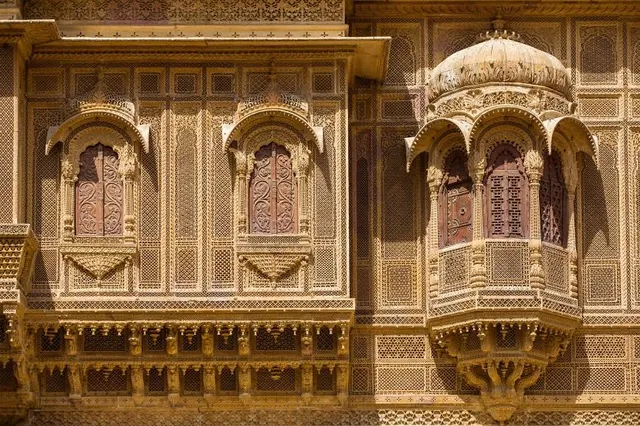
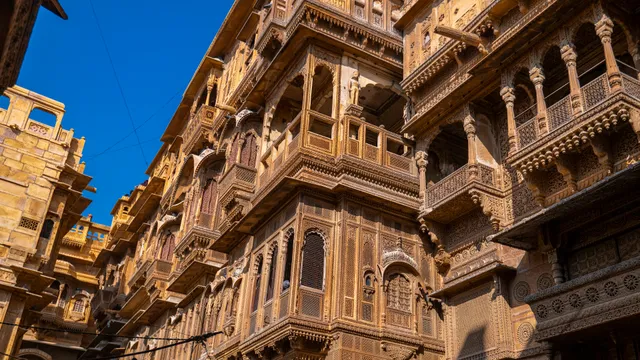
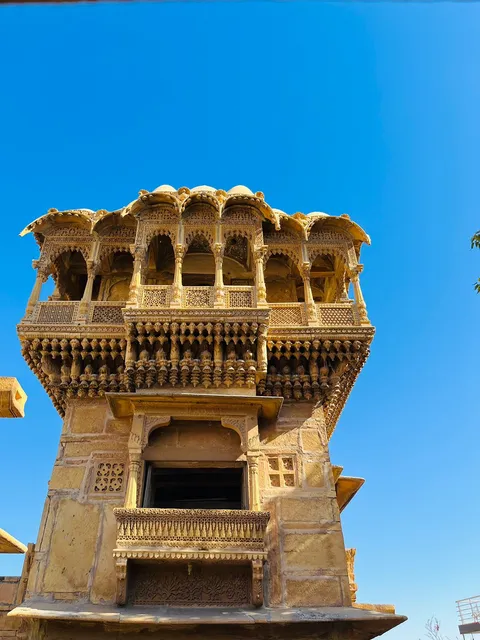
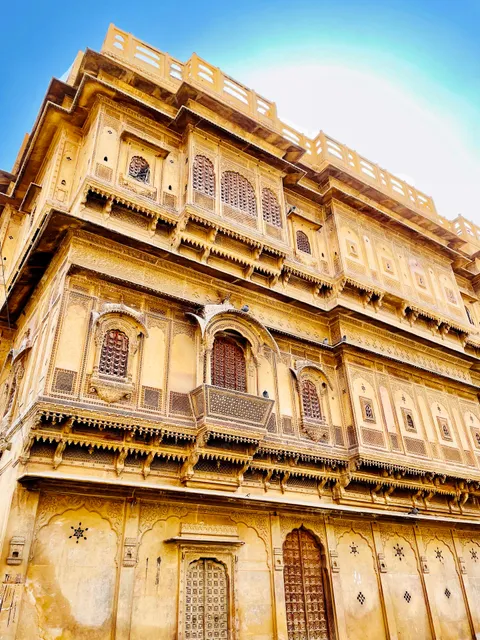
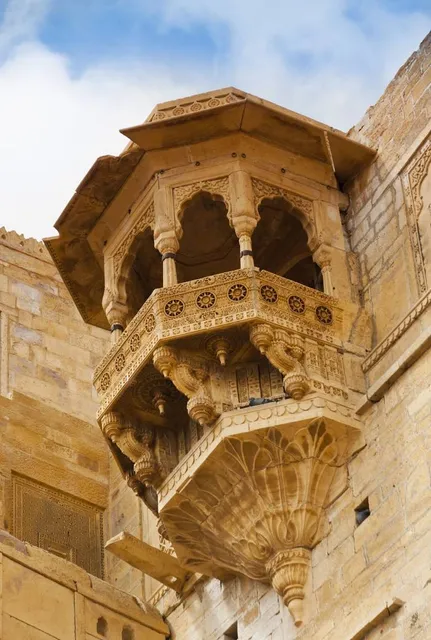
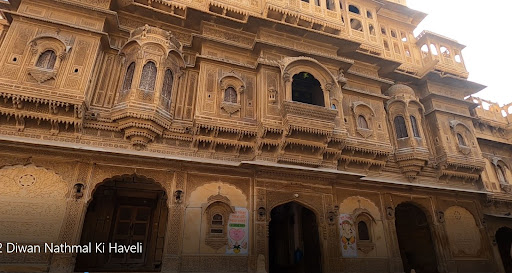
Architecturally, Nathmal Ki Haveli is made from the characteristic yellow sandstone of Jaisalmer, which glows golden under sunlight, especially during sunrise and sunset. The façade of the haveli is intricately adorned with detailed carvings depicting Hindu, Rajput, and Islamic motifs, including animals, floral patterns, dancers, musicians, and warriors. These carvings tell stories from the lives and culture of the people in 19th-century Rajasthan.
Two life-sized elephant statues guard the entrance of Nathmal Ki Haveli, symbolizing strength and protection. The building itself has multiple balconies, jharokhas (overhanging enclosed balconies), and windows adorned with fine latticework, which not only add to the beauty of the structure but also serve practical purposes by allowing air circulation and shade in the desert climate.
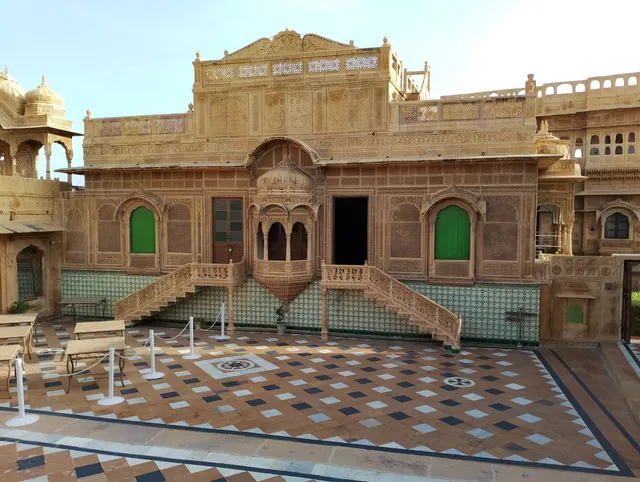
Inside, the haveli features elaborately painted walls and ceilings that depict scenes from Hindu mythology, everyday life in royal courts, and details of local flora and fauna. The interiors are peaceful and offer a glimpse into the lavish lifestyle of the elite during the time of its construction.
Nathmal Ki Haveli is a perfect example of fusion architecture where Rajput traditions harmoniously blend with Islamic design features. The symmetrical layout, balanced proportions, and ornamental details make it a masterpiece that reflects the cultural confluence prevalent in Rajasthan’s history. It is not merely a residence but also a monument that symbolizes power, prestige, and artistic excellence.
Today, Nathmal Ki Haveli serves as a popular tourist attraction in Jaisalmer, drawing visitors from all over the world who come to admire its architectural beauty and historical significance. Walking through its halls and courtyards, visitors can experience the rich cultural tapestry of Rajasthan and understand the significance of the haveli in preserving the heritage of Jaisalmer. Nathmal Ki Haveli is a stunning architectural gem that offers deep insights into 19th-century life in Jaisalmer. Its creation by two master craftsmen, the blend of styles, and its intricate artistry make it an essential destination for anyone interested in heritage, architecture, and the history of Rajasthan. The haveli continues to be a symbol of the city’s golden age and a proud representation of Jaisalmer’s artistic...
Read moreThe story behind the construction of Nathmal Ki Haveli is interesting. It is said that the two brothers, Nathmal and Hathi, were given the task of designing the haveli by the then Prime Minister of Jaisalmer, Maharawal Beri Sal. However, due to a misunderstanding, they ended up creating two different facades of the haveli, each with its own unique design. The result is a beautiful haveli with two distinct sections, which are mirror images of each other but have slight differences in their architectural style and motifs.
The architecture of Nathmal Ki Haveli is a fine blend of Rajput and Islamic styles, with intricate carvings, delicate jharokhas (balconies), and exquisite frescoes. The haveli is made of yellow sandstone, which is abundant in the region and gives it a distinct golden hue. The facade of the haveli is adorned with detailed carvings of elephants, horses, flowers, and other motifs, showcasing the exceptional craftsmanship of the artisans of that time.
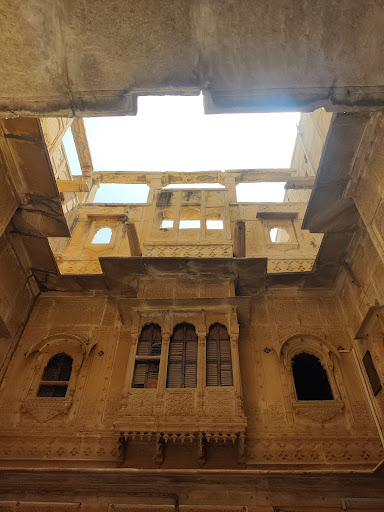
Inside the haveli, there are several rooms, courtyards, and corridors, each showcasing unique architectural elements. The walls and ceilings of the haveli are adorned with beautiful frescoes depicting scenes from everyday life, mythology, and Rajput royalty. The intricate carvings and ornate details of Nathmal Ki Haveli are a testament to the rich cultural heritage and architectural prowess of the region.
Today, Nathmal Ki Haveli is a popular tourist attraction in Jaisalmer, visited by tourists from all over the world who come to admire its splendid architecture and learn about the rich history and culture of Rajasthan. The haveli is well-maintained and preserved by the local authorities, and serves as a living example of the architectural marvels of Rajasthan's golden era. Yellow stone in Sunlight Shines like GOLD ! Owner Lives here & no entry inside the Haveli. You can take see out side of Haveli which has Great History & architecture. Check History Before Going There ! (...
Read moreNathmal Ji ki haveli was commissioned to serve as the residence of Diwan Mohata Nathmal, the then Prime Minister of Jaisalmer. Maharawal Beri Sal commissioned the construction of this Haveli. The architects of this haveli were Hathi and Lulu who happened to be brothers. There is a very interesting story regarding its construction. It is said that the two brothers started building different facets of haveli simultaneously. In those days there were no such instruments, which could keep a track on continuity and thus when this building came up finally it had irregular shape.
Barring that, this haveli is still considered the best in Jaisalmer in terms of grandeur. There are other minute details worth appreciation. For example there are two Elephants made of yellow stone. These life-size replicas have been put in front of the main entrance so that it looks as if they are guarding the Haveli. Other than these, there are pictures engraved on pillars and walls. These consist of Horses, Cattle, and depiction of Flora among other things. But the most interesting aspect of this haveli is the drawing of modern amenities such as cars, fans etc. It is said and believed that the Architect brothers dint see these things ever in their life and engraved it with mere help of their descriptions given by people who had seen it.
Thus the architecture present in this haveli is quite different from the one popular in other parts of Jaisalmer. The workmanship of Jaisalmer havelis is an amalgam of both Rajput architecture as well as Islamic art that was imported via the traders' caravan...
Read more