HTML SitemapExplore
logo
Find Things to DoFind The Best Restaurants

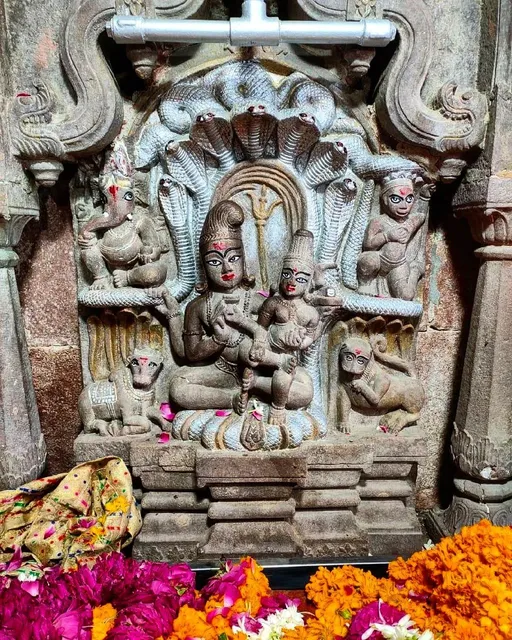
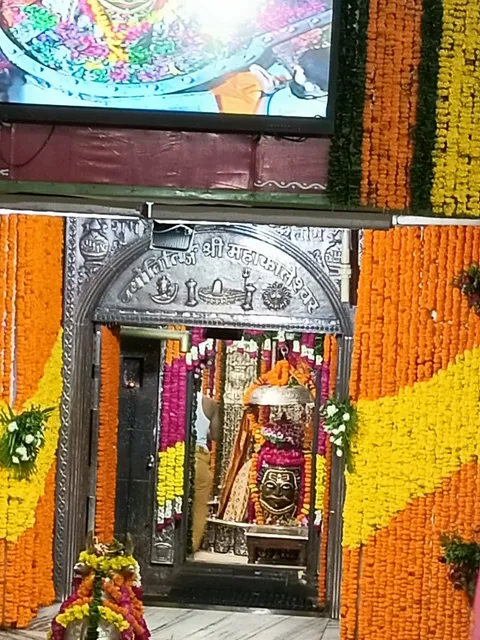
Mahakaal mandir — Attraction in Ujjain

Name
Mahakaal mandir
Description
Nearby attractions
Ujjain temple
Sant Nagar, Ujjain, Madhya Pradesh 456010, India
Pathri Mata Temple Ujjain
5QHP+M2R, near Ujjain, Madhav Nagar, Ujjain, Madhya Pradesh 456010, India
Prakateshwer Mahadev & Akhand Jyoti Hanuman Mandir Freeganj Ujjain
12 munj marg, Freeganj, Madhav Nagar, Ujjain, Madhya Pradesh 456010, India
Nearby restaurants
SADASHIV FAMILY RESTAURANT
Madhav Nagar, Ujjain, Madhya Pradesh 456010, India
New Rajkumar Restaurant(Madhav Nagar)
20, Bhaktawar Marg, Madhav Nagar, Thana, Ujjain, Madhya Pradesh 456010, India
Hotel Sai Palace Dal Bafla
23, Bakhtawar Marg, Freeganj, Ujjain, Madhya Pradesh 456010, India
Mahakal Home Food And Restaurant
Teen Batti Chauraha, Madhav Nagar, Ujjain, Madhya Pradesh 456010, India
Tapasya Family Restaurant
Durga Plaza, 39, Kamla Nehru Marg, Opp TVS Showroom, Madhav Nagar, Ujjain, Madhya Pradesh 456010, India
Karachi - Kastoor's Restaurant
12/5, Shanku Marg, Freeganj, Madhav Nagar, Ujjain, Madhya Pradesh 456010, India
Maheshwari ke Namkeen And Sweets
Amar Singh Marg, Freeganj, Madhav Nagar, Ujjain, Madhya Pradesh 456010, India
Rajkumar Restaurant Since 1949
Freeganj, Madhav Nagar, Ujjain, Madhya Pradesh 456010, India
Ramesh South Indian Restaurent
5QHR+2M5, Freeganj, Madhav Nagar, Ujjain, Madhya Pradesh 456010, India
Fire & Ice Family Restaurant | Restaurant in Ujjain
19, Kamla Nehru Marg, Freeganj, Madhav Nagar, Ujjain, Madhya Pradesh 456010, India
Related posts
Keywords
Mahakaal mandir tourism.Mahakaal mandir hotels.Mahakaal mandir bed and breakfast. flights to Mahakaal mandir.Mahakaal mandir attractions.Mahakaal mandir restaurants.Mahakaal mandir travel.Mahakaal mandir travel guide.Mahakaal mandir travel blog.Mahakaal mandir pictures.Mahakaal mandir photos.Mahakaal mandir travel tips.Mahakaal mandir maps.Mahakaal mandir things to do.
Mahakaal mandir things to do, attractions, restaurants, events info and trip planning
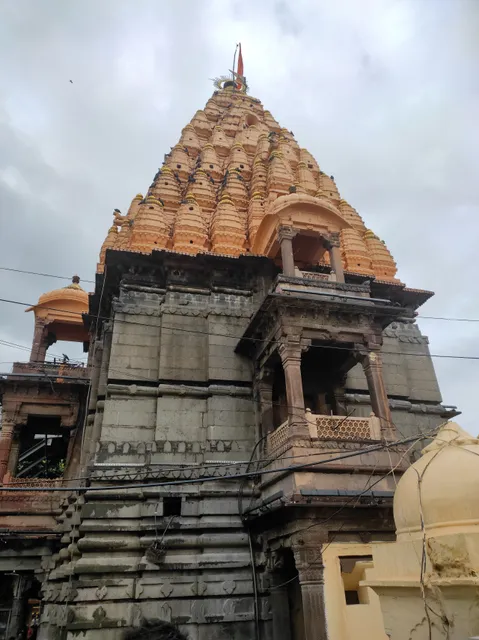
Mahakaal mandir
IndiaMadhya PradeshUjjainMahakaal mandir

Basic Info

Mahakaal mandir

5QGQ+HCJ, Sindhi Colony, Ujjain, Madhya Pradesh 456010, India
4.7(50)
Open until 12:00 AM
Save
spot

Ratings & Description

Info

Cultural
Family friendly
Accessibility
attractions: Ujjain temple, Pathri Mata Temple Ujjain, Prakateshwer Mahadev & Akhand Jyoti Hanuman Mandir Freeganj Ujjain, restaurants: SADASHIV FAMILY RESTAURANT, New Rajkumar Restaurant(Madhav Nagar), Hotel Sai Palace Dal Bafla, Mahakal Home Food And Restaurant, Tapasya Family Restaurant, Karachi - Kastoor's Restaurant, Maheshwari ke Namkeen And Sweets, Rajkumar Restaurant Since 1949, Ramesh South Indian Restaurent, Fire & Ice Family Restaurant | Restaurant in Ujjain
logoLearn more insights from Wanderboat AI.
Open hoursSee all hours
FriOpen 24 hoursOpen

Plan your stay

hotel
Pet-friendly Hotels in Ujjain
Find a cozy hotel nearby and make it a full experience.

hotel
Affordable Hotels in Ujjain
Find a cozy hotel nearby and make it a full experience.

hotel
The Coolest Hotels You Haven't Heard Of (Yet)
Find a cozy hotel nearby and make it a full experience.

hotel
Trending Stays Worth the Hype in Ujjain
Find a cozy hotel nearby and make it a full experience.

Reviews

Nearby attractions of Mahakaal mandir

Ujjain temple

Pathri Mata Temple Ujjain

Prakateshwer Mahadev & Akhand Jyoti Hanuman Mandir Freeganj Ujjain

Ujjain temple

Ujjain temple

4.7

(1.6K)

Open 24 hours
Click for details
Pathri Mata Temple Ujjain

Pathri Mata Temple Ujjain

3.9

(133)

Open 24 hours
Click for details
Prakateshwer Mahadev & Akhand Jyoti Hanuman Mandir Freeganj Ujjain

Prakateshwer Mahadev & Akhand Jyoti Hanuman Mandir Freeganj Ujjain

4.6

(95)

Open 24 hours
Click for details

Nearby restaurants of Mahakaal mandir

SADASHIV FAMILY RESTAURANT

New Rajkumar Restaurant(Madhav Nagar)

Hotel Sai Palace Dal Bafla

Mahakal Home Food And Restaurant

Tapasya Family Restaurant

Karachi - Kastoor's Restaurant

Maheshwari ke Namkeen And Sweets

Rajkumar Restaurant Since 1949

Ramesh South Indian Restaurent

Fire & Ice Family Restaurant | Restaurant in Ujjain

SADASHIV FAMILY RESTAURANT

SADASHIV FAMILY RESTAURANT

4.5

(62)

Click for details
New Rajkumar Restaurant(Madhav Nagar)

New Rajkumar Restaurant(Madhav Nagar)

4.1

(737)

Click for details
Hotel Sai Palace Dal Bafla

Hotel Sai Palace Dal Bafla

4.0

(487)

$

Click for details
Mahakal Home Food And Restaurant

Mahakal Home Food And Restaurant

4.6

(70)

Open until 11:00 PM
Click for details
Get the Appoverlay
Get the AppOne tap to find yournext favorite spots!
Wanderboat LogoWanderboat

Your everyday Al companion for getaway ideas

CompanyAbout Us
InformationAI Trip PlannerSitemap
SocialXInstagramTiktokLinkedin
LegalTerms of ServicePrivacy Policy

Get the app

© 2025 Wanderboat. All rights reserved.
logo

Reviews of Mahakaal mandir

4.7
(50)
avatar
5.0
1y

According to the Puranas, the city of Ujjain was called Avantika and was famous for its beauty and its status as a devotional epicenter. It was also one of the primary cities where students went to study holy scripture. According to legend there was a ruler of Ujjain called Chandrasena who was a pious devotee of Shiva and worshiped him all the time. One day a farmer's boy named Shrikhar was walking on the grounds of the palace and heard the King chant the Shiva's name & rushed to the temple to start praying with him. However, the guards removed him by force &sent him to the outskirts of the city near the river Kshipra. Rivals of Ujjain primarily King Ripudamana and King Singhaditya of the neighboring kingdoms decided to attack the Kingdom and take over its treasures around this time. Hearing this Shrikhar started to pray & the news spread to a priest named Vridhi. He was shocked to hear this and upon the urgent pleas of his sons, started to pray to Shiva at the river Kshipra. The Kings chose to attack and were successful with the help of the powerful demon Dushan who was blessed by Brahma to be invisible they plundered the city and attacked all the devotees of Shiva. Upon hearing the pleas of His helpless devotees, Shiva appeared in his Mahakala form & destroyed the enemies of King Chandrasena. Upon the request of his devotees Shrikhar&Vridhi, Shiva agreed to reside in the city and become the chief deity of the Kingdom & take care of it against its enemies and to protect all His devotees. From that day on, Shiva resided in His light form as Mahakala in a Lingam that was formed on its own from the powers of Shiva & his consort Parvati. Shiva also blessed his devotees and declared that people who worshipped Him in this form would be free from the fear of death and diseases. Also, they would be granted worldly treasures & be under the protection of the Shiva himself. Bharthari was the elder son of King Gandharva Sena, & received the kingdom of Ujjain from the celestial god Indra& the King of Dhara. When Bharthari was king of 'Ujjayani' in his state there lived a Brahman who after years of austerities was given the fruit of immortality from the celestial tree of Kalpavriksha. The Brahman presented the same to his monarch, Raja Bharthari, who in turn, passed it on to his love, the beautiful, Pinglah Rani or Ananga Sena Raja Bhartrhari's last & youngest wife. The queen, being in love with the Head police officer of the state, Mahipaala, presented the fruit to him, who further passed it on to his beloved, Lakha, one of the maids of honour. Eventually Lakha being in love with the king presented the fruit back to the king. Having completed the circle the fruit revealed the downsides of infidelity to the king he summoned the queen and ordered her beheading & ate the fruit himself. After that, he abdicated the throne, & became a religious mendicant. He later became a disciple of Pattinatthar who first indulged in an argument about samsari and sanyasi with king Bhartrhari. Later during the conversation pattinathar said that all women have dual mind &it might be the true case even with Parameswari. King conveyed this news to Rani Pingalah and she ordered Pattinathar to get punished & to sit in kalu maram (tree whose top portion would be sharpened like a pencil and whole tree is fully coated with oil a person who is punished to sit in the top will be split into two pieces) they tried to kill Pattinathar, but Kalu Maram started burning and nothing happened to Pattinathar the king received the news and went directly to Pattinathar and asked him to get ready to die the next day but Pattinathar replied I'm ready right now to die.The next day king came with tears in his eyes&released saint from jail because he actually noticed Queen Pingalah in love with horsemen that night, He threw away his empire wealth,even full coat dress & dressed in a simple kovanam the king became a disciple of Pattinatthar and got moksha in the Srikalahasteeshwara Temple in Andhra Pradesh which houses the Vayu Lingam a part of thePancha Bhoota...

   Read more
avatar
5.0
2y

Jai shree mahakal

Got a chance to attend bhasma aarti and it was beautifull and awaited moment of my life. Highly recommended to take bhasma aarti if possible.

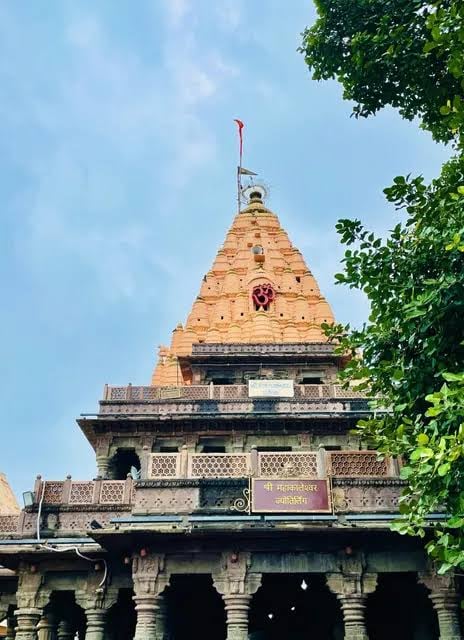
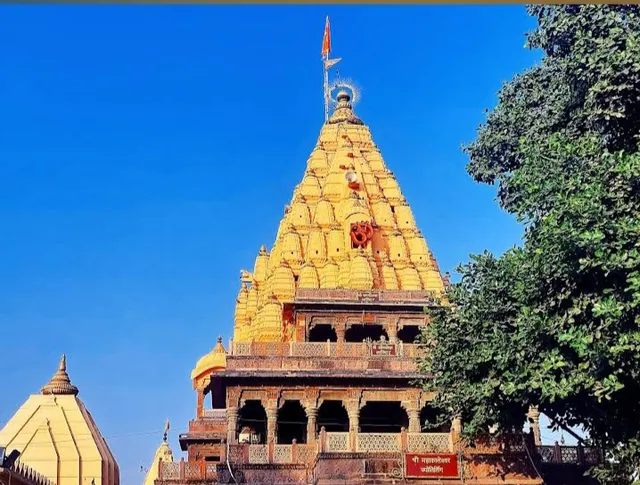
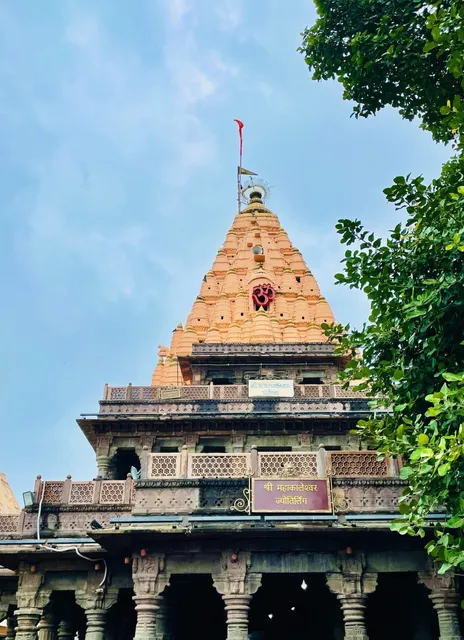
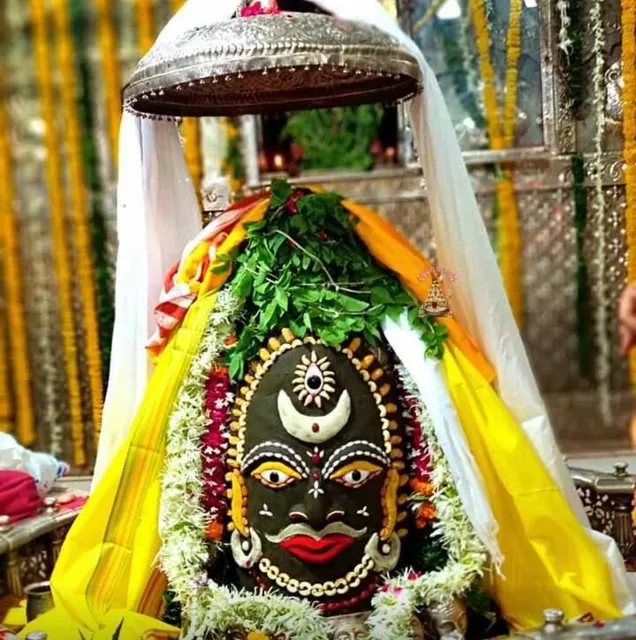
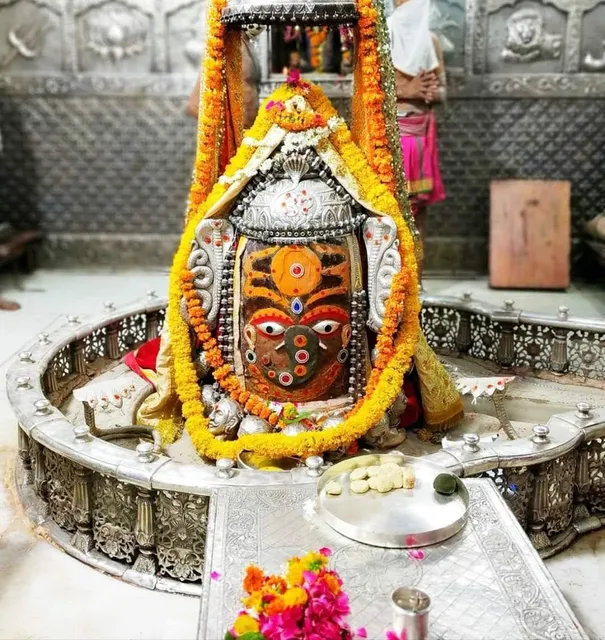
Mahakaleshwar Jyotirlinga, one of the twelve most sacred abodes of Lord Shiva, is located in the ancient city of Ujjain in Madhya Pradesh, India. The temple is situated on the banks of the holy river Shipra and is believed to have been established in the 1st century BCE. The presiding deity, Shiva in the lingam form, is revered as Swayambhu, meaning self-manifested, deriving its power from within itself. [Image of Mahakaleshwar Jyotirlinga temple]

Mahakaleshwar Jyotirlinga holds immense religious significance for Hindus. It is believed that the temple was visited by Lord Rama, Lord Krishna, and Adi Shankaracharya. The temple is also mentioned in the Skanda Purana, one of the 18 Mahapuranas.

Architecture

The Mahakaleshwar Jyotirlinga temple is a remarkable example of a blend of architectural styles, including Chalukya, Maratha, and Bhumija. The temple complex is spread over a vast area and comprises several structures, including the main temple, the Nandi Mandap, the Bhairava Temple, and the Surya Mandir.

Main Temple

The main temple is a five-level structure, with the sanctum sanctorum (garbhagriha) located underground. The sanctum houses the Swayambhu lingam, which is adorned with silver serpents. Devotees descend a flight of stairs to reach the sanctum and offer prayers to the deity.

Nandi Mandap

The Nandi Mandap is a large hall preceding the sanctum sanctorum. It houses a massive statue of Nandi, the sacred bull who is the vehicle of Lord Shiva.

Bhairava Temple

The Bhairava Temple is dedicated to Bhairava, a fierce form of Lord Shiva. The temple is located in the southwest corner of the main temple complex.

Surya Mandir

The Surya Mandir is dedicated to Surya, the Sun God. The temple is located in the northeast corner of the main temple complex.

Rituals and Practices

The Mahakaleshwar Jyotirlinga temple is a vibrant center of Hindu pilgrimage and rituals. Devotees perform various poojas (rituals) and offer prayers to the deity. Some of the popular rituals include:

Bhasma Aarti:This unique ritual is performed at dawn every day. The ashes of cremated bones are collected and mixed with water to form a paste. This paste is then applied to the lingam as an offering.

Jyotiba Aarti:This aarti is performed at 7:00 PM every day. The aarti involves offering lamps, incense, and flowers to the deity.

Mahakal Darshan:Devotees stand in long queues to have a glimpse of the Swayambhu lingam. The darshan is considered to be very auspicious.

The Mahakaleshwar Jyotirlinga temple celebrates several Hindu festivals throughout the year. Some of the major festivals include:

Maha Shivaratri:This is the most important festival at the temple. It is celebrated in the month of February or March. Devotees observe a fast and offer prayers to Lord Shiva throughout the night.

Sawan Somwar:This festival is observed on every Monday during the Hindu month of Sawan (July-August). Devotees offer prayers to Lord Shiva and perform abhishek (bathing) of the lingam with water, milk, and other sacred liquids.

Bhasma Aarti Mahotsav:This festival is celebrated in the month of November or December. It marks the anniversary of the Bhasma Aarti ritual.

Mahakaleshwar Jyotirlinga is a revered Hindu pilgrimage site that attracts devotees from all over India and the world. The temple's unique architecture, rich history, and vibrant rituals make it a must-visit destination for anyone interested in Hindu culture and...

   Read more
avatar
3.0
1y

If you're short on time and don’t want to read further, here's a quick summary: The Mahaakaal Temple and its premises are well-maintained and thoughtfully developed, making it a major tourist attraction as well as a sacred spot. LED monitors are installed at various locations within the temple, offering live views of the sanctum sanctorum, which adds to the experience. Seeing the Mahaakaaleshwar Shivling in person is truly an unforgettable moment. The lively marketplace surrounding the temple makes the area even more vibrant. Jai Mahaakaal!

The Story of My Visit:

As part of my solo cycling expedition to Maheshwar, Omkareshwar, and Ujjain, the Mahakaal Temple in Ujjain was my final stop. I decided to visit early in the morning at around 6:00 AM, hoping for a smaller crowd. I purchased a Rs. 250 entry pass, which allowed me to bypass the long queues. Keep in mind, however, that mobile phones are not allowed inside the temple premises, but there are free phone lockers available.

Despite the early hour, the line to submit my phone took about an hour, which I later realized depends on the crowd. My advice would be to factor in the extra time for submitting and collecting your phone. Once I got past that, it took me only 5 minutes to reach the Shivling, which was a blessing. However, I did notice some people inside the temple carrying their phones, which was disappointing considering the rest of us were made to stand in line to follow the rules.

That said, the temple atmosphere in the early morning is serene and peaceful. The premises host 84 Shivlings and several smaller temples dedicated to different gods and goddesses. The facilities, including drinking water, are well provided, and the overall ambiance feels calming, especially if you visit during non-peak hours.

Exiting the temple and collecting my phone was much easier, as there was no line by then.

A Few Recommendations:

While my experience was good overall, the temple management could improve how they handle peak-hour crowds. The process of regulating visitors, especially concerning mobile phones, needs better enforcement to maintain fairness. Another suggestion is to ensure that the temple remains primarily a place of worship, free from excessive advertisements and banners for services or pandits right outside some temples within the complex.

Historical Background:

The Ujjain Mahaakaal Temple is not just a popular religious destination but also holds immense historical and mythological significance. It is one of the 12 Jyotirlingas, the sacred abodes of Lord Shiva, making it an important pilgrimage site for Hindus. The temple is dedicated to Lord Mahaakaaleshwar, who is considered the guardian deity of Ujjain and the destroyer of evil. The temple’s current structure was built by the Maratha ruler Ranoji Shinde in the 18th century, reflecting Maratha-style architecture, though the original temple is believed to date back to ancient times, mentioned even in the Puranas.

A visit to the Mahakaal Temple is not just about spirituality; it’s about connecting with centuries of devotion and history. Whether you’re here as a pilgrim or a traveler, the experience is bound to leave a lasting impression.

Final Thoughts:

If you plan to visit, keep in mind the temple's crowd dynamics, particularly around mobile phone lockers, and try to go early in the morning to truly appreciate the peaceful and spiritual atmosphere. Mahaakaal Temple is more than just a tourist spot—it’s a place of deep faith and rich heritage that stands out in India’s...

   Read more
Page 1 of 7
Previous
Next

Posts

RANJEET SINGHRANJEET SINGH
According to the Puranas, the city of Ujjain was called Avantika and was famous for its beauty and its status as a devotional epicenter. It was also one of the primary cities where students went to study holy scripture. According to legend there was a ruler of Ujjain called Chandrasena who was a pious devotee of Shiva and worshiped him all the time. One day a farmer's boy named Shrikhar was walking on the grounds of the palace and heard the King chant the Shiva's name & rushed to the temple to start praying with him. However, the guards removed him by force &sent him to the outskirts of the city near the river Kshipra. Rivals of Ujjain primarily King Ripudamana and King Singhaditya of the neighboring kingdoms decided to attack the Kingdom and take over its treasures around this time. Hearing this Shrikhar started to pray & the news spread to a priest named Vridhi. He was shocked to hear this and upon the urgent pleas of his sons, started to pray to Shiva at the river Kshipra. The Kings chose to attack and were successful with the help of the powerful demon Dushan who was blessed by Brahma to be invisible they plundered the city and attacked all the devotees of Shiva. Upon hearing the pleas of His helpless devotees, Shiva appeared in his Mahakala form & destroyed the enemies of King Chandrasena. Upon the request of his devotees Shrikhar&Vridhi, Shiva agreed to reside in the city and become the chief deity of the Kingdom & take care of it against its enemies and to protect all His devotees. From that day on, Shiva resided in His light form as Mahakala in a Lingam that was formed on its own from the powers of Shiva & his consort Parvati. Shiva also blessed his devotees and declared that people who worshipped Him in this form would be free from the fear of death and diseases. Also, they would be granted worldly treasures & be under the protection of the Shiva himself. Bharthari was the elder son of King Gandharva Sena, & received the kingdom of Ujjain from the celestial god Indra& the King of Dhara. When Bharthari was king of 'Ujjayani' in his state there lived a Brahman who after years of austerities was given the fruit of immortality from the celestial tree of Kalpavriksha. The Brahman presented the same to his monarch, Raja Bharthari, who in turn, passed it on to his love, the beautiful, Pinglah Rani or Ananga Sena Raja Bhartrhari's last & youngest wife. The queen, being in love with the Head police officer of the state, Mahipaala, presented the fruit to him, who further passed it on to his beloved, Lakha, one of the maids of honour. Eventually Lakha being in love with the king presented the fruit back to the king. Having completed the circle the fruit revealed the downsides of infidelity to the king he summoned the queen and ordered her beheading & ate the fruit himself. After that, he abdicated the throne, & became a religious mendicant. He later became a disciple of Pattinatthar who first indulged in an argument about samsari and sanyasi with king Bhartrhari. Later during the conversation pattinathar said that all women have dual mind &it might be the true case even with Parameswari. King conveyed this news to Rani Pingalah and she ordered Pattinathar to get punished & to sit in kalu maram (tree whose top portion would be sharpened like a pencil and whole tree is fully coated with oil a person who is punished to sit in the top will be split into two pieces) they tried to kill Pattinathar, but Kalu Maram started burning and nothing happened to Pattinathar the king received the news and went directly to Pattinathar and asked him to get ready to die the next day but Pattinathar replied I'm ready right now to die.The next day king came with tears in his eyes&released saint from jail because he actually noticed Queen Pingalah in love with horsemen that night, He threw away his empire wealth,even full coat dress & dressed in a simple kovanam the king became a disciple of Pattinatthar and got moksha in the Srikalahasteeshwara Temple in Andhra Pradesh which houses the Vayu Lingam a part of thePancha Bhoota Sthalams of shiva
Atharva VayalAtharva Vayal
Jai shree mahakal Got a chance to attend bhasma aarti and it was beautifull and awaited moment of my life. Highly recommended to take bhasma aarti if possible. Mahakaleshwar Jyotirlinga, one of the twelve most sacred abodes of Lord Shiva, is located in the ancient city of Ujjain in Madhya Pradesh, India. The temple is situated on the banks of the holy river Shipra and is believed to have been established in the 1st century BCE. The presiding deity, Shiva in the lingam form, is revered as Swayambhu, meaning self-manifested, deriving its power from within itself. [Image of Mahakaleshwar Jyotirlinga temple] Mahakaleshwar Jyotirlinga holds immense religious significance for Hindus. It is believed that the temple was visited by Lord Rama, Lord Krishna, and Adi Shankaracharya. The temple is also mentioned in the Skanda Purana, one of the 18 Mahapuranas. Architecture The Mahakaleshwar Jyotirlinga temple is a remarkable example of a blend of architectural styles, including Chalukya, Maratha, and Bhumija. The temple complex is spread over a vast area and comprises several structures, including the main temple, the Nandi Mandap, the Bhairava Temple, and the Surya Mandir. Main Temple The main temple is a five-level structure, with the sanctum sanctorum (garbhagriha) located underground. The sanctum houses the Swayambhu lingam, which is adorned with silver serpents. Devotees descend a flight of stairs to reach the sanctum and offer prayers to the deity. Nandi Mandap The Nandi Mandap is a large hall preceding the sanctum sanctorum. It houses a massive statue of Nandi, the sacred bull who is the vehicle of Lord Shiva. Bhairava Temple The Bhairava Temple is dedicated to Bhairava, a fierce form of Lord Shiva. The temple is located in the southwest corner of the main temple complex. **Surya Mandir** The Surya Mandir is dedicated to Surya, the Sun God. The temple is located in the northeast corner of the main temple complex. Rituals and Practices The Mahakaleshwar Jyotirlinga temple is a vibrant center of Hindu pilgrimage and rituals. Devotees perform various poojas (rituals) and offer prayers to the deity. Some of the popular rituals include: Bhasma Aarti:This unique ritual is performed at dawn every day. The ashes of cremated bones are collected and mixed with water to form a paste. This paste is then applied to the lingam as an offering. Jyotiba Aarti:This aarti is performed at 7:00 PM every day. The aarti involves offering lamps, incense, and flowers to the deity. Mahakal Darshan:Devotees stand in long queues to have a glimpse of the Swayambhu lingam. The darshan is considered to be very auspicious. The Mahakaleshwar Jyotirlinga temple celebrates several Hindu festivals throughout the year. Some of the major festivals include: Maha Shivaratri:This is the most important festival at the temple. It is celebrated in the month of February or March. Devotees observe a fast and offer prayers to Lord Shiva throughout the night. Sawan Somwar:This festival is observed on every Monday during the Hindu month of Sawan (July-August). Devotees offer prayers to Lord Shiva and perform abhishek (bathing) of the lingam with water, milk, and other sacred liquids. Bhasma Aarti Mahotsav:This festival is celebrated in the month of November or December. It marks the anniversary of the Bhasma Aarti ritual. Mahakaleshwar Jyotirlinga is a revered Hindu pilgrimage site that attracts devotees from all over India and the world. The temple's unique architecture, rich history, and vibrant rituals make it a must-visit destination for anyone interested in Hindu culture and spirituality.
Rishi KolvekarRishi Kolvekar
If you're short on time and don’t want to read further, here's a quick summary: The Mahaakaal Temple and its premises are well-maintained and thoughtfully developed, making it a major tourist attraction as well as a sacred spot. LED monitors are installed at various locations within the temple, offering live views of the sanctum sanctorum, which adds to the experience. Seeing the Mahaakaaleshwar Shivling in person is truly an unforgettable moment. The lively marketplace surrounding the temple makes the area even more vibrant. Jai Mahaakaal! --- The Story of My Visit: As part of my solo cycling expedition to Maheshwar, Omkareshwar, and Ujjain, the Mahakaal Temple in Ujjain was my final stop. I decided to visit early in the morning at around 6:00 AM, hoping for a smaller crowd. I purchased a Rs. 250 entry pass, which allowed me to bypass the long queues. Keep in mind, however, that mobile phones are not allowed inside the temple premises, but there are free phone lockers available. Despite the early hour, the line to submit my phone took about an hour, which I later realized depends on the crowd. My advice would be to factor in the extra time for submitting and collecting your phone. Once I got past that, it took me only 5 minutes to reach the Shivling, which was a blessing. However, I did notice some people inside the temple carrying their phones, which was disappointing considering the rest of us were made to stand in line to follow the rules. That said, the temple atmosphere in the early morning is serene and peaceful. The premises host 84 Shivlings and several smaller temples dedicated to different gods and goddesses. The facilities, including drinking water, are well provided, and the overall ambiance feels calming, especially if you visit during non-peak hours. Exiting the temple and collecting my phone was much easier, as there was no line by then. --- A Few Recommendations: While my experience was good overall, the temple management could improve how they handle peak-hour crowds. The process of regulating visitors, especially concerning mobile phones, needs better enforcement to maintain fairness. Another suggestion is to ensure that the temple remains primarily a place of worship, free from excessive advertisements and banners for services or pandits right outside some temples within the complex. --- Historical Background: The Ujjain Mahaakaal Temple is not just a popular religious destination but also holds immense historical and mythological significance. It is one of the 12 Jyotirlingas, the sacred abodes of Lord Shiva, making it an important pilgrimage site for Hindus. The temple is dedicated to Lord Mahaakaaleshwar, who is considered the guardian deity of Ujjain and the destroyer of evil. The temple’s current structure was built by the Maratha ruler Ranoji Shinde in the 18th century, reflecting Maratha-style architecture, though the original temple is believed to date back to ancient times, mentioned even in the Puranas. A visit to the Mahakaal Temple is not just about spirituality; it’s about connecting with centuries of devotion and history. Whether you’re here as a pilgrim or a traveler, the experience is bound to leave a lasting impression. --- Final Thoughts: If you plan to visit, keep in mind the temple's crowd dynamics, particularly around mobile phone lockers, and try to go early in the morning to truly appreciate the peaceful and spiritual atmosphere. Mahaakaal Temple is more than just a tourist spot—it’s a place of deep faith and rich heritage that stands out in India’s spiritual landscape.
See more posts
See more posts
hotel
Find your stay

Pet-friendly Hotels in Ujjain

Find a cozy hotel nearby and make it a full experience.

According to the Puranas, the city of Ujjain was called Avantika and was famous for its beauty and its status as a devotional epicenter. It was also one of the primary cities where students went to study holy scripture. According to legend there was a ruler of Ujjain called Chandrasena who was a pious devotee of Shiva and worshiped him all the time. One day a farmer's boy named Shrikhar was walking on the grounds of the palace and heard the King chant the Shiva's name & rushed to the temple to start praying with him. However, the guards removed him by force &sent him to the outskirts of the city near the river Kshipra. Rivals of Ujjain primarily King Ripudamana and King Singhaditya of the neighboring kingdoms decided to attack the Kingdom and take over its treasures around this time. Hearing this Shrikhar started to pray & the news spread to a priest named Vridhi. He was shocked to hear this and upon the urgent pleas of his sons, started to pray to Shiva at the river Kshipra. The Kings chose to attack and were successful with the help of the powerful demon Dushan who was blessed by Brahma to be invisible they plundered the city and attacked all the devotees of Shiva. Upon hearing the pleas of His helpless devotees, Shiva appeared in his Mahakala form & destroyed the enemies of King Chandrasena. Upon the request of his devotees Shrikhar&Vridhi, Shiva agreed to reside in the city and become the chief deity of the Kingdom & take care of it against its enemies and to protect all His devotees. From that day on, Shiva resided in His light form as Mahakala in a Lingam that was formed on its own from the powers of Shiva & his consort Parvati. Shiva also blessed his devotees and declared that people who worshipped Him in this form would be free from the fear of death and diseases. Also, they would be granted worldly treasures & be under the protection of the Shiva himself. Bharthari was the elder son of King Gandharva Sena, & received the kingdom of Ujjain from the celestial god Indra& the King of Dhara. When Bharthari was king of 'Ujjayani' in his state there lived a Brahman who after years of austerities was given the fruit of immortality from the celestial tree of Kalpavriksha. The Brahman presented the same to his monarch, Raja Bharthari, who in turn, passed it on to his love, the beautiful, Pinglah Rani or Ananga Sena Raja Bhartrhari's last & youngest wife. The queen, being in love with the Head police officer of the state, Mahipaala, presented the fruit to him, who further passed it on to his beloved, Lakha, one of the maids of honour. Eventually Lakha being in love with the king presented the fruit back to the king. Having completed the circle the fruit revealed the downsides of infidelity to the king he summoned the queen and ordered her beheading & ate the fruit himself. After that, he abdicated the throne, & became a religious mendicant. He later became a disciple of Pattinatthar who first indulged in an argument about samsari and sanyasi with king Bhartrhari. Later during the conversation pattinathar said that all women have dual mind &it might be the true case even with Parameswari. King conveyed this news to Rani Pingalah and she ordered Pattinathar to get punished & to sit in kalu maram (tree whose top portion would be sharpened like a pencil and whole tree is fully coated with oil a person who is punished to sit in the top will be split into two pieces) they tried to kill Pattinathar, but Kalu Maram started burning and nothing happened to Pattinathar the king received the news and went directly to Pattinathar and asked him to get ready to die the next day but Pattinathar replied I'm ready right now to die.The next day king came with tears in his eyes&released saint from jail because he actually noticed Queen Pingalah in love with horsemen that night, He threw away his empire wealth,even full coat dress & dressed in a simple kovanam the king became a disciple of Pattinatthar and got moksha in the Srikalahasteeshwara Temple in Andhra Pradesh which houses the Vayu Lingam a part of thePancha Bhoota Sthalams of shiva
RANJEET SINGH

RANJEET SINGH

hotel
Find your stay

Affordable Hotels in Ujjain

Find a cozy hotel nearby and make it a full experience.

Get the Appoverlay
Get the AppOne tap to find yournext favorite spots!
Jai shree mahakal Got a chance to attend bhasma aarti and it was beautifull and awaited moment of my life. Highly recommended to take bhasma aarti if possible. Mahakaleshwar Jyotirlinga, one of the twelve most sacred abodes of Lord Shiva, is located in the ancient city of Ujjain in Madhya Pradesh, India. The temple is situated on the banks of the holy river Shipra and is believed to have been established in the 1st century BCE. The presiding deity, Shiva in the lingam form, is revered as Swayambhu, meaning self-manifested, deriving its power from within itself. [Image of Mahakaleshwar Jyotirlinga temple] Mahakaleshwar Jyotirlinga holds immense religious significance for Hindus. It is believed that the temple was visited by Lord Rama, Lord Krishna, and Adi Shankaracharya. The temple is also mentioned in the Skanda Purana, one of the 18 Mahapuranas. Architecture The Mahakaleshwar Jyotirlinga temple is a remarkable example of a blend of architectural styles, including Chalukya, Maratha, and Bhumija. The temple complex is spread over a vast area and comprises several structures, including the main temple, the Nandi Mandap, the Bhairava Temple, and the Surya Mandir. Main Temple The main temple is a five-level structure, with the sanctum sanctorum (garbhagriha) located underground. The sanctum houses the Swayambhu lingam, which is adorned with silver serpents. Devotees descend a flight of stairs to reach the sanctum and offer prayers to the deity. Nandi Mandap The Nandi Mandap is a large hall preceding the sanctum sanctorum. It houses a massive statue of Nandi, the sacred bull who is the vehicle of Lord Shiva. Bhairava Temple The Bhairava Temple is dedicated to Bhairava, a fierce form of Lord Shiva. The temple is located in the southwest corner of the main temple complex. **Surya Mandir** The Surya Mandir is dedicated to Surya, the Sun God. The temple is located in the northeast corner of the main temple complex. Rituals and Practices The Mahakaleshwar Jyotirlinga temple is a vibrant center of Hindu pilgrimage and rituals. Devotees perform various poojas (rituals) and offer prayers to the deity. Some of the popular rituals include: Bhasma Aarti:This unique ritual is performed at dawn every day. The ashes of cremated bones are collected and mixed with water to form a paste. This paste is then applied to the lingam as an offering. Jyotiba Aarti:This aarti is performed at 7:00 PM every day. The aarti involves offering lamps, incense, and flowers to the deity. Mahakal Darshan:Devotees stand in long queues to have a glimpse of the Swayambhu lingam. The darshan is considered to be very auspicious. The Mahakaleshwar Jyotirlinga temple celebrates several Hindu festivals throughout the year. Some of the major festivals include: Maha Shivaratri:This is the most important festival at the temple. It is celebrated in the month of February or March. Devotees observe a fast and offer prayers to Lord Shiva throughout the night. Sawan Somwar:This festival is observed on every Monday during the Hindu month of Sawan (July-August). Devotees offer prayers to Lord Shiva and perform abhishek (bathing) of the lingam with water, milk, and other sacred liquids. Bhasma Aarti Mahotsav:This festival is celebrated in the month of November or December. It marks the anniversary of the Bhasma Aarti ritual. Mahakaleshwar Jyotirlinga is a revered Hindu pilgrimage site that attracts devotees from all over India and the world. The temple's unique architecture, rich history, and vibrant rituals make it a must-visit destination for anyone interested in Hindu culture and spirituality.
Atharva Vayal

Atharva Vayal

hotel
Find your stay

The Coolest Hotels You Haven't Heard Of (Yet)

Find a cozy hotel nearby and make it a full experience.

hotel
Find your stay

Trending Stays Worth the Hype in Ujjain

Find a cozy hotel nearby and make it a full experience.

If you're short on time and don’t want to read further, here's a quick summary: The Mahaakaal Temple and its premises are well-maintained and thoughtfully developed, making it a major tourist attraction as well as a sacred spot. LED monitors are installed at various locations within the temple, offering live views of the sanctum sanctorum, which adds to the experience. Seeing the Mahaakaaleshwar Shivling in person is truly an unforgettable moment. The lively marketplace surrounding the temple makes the area even more vibrant. Jai Mahaakaal! --- The Story of My Visit: As part of my solo cycling expedition to Maheshwar, Omkareshwar, and Ujjain, the Mahakaal Temple in Ujjain was my final stop. I decided to visit early in the morning at around 6:00 AM, hoping for a smaller crowd. I purchased a Rs. 250 entry pass, which allowed me to bypass the long queues. Keep in mind, however, that mobile phones are not allowed inside the temple premises, but there are free phone lockers available. Despite the early hour, the line to submit my phone took about an hour, which I later realized depends on the crowd. My advice would be to factor in the extra time for submitting and collecting your phone. Once I got past that, it took me only 5 minutes to reach the Shivling, which was a blessing. However, I did notice some people inside the temple carrying their phones, which was disappointing considering the rest of us were made to stand in line to follow the rules. That said, the temple atmosphere in the early morning is serene and peaceful. The premises host 84 Shivlings and several smaller temples dedicated to different gods and goddesses. The facilities, including drinking water, are well provided, and the overall ambiance feels calming, especially if you visit during non-peak hours. Exiting the temple and collecting my phone was much easier, as there was no line by then. --- A Few Recommendations: While my experience was good overall, the temple management could improve how they handle peak-hour crowds. The process of regulating visitors, especially concerning mobile phones, needs better enforcement to maintain fairness. Another suggestion is to ensure that the temple remains primarily a place of worship, free from excessive advertisements and banners for services or pandits right outside some temples within the complex. --- Historical Background: The Ujjain Mahaakaal Temple is not just a popular religious destination but also holds immense historical and mythological significance. It is one of the 12 Jyotirlingas, the sacred abodes of Lord Shiva, making it an important pilgrimage site for Hindus. The temple is dedicated to Lord Mahaakaaleshwar, who is considered the guardian deity of Ujjain and the destroyer of evil. The temple’s current structure was built by the Maratha ruler Ranoji Shinde in the 18th century, reflecting Maratha-style architecture, though the original temple is believed to date back to ancient times, mentioned even in the Puranas. A visit to the Mahakaal Temple is not just about spirituality; it’s about connecting with centuries of devotion and history. Whether you’re here as a pilgrim or a traveler, the experience is bound to leave a lasting impression. --- Final Thoughts: If you plan to visit, keep in mind the temple's crowd dynamics, particularly around mobile phone lockers, and try to go early in the morning to truly appreciate the peaceful and spiritual atmosphere. Mahaakaal Temple is more than just a tourist spot—it’s a place of deep faith and rich heritage that stands out in India’s spiritual landscape.
Rishi Kolvekar

Rishi Kolvekar

See more posts
See more posts