HTML SitemapExplore
logo
Find Things to DoFind The Best Restaurants

Buland Darwaza — Attraction in Uttar Pradesh

Name
Buland Darwaza
Description
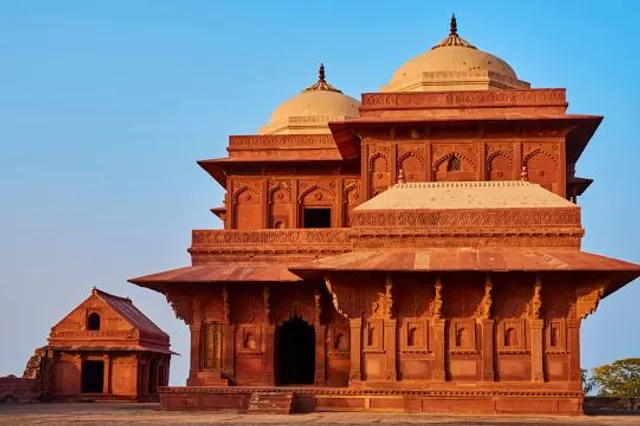
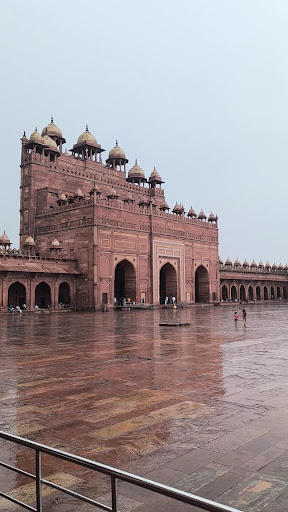
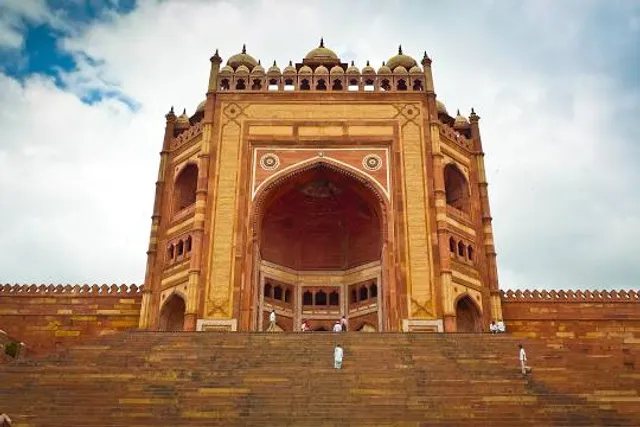
Buland Darwaza, or the "Door of Victory", was built in 1575 by Mughal emperor Akbar to commemorate his victory over Gujarat. It is the main entrance to the Jama Masjid at Fatehpur Sikri, which is 43 km from Agra, India. Buland Darwaza is the highest gateway in the world and is an example of Mughal architecture.
Nearby attractions
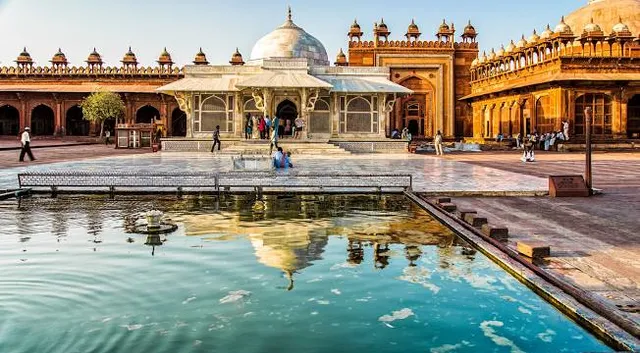
Holy Tomb of Hazrat Salim Chishti
Dadupura, Fatehpur Sikri, Uttar Pradesh 283110, India
King's Gate
Badshahi Darwaza, Dadupura, Fatehpur Sikri, Uttar Pradesh 283110, India
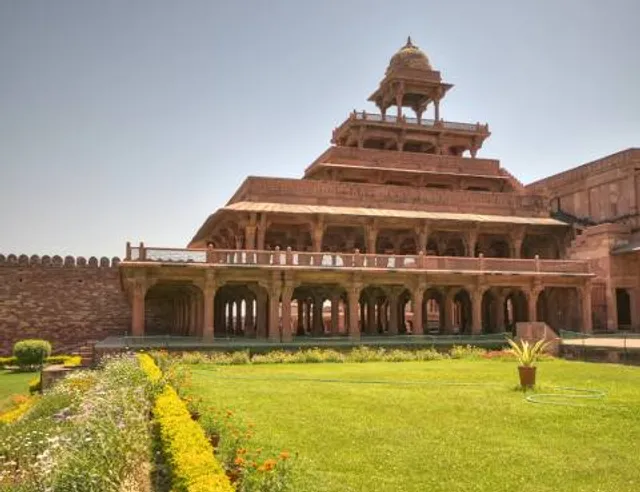
Panch Mahal
3MW8+V7G, Dadupura, Fatehpur Sikri, Uttar Pradesh 283110, India
Birbal's Palace
3MW7+QP3, Dadupura, Fatehpur Sikri, Uttar Pradesh 283110, India
Diwan-e-Khas
3MX8+4CG, Dadupura, Fatehpur Sikri, Uttar Pradesh 283110, India
Hiran Minar, Fatehpur Sikri
3MX7+F2G, Agra, Uttar Pradesh 283110, India
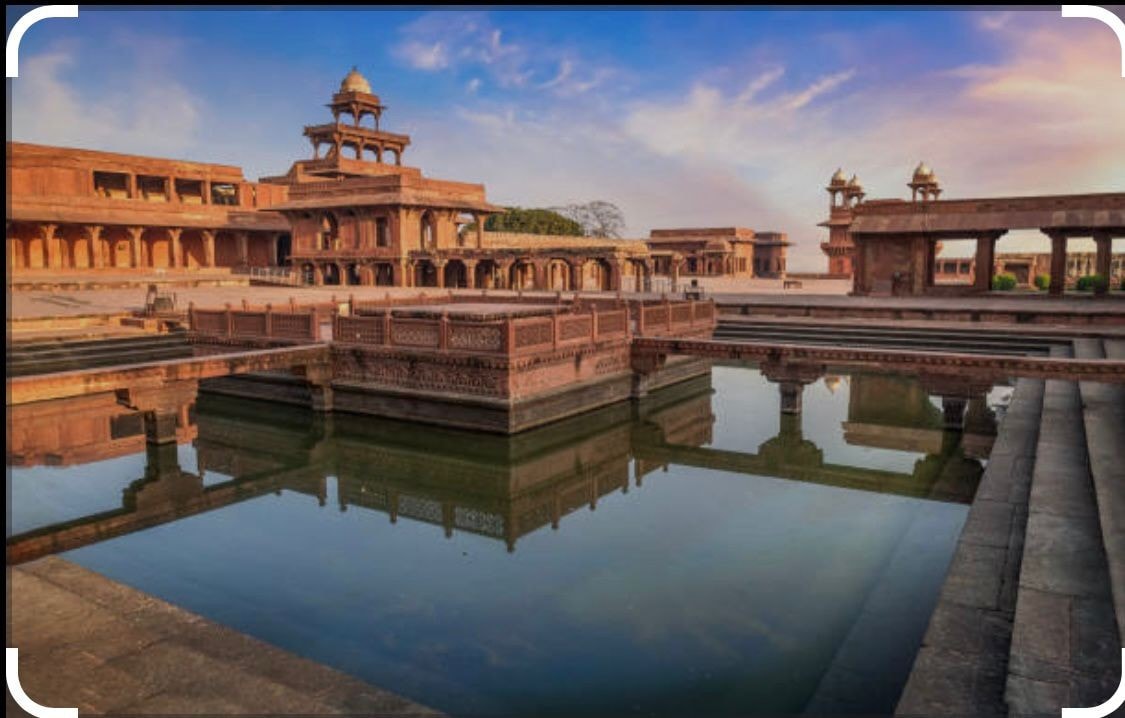
Anup Talab
Buland Gate, Dadupura, Fatehpur Sikri, Uttar Pradesh 283110, India
Khwabgah (Royal Bed-room)
3MW8+JFR, Dadupura, Fatehpur Sikri, Uttar Pradesh 283110, India
Ankh Micholi Treasury
3MX8+48C, Dadupura, Fatehpur Sikri, Uttar Pradesh 283110, India
Nearby restaurants
Jodha Restaurant
Hotel Goverdhan, Fatehpur Sikri, Uttar Pradesh 283110, India
Hotel Ajay Palace
3MV7+FXF, UP Roadways Bus Stand, Dadupura, Fatehpur Sikri, Uttar Pradesh 283110, India
Hotel Vrindavan Restaurant
Santosh Nagar, Agra SH-45, Fatehpur Sikri Rd, Fatehpur Sikri, Uttar Pradesh 283110, India
ITALIAN PIZZA HOUSE
Dadupura, Fatehpur Sikri, Uttar Pradesh 283110, India
Gulistan tourist complex restaurant
Ramkrishna Colony, Fatehpur Sikri, Uttar Pradesh 283110, India
Nearby hotels
Tiwari Guest House
Fatehpur Sikri, near Railway station, Agra, Uttar Pradesh 283110, India
Hotel Gulistan Tourist Complex
Dadupura, Fatehpur Sikri, Uttar Pradesh 283110, India
Hotel Blue Heavens
Shahkulli, near prince tourist lodge, Dadupura, Fatehpur Sikri, Uttar Pradesh 283110, India
Related posts
Keywords
Buland Darwaza tourism.Buland Darwaza hotels.Buland Darwaza bed and breakfast. flights to Buland Darwaza.Buland Darwaza attractions.Buland Darwaza restaurants.Buland Darwaza travel.Buland Darwaza travel guide.Buland Darwaza travel blog.Buland Darwaza pictures.Buland Darwaza photos.Buland Darwaza travel tips.Buland Darwaza maps.Buland Darwaza things to do.
Buland Darwaza things to do, attractions, restaurants, events info and trip planning
Buland Darwaza
IndiaUttar PradeshBuland Darwaza

Basic Info

Buland Darwaza

Near nagar palika building, Dadupura, Agra, Delhi - Mathura Hwy, Fatehpur Sikri, Uttar Pradesh 283110, India
4.4(4.5K)
Closed
Save
spot

Ratings & Description

Info

Buland Darwaza, or the "Door of Victory", was built in 1575 by Mughal emperor Akbar to commemorate his victory over Gujarat. It is the main entrance to the Jama Masjid at Fatehpur Sikri, which is 43 km from Agra, India. Buland Darwaza is the highest gateway in the world and is an example of Mughal architecture.

Cultural
Outdoor
Family friendly
attractions: Holy Tomb of Hazrat Salim Chishti, King's Gate, Panch Mahal, Birbal's Palace, Diwan-e-Khas, Hiran Minar, Fatehpur Sikri, Anup Talab, Khwabgah (Royal Bed-room), Ankh Micholi Treasury, restaurants: Jodha Restaurant, Hotel Ajay Palace, Hotel Vrindavan Restaurant, ITALIAN PIZZA HOUSE, Gulistan tourist complex restaurant
logoLearn more insights from Wanderboat AI.
Website
bulanddarwaza.com
Open hoursSee all hours
Mon8 AM - 7 PMClosed

Plan your stay

hotel
Pet-friendly Hotels in Uttar Pradesh
Find a cozy hotel nearby and make it a full experience.
hotel
Affordable Hotels in Uttar Pradesh
Find a cozy hotel nearby and make it a full experience.
hotel
The Coolest Hotels You Haven't Heard Of (Yet)
Find a cozy hotel nearby and make it a full experience.
hotel
Trending Stays Worth the Hype in Uttar Pradesh
Find a cozy hotel nearby and make it a full experience.

Reviews

Nearby attractions of Buland Darwaza

Holy Tomb of Hazrat Salim Chishti

King's Gate

Panch Mahal

Birbal's Palace

Diwan-e-Khas

Hiran Minar, Fatehpur Sikri

Anup Talab

Khwabgah (Royal Bed-room)

Ankh Micholi Treasury

Holy Tomb of Hazrat Salim Chishti

Holy Tomb of Hazrat Salim Chishti

4.4

(942)

Open 24 hours
Click for details
King's Gate

King's Gate

4.3

(27)

Open 24 hours
Click for details
Panch Mahal

Panch Mahal

4.5

(573)

Open 24 hours
Click for details
Birbal's Palace

Birbal's Palace

4.3

(63)

Open until 12:00 AM
Click for details

Things to do nearby

Explore Fatehpur Sikri with a Private guide
Mon, Dec 8 • 11:00 AM
Gulistan parking Fatehpur Sikri, Uttar Pradesh, 283110, India
View details

Nearby restaurants of Buland Darwaza

Jodha Restaurant

Hotel Ajay Palace

Hotel Vrindavan Restaurant

ITALIAN PIZZA HOUSE

Gulistan tourist complex restaurant

Jodha Restaurant

Jodha Restaurant

4.7

(446)

Closed
Click for details
Hotel Ajay Palace

Hotel Ajay Palace

4.5

(11)

Click for details
Hotel Vrindavan Restaurant

Hotel Vrindavan Restaurant

3.9

(19)

Closed
Click for details
ITALIAN PIZZA HOUSE

ITALIAN PIZZA HOUSE

3.4

(8)

Click for details
Get the Appoverlay
Get the AppOne tap to find yournext favorite spots!
Wanderboat LogoWanderboat

Your everyday Al companion for getaway ideas

CompanyAbout Us
InformationAI Trip PlannerSitemap
SocialXInstagramTiktokLinkedin
LegalTerms of ServicePrivacy Policy

Get the app

Š 2025 Wanderboat. All rights reserved.
logo

Reviews of Buland Darwaza

4.4
(4,486)
avatar
5.0
44w

Buland Darwaza at Fatehpur Sikri, Agra: A Monumental Testament to Mughal Grandeur

Rising imposingly from the historical city of Fatehpur Sikri near Agra, the Buland Darwaza, or "Gate of Magnificence," stands as an awe-inspiring symbol of Mughal architectural prowess and imperial ambition. Commissioned by Emperor Akbar in 1575 to commemorate his decisive victory over the Gujarat Sultanate in 1573, this colossal gateway is not merely an architectural marvel but also a narrative of triumph, cultural synthesis, and spiritual introspection. As the tallest gateway in the world, soaring approximately 54 meters (176 feet) from its base, it dominates the skyline of Fatehpur Sikri, a UNESCO World Heritage Site that once served as Akbar’s short-lived capital (1571–1585).

Historical Context and Symbolism The Buland Darwaza was conceived as a triumphal arch, marking Akbar’s military success and the expansion of the Mughal Empire. Its construction coincided with the zenith of Akbar’s reign, reflecting his vision of an inclusive empire. The gateway’s location at the southern entrance of the Jama Masjid complex underscores its dual role: a political statement of victory and a spiritual portal to one of India’s largest mosques. Fatehpur Sikri itself, though abandoned due to water scarcity, remains a frozen moment in Mughal history, with the Buland Darwaza as its most iconic remnant.

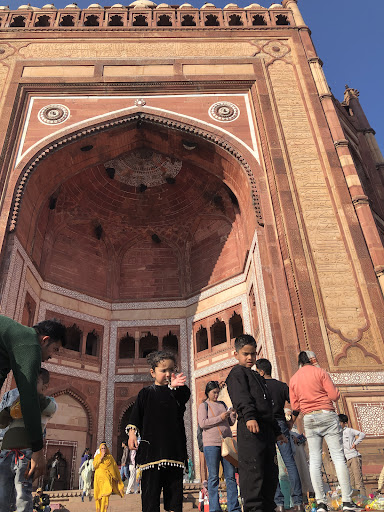
Architectural Splendor Crafted from red sandstone and accented with white marble, the Buland Darwaza exemplifies the fusion of Persian and Indian architectural styles. Its towering façade is adorned with intricate carvings, geometric patterns, and floral motifs, while calligraphic inscriptions from the Quran and a thought-provoking saying attributed to Jesus Christ—“The world is a bridge, pass over it, but build no house upon it”—embody Akbar’s ethos of religious tolerance. The verses, rendered in elegant Nastaliq script, contrast strikingly against the red stone, symbolizing the confluence of earthly power and divine wisdom.

The structure’s grandeur is amplified by its elevated platform, accessed via a flight of 42 steep steps that force visitors to literally and metaphorically ascend toward its majesty. Ornamental chhatris (pavilions), slender minarets, and jali (lattice) screens add layers of aesthetic complexity, showcasing the meticulous craftsmanship of Mughal artisans.

Cultural and Spiritual Resonance Beyond its physical scale, the Buland Darwaza embodies the cultural syncretism of Akbar’s court. The inclusion of Christian and Islamic inscriptions reflects the emperor’s progressive dialogues with diverse faiths. As the entrance to the Jama Masjid, the gateway also serves as a reminder of the Mughals’ role as both conquerors and patrons of spiritual life. Its height and prominence were designed to inspire humility and awe, reinforcing the idea of the emperor as a divinely sanctioned ruler.

Visitor Experience Approaching the Buland Darwaza is an immersive journey. The climb up the stairs builds anticipation, culminating in a breathtaking view of the gateway’s monumental scale. Standing beneath its vast arch, one is enveloped by the echoes of history—the footsteps of Akbar’s court, the prayers of devotees, and the silent stories of artisans. The surrounding complex, including the serene Tomb of Salim Chishti and the sprawling palace quarters, offers a holistic glimpse into Mughal life. Panoramic vistas from the top further highlight the strategic and aesthetic brilliance of its placement.

Legacy and Conclusion Today, the Buland Darwaza transcends its role as a historical relic. It is a testament to Mughal innovation, ambition, and artistic sensibility, drawing parallels with other wonders like the Taj Mahal. For modern visitors, it is not just a photo opportunity but a portal to the past, inviting reflection on the transient nature of power and the enduring legacy of cultural harmony. As a cornerstone of India’s architectural heritage, the Buland Darwaza remains an unmissable landmark, echoing...

   Read more
avatar
5.0
1y

The Buland Darwaza, or the Victory Gate, is a monumental gateway in Fatehpur Sikri, near Agra, Uttar Pradesh, India. Here's some information about it:

Location: The Buland Darwaza is situated in Fatehpur Sikri, approximately 40 kilometres west of Agra, in the state of Uttar Pradesh, India.

Construction: The Buland Darwaza was built in 1576 by the Mughal Emperor Akbar to commemorate his victory over the kingdom of Gujarat. It was constructed in red sandstone and marble and is one of the tallest and most magnificent gateways in the world.

Architecture: The Buland Darwaza is an architectural marvel, standing at a height of 54 meters (177 feet) and adorned with intricate carvings, geometric patterns, and Quranic inscriptions. It features a grand central archway flanked by smaller arches and octagonal towers.

Symbolism: The Buland Darwaza symbolises the triumph of the Mughal Empire and serves as a testament to Akbar's military prowess and imperial ambitions. Its imposing stature and ornate design reflect the grandeur and splendour of the Mughal era.

Purpose: The Buland Darwaza was intended to serve as the main entrance to the city of Fatehpur Sikri and to impress visitors and dignitaries with its monumental scale and architectural beauty. It also functioned as a symbol of Akbar's religious tolerance and cultural inclusivity, as evidenced by the inscriptions from the Quran decorating its facade.

Inscriptions: The Buland Darwaza is adorned with inscriptions from the Quran, including verses praising the greatness of Allah and the victory of Islam. The calligraphy on the gateway is considered among the finest examples of Islamic artistry in India.

Tourist Attraction: The Buland Darwaza is a popular tourist attraction in Fatehpur Sikri and attracts visitors from around the world who come to admire its grandeur, take photographs, and learn about its historical significance through guided tours and informational displays.

Views: From the top of the Buland Darwaza, visitors can enjoy panoramic views of the surrounding landscape, including the city of Fatehpur Sikri, the Jama Masjid, and other historic monuments within the complex.

Preservation: The Buland Darwaza has been meticulously preserved and restored over the years to ensure its structural integrity and architectural beauty. Conservation efforts aim to safeguard this iconic landmark for future generations to appreciate and enjoy.

Cultural Legacy: The Buland Darwaza is not only a symbol of Mughal power and prestige but also a cultural treasure that embodies the artistic and architectural achievements of the Mughal Empire. It holds a special place in the hearts of Indians and is a source of pride for the nation.

Overall, the Buland Darwaza is a timeless monument to India's rich cultural heritage and continues to inspire awe and admiration with its majestic presence and historical...

   Read more
avatar
5.0
20w

Here’s a detailed review of Buland Darwaza, complete with historical facts, architectural highlights, and visitor insights:

🏯 Buland Darwaza: Review with Facts and Figures

📌 Overview

Name: Buland Darwaza (meaning "Gate of Magnificence")

Location: Fatehpur Sikri, Uttar Pradesh, India (approx 43 km from Agra)

Built by: Emperor Akbar

Year of Completion: 1601 AD

Purpose: To commemorate Akbar’s victory over Gujarat & Ahmednagar (Dakshin Bharat) in 1573

🏗️ Architectural Marvel

Style: Indo-Islamic architecture with Persian influences

Material: Red sandstone with white and black marble inlays

Height: 54 meters (177 ft) from ground level

Width: Approx. 35 meters

Total Height from Plain: 176 feet (54 meters), making it the tallest gateway in the world.

🔹 Key Features:

51 steps lead to the gate from the plain.

Massive central arch flanked by smaller domed kiosks (chhatris).

Decorative calligraphy in Persian and Arabic from the Quran adorn the walls.

Inscription: “Isa (Jesus), son of Mary said: The world is a bridge, pass over it but build no houses upon it…”

🕰️ Historical Significance

Symbol of Power: Demonstrates Mughal imperial strength and architectural sophistication. Faces south to establish Akbars victory in southern direction

Religious Harmony: Contains quotes from Jesus Christ, reflecting Akbar’s syncretic approach to religion. Some believe, these were later interpretations and Akbar was no less a religious bigot than aurangazeb

Part of Fatehpur Sikri complex, a UNESCO World Heritage Site.

📸 Tourist Experience

Entry Fee:

Indians: ₹35

Foreigners: ₹550 (includes entry to Fatehpur Sikri complex)

Children below 15 years: Free

Best Time to Visit: October to March (pleasant weather)

Nearby Attractions: Jama Masjid, Tomb of Salim Chishti, Diwan-i-Khas, Panch Mahal

✅ Pros

Awe-inspiring scale and grandeur

Deep historical and cultural significance

Excellent photo opportunities

Part of a larger heritage complex

❌ Cons

Harassment by touts and unofficial guides

Limited signage and explanation boards

Climbing stairs may be difficult for elderly or disabled visitors

🧭 Travel Tips

Wear comfortable footwear—there are many steps and uneven surfaces.

Hire an ASI-certified guide for proper historical context.

Early morning or late afternoon offers best lighting and fewer crowds.

⭐ Verdict

Buland Darwaza is a must-visit for history lovers, architecture enthusiasts, and photographers. Its towering height and rich carvings make it a marvel of Mughal architecture. Despite minor inconveniences like touts, the experience of standing under this colossal gate is nothing short...

   Read more
Page 1 of 7
Previous
Next

Posts

Amir Gulam LoneAmir Gulam Lone
**Buland Darwaza at Fatehpur Sikri, Agra: A Monumental Testament to Mughal Grandeur** Rising imposingly from the historical city of Fatehpur Sikri near Agra, the Buland Darwaza, or "Gate of Magnificence," stands as an awe-inspiring symbol of Mughal architectural prowess and imperial ambition. Commissioned by Emperor Akbar in 1575 to commemorate his decisive victory over the Gujarat Sultanate in 1573, this colossal gateway is not merely an architectural marvel but also a narrative of triumph, cultural synthesis, and spiritual introspection. As the tallest gateway in the world, soaring approximately 54 meters (176 feet) from its base, it dominates the skyline of Fatehpur Sikri, a UNESCO World Heritage Site that once served as Akbar’s short-lived capital (1571–1585). **Historical Context and Symbolism** The Buland Darwaza was conceived as a triumphal arch, marking Akbar’s military success and the expansion of the Mughal Empire. Its construction coincided with the zenith of Akbar’s reign, reflecting his vision of an inclusive empire. The gateway’s location at the southern entrance of the Jama Masjid complex underscores its dual role: a political statement of victory and a spiritual portal to one of India’s largest mosques. Fatehpur Sikri itself, though abandoned due to water scarcity, remains a frozen moment in Mughal history, with the Buland Darwaza as its most iconic remnant. **Architectural Splendor** Crafted from red sandstone and accented with white marble, the Buland Darwaza exemplifies the fusion of Persian and Indian architectural styles. Its towering façade is adorned with intricate carvings, geometric patterns, and floral motifs, while calligraphic inscriptions from the Quran and a thought-provoking saying attributed to Jesus Christ—*“The world is a bridge, pass over it, but build no house upon it”*—embody Akbar’s ethos of religious tolerance. The verses, rendered in elegant Nastaliq script, contrast strikingly against the red stone, symbolizing the confluence of earthly power and divine wisdom. The structure’s grandeur is amplified by its elevated platform, accessed via a flight of 42 steep steps that force visitors to literally and metaphorically ascend toward its majesty. Ornamental chhatris (pavilions), slender minarets, and jali (lattice) screens add layers of aesthetic complexity, showcasing the meticulous craftsmanship of Mughal artisans. **Cultural and Spiritual Resonance** Beyond its physical scale, the Buland Darwaza embodies the cultural syncretism of Akbar’s court. The inclusion of Christian and Islamic inscriptions reflects the emperor’s progressive dialogues with diverse faiths. As the entrance to the Jama Masjid, the gateway also serves as a reminder of the Mughals’ role as both conquerors and patrons of spiritual life. Its height and prominence were designed to inspire humility and awe, reinforcing the idea of the emperor as a divinely sanctioned ruler. **Visitor Experience** Approaching the Buland Darwaza is an immersive journey. The climb up the stairs builds anticipation, culminating in a breathtaking view of the gateway’s monumental scale. Standing beneath its vast arch, one is enveloped by the echoes of history—the footsteps of Akbar’s court, the prayers of devotees, and the silent stories of artisans. The surrounding complex, including the serene Tomb of Salim Chishti and the sprawling palace quarters, offers a holistic glimpse into Mughal life. Panoramic vistas from the top further highlight the strategic and aesthetic brilliance of its placement. **Legacy and Conclusion** Today, the Buland Darwaza transcends its role as a historical relic. It is a testament to Mughal innovation, ambition, and artistic sensibility, drawing parallels with other wonders like the Taj Mahal. For modern visitors, it is not just a photo opportunity but a portal to the past, inviting reflection on the transient nature of power and the enduring legacy of cultural harmony. As a cornerstone of India’s architectural heritage, the Buland Darwaza remains an unmissable landmark, echoing Akbar’s vision.
Kalicharan GopalanKalicharan Gopalan
Here’s a detailed review of Buland Darwaza, complete with historical facts, architectural highlights, and visitor insights: 🏯 Buland Darwaza: Review with Facts and Figures 📌 Overview Name: Buland Darwaza (meaning "Gate of Magnificence") Location: Fatehpur Sikri, Uttar Pradesh, India (approx 43 km from Agra) Built by: Emperor Akbar Year of Completion: 1601 AD Purpose: To commemorate Akbar’s victory over Gujarat & Ahmednagar (Dakshin Bharat) in 1573 🏗️ Architectural Marvel Style: Indo-Islamic architecture with Persian influences Material: Red sandstone with white and black marble inlays Height: 54 meters (177 ft) from ground level Width: Approx. 35 meters Total Height from Plain: 176 feet (54 meters), making it the tallest gateway in the world. 🔹 Key Features: 51 steps lead to the gate from the plain. Massive central arch flanked by smaller domed kiosks (chhatris). Decorative calligraphy in Persian and Arabic from the Quran adorn the walls. Inscription: “Isa (Jesus), son of Mary said: The world is a bridge, pass over it but build no houses upon it…” 🕰️ Historical Significance Symbol of Power: Demonstrates Mughal imperial strength and architectural sophistication. Faces south to establish Akbars victory in southern direction Religious Harmony: Contains quotes from Jesus Christ, reflecting Akbar’s syncretic approach to religion. Some believe, these were later interpretations and Akbar was no less a religious bigot than aurangazeb Part of Fatehpur Sikri complex, a UNESCO World Heritage Site. 📸 Tourist Experience Entry Fee: Indians: ₹35 Foreigners: ₹550 (includes entry to Fatehpur Sikri complex) Children below 15 years: Free Best Time to Visit: October to March (pleasant weather) Nearby Attractions: Jama Masjid, Tomb of Salim Chishti, Diwan-i-Khas, Panch Mahal ✅ Pros Awe-inspiring scale and grandeur Deep historical and cultural significance Excellent photo opportunities Part of a larger heritage complex ❌ Cons Harassment by touts and unofficial guides Limited signage and explanation boards Climbing stairs may be difficult for elderly or disabled visitors 🧭 Travel Tips Wear comfortable footwear—there are many steps and uneven surfaces. Hire an ASI-certified guide for proper historical context. Early morning or late afternoon offers best lighting and fewer crowds. ⭐ Verdict Buland Darwaza is a must-visit for history lovers, architecture enthusiasts, and photographers. Its towering height and rich carvings make it a marvel of Mughal architecture. Despite minor inconveniences like touts, the experience of standing under this colossal gate is nothing short of majestic.
Syed Obaidullah HussainiSyed Obaidullah Hussaini
The Buland Darwaza is a magnificent gateway located in Fatehpur Sikri, near Agra in India. Built by the Mughal Emperor Akbar in the late 16th century, it is one of the most impressive examples of Mughal architecture in India. The Buland Darwaza is a must-visit destination for anyone interested in history or architecture. The architectural style of the Buland Darwaza is a blend of Indian and Persian styles. The gateway is made of red sandstone and marble and is decorated with intricate carvings and inscriptions. The gateway is over 40 meters high and is adorned with four minarets, each around 13 meters high. The main entrance to the gateway is through a massive doorway that is over 15 meters high. The history around the Buland Darwaza is fascinating. The gateway was built by Akbar to commemorate his victory over the state of Gujarat in 1573. The gateway was designed by the Mughal architect, Qutubuddin Koka, and took over 12 years to complete. Today, the Buland Darwaza remains an important historical monument and a symbol of Mughal power and grandeur. The aesthetics of the Buland Darwaza are breathtaking. The intricate carvings and designs on the walls and ceilings of the gateway are stunning and are a testament to the skill and artistry of the Mughal artisans. The minarets of the gateway are particularly impressive, with their beautiful marble work and intricate designs. The massive doorway of the gateway is also stunning, with its intricate carvings and inscriptions. There are several tourist packages available for those who wish to visit the Buland Darwaza. These packages include transportation, accommodation, and guided tours of the gateway and its surroundings. Many of these packages also include visits to other famous landmarks in Fatehpur Sikri, such as the Jama Masjid and the Tomb of Salim Chishti. In conclusion, the Buland Darwaza is a stunningly beautiful and historically significant monument that is a must-visit destination for anyone interested in history or architecture. Its blend of Indian and Persian styles, its fascinating history, and its breathtaking aesthetics make it one of the most impressive examples of Mughal architecture in India.
See more posts
See more posts
hotel
Find your stay

Pet-friendly Hotels in Uttar Pradesh

Find a cozy hotel nearby and make it a full experience.

**Buland Darwaza at Fatehpur Sikri, Agra: A Monumental Testament to Mughal Grandeur** Rising imposingly from the historical city of Fatehpur Sikri near Agra, the Buland Darwaza, or "Gate of Magnificence," stands as an awe-inspiring symbol of Mughal architectural prowess and imperial ambition. Commissioned by Emperor Akbar in 1575 to commemorate his decisive victory over the Gujarat Sultanate in 1573, this colossal gateway is not merely an architectural marvel but also a narrative of triumph, cultural synthesis, and spiritual introspection. As the tallest gateway in the world, soaring approximately 54 meters (176 feet) from its base, it dominates the skyline of Fatehpur Sikri, a UNESCO World Heritage Site that once served as Akbar’s short-lived capital (1571–1585). **Historical Context and Symbolism** The Buland Darwaza was conceived as a triumphal arch, marking Akbar’s military success and the expansion of the Mughal Empire. Its construction coincided with the zenith of Akbar’s reign, reflecting his vision of an inclusive empire. The gateway’s location at the southern entrance of the Jama Masjid complex underscores its dual role: a political statement of victory and a spiritual portal to one of India’s largest mosques. Fatehpur Sikri itself, though abandoned due to water scarcity, remains a frozen moment in Mughal history, with the Buland Darwaza as its most iconic remnant. **Architectural Splendor** Crafted from red sandstone and accented with white marble, the Buland Darwaza exemplifies the fusion of Persian and Indian architectural styles. Its towering façade is adorned with intricate carvings, geometric patterns, and floral motifs, while calligraphic inscriptions from the Quran and a thought-provoking saying attributed to Jesus Christ—*“The world is a bridge, pass over it, but build no house upon it”*—embody Akbar’s ethos of religious tolerance. The verses, rendered in elegant Nastaliq script, contrast strikingly against the red stone, symbolizing the confluence of earthly power and divine wisdom. The structure’s grandeur is amplified by its elevated platform, accessed via a flight of 42 steep steps that force visitors to literally and metaphorically ascend toward its majesty. Ornamental chhatris (pavilions), slender minarets, and jali (lattice) screens add layers of aesthetic complexity, showcasing the meticulous craftsmanship of Mughal artisans. **Cultural and Spiritual Resonance** Beyond its physical scale, the Buland Darwaza embodies the cultural syncretism of Akbar’s court. The inclusion of Christian and Islamic inscriptions reflects the emperor’s progressive dialogues with diverse faiths. As the entrance to the Jama Masjid, the gateway also serves as a reminder of the Mughals’ role as both conquerors and patrons of spiritual life. Its height and prominence were designed to inspire humility and awe, reinforcing the idea of the emperor as a divinely sanctioned ruler. **Visitor Experience** Approaching the Buland Darwaza is an immersive journey. The climb up the stairs builds anticipation, culminating in a breathtaking view of the gateway’s monumental scale. Standing beneath its vast arch, one is enveloped by the echoes of history—the footsteps of Akbar’s court, the prayers of devotees, and the silent stories of artisans. The surrounding complex, including the serene Tomb of Salim Chishti and the sprawling palace quarters, offers a holistic glimpse into Mughal life. Panoramic vistas from the top further highlight the strategic and aesthetic brilliance of its placement. **Legacy and Conclusion** Today, the Buland Darwaza transcends its role as a historical relic. It is a testament to Mughal innovation, ambition, and artistic sensibility, drawing parallels with other wonders like the Taj Mahal. For modern visitors, it is not just a photo opportunity but a portal to the past, inviting reflection on the transient nature of power and the enduring legacy of cultural harmony. As a cornerstone of India’s architectural heritage, the Buland Darwaza remains an unmissable landmark, echoing Akbar’s vision.
Amir Gulam Lone

Amir Gulam Lone

hotel
Find your stay

Affordable Hotels in Uttar Pradesh

Find a cozy hotel nearby and make it a full experience.

Get the Appoverlay
Get the AppOne tap to find yournext favorite spots!
Here’s a detailed review of Buland Darwaza, complete with historical facts, architectural highlights, and visitor insights: 🏯 Buland Darwaza: Review with Facts and Figures 📌 Overview Name: Buland Darwaza (meaning "Gate of Magnificence") Location: Fatehpur Sikri, Uttar Pradesh, India (approx 43 km from Agra) Built by: Emperor Akbar Year of Completion: 1601 AD Purpose: To commemorate Akbar’s victory over Gujarat & Ahmednagar (Dakshin Bharat) in 1573 🏗️ Architectural Marvel Style: Indo-Islamic architecture with Persian influences Material: Red sandstone with white and black marble inlays Height: 54 meters (177 ft) from ground level Width: Approx. 35 meters Total Height from Plain: 176 feet (54 meters), making it the tallest gateway in the world. 🔹 Key Features: 51 steps lead to the gate from the plain. Massive central arch flanked by smaller domed kiosks (chhatris). Decorative calligraphy in Persian and Arabic from the Quran adorn the walls. Inscription: “Isa (Jesus), son of Mary said: The world is a bridge, pass over it but build no houses upon it…” 🕰️ Historical Significance Symbol of Power: Demonstrates Mughal imperial strength and architectural sophistication. Faces south to establish Akbars victory in southern direction Religious Harmony: Contains quotes from Jesus Christ, reflecting Akbar’s syncretic approach to religion. Some believe, these were later interpretations and Akbar was no less a religious bigot than aurangazeb Part of Fatehpur Sikri complex, a UNESCO World Heritage Site. 📸 Tourist Experience Entry Fee: Indians: ₹35 Foreigners: ₹550 (includes entry to Fatehpur Sikri complex) Children below 15 years: Free Best Time to Visit: October to March (pleasant weather) Nearby Attractions: Jama Masjid, Tomb of Salim Chishti, Diwan-i-Khas, Panch Mahal ✅ Pros Awe-inspiring scale and grandeur Deep historical and cultural significance Excellent photo opportunities Part of a larger heritage complex ❌ Cons Harassment by touts and unofficial guides Limited signage and explanation boards Climbing stairs may be difficult for elderly or disabled visitors 🧭 Travel Tips Wear comfortable footwear—there are many steps and uneven surfaces. Hire an ASI-certified guide for proper historical context. Early morning or late afternoon offers best lighting and fewer crowds. ⭐ Verdict Buland Darwaza is a must-visit for history lovers, architecture enthusiasts, and photographers. Its towering height and rich carvings make it a marvel of Mughal architecture. Despite minor inconveniences like touts, the experience of standing under this colossal gate is nothing short of majestic.
Kalicharan Gopalan

Kalicharan Gopalan

hotel
Find your stay

The Coolest Hotels You Haven't Heard Of (Yet)

Find a cozy hotel nearby and make it a full experience.

hotel
Find your stay

Trending Stays Worth the Hype in Uttar Pradesh

Find a cozy hotel nearby and make it a full experience.

The Buland Darwaza is a magnificent gateway located in Fatehpur Sikri, near Agra in India. Built by the Mughal Emperor Akbar in the late 16th century, it is one of the most impressive examples of Mughal architecture in India. The Buland Darwaza is a must-visit destination for anyone interested in history or architecture. The architectural style of the Buland Darwaza is a blend of Indian and Persian styles. The gateway is made of red sandstone and marble and is decorated with intricate carvings and inscriptions. The gateway is over 40 meters high and is adorned with four minarets, each around 13 meters high. The main entrance to the gateway is through a massive doorway that is over 15 meters high. The history around the Buland Darwaza is fascinating. The gateway was built by Akbar to commemorate his victory over the state of Gujarat in 1573. The gateway was designed by the Mughal architect, Qutubuddin Koka, and took over 12 years to complete. Today, the Buland Darwaza remains an important historical monument and a symbol of Mughal power and grandeur. The aesthetics of the Buland Darwaza are breathtaking. The intricate carvings and designs on the walls and ceilings of the gateway are stunning and are a testament to the skill and artistry of the Mughal artisans. The minarets of the gateway are particularly impressive, with their beautiful marble work and intricate designs. The massive doorway of the gateway is also stunning, with its intricate carvings and inscriptions. There are several tourist packages available for those who wish to visit the Buland Darwaza. These packages include transportation, accommodation, and guided tours of the gateway and its surroundings. Many of these packages also include visits to other famous landmarks in Fatehpur Sikri, such as the Jama Masjid and the Tomb of Salim Chishti. In conclusion, the Buland Darwaza is a stunningly beautiful and historically significant monument that is a must-visit destination for anyone interested in history or architecture. Its blend of Indian and Persian styles, its fascinating history, and its breathtaking aesthetics make it one of the most impressive examples of Mughal architecture in India.
Syed Obaidullah Hussaini

Syed Obaidullah Hussaini

See more posts
See more posts