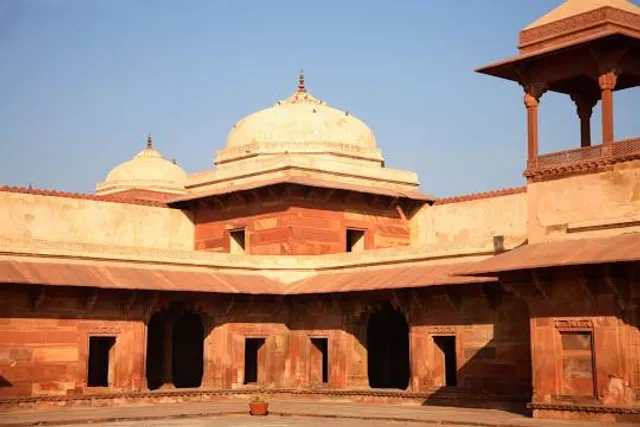
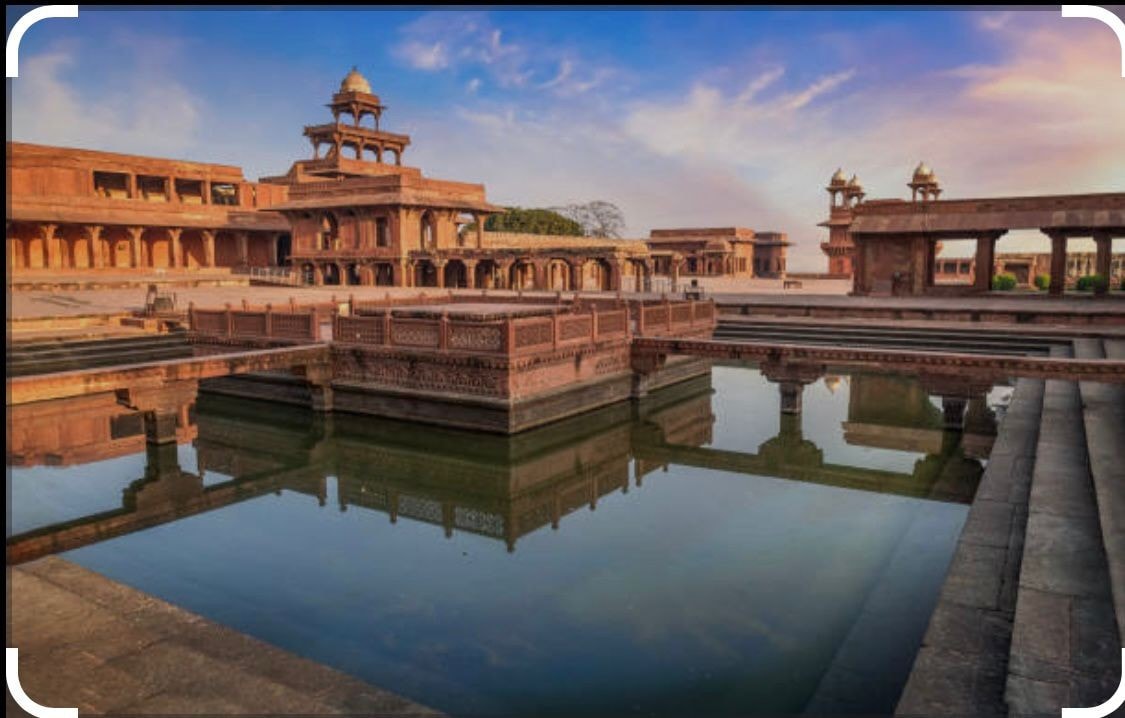
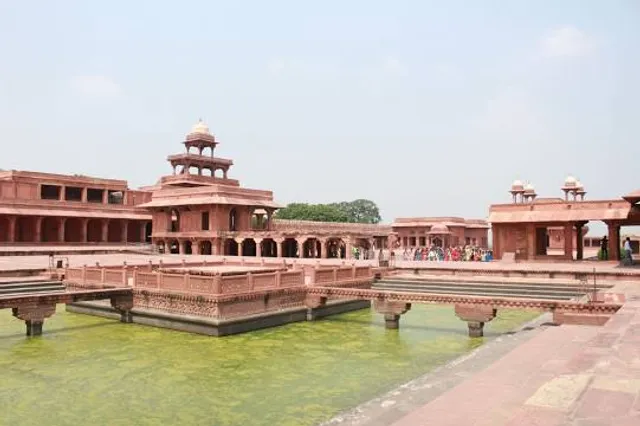
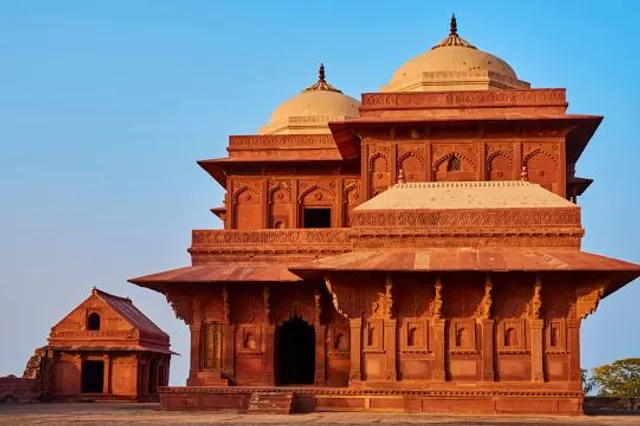
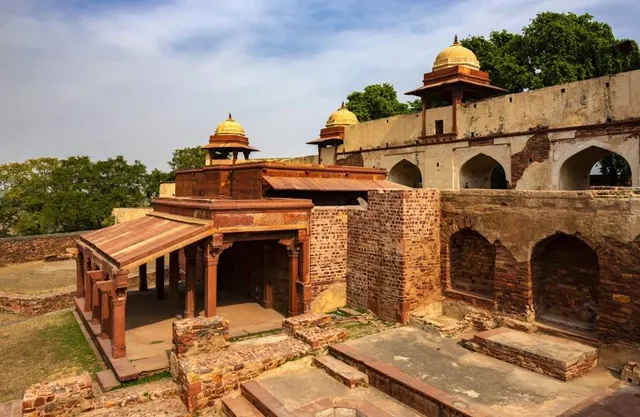
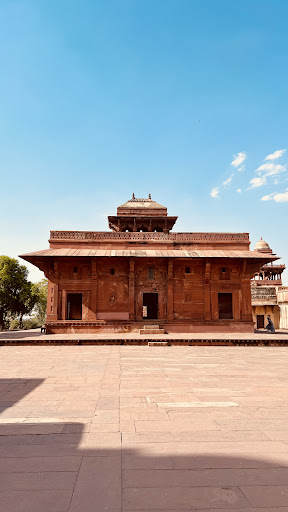
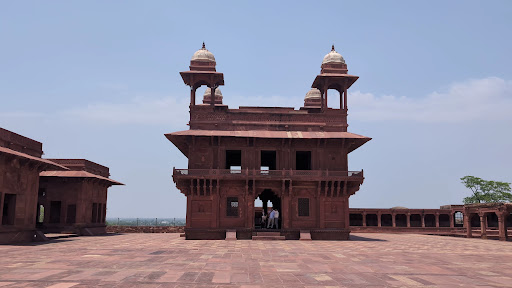
There were times when the Mughal emperor Akbar entertained the common masses, while others were reserved for the royals. The Diwan-i-Khas, or the Hall of Private Audience, was built for such occasions. During your trip to Fatehpur Sikri, you will find his majestic structure located in the north corner of the Pachisi courtyard. It is marked by a carved pillar in the center. Akbar, by way of his secular outlook, was a man far ahead of this time. He was interested in knowing about other religions than Islam, and invited scholars belonging to different faiths to hold religious discussions. This is the place where he would do that. Upon visiting it, you are certainly intrigued by its wonderful architecture, which is most popular for its four chhatris (umbrella like structures) and intricately carved central pillar. It is commonly believed that the scholars, who would debate with Akbar, would stand at the ends of the four "bridges" which were connected by the center. If all this sounds quite interesting, wait till you actually come across this marvellous structure during your tour to Fatehpur Sikri from Agra. Architecture The Diwan-i-Khas, or the Hall of Private Audience, was built largely in the Persian style of architecture. A carved central column dominates the interiors, while the four pillars, which open themselves at the top, are adorned with exquisite sculptures and precious stones. One of these pillars is attached to the central platform, which is where the emperor would sit. The diagonal galleries surrounding it are believed to have been occupied by ministers and nobles. At times, though, the galleries were too narrow, and was unable to accommodate all the ministers of the court at once. According to some people, the Diwan-i-Khas is where the gems, jewels and other precious possessions of the royal household would be stored, with the emperor making occasional visits to it. Even though there is lack of much ornamentation in the structure, it is undoubtedly one of the main tourist attractions of Fatehpur Sikri. Interesting Facts • It is believed that Diwan-i-Khas was once used for gold, jewels and other precious items. • It's one of the masterpieces of Persian styles of architecture. • This is where Akbar used to hold his religious discussions. Entry Fee The Diwan-i-Khas is one of the most beautiful things to see in Fatehpur Sikri, and is a part of it. You do not have to pay any extra entry fee to visit this structure. To visit Fatehpur Sikri however, you will have to pay an entry fee, which varies for both domestic and international tourists. While citizens of India and those belonging to countries of SAARC and BIMSTEC have to pay an entry fee of 35 INR, the entry for international tourists is 550 INR. Children under 15 years of age are not required to pay any entry fee. Best Time to Visit Diwan-i-Khas, a part of Fatehpur Sikri, is located in the state of Uttar Pradesh. During summers, it can get very hot here, with temperatures fluctuating between 41°C to 45°C. This can be a daunting factor for many people wanting to visit it during this time. During the winters, it is a completely different story. The weather is cool and pleasant, with the average temperature being 12°C. This is certainly the best time to enjoy sightseeing and...
Read moreThe Diwan-i-Khas, meaning the "Hall of Private Audience," is a significant structure within the Fatehpur Sikri complex near Agra, Uttar Pradesh, India. Here's a detailed overview of this historical site:
History and Significance:
Construction: The Diwan-i-Khas was built during the reign of Emperor Akbar in 1571-1572 as part of the Fatehpur Sikri complex. It served as a place for private meetings, discussions, and audiences with select dignitaries and courtiers.
Purpose: This splendid hall was reserved for confidential and intimate gatherings, where Akbar held discussions on various matters, including religious, political, and philosophical topics.
Architecture and Design:
Architectural Style: The Diwan-i-Khas represents an exquisite blend of Persian, Indian, and Islamic architectural styles, showcasing the artistic brilliance of the Mughal era.
Central Pillar: The hall's most remarkable feature is the impressive central pillar, which supports a circular platform where Akbar's throne was placed. The pillar is intricately designed and intricately carved with floral motifs and geometric patterns.
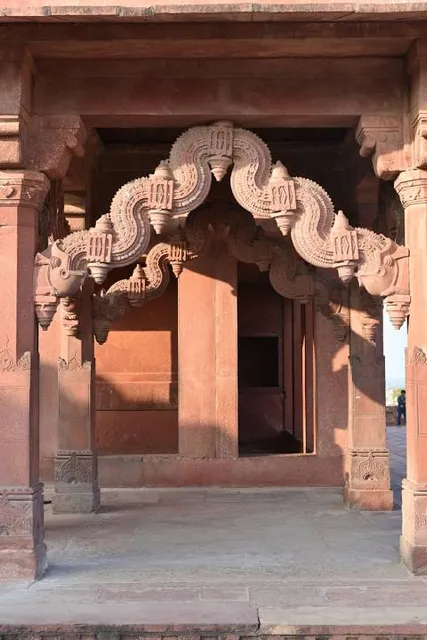
Material and Decor: The structure is built primarily of red sandstone, adorned with white marble embellishments, intricately carved brackets, and delicate lattice work, presenting a captivating visual spectacle.
Key Features and Highlights:
The Throne: The central platform was where the Emperor's throne stood. It was here that Akbar received select guests and held discussions on various subjects.
Philosophical Debates: Akbar encouraged discussions and debates among scholars, religious leaders, and intellectuals from diverse backgrounds. The Diwan-i-Khas was a space for promoting religious tolerance and open dialogue.
Visiting Details:
Location: The Diwan-i-Khas is situated within the Fatehpur Sikri complex, around 40 kilometers from Agra, Uttar Pradesh.
Timings: The site is open to visitors from sunrise to sunset.
Entrance Fee: Visitors need to pay an entry fee to access Fatehpur Sikri, which includes entry to the Diwan-i-Khas along with other structures in the complex.
Guided Tours: Local guides are available at the site, providing insights into the historical significance and architectural beauty of the Diwan-i-Khas.
Cultural and Historical Significance:
Symbol of Mughal Opulence: The Diwan-i-Khas represents the grandeur and magnificence of the Mughal court, reflecting Akbar's patronage of art, culture, and intellectual discourse.
Architectural Marvel: Its exquisite design, intricate carvings, and the significance of the discussions held here make it an architectural and historical treasure.
The Diwan-i-Khas at Fatehpur Sikri stands as a testimony to the Mughal era's cultural sophistication, showcasing the architectural finesse and fostering intellectual exchanges that characterized Akbar's reign. It remains a captivating site for visitors exploring India's rich...
Read moreThis UNESCO World Heritage Site, once the capital of the Mughal Empire, stands as a testament to the architectural brilliance, cultural fusion, and imperial grandeur of its time.
The first impression of Fatehpur Sikri is its grand entrance and imposing gateway known as the Buland Darwaza. This towering structure, with its intricate carvings and inscriptions, sets the stage for the architectural wonders that lie within. Walking through the colossal gateway, I was immediately struck by the vastness and magnificence of the complex.
Exploring Fatehpur Sikri is like stepping into a well-preserved time capsule. The architectural style reflects a unique blend of Indian, Persian, and Islamic influences, creating a distinct Mughal architectural identity. The intricate jali work, delicately carved pillars, and ornate chambers transport visitors to an era of opulence and cultural exchange.
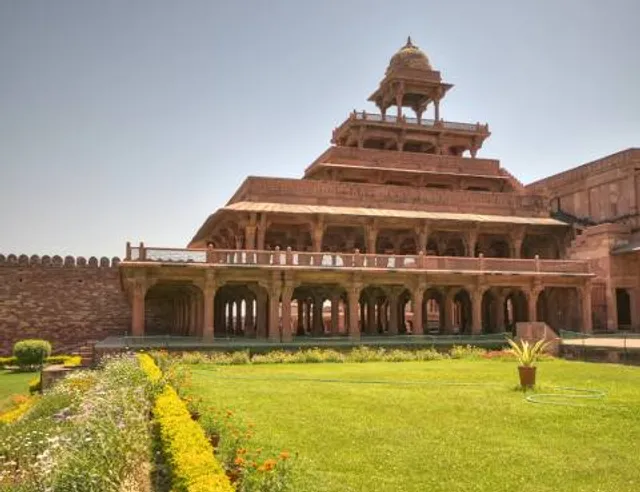
The main highlights of Fatehpur Sikri include the Jama Masjid, the largest mosque in India at the time of its construction. The mosque's vast courtyard and towering minarets create a sense of awe and reverence. The Panch Mahal, a five-story palace, showcases the architectural ingenuity of the Mughal craftsmen, with its intricately carved columns and open pavilions that offer panoramic views of the surrounding landscape.
The Diwan-i-Khas, or the Hall of Private Audience, stands as a testament to Emperor Akbar's inclusive and progressive policies. The central pillar, known as the Ashoka Pillar, bears inscriptions that promote religious tolerance and understanding, reflecting the emperor's vision of unity among diverse communities.
One of the most captivating aspects of Fatehpur Sikri is the intricate stone carvings that adorn the buildings. The delicate detailing, depicting flora, fauna, mythological figures, and court scenes, showcases the artistic mastery of the Mughal craftsmen. These carvings breathe life into the structures, evoking a sense of wonder and admiration for the artisans of that era.
Despite its architectural brilliance, Fatehpur Sikri faced challenges in terms of sustainable water supply, which led to its abandonment after a short period. However, the site's preservation and restoration efforts have ensured that its historical and cultural significance continues to be appreciated by visitors from around the world.
In conclusion, Fatehpur Sikri stands as a remarkable testament to the architectural marvels and cultural fusion of the Mughal Empire. The well-preserved structures, intricate carvings, and the immersive historical ambiance make it a must-visit destination for history enthusiasts and admirers of architectural excellence. A visit to Fatehpur Sikri offers a captivating journey into the past, allowing visitors to appreciate the grandeur and vision of Emperor Akbar while gaining insights into the cultural tapestry of...
Read more