HTML SitemapExplore
logo
Find Things to DoFind The Best Restaurants

Holy Tomb of Hazrat Salim Chishti — Attraction in Uttar Pradesh

Name
Holy Tomb of Hazrat Salim Chishti
Description
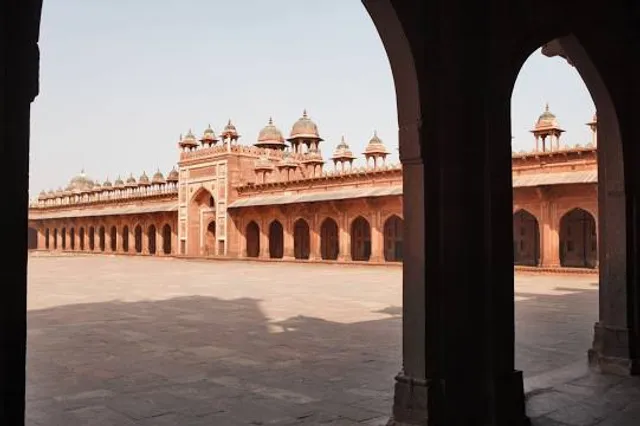
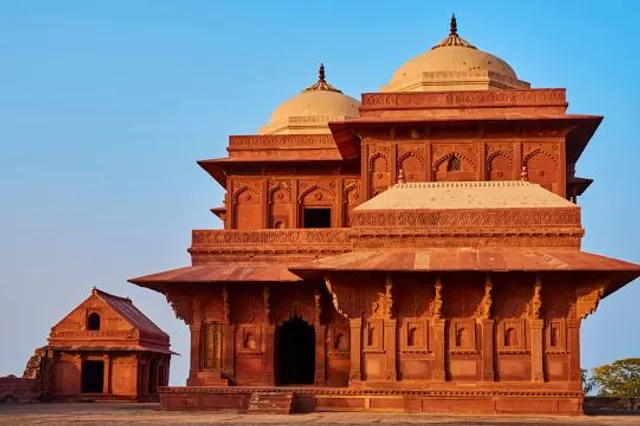
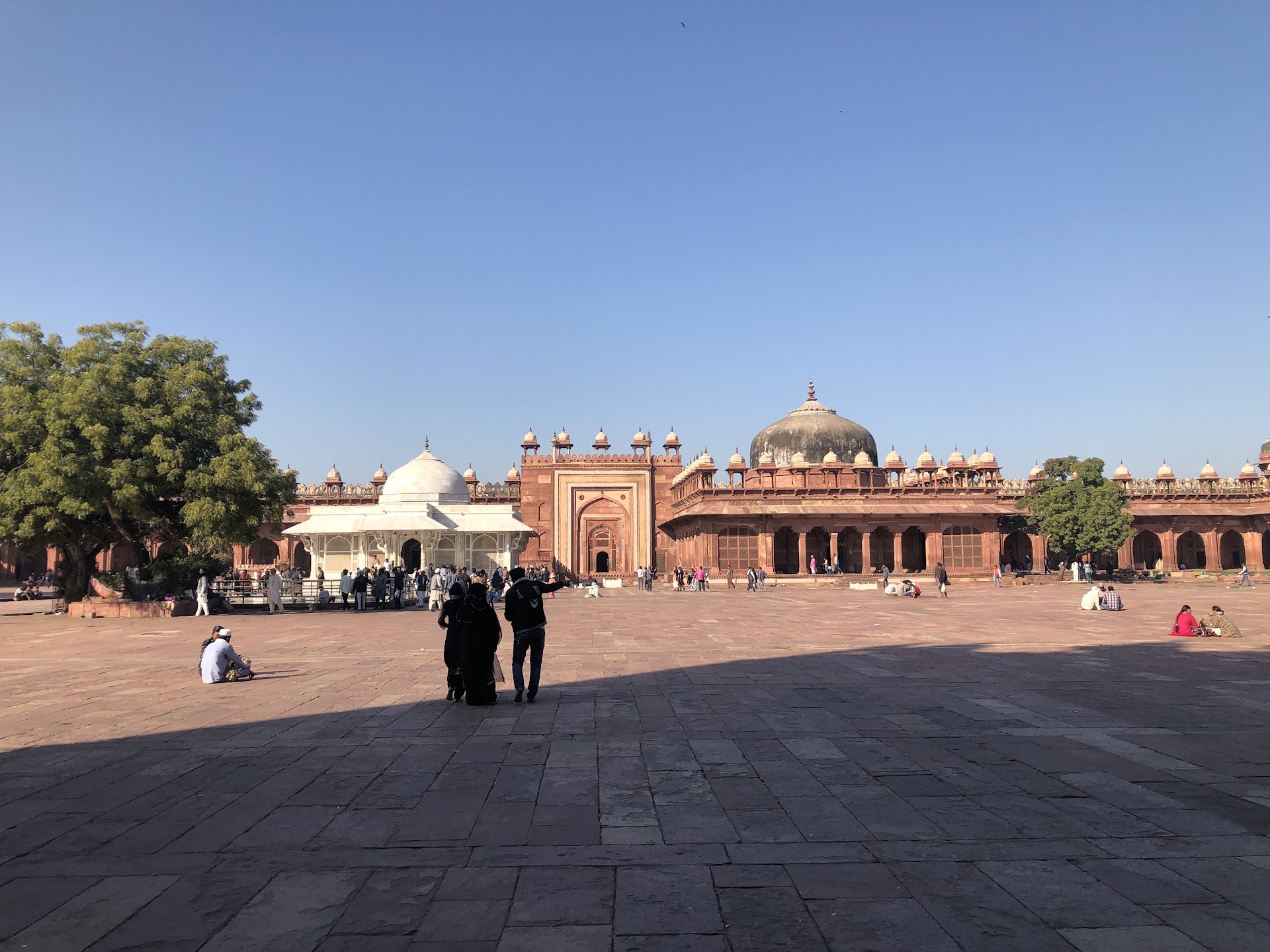
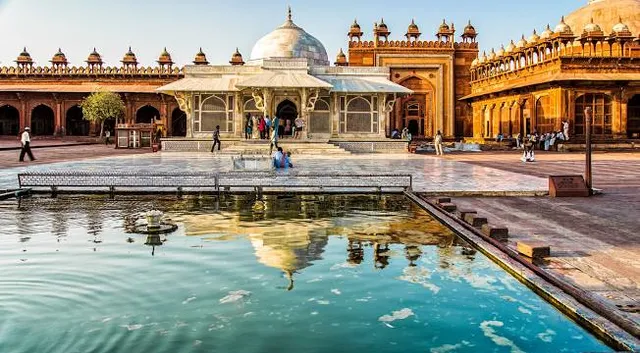
The Tomb of Salim Chishti is a mausoleum locating within the quadrangle of the Jama Masjid in Fatehpur Sikri, Uttar Pradesh, India. It enshrines the burial place of the Sufi saint, Salim Chisti, a descendant of Baba Farid, and who lived in a cavern on the ridge at Sikri.
Nearby attractions
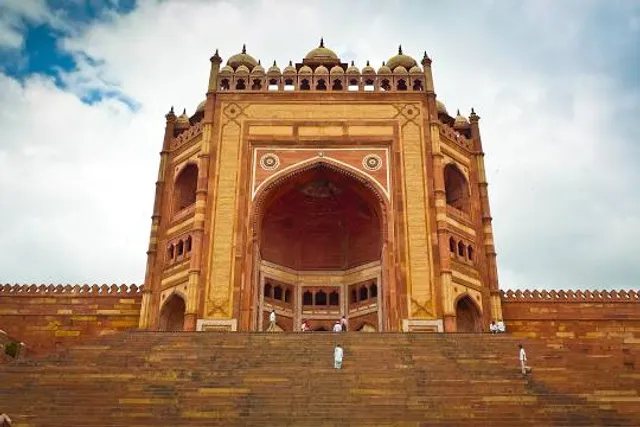
Buland Darwaza
Near nagar palika building, Dadupura, Agra, Delhi - Mathura Hwy, Fatehpur Sikri, Uttar Pradesh 283110, India
King's Gate
Badshahi Darwaza, Dadupura, Fatehpur Sikri, Uttar Pradesh 283110, India
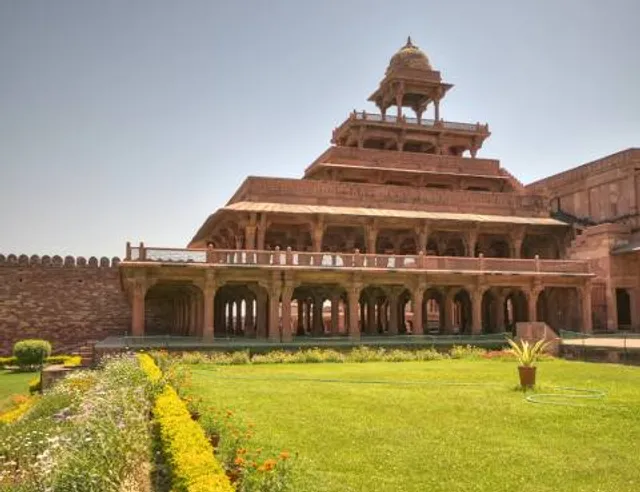
Panch Mahal
3MW8+V7G, Dadupura, Fatehpur Sikri, Uttar Pradesh 283110, India
Birbal's Palace
3MW7+QP3, Dadupura, Fatehpur Sikri, Uttar Pradesh 283110, India
Diwan-e-Khas
3MX8+4CG, Dadupura, Fatehpur Sikri, Uttar Pradesh 283110, India
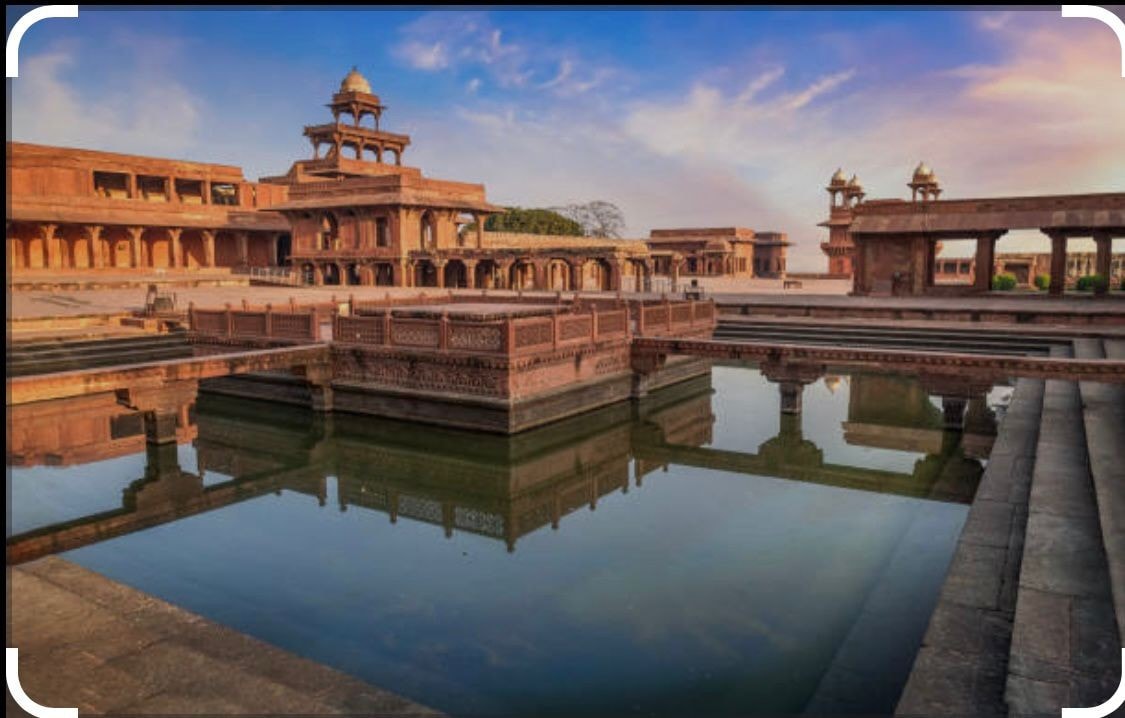
Hiran Minar, Fatehpur Sikri
3MX7+F2G, Agra, Uttar Pradesh 283110, India
Anup Talab
Buland Gate, Dadupura, Fatehpur Sikri, Uttar Pradesh 283110, India
Khwabgah (Royal Bed-room)
3MW8+JFR, Dadupura, Fatehpur Sikri, Uttar Pradesh 283110, India
Ankh Micholi Treasury
3MX8+48C, Dadupura, Fatehpur Sikri, Uttar Pradesh 283110, India
Nearby restaurants
Jodha Restaurant
Hotel Goverdhan, Fatehpur Sikri, Uttar Pradesh 283110, India
Hotel Ajay Palace
3MV7+FXF, UP Roadways Bus Stand, Dadupura, Fatehpur Sikri, Uttar Pradesh 283110, India
Hotel Vrindavan Restaurant
Santosh Nagar, Agra SH-45, Fatehpur Sikri Rd, Fatehpur Sikri, Uttar Pradesh 283110, India
ITALIAN PIZZA HOUSE
Dadupura, Fatehpur Sikri, Uttar Pradesh 283110, India
Gulistan tourist complex restaurant
Ramkrishna Colony, Fatehpur Sikri, Uttar Pradesh 283110, India
Utsav Resort
Fatehpur Sikri Rd, near parking, Dadupura, Fatehpur Sikri, Uttar Pradesh 283110, India
Nearby hotels
Tiwari Guest House
Fatehpur Sikri, near Railway station, Agra, Uttar Pradesh 283110, India
Hotel Gulistan Tourist Complex
Dadupura, Fatehpur Sikri, Uttar Pradesh 283110, India
Hotel Blue Heavens
Shahkulli, near prince tourist lodge, Dadupura, Fatehpur Sikri, Uttar Pradesh 283110, India
Related posts
Keywords
Holy Tomb of Hazrat Salim Chishti tourism.Holy Tomb of Hazrat Salim Chishti hotels.Holy Tomb of Hazrat Salim Chishti bed and breakfast. flights to Holy Tomb of Hazrat Salim Chishti.Holy Tomb of Hazrat Salim Chishti attractions.Holy Tomb of Hazrat Salim Chishti restaurants.Holy Tomb of Hazrat Salim Chishti travel.Holy Tomb of Hazrat Salim Chishti travel guide.Holy Tomb of Hazrat Salim Chishti travel blog.Holy Tomb of Hazrat Salim Chishti pictures.Holy Tomb of Hazrat Salim Chishti photos.Holy Tomb of Hazrat Salim Chishti travel tips.Holy Tomb of Hazrat Salim Chishti maps.Holy Tomb of Hazrat Salim Chishti things to do.
Holy Tomb of Hazrat Salim Chishti things to do, attractions, restaurants, events info and trip planning
Holy Tomb of Hazrat Salim Chishti
IndiaUttar PradeshHoly Tomb of Hazrat Salim Chishti

Basic Info

Holy Tomb of Hazrat Salim Chishti

Dadupura, Fatehpur Sikri, Uttar Pradesh 283110, India
4.4(942)
Open 24 hours
Save
spot

Ratings & Description

Info

The Tomb of Salim Chishti is a mausoleum locating within the quadrangle of the Jama Masjid in Fatehpur Sikri, Uttar Pradesh, India. It enshrines the burial place of the Sufi saint, Salim Chisti, a descendant of Baba Farid, and who lived in a cavern on the ridge at Sikri.

Cultural
Scenic
Family friendly
attractions: Buland Darwaza, King's Gate, Panch Mahal, Birbal's Palace, Diwan-e-Khas, Hiran Minar, Fatehpur Sikri, Anup Talab, Khwabgah (Royal Bed-room), Ankh Micholi Treasury, restaurants: Jodha Restaurant, Hotel Ajay Palace, Hotel Vrindavan Restaurant, ITALIAN PIZZA HOUSE, Gulistan tourist complex restaurant, Utsav Resort
logoLearn more insights from Wanderboat AI.

Plan your stay

hotel
Pet-friendly Hotels in Uttar Pradesh
Find a cozy hotel nearby and make it a full experience.
hotel
Affordable Hotels in Uttar Pradesh
Find a cozy hotel nearby and make it a full experience.
hotel
The Coolest Hotels You Haven't Heard Of (Yet)
Find a cozy hotel nearby and make it a full experience.
hotel
Trending Stays Worth the Hype in Uttar Pradesh
Find a cozy hotel nearby and make it a full experience.

Reviews

Nearby attractions of Holy Tomb of Hazrat Salim Chishti

Buland Darwaza

King's Gate

Panch Mahal

Birbal's Palace

Diwan-e-Khas

Hiran Minar, Fatehpur Sikri

Anup Talab

Khwabgah (Royal Bed-room)

Ankh Micholi Treasury

Buland Darwaza

Buland Darwaza

4.4

(4.5K)

Closed
Click for details
King's Gate

King's Gate

4.3

(27)

Open 24 hours
Click for details
Panch Mahal

Panch Mahal

4.5

(573)

Open 24 hours
Click for details
Birbal's Palace

Birbal's Palace

4.3

(63)

Open until 12:00 AM
Click for details

Things to do nearby

Explore Fatehpur Sikri with a Private guide
Tue, Dec 9 • 7:00 AM
Gulistan parking Fatehpur Sikri, Uttar Pradesh, 283110, India
View details

Nearby restaurants of Holy Tomb of Hazrat Salim Chishti

Jodha Restaurant

Hotel Ajay Palace

Hotel Vrindavan Restaurant

ITALIAN PIZZA HOUSE

Gulistan tourist complex restaurant

Utsav Resort

Jodha Restaurant

Jodha Restaurant

4.7

(446)

Closed
Click for details
Hotel Ajay Palace

Hotel Ajay Palace

4.5

(11)

Click for details
Hotel Vrindavan Restaurant

Hotel Vrindavan Restaurant

3.9

(19)

Closed
Click for details
ITALIAN PIZZA HOUSE

ITALIAN PIZZA HOUSE

3.4

(8)

Click for details
Get the Appoverlay
Get the AppOne tap to find yournext favorite spots!
Wanderboat LogoWanderboat

Your everyday Al companion for getaway ideas

CompanyAbout Us
InformationAI Trip PlannerSitemap
SocialXInstagramTiktokLinkedin
LegalTerms of ServicePrivacy Policy

Get the app

© 2025 Wanderboat. All rights reserved.
logo

Posts

Amir Gulam LoneAmir Gulam Lone
The Tomb of Hazrat Salim Chisti, located within the premises of Jama Masjid in Fatehpur Sikri, is one of the most revered and architecturally significant sites in India. Situated in the UNESCO World Heritage city of Fatehpur Sikri, this tomb attracts not only spiritual pilgrims but also history enthusiasts and architecture lovers. It offers an intriguing glimpse into the Mughal era, showcasing both the spiritual importance of the site and the architectural grandeur of the period. Hazrat Salim Chisti was a prominent Sufi saint whose blessings were sought by Emperor Akbar. According to legend, Akbar visited him in search of a son, and Hazrat Salim Chisti’s blessings were believed to have led to the birth of Akbar’s heir, Salim (later known as Emperor Jahangir). Because of this, the tomb became a significant pilgrimage site, especially for people seeking blessings for children. Visitors still tie threads on the tomb’s grille, hoping for the fulfillment of their wishes. The tomb itself is a beautiful blend of Mughal and Persian architectural styles. The white marble structure is simple yet mesmerizing, surrounded by an intricately designed marble jali (lattice) that allows for an ethereal play of light and shadow within the tomb. The tomb is set within a peaceful courtyard, and the atmosphere here is one of calm and reverence. The detailed inlay work on the tomb and the beautiful carvings reflect the skilled craftsmanship of the Mughal artisans of that era. As you step inside the tomb, you’re greeted with a serene and spiritual ambiance. The tomb is housed in a small, square building, and you can see the tomb of Hazrat Salim Chisti placed on a raised platform in the center, surrounded by a decorative marble grille. Visitors often whisper their prayers and offerings here, creating a solemn and peaceful environment. The reverence surrounding the tomb makes it one of the most spiritually significant places in the region. The tomb is also notable for its unique architecture. The design is minimalist compared to some of the grander Mughal structures like the Taj Mahal, but this simplicity adds to its charm. The use of white marble, the decorative jharokhas (overhanging structures), and the beautiful inlay work all contribute to its aesthetic appeal. The tomb stands as a testament to the Mughal Empire's dedication to art, architecture, and religion. Aside from its spiritual significance, the Tomb of Hazrat Salim Chisti is a must-see for anyone interested in Mughal history or architecture. It’s a place that holds deep cultural and historical value and continues to inspire awe in those who visit. Whether you come for spiritual reasons, historical interest, or simply to experience the beauty of Mughal architecture, this tomb is a remarkable site worth exploring.
Sheikh HaashimSheikh Haashim
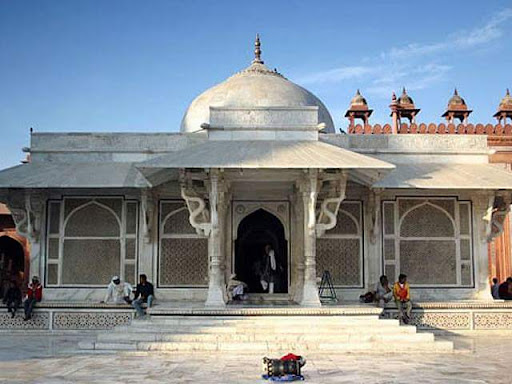
The Tomb of Sheikh Salim Chishti is famed as one of the finest examples of Mughal architecture in India, built during the years 1580 and 1581, along with the imperial complex at Fatehpur Sikri near Zenana Rauza and facing south towards Buland Darwaza, within the quadrangle of the Jama Masjid which measures 350 ft. by 440 ft. It enshrines the burial place of the Sufi saint, Salim Chisti (1478 – 1572), a descendant of Khwaja Moinuddin Chishti of Ajmer, and who lived in a cavern on the ridge at Sikri. The mausoleum, constructed by Akbar as a mark of his respect for the Sufi saint, who foretold the birth of Akbar's son, who was named Prince Salim after the Sufi Saint and later succeeded Akbar to the throne of the Mughal Empire, as Jahangir. Intricate Jali, stone latticework window,looking into the quadrangle of the Jama Masjid Wooden canopy over the inner tomb, with an inlay mosaic of mother-of-pearl The tomb has been constructed on a platform which is about 1 m. high, a flight of five steps leading to the entrance portico. The main tomb building is enclosed by delicate marble screens on all sides, and the tomb is located in the centre of the main hall, which has a single semi-circular dome. The marble building is beautifully carved, and has an ivory-like appearance. The plinth is ornamented with mosaics of black and yellow marble arranged in geometric patterns. An ebony “chhaparkhat” enclosure surrounds the marble cenotaph, which is usually covered by a green cloth. A wooden canopy incrusted with mother-of-pearl inlay mosaic over it. The door to the main chamber is intricately carved with arabesque patterns and bears inscriptions from the Quran. Brown marble borders the interior bays while the relief panels - with the quran verses - have a blue background. The carved and painted tomb chamber has a white marble floor, which is inlaid with multicolored stones. Devotees ask for the blessings of the saint and seek fulfillment of their wishes. It is believed that tying a thread on the marble screens of the main tomb building serves as a constant reminder to the saint of their wishes. This tomb is known for Child Birth Blessing.
Sumit SrivastavaSumit Srivastava
🚫 WARNING: SCAM ALERT at Saleem Chishti Dargah, Fatehpur Sikri 🚫 I am extremely disappointed and want to warn all tourists planning to visit the Saleem Chishti Dargah in Fatehpur Sikri (Agra). I had a terrible experience with a so-called "guide" who completely scammed us. He charged ₹500 for guiding us and falsely claimed there was an extra ₹50 ticket for visiting the Dargah and Buland Darwaza — which is a complete lie. These areas are free to enter. The actual ticket is for the archaeological zone where Akbar’s palace and other historical structures are located — not the Dargah. This scammer then took us to a pre-decided shopkeeper and tried to emotionally blackmail us into buying a chadar and offerings. What normally costs ₹50–₹100, they forcefully demand ₹2,000–₹3,000 saying it's for religious rituals. It’s a complete money trap, especially targeting tourists who are unfamiliar with the place. These people are running a well-organized scam, manipulating religious sentiments to make money. This is not just unethical — it’s criminal. I am attaching a photo of the guide who scammed us. Please beware of this man and others like him. They look trustworthy at first but will fool you. ⚠️ IMPORTANT: There is no entry ticket for Buland Darwaza or the Dargah. Don’t fall for emotional blackmail regarding chadar or donation. Avoid guides unless they are official and registered with ASI (Archaeological Survey of India). Don’t visit alone, especially if you are a foreigner or first-time visitor. The government should take immediate action against these scammers and protect tourists. I’m sharing this so no one else becomes a victim. Tourism should be about heritage and hospitality, not exploitation. I am attaching photo of that guide please beware of him specially
See more posts
See more posts
hotel
Find your stay

Pet-friendly Hotels in Uttar Pradesh

Find a cozy hotel nearby and make it a full experience.

The Tomb of Hazrat Salim Chisti, located within the premises of Jama Masjid in Fatehpur Sikri, is one of the most revered and architecturally significant sites in India. Situated in the UNESCO World Heritage city of Fatehpur Sikri, this tomb attracts not only spiritual pilgrims but also history enthusiasts and architecture lovers. It offers an intriguing glimpse into the Mughal era, showcasing both the spiritual importance of the site and the architectural grandeur of the period. Hazrat Salim Chisti was a prominent Sufi saint whose blessings were sought by Emperor Akbar. According to legend, Akbar visited him in search of a son, and Hazrat Salim Chisti’s blessings were believed to have led to the birth of Akbar’s heir, Salim (later known as Emperor Jahangir). Because of this, the tomb became a significant pilgrimage site, especially for people seeking blessings for children. Visitors still tie threads on the tomb’s grille, hoping for the fulfillment of their wishes. The tomb itself is a beautiful blend of Mughal and Persian architectural styles. The white marble structure is simple yet mesmerizing, surrounded by an intricately designed marble jali (lattice) that allows for an ethereal play of light and shadow within the tomb. The tomb is set within a peaceful courtyard, and the atmosphere here is one of calm and reverence. The detailed inlay work on the tomb and the beautiful carvings reflect the skilled craftsmanship of the Mughal artisans of that era. As you step inside the tomb, you’re greeted with a serene and spiritual ambiance. The tomb is housed in a small, square building, and you can see the tomb of Hazrat Salim Chisti placed on a raised platform in the center, surrounded by a decorative marble grille. Visitors often whisper their prayers and offerings here, creating a solemn and peaceful environment. The reverence surrounding the tomb makes it one of the most spiritually significant places in the region. The tomb is also notable for its unique architecture. The design is minimalist compared to some of the grander Mughal structures like the Taj Mahal, but this simplicity adds to its charm. The use of white marble, the decorative jharokhas (overhanging structures), and the beautiful inlay work all contribute to its aesthetic appeal. The tomb stands as a testament to the Mughal Empire's dedication to art, architecture, and religion. Aside from its spiritual significance, the Tomb of Hazrat Salim Chisti is a must-see for anyone interested in Mughal history or architecture. It’s a place that holds deep cultural and historical value and continues to inspire awe in those who visit. Whether you come for spiritual reasons, historical interest, or simply to experience the beauty of Mughal architecture, this tomb is a remarkable site worth exploring.
Amir Gulam Lone

Amir Gulam Lone

hotel
Find your stay

Affordable Hotels in Uttar Pradesh

Find a cozy hotel nearby and make it a full experience.

Get the Appoverlay
Get the AppOne tap to find yournext favorite spots!
The Tomb of Sheikh Salim Chishti is famed as one of the finest examples of Mughal architecture in India, built during the years 1580 and 1581, along with the imperial complex at Fatehpur Sikri near Zenana Rauza and facing south towards Buland Darwaza, within the quadrangle of the Jama Masjid which measures 350 ft. by 440 ft. It enshrines the burial place of the Sufi saint, Salim Chisti (1478 – 1572), a descendant of Khwaja Moinuddin Chishti of Ajmer, and who lived in a cavern on the ridge at Sikri. The mausoleum, constructed by Akbar as a mark of his respect for the Sufi saint, who foretold the birth of Akbar's son, who was named Prince Salim after the Sufi Saint and later succeeded Akbar to the throne of the Mughal Empire, as Jahangir. Intricate Jali, stone latticework window,looking into the quadrangle of the Jama Masjid Wooden canopy over the inner tomb, with an inlay mosaic of mother-of-pearl The tomb has been constructed on a platform which is about 1 m. high, a flight of five steps leading to the entrance portico. The main tomb building is enclosed by delicate marble screens on all sides, and the tomb is located in the centre of the main hall, which has a single semi-circular dome. The marble building is beautifully carved, and has an ivory-like appearance. The plinth is ornamented with mosaics of black and yellow marble arranged in geometric patterns. An ebony “chhaparkhat” enclosure surrounds the marble cenotaph, which is usually covered by a green cloth. A wooden canopy incrusted with mother-of-pearl inlay mosaic over it. The door to the main chamber is intricately carved with arabesque patterns and bears inscriptions from the Quran. Brown marble borders the interior bays while the relief panels - with the quran verses - have a blue background. The carved and painted tomb chamber has a white marble floor, which is inlaid with multicolored stones. Devotees ask for the blessings of the saint and seek fulfillment of their wishes. It is believed that tying a thread on the marble screens of the main tomb building serves as a constant reminder to the saint of their wishes. This tomb is known for Child Birth Blessing.
Sheikh Haashim

Sheikh Haashim

hotel
Find your stay

The Coolest Hotels You Haven't Heard Of (Yet)

Find a cozy hotel nearby and make it a full experience.

hotel
Find your stay

Trending Stays Worth the Hype in Uttar Pradesh

Find a cozy hotel nearby and make it a full experience.

🚫 WARNING: SCAM ALERT at Saleem Chishti Dargah, Fatehpur Sikri 🚫 I am extremely disappointed and want to warn all tourists planning to visit the Saleem Chishti Dargah in Fatehpur Sikri (Agra). I had a terrible experience with a so-called "guide" who completely scammed us. He charged ₹500 for guiding us and falsely claimed there was an extra ₹50 ticket for visiting the Dargah and Buland Darwaza — which is a complete lie. These areas are free to enter. The actual ticket is for the archaeological zone where Akbar’s palace and other historical structures are located — not the Dargah. This scammer then took us to a pre-decided shopkeeper and tried to emotionally blackmail us into buying a chadar and offerings. What normally costs ₹50–₹100, they forcefully demand ₹2,000–₹3,000 saying it's for religious rituals. It’s a complete money trap, especially targeting tourists who are unfamiliar with the place. These people are running a well-organized scam, manipulating religious sentiments to make money. This is not just unethical — it’s criminal. I am attaching a photo of the guide who scammed us. Please beware of this man and others like him. They look trustworthy at first but will fool you. ⚠️ IMPORTANT: There is no entry ticket for Buland Darwaza or the Dargah. Don’t fall for emotional blackmail regarding chadar or donation. Avoid guides unless they are official and registered with ASI (Archaeological Survey of India). Don’t visit alone, especially if you are a foreigner or first-time visitor. The government should take immediate action against these scammers and protect tourists. I’m sharing this so no one else becomes a victim. Tourism should be about heritage and hospitality, not exploitation. I am attaching photo of that guide please beware of him specially
Sumit Srivastava

Sumit Srivastava

See more posts
See more posts

Reviews of Holy Tomb of Hazrat Salim Chishti

4.4
(942)
avatar
5.0
6y

The tomb of Salim Chishti is located within the Friday Mosque complex at Fatehpur Sikri, which is located at the southern end of the Fatehpur Sikri palace complex Chishti, whose tomb is in Ajmer. Legend has it that Akbar, who lacked an heir, sought assistance from Salim Chisti. The son then born to Akbar was named Salim, after the saint, and later became known as Jahangir.Today, the tomb is a white marble structure raised on a plinth. The original building commissioned by Akbar is believed to have been a smaller, red sandstone structure, consisting of today's inner tomb chamber. Jahangir later introduced the verandah, the southern porch and the extensive marble cladding.On the south, an ablution tank and a raised white marble plinth precede an entrance porch notable for its (nonstructural) serpentine brackets which traverse between the columns and the porch roof. The building, comprising the tomb chamber and a circumambulatory verandah, is square in plan and measures 14.63 meters per side. It is clad completely in white makrana marble. At the corners of the verandah, three small vertical jali panels form side lights flanking the arch on either side; a horizontal band at the springline of the arch divides it into two sections, and its tymphanum above creates a third. Each panel is filled with intricate geometric patterns; the fine detailing gives the marble the appearance of ivory. On the interior, the opaque surfaces of the verandah contain inlaid Arabic inscriptions in black marble from the Quran and the Hadith. A very broad chajja (eave) encircling the building's elevations, including the porch, is supported on S-shaped Gujarati-type struts, with the space between the curves of the ‘S’ filled with intricate jali work in geometrical and floral designs. These nonstructural struts are further articulated with a molded pendant at the lower end and a half chakra (a circular medallion) at the crown. Similar serpentine struts can also be found on the small Stonecutter’s Mosque. They are entirely decorative; the load from the chajja is transferred to a system of bracket supports that project from the capitals of the columns. The roof over the verandah is corbelled ( a "lantern" roof), and the tomb chamber is surmounted by a single central marble hemispherical dome supported on squinches within and crowned by a modest lotus finial without.The cenotaph is located in the centre of the inner tomb chamber and is covered by a canopy made of ebony and inlaid with mother of pearl. The interior of the tomb is decorated profusely with paintings, covering almost all surfaces from the skirting to the dome. Created on plaster applied to the stone walls, these paintings contain a combination of organic and geometric motifs, a style which would date them to the reign of Shah Jahan (reg. 1628-1657).The materials of the tomb indicate that its current form is the product of a renovation by Jahangir, one undertaken approximately 20 years after Akbar built the original structure. The rich marble veneer of the verandah and the external surfaces do not belong to Akbar’s period, when marble was used quite sparingly in the form of inlay and ornament, and most buildings were clad in red sandstone; examples include Humayun’s Tomb in Delhi and the Jahangiri Mahal in Agra, both built by Akbar. In addition, the burial chamber has a brick skeleton, with stone used only in the skirting; this forms the basis of the conjecture that the original site was limited to the internal tomb chamber, which would have been clad in red sandstone.Jahangir’s memoirs include references to additions made to the Salim Chisti tomb during his reign which were carried out under the supervision of Qutb Al Din Kukaltash Kuban, the grandson of Salim Chisti. In 1605-1607, the verandah and porch were added along with their corbelled roof and the jali screens, and the external surfaces were clad...

   Read more
avatar
5.0
44w

The Tomb of Hazrat Salim Chisti, located within the premises of Jama Masjid in Fatehpur Sikri, is one of the most revered and architecturally significant sites in India. Situated in the UNESCO World Heritage city of Fatehpur Sikri, this tomb attracts not only spiritual pilgrims but also history enthusiasts and architecture lovers. It offers an intriguing glimpse into the Mughal era, showcasing both the spiritual importance of the site and the architectural grandeur of the period.

Hazrat Salim Chisti was a prominent Sufi saint whose blessings were sought by Emperor Akbar. According to legend, Akbar visited him in search of a son, and Hazrat Salim Chisti’s blessings were believed to have led to the birth of Akbar’s heir, Salim (later known as Emperor Jahangir). Because of this, the tomb became a significant pilgrimage site, especially for people seeking blessings for children. Visitors still tie threads on the tomb’s grille, hoping for the fulfillment of their wishes.

The tomb itself is a beautiful blend of Mughal and Persian architectural styles. The white marble structure is simple yet mesmerizing, surrounded by an intricately designed marble jali (lattice) that allows for an ethereal play of light and shadow within the tomb. The tomb is set within a peaceful courtyard, and the atmosphere here is one of calm and reverence. The detailed inlay work on the tomb and the beautiful carvings reflect the skilled craftsmanship of the Mughal artisans of that era.

As you step inside the tomb, you’re greeted with a serene and spiritual ambiance. The tomb is housed in a small, square building, and you can see the tomb of Hazrat Salim Chisti placed on a raised platform in the center, surrounded by a decorative marble grille. Visitors often whisper their prayers and offerings here, creating a solemn and peaceful environment. The reverence surrounding the tomb makes it one of the most spiritually significant places in the region.

The tomb is also notable for its unique architecture. The design is minimalist compared to some of the grander Mughal structures like the Taj Mahal, but this simplicity adds to its charm. The use of white marble, the decorative jharokhas (overhanging structures), and the beautiful inlay work all contribute to its aesthetic appeal. The tomb stands as a testament to the Mughal Empire's dedication to art, architecture, and religion.

Aside from its spiritual significance, the Tomb of Hazrat Salim Chisti is a must-see for anyone interested in Mughal history or architecture. It’s a place that holds deep cultural and historical value and continues to inspire awe in those who visit. Whether you come for spiritual reasons, historical interest, or simply to experience the beauty of Mughal architecture, this tomb is a remarkable site...

   Read more
avatar
1.0
1y

Pretty horrific experience. We hired the government guide who met us outside our taxi, was wearing a batch. Took cash but never gave us any ticket or receipt. We hired guide for private guided tour of Fatehpur sekri. The first guide was a aged highly learned and informed hindu man from Rajasthan who had deep knowledge in history and showed us around. He explained things in detail and answered all our questions.

However, when the second half of the tour started, the guide changed. It was a young Muslim guy. He took us to buland darwaza, jama mosque and hazrat salim chisti's dargah. This guide first started preaching how great Islam is and what's so special about it. It felt more like a brain washing than a tour. He pushed us to buy us a chadar (sheet) to be put in dargah. He said the cheapest one was for Rs. 2500. When he saw our unwillingness to shed so much money. Then he made us sit beside the sheet seller, and showed us pictures of actress like Katrina Kaif and some random dignitories who had visited the shrine. He said it is a must that we buy a sheet. When he realized that I was unwilling to pay more than Rs. 100 then he tried to push us further. At that point my wife agreed to pay Rs. 500 and we really didn't intend to buy a sheet. But he said that there is one for 500 too. It seemed like a used one. Seems it is recirculated between holy tomb and the seller and repeatedly sold. Later, our second guide was quite pushy on whom to give money and with preaching his religion etc.

As much as the first half of the tour was a good experience, the second half of the tour was completely spoilt by this pushy guide.

Buland darwaza, Jama Mosque and holy tomb visit could be totally avoided. The guide kept saying that in this part there is no government involvement and is only run by donations made by people like us and is managed by the decendants of those who lived there earlier. A small graveyard is also situated within this part.

I hope the government does something to rectify this and change such pushy attitude and brainwashing by government guides. This could save so many international and national tourists such...

   Read more
Page 1 of 7
Previous
Next