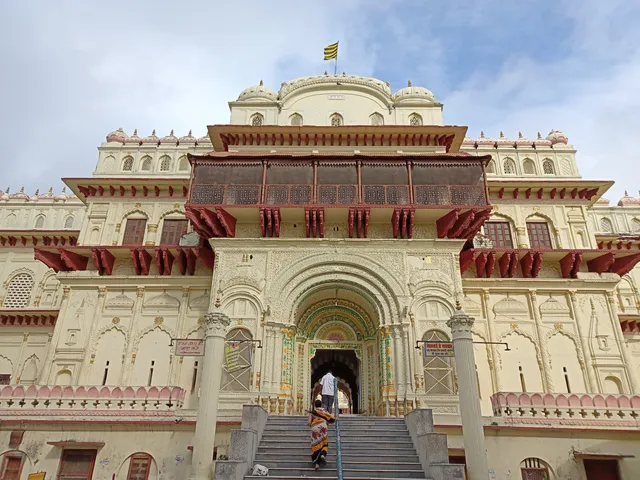
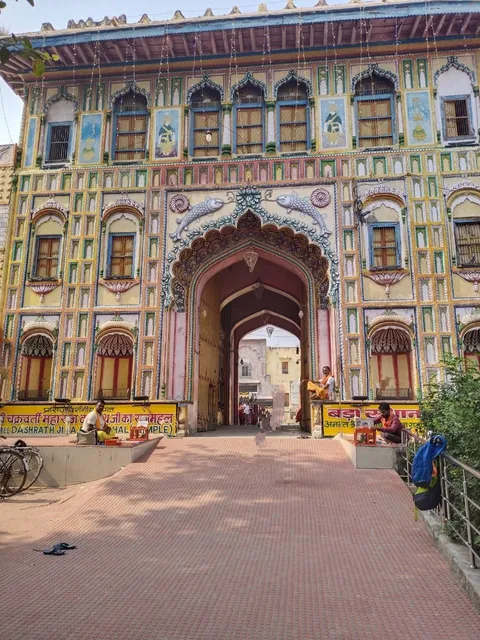
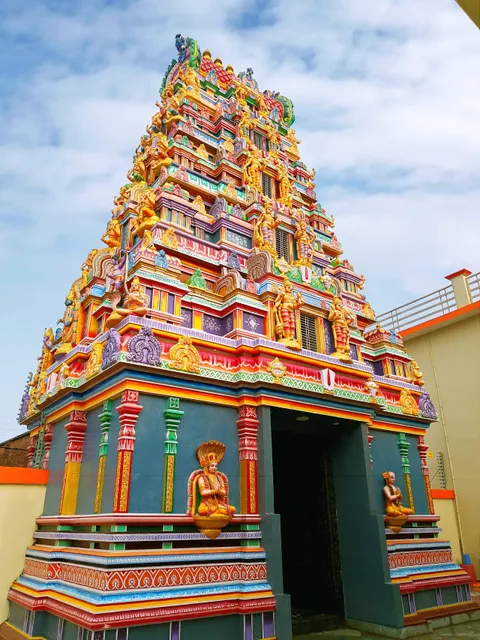
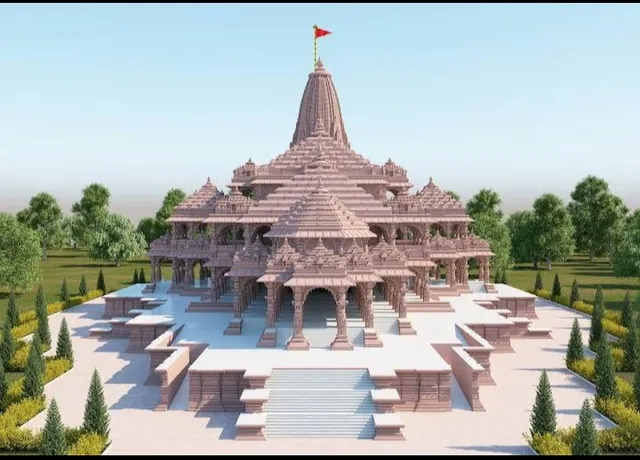
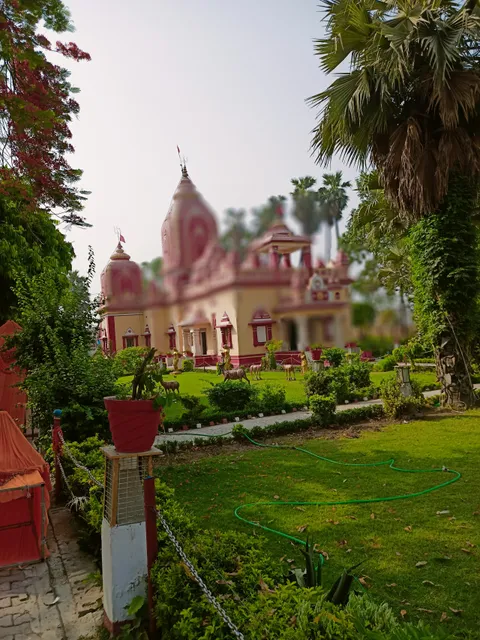
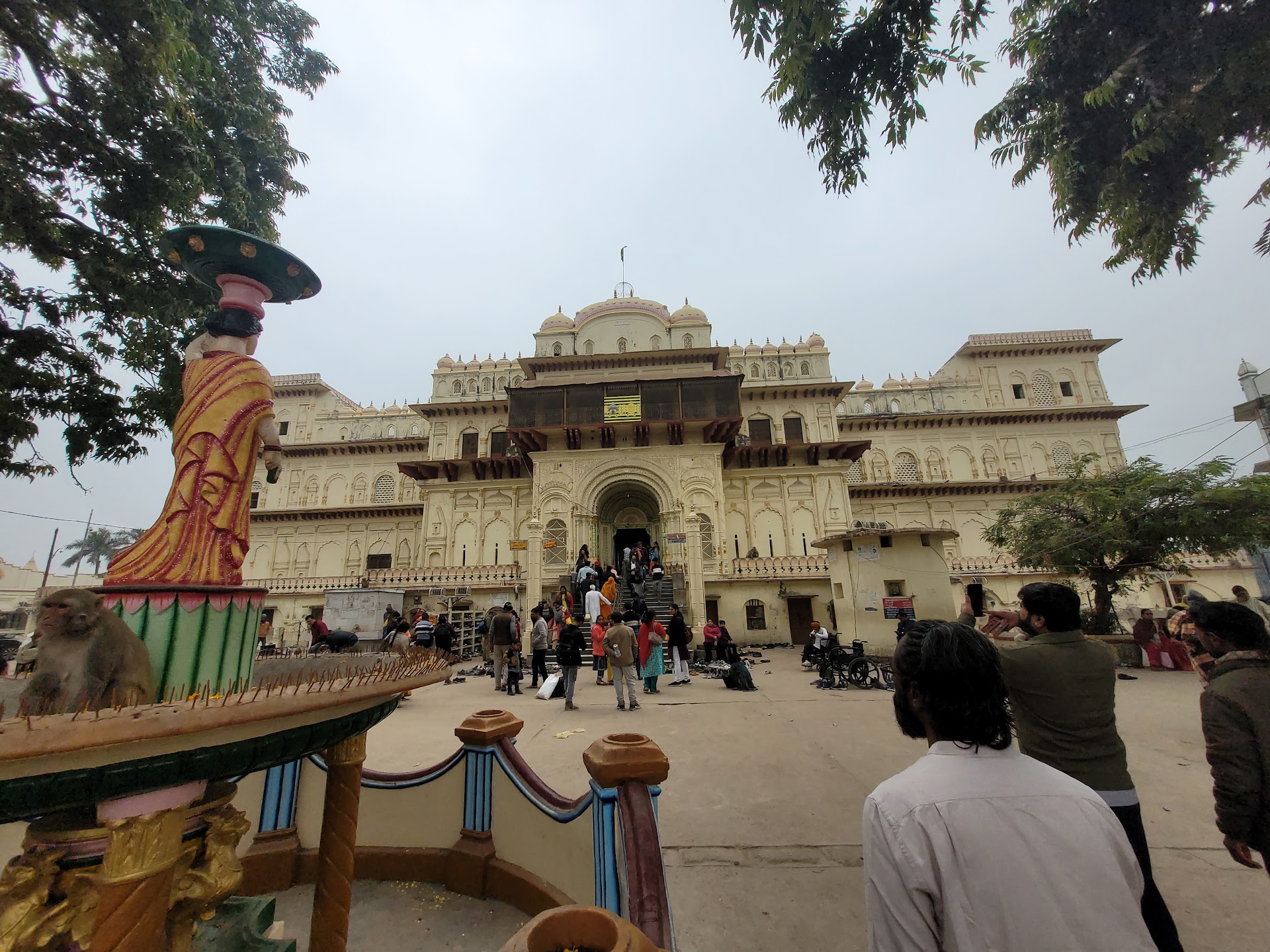
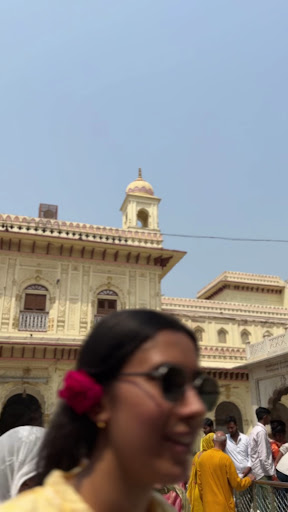
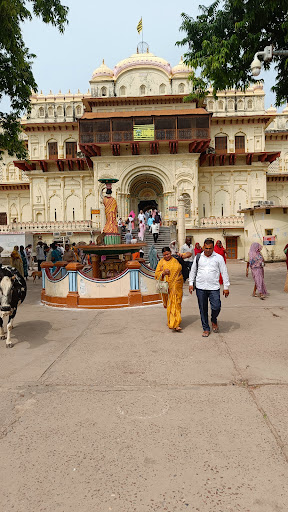
This temple is one of the best temples in Ayodhya.. very clean n peaceful environment. It is also one of the oldest temple in ayodhya I recommend must visit this place if you ever go to ayodhya and you will love this place and the environment. This temple is Architecturally an aesthetically built temple dedicated to Lord Ram and his divine consort Sita, (Main Festivals: Though ceremonies and festivals keep on going throughout the year on various auspicious occasions according to the Hindu calendar, but some of them are special. All these occasions are marked by festivities and ceremonies as well as pomp and pageantry. Music and devotional songs reverberate in the temple. These special occasions are the following—
(i) ‘Ram Navmi’ marking the birth day of Lord Ram. It falls in the Hindu month of Chaitra which is roughly late March and early April.
(ii) ‘Janki Navmi’ marking the birth day of Sita. It falls exactly one month after Ram Navmi, i.e. in late April or early May.
(iii) ‘Phool Bangla’—this is an occasion when the deity and the temple are decorated with flowers. It presents a fabulous sight.
(iv) ‘Jhula’ or the Swing Festival—it is organized during the onset of the rainy season roughly in August. A silver Swing is installed in the main hall of the temple and the deity is brought out from the sanctum to enjoy the Swing. The festival lasts for about fifteen days continuously. On the first day of this festival, the third pair of deities is taken out in a procession in the evening from the temple compound, winds its way through the streets of Ayodhya to reach a place called Mani Parvat. It is a place where the deities of all other temples of Ayodhya too assemble. After return to the temple premises, Darshan (viewing) of the deity is held on the silver Swing already installed in the hall.
(v) ‘Vijaya Dashmi’—this is the Dusshera festival just prior to the well-known Indian cultural extravaganza and the festival of lights known as Divali/Dipawali. It marks the victory of Lord Ram over the demon king Ravana. A special Darshan (view of the deity) is held in the outer hall of the temple.
(vi) ‘Sharad Purnima’—this is the full moon night of Fall when it is believed that the Gods rain nectar on the earth from the heavens. On this occasion, a special Darshan (view of the deity) is organized in the open inner courtyard of the temple, directly under the beautiful light of the full moon shining overhead in the sky.
(vii) ‘Sita-Ram Vivaaha’—this celebration marks the marriage of the divine couple Lord Ram and Sita. It is done in the traditional method when all the steps of the actual marriage ceremony are performed. A marriage procession is taken out in the evening from the temple premises, goes round the town, and comes back. The actual marriage rituals are done during the late evening hours on a stage erected in the main hall of the temple. Thousand witness this ceremony personally. This festival falls in late November or early December.
(viii) ‘Gauna’—this is the time when the wife leaved her parental home for the home of her in-laws and husband. It is celebrated about a fortnight from the marriage festival.
(ix) ‘Holi’—this is the fabled festival of colours in India. A Darshan of the deity is organized in the main hall of the temple, and devotees offer dry coloured powder...
Read moreQueen Kaikeyi's wedding gift to Mata Sita
In the sacred city of Ayodhya, where sanctity is in the air, stands the grand Kanak Bhawan - a glorious temple that pays homage to the divine union of Lord Rama and his consort, Mata Sita.
Nestled to the northeast of the hallowed grounds of Ram Janmabhoomi, this architectural marvel, also known as Sone-ka-Ghar (House of Gold), beckons devotees with its rich history and spiritual significance. It is believed that Queen Kaikeyi (Lord Rama's stepmother) gifted a golden palace to Mata Sita after her wedding; the Kanak Bhawan echoes the timeless love story of the revered deities.
While its origins are rooted in ancient lore, the current structure was renovated and wholly revamped by Vrish Bhanu Kunwari in 1891 under the patronage of Vikramaditya. This magnificent Bundela-style edifice is a testament to the unwavering devotion towards Lord Rama and Mata Sita that courses through Ayodhya's veins.
A breathtaking exemplar of the Bundelkhand architectural style, the Kanak Bhawan emerges as Ayodhya's crowning jewel; its resplendent beauty is simply unmatched. The temple's central hall is an architectural marvel, with arched doorways on three sides inviting you into a realm of divine grandeur.
Within the sanctum sanctorum, you are transported to a world where divinity takes form—three exquisitely crafted pairs of idols depicting Lord Rama and Mata Sita, each adorned with regal crowns of gold. The largest pair was lovingly installed by Rani Vrish Bhanu Kunwari herself, while the medium-sized idols are believed to be those established by the great King Vikramaditya. The smallest pair holds a legendary allure, said to have been gifted by Lord Krishna himself to a hermit deeply immersed in meditation upon Lord Rama at this sacred site. While the divine presence of Lord Rama and Mata Sita imbues Kanak Bhawan with an eternal sense of sanctity, the temple truly comes alive during its grand festival celebrations. Though visiting here is a transcendent experience any time of year, witnessing the festivities firsthand offers a deeper immersion into Ayodhya's culture. The Phool Bangla festival (April-July) sees the entire temple adorned with a breathtaking floral shower. At the same time, the Jhula or Swing Festival in August celebrates the arrival of monsoon rains by seating the divine idols on an ornate silver swing.
As the full moon bathes the earth in its ethereal glow on Sharad Purnima (October), devotees gather for a rare open-air darshan amidst the temple's inner courtyard. However, during the vibrant festival of Holi (February-March), Kanak Bhawan transforms into a...
Read moreKanak Bhavan is a temple complex which is dedicated to Lord Sri Rama and his consort Goddess Sita. This temple is located @ 400 meters away from the famous Hanuman Garhi temple.
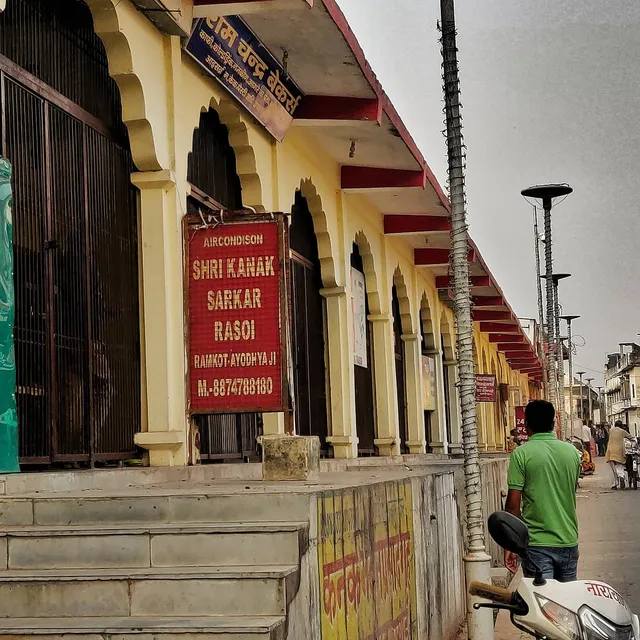
Follow the guide path which I am mentioning here so that you can save your time and will not miss any place during your visit to Ayodhya. Visit Ram Janmabhoomi then go to Hanuman Garhi temple. After having Darshan at Hanuman Garhi temple visit Dashrath Bhavan from there Kanak Bhavan is just walkable distance only. After Visiting of Kanak Bhavan still if you have time you can visit Sita ki rasoi which is believed to be the place where Maa Sita used to prepare food.
Kanak Bhavan is also popularly called as "Sone ka ghar" which is hind word which means House of gold. Kanak Bhavan was given to Maa Sita as her wedding gift by Dashrath Maharaj and Kaikai. This is the private place of Lord Ram and Maa Sita.
Architecture and History of the temple: The recognition of its history basically goes back to Treta Yuga when it was given by Dashrath Maharaj and kaikeyi to Maa Sita as a gift after marriage. over time it's completely destroyed and was rebuilt and renovated several times. The first reconstruction was done by Rama's Son Kush in the early period of Dvapara Yuga. After this, it was rebuilt by King Rishabh Dev in the middle of Dvapara Yuga. In Present Kali Yuga, it was first built by Chandragupta Vikramaditya in 2431 BC. After that it was constructed by Samudra Gupta in 387 AD. The temple was destroyed by Nawab Salarjung II Ghazi in 1027 AD and was renovated by Bundela Rajput Maharaja Shri Pratap Singh Ju Dev Bundel and his wife Maharani Vrishabhan Kunwari in 1891.
At Present In this temple idols of Sita Rama and Laxman kept in different enclosures and decorated with Rajasthani art. The deities installed in the sanctum are so beautiful and captivating that one goes awestruck looking at them. The temple houses three pairs of idols, all depicting Lord Rama and Sita. Rani Shri Vrishbhan Kunwari installed the largest pair who played a crucial role in the temple's reconstruction, followed by Vikramaditya who installed the second and the medium heighted pair, and the third is believed to be given by Lord Krishna to a devoted woman who worshipped Rama at the site. This is one of the holy place for Hindu devotees who visit Ayodhya with all eagerness to see the birth place of lord Sri Rama.
Temple Visiting hours: During Summer morning 08:00 to 11:30 am and then Evening 04:30 to 09:30 pm During Winter Morning 09:00 to 12:00 noon and then Evening 04:00...
Read more