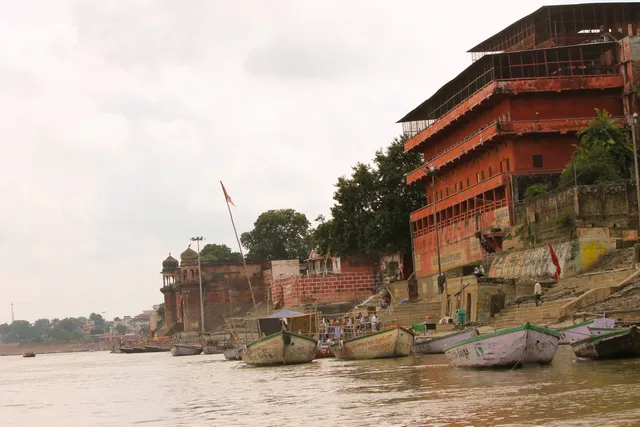
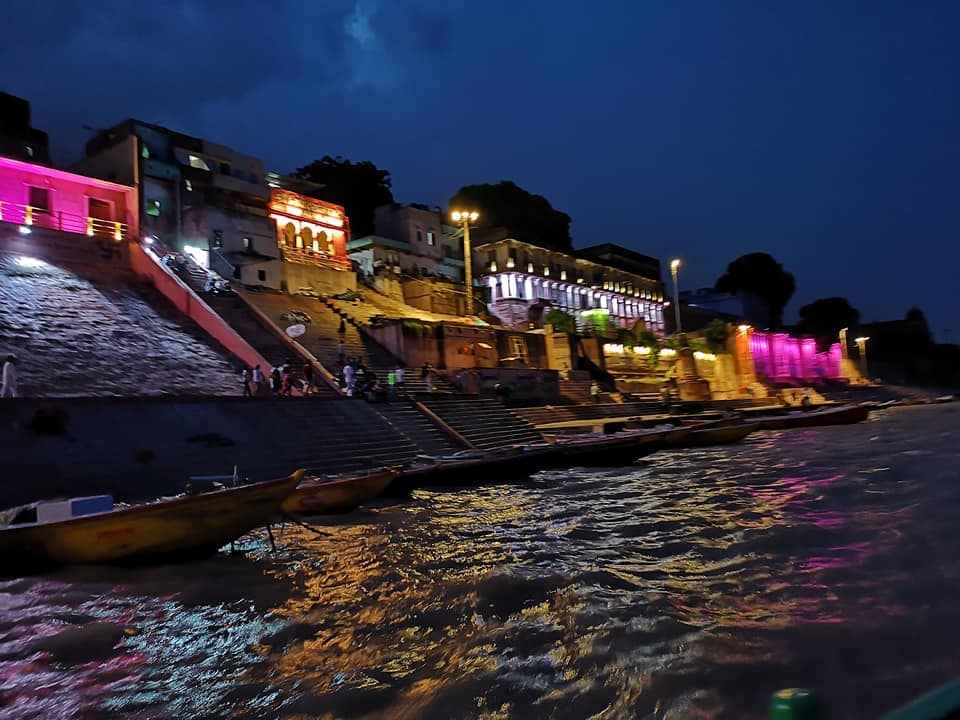
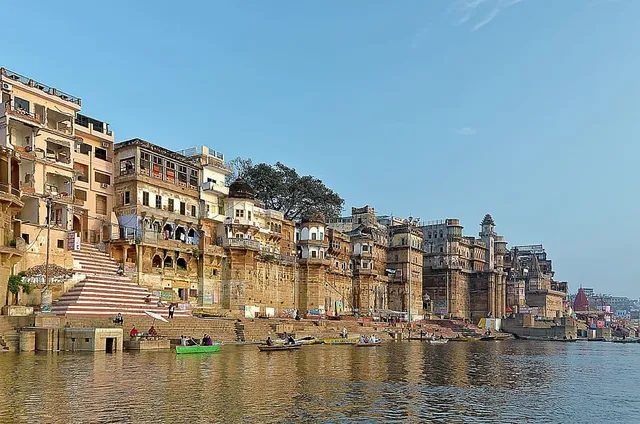
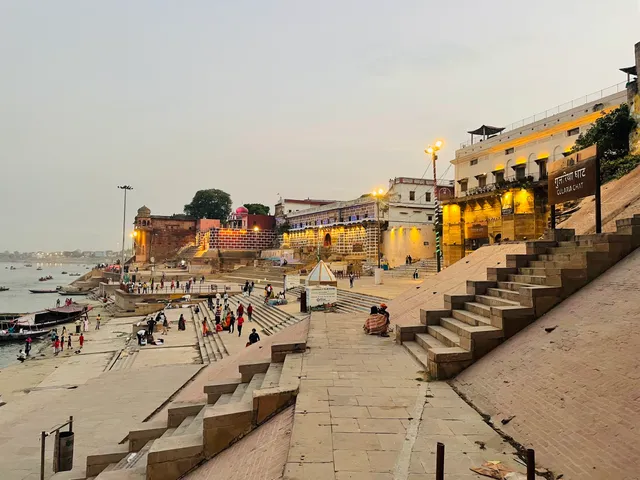
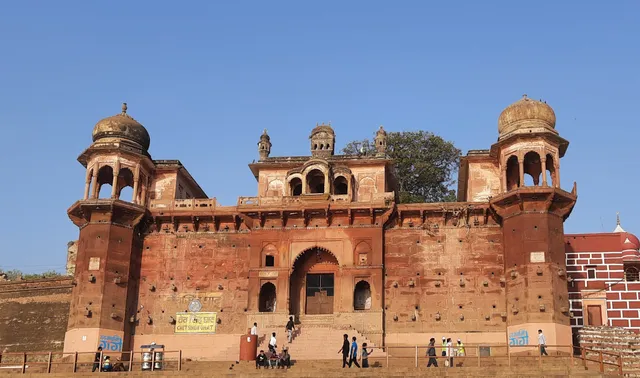
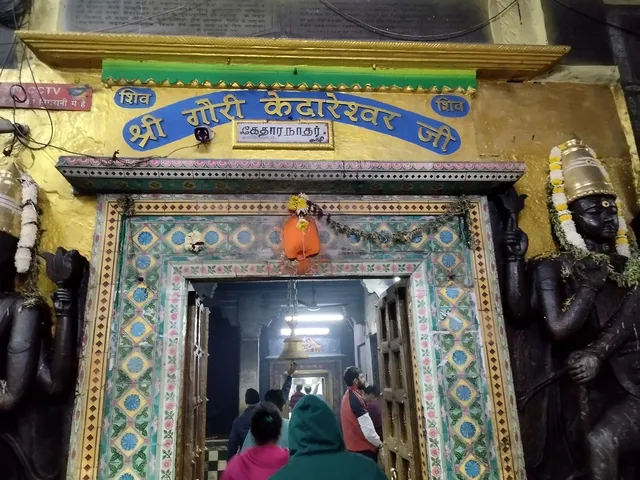
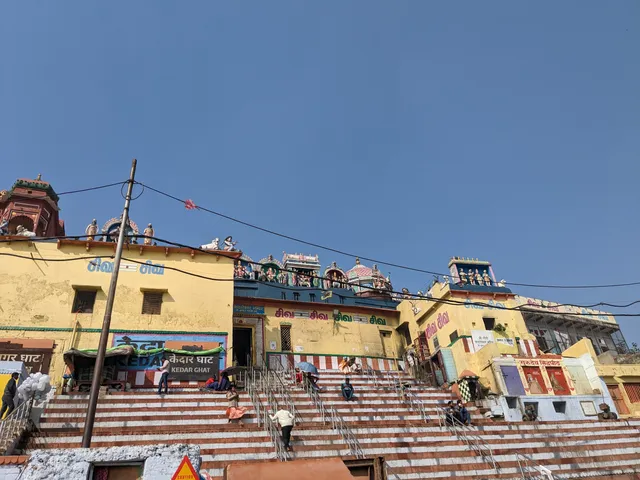
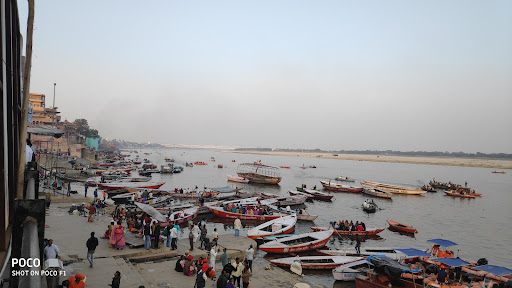
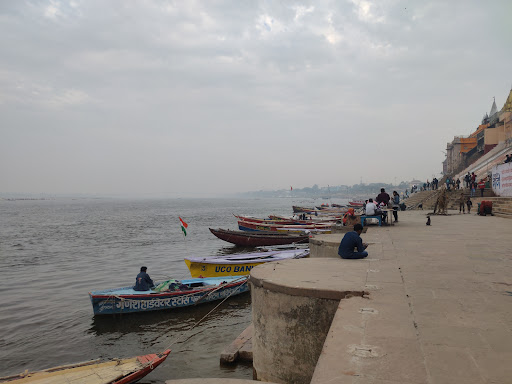
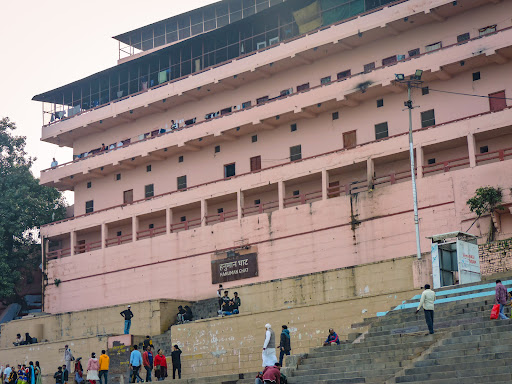
The earlier name of the ghat was Rameshvara Ghat, after the famous image of the same name lying there. The ghats were made stone staired (pucca) by Mahant Hariharanath in 1825. The ghat having also affinity of a great bhakti saint Vallabha (CE 1479-1531), who laid the philosophical foundation for the Krishna devotion. There are eight temple and shrines at the Hanuman Ghat and Prachin Hanuman Ghat area. Most of them are of the 18th century. In course of time many temple built as auxiliary during 19th century. According to oral history it is believed that the shrine of Hanuman was built by Tulasi (early 17th century). The Pancayati Juna Akhara (House no. B 4/ 43) consists of around hundred images and statues of different periods and of different deities. Outside, along the ghat in a cave-like niche is the image of Hanumadishvara, eulogised in the various pilgrimages. A little further, at the steps of Karnataka (Mysore) Ghat is a small shrine of Ruru Bhairava; the present image of black stone is the new at the place of the old one which was broken about fifteen years ago. The Rameshvara Linga in the inner courtyard is of special importance because of its entry into several pilgrimages. This image is also counted as one among the list of 12 Jyotira lingas of Varanasi, and symbolises the famous temple in Ramanathpuram in Tamil Nadu (southern India). The built form is based on inner sanctum and half-pavilion, and about 1m platform. The main building is in the Dorika style, but the upper part is in Nagara style characterised by amalaka, water pot and trident. In the inner courtyard and in the niches there are images of Surya (sun-god), Vishnu, Shakti, Ganesha. In a separate flat-roofed shrine is an image of Vishnu, made of black stone, and dated to 12-13th century. The Ghat and the temple derived their names after Hanuman, whose shrine is in the inner courtyard in a flat-roofed building, consisting of 2m high statue of Hanuman. The wall in the sanctum sanctorum is depicted with paintings of the Ramayana story in the Banaras styles of frescos. Also written there are lines from the Ramacaritamanasa. The entrance is...
Read moreHanuman Ghat: Where History Meets Devotion
Hanuman Ghat, nestled along the sacred banks of the Ganges River in Varanasi, Uttar Pradesh, stands as a significant pilgrimage site steeped in mythology, spirituality, and historical importance. Named after Lord Hanuman, the revered monkey deity in Hinduism, this ghat holds a unique place in the hearts of devotees and travelers seeking spiritual solace.
The history of Hanuman Ghat intertwines with various Hindu mythological tales. Legend has it that Lord Hanuman, an ardent devotee of Lord Rama, spent a considerable time meditating and seeking solace at this very spot during the Ramayana era. As a result, the ghat was named in his honor, commemorating his devotion and connection to this sacred land.
The architectural splendor of Hanuman Ghat reflects the cultural heritage of Varanasi. Adorned with temples, shrines, and intricately designed structures, the ghat exudes an aura of spirituality and serenity. Pilgrims flock to this site to perform rituals, offer prayers, and seek blessings from Lord Hanuman, believed to be the epitome of strength, devotion, and loyalty in Hindu mythology.
One of the notable attractions at Hanuman Ghat is the shrine dedicated to Lord Hanuman, drawing devotees who come to pay homage and seek divine blessings. The ghat also witnesses various religious ceremonies and rituals, amplifying the spiritual ambiance that envelops this sacred place.
Beyond its religious significance, Hanuman Ghat offers travelers a glimpse into Varanasi's vibrant culture and traditions. Visitors can witness the daily rituals, attend mesmerizing Ganga Aarti ceremonies, and immerse themselves in the captivating spiritual aura that pervades the ghat.
For travelers seeking an immersive spiritual experience intertwined with history and devotion, Hanuman Ghat stands as a testament to faith and reverence. Its tranquil setting along the holy Ganges River and the stories of Lord Hanuman's devotion make it a must-visit destination for those exploring Varanasi's spiritual landscape and seeking a deeper connection with...
Read moreAmong the Ghats of Kashi, "Hanuman Ghat" is specially the Ghat of Sadhu-Mahatma people. In the upper part of this ghat, there is a very ancient big temple of Hanuman ji. Apart from Hanuman ji, Ram Darbar nine and a horse are also established in this temple, which reminds of the celebration of Ram ji's Ashwamedh victory. In the courtyard of the Hanuman temple, there is a very grand temple of Lord Dattatreya, on whose walls wonderful paintings related to the biography of Lord Dattatreya have been done. Along with this, the worshipers of Ram, Lakshman, Bharat, Shatrudhna have been established in the form of linga in the company of Dattatreya temple. Mainly the worship and arrangement of Hanuman Ghat and temple is under Dashnami Juna Akhara. Hanuman Ghat Mohalla is mostly inhabited by South Indians. There is a temple of Sringeri Shankaracharya in Hanuman Ghat Mohalla, in which all the sadhus of Dash-Nami Akhara visit after Kumbh bath. Entering the Hanuman Ghat locality, it seems as if you have reached the Vedic era, wherever you go, only Vedic voices are heard.
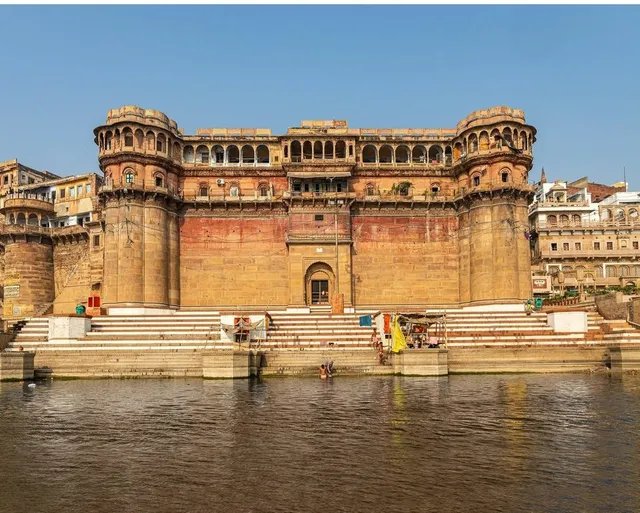
Hanuman Ghat is one of the most visited ghats of Varanasi. Hanuman Ghat is known so because a temple of Lord Hanuman was built here by esteemed poet-saint Goswami Tulsi Das of Ramcharitmanas fame. Earlier, Hanuman Ghat was called Rameshwaram Ghat too because Lord Ram had established & worshipped a ‘Shivlingam’ by his own hands. Girvanpadmanjari (गिरवांपद्मांजरी) of the 17th century mentions it. The Rameshwar Shivlingam, worshipped as one of the Dwadash Jyotirlinga of Varanasi, is presently located within the premises of Juna Akhara of Naga sadhus. In 1825 AD, Hanuman Ghat was made pucca by Juna Akhara Mahant Hariharnath. James Princep in 1831 AD mentions Hanuman Ghat. In early 20th century, the ghat was re-constructed by State of Mysore. Again, in 1984, the Irrigation Department of the Government of Uttar Pradesh renovated...
Read more