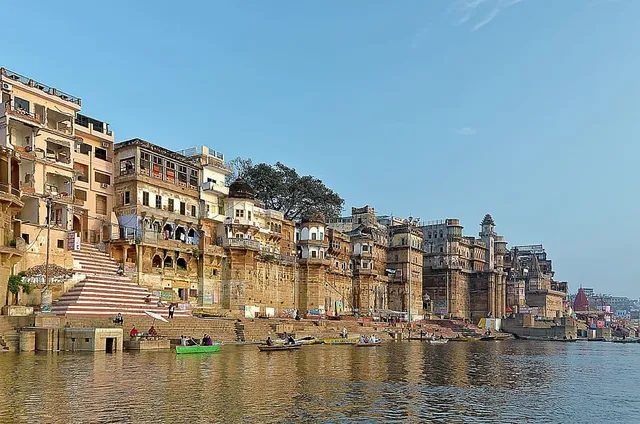
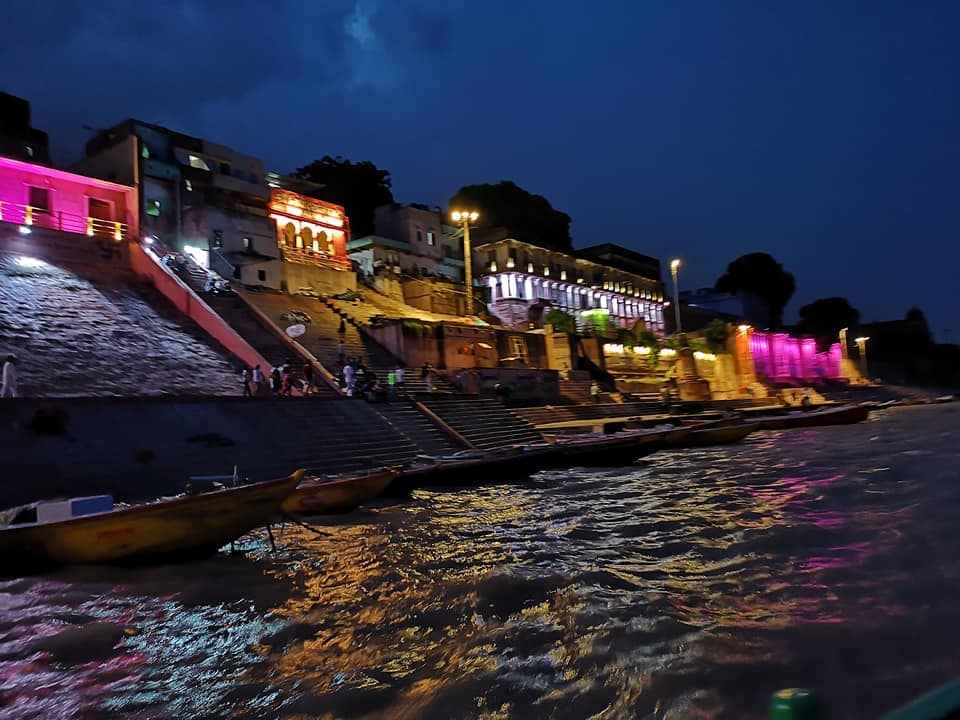
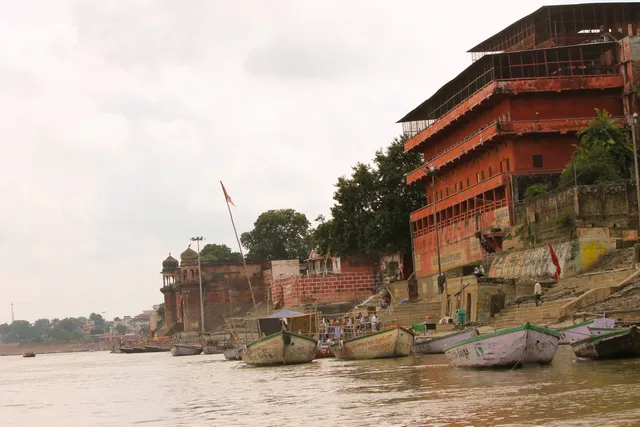
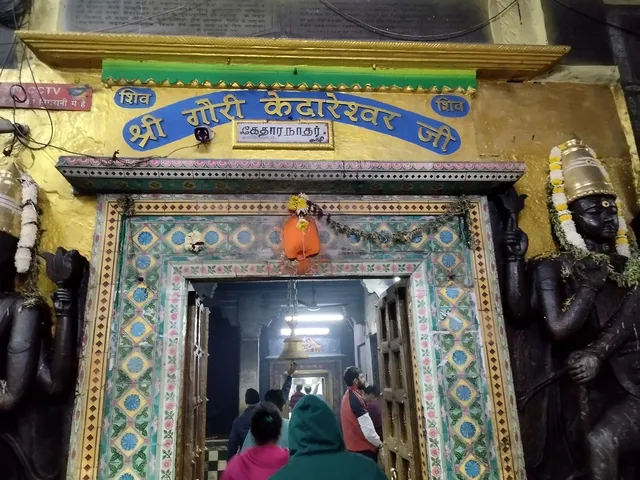
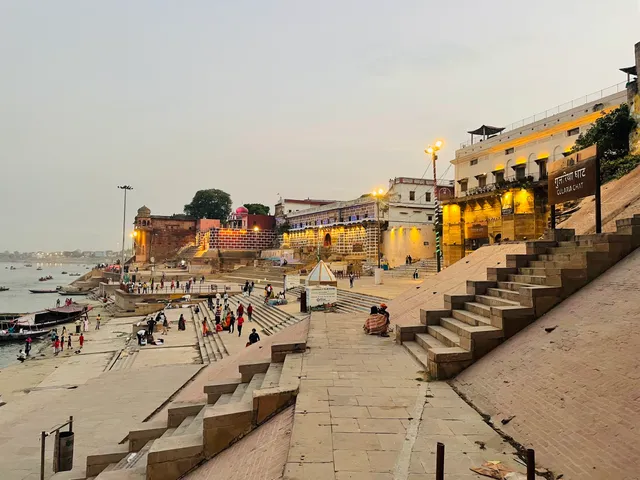
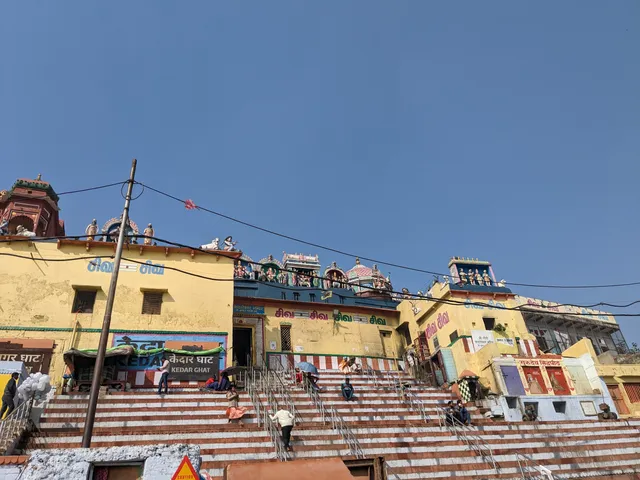
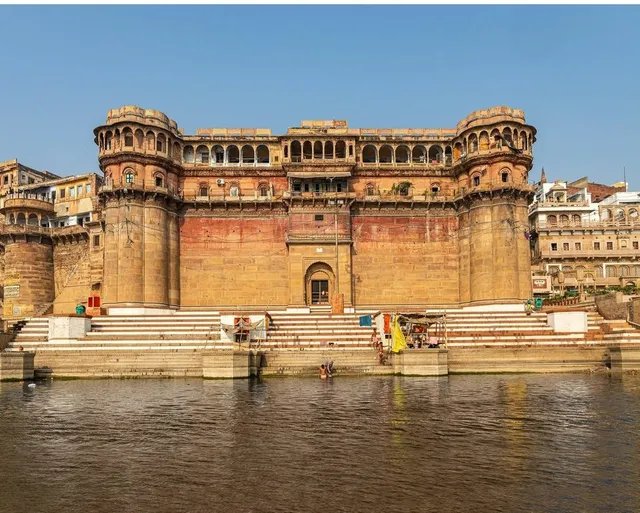
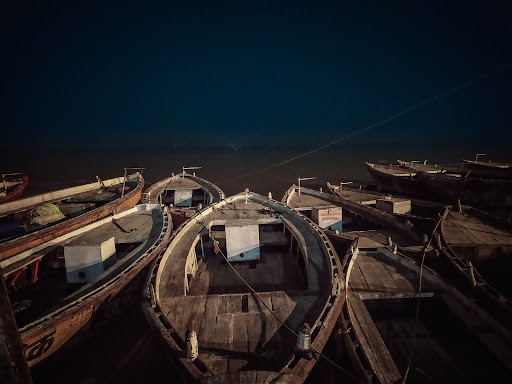
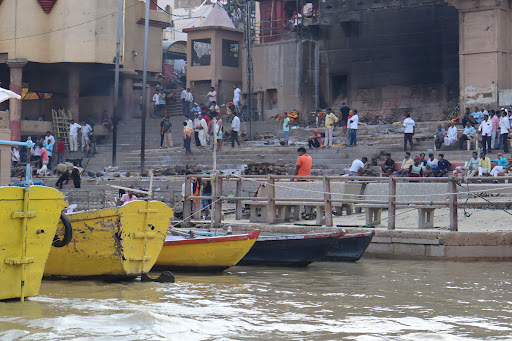
Harishchandra Ghat in Varanasi, one of the city’s oldest ghats and a significant cremation site alongside Manikarnika:Ghat, carries deep historical and spiritual importance. Named after the mythological King Harishchandra, who is celebrated in Hindu lore for his unwavering commitment to truth and duty, the ghat is also known as "Adi Manikarnika" (the original Manikarnika). According to legend, Harishchandra worked here as a cremator, enduring immense personal sacrifice, including refusing his wife a cremation fee for their son’s body, to uphold his principles. His perseverance led to divine intervention, restoring his kingdom and family. Reviews and Visitor Experiences Based on traveler feedback, primarily from Tripadvisor, Harishchandra Ghat evokes a range of emotions due to its role as a cremation site where pyres burn continuously, with an estimated 50 bodies cremated daily. Here are key points from reviews: Spiritual and Philosophical Impact: Visitors often describe the ghat as a humbling and introspective experience, confronting them with the reality of mortality. One reviewer noted, “It is a sight that will make you realize how vulnerable our life is,” emphasizing the ghat’s ability to put life in perspective. Another said, “Nothing is permanent... one should visit such places to strengthen your soul.” Atmosphere and Cleanliness: The ghat is generally described as quieter and less crowded than Manikarnika Ghat, with some noting its relative cleanliness during visits (e.g., late February when the river is lower). However, it can feel somber due to the constant cremations, and some find the sight of burning pyres unsettling, with one stating, “Of course not a great sight to see burning bodies, but that’s the truth.” Accessibility and Viewing: Tourism at the ghat itself is restricted to respect the sanctity of cremation rituals, but it’s commonly viewed via boat rides along the Ganges, which many recommend as the best way to see it alongside other ghats. Reviewers suggest negotiating with boatmen beforehand for a cost-effective tour (approx. ₹600-800 for a 40-minute ride covering multiple ghats). The ghat is accessible for those with mobility issues when viewed from a boat, with railings aiding entry. One visitor with a foot injury found it manageable. Cultural and Religious Significance: The ghat is revered for its association with moksha (salvation), with Hindus believing cremation here liberates the soul from the cycle of rebirth. A temple housing idols of Harishchandra, Vriddha Kedara, and Adi Manikanteshwra, along with a Shiva Linga, adds to its spiritual allure. The presence of an electric crematorium, introduced in the 1980s, modernizes the site, though traditional wood pyres remain prevalent. Photography and Respect: Visitors are urged to respect the solemn context by refraining from taking photos or videos without permission. The ghat is a photographer’s paradise when viewed from a boat, but discretion is critical. Some describe the visual of pyres against the night sky as striking yet poignant. Nearby Attractions: The ghat’s proximity to sites like the Kashi Vishwanath Temple and the Nepali Temple makes it part of a broader cultural exploration. Its location between Kedar Ghat and Assi Ghat allows for easy inclusion in boat tours or walking itineraries. Practical Tips Best Time to Visit: Early morning or late evening boat rides offer stunning views, especially during sunrise or sunset when the ghat is bathed in a magical glow. How to Reach: The ghat is accessible by foot through Varanasi’s narrow lanes or by boat. It’s located south of Dashashwamedh Ghat, near Karnataka Ghat. Respectful Conduct: Maintain silence, avoid photography of cremations, and be cautious of brokers overcharging for boat rides. Not for Everyone: The open cremations can be intense for some, as one reviewer noted it’s “not for the weak at heart.” Critical Notes While the ghat is a profound cultural site, some concerns exist. A 2021 post on X highlighted harassment by local operators charging exorbitant fees to grieving...
Read moreHarishchandra Ghat is the only place where one can witness the rituals of life and death happening. This ghat, situated on the sacred banks of the River Ganga in Varanasi, is named after the legendary king Harish Chandra, who is known for his commitment to speaking the truth and unwavering righteousness. Harish Chandra Ghats hold a cultural and religious significance according to Hindu Mythology. Amidst the flames, flickering wooden logs, and ashes collected, Harish Chandra Ghat invites visitors and tourists to witness the spiritual essence of this place. Visitors with cremation happening right in front of their eyes see the cycle of life and death.
History Of Harishchandra Ghat Holy fires of funeral at Harishchandra Ghat in VaranasiHoly fires of funeral at Harishchandra Ghat in VaranasiGet Customized Quotes Image Credit: Anton Gutmann for Wikimedia Commons
The history of Harish Chandra Ghats can be traced to the times when ancient Varanasi was a hub of pilgrimage, hub and trade. The place is named after King Harish Chandra. The king is known for his strong commitment to truth and righteousness. He once ruled over this city. According to Hindu Mythology, his unwavering commitment to honesty and integrity earned him a place of honour at Varanasi, hence the occurrence of the Harish Chandra Ghat. It is also believed that when the king ruled over this city with unparalleled integrity, he sacrificed his family, the reign and his own identity to preach the principles of truth and righteousness.
The ghat has served as a place for cremation of the dead bodies. It is the solemn site for cremation rituals done where families bid goodbye to their loved ones with the flames flickering right in front of their eyes and echoing chants. The experience is divine and tourists can immerse themselves in knowing what the cycle of life and death holds. According to the ancient texts discovered, this ghat has been bearing cremation for all these centuries.
Must Read: Things to do in Varanasi
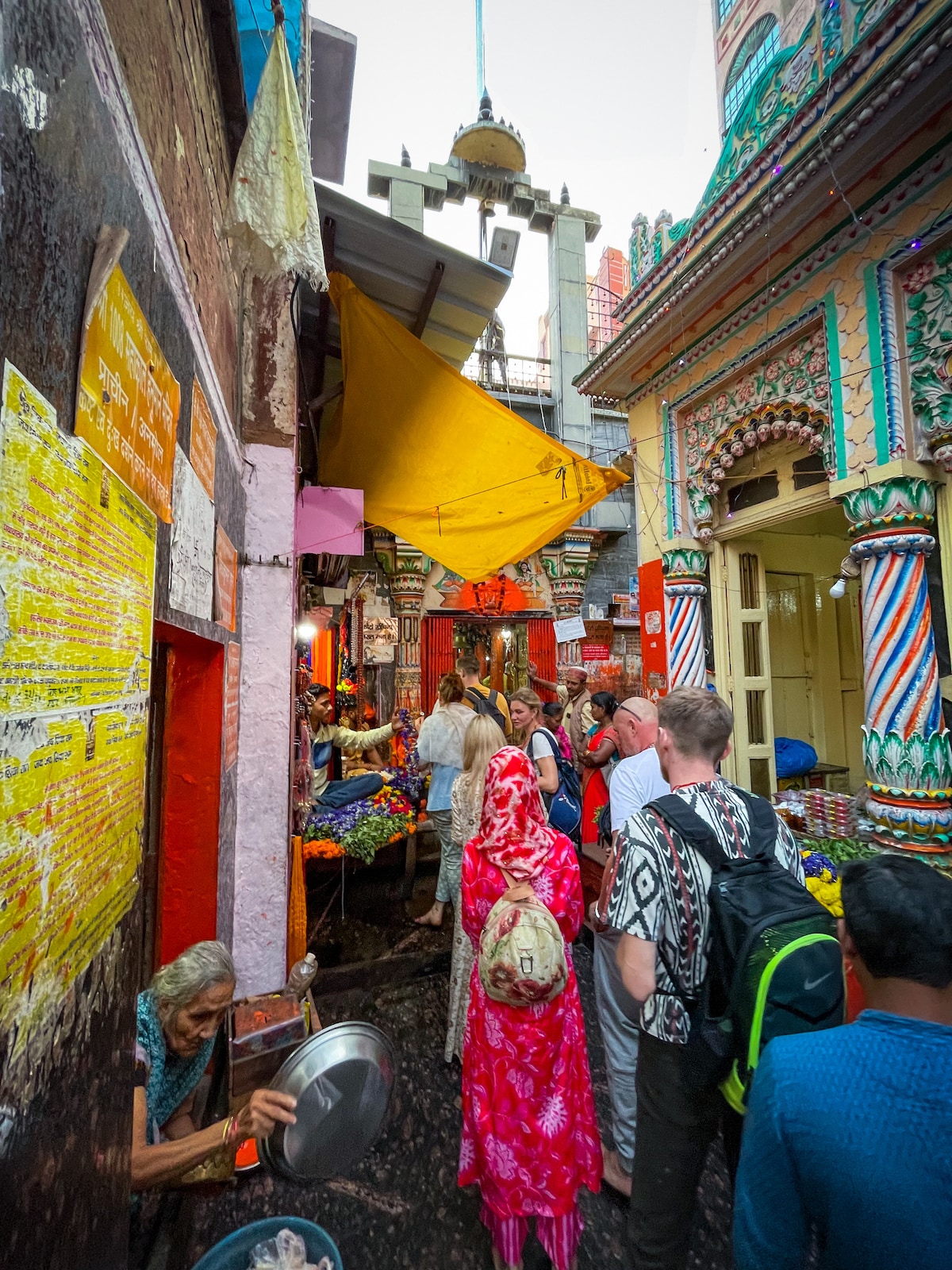
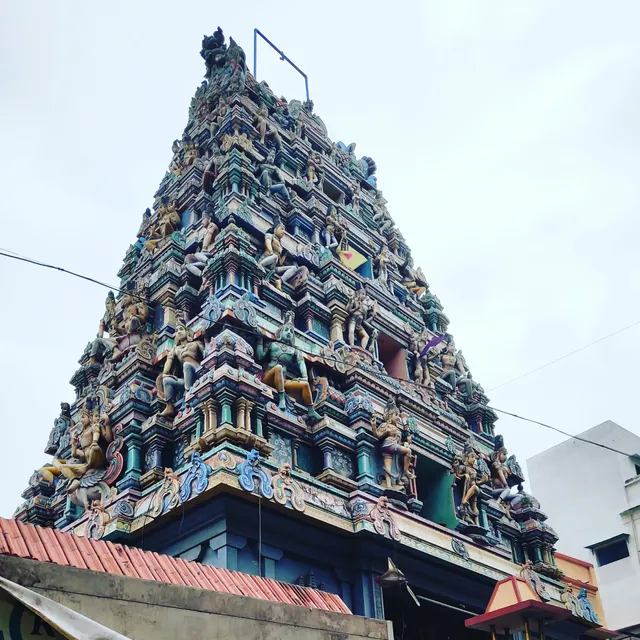
Temples Near Harishchandra Ghat There are certainly plethora of temples in and near the vicinity of Varanasi which also called as the City of Spirituality for a reason, Here we listed two of the important temples near Harishchandra Ghat,
Kaal Bhairav Temple Kaal Bhairav is worshipped in one of the temples in Harishchandra GhatKaal Bhairav is worshipped in one of the temples in Harishchandra GhatGet Customized Quotes Image Source: Shutterstock This temple is located within the premises of Harish Chandra Ghat. Kaal Bhairav Temple is dedicated to Lord Bhairava, who is a fierce manifestation of Lord Shiva. Devotees offer prayers here to seek blessings for the protection and prosperity of their families. Also known as ‘The Kotwal Of Varanasi’ ,Kaal Bhairav is considered as the protector of the city, The temple is renowned for its powerful aura and ancient traditions which draws the attention of many devotees.
Timings: 5 AM to 10PM Entry Fees: Free Entry
Mritunjay Mahadev Temple A divine picture of temple near Harishchandra Ghat.Get Customized Quotes Image Credit: Sujay25 for Wikimedia Commons This is another important temple located near Harish Chandra Ghat. It is solely dedicated to Lord Shiva. According to Hindu Mythology, offering prayers to this temple will help the devotees overcome the fear of death and attain spiritual liberation. The temple is famous for its Maha Mrityunjay Mantra, which is believed to grant health...
Read moreI recently had the incredible opportunity to experience an unforgettable and serene moment at the sacred Ghat in Varanasi. This mystical city, nestled along the banks of the holy River Ganges, has always held a special place in my heart, but it was during my peaceful time spent at the Ghat that I truly discovered the essence of tranquility.
As I arrived at the Ghat, the warm hues of the setting sun painted a breathtaking canvas across the sky. The gentle sounds of the flowing river mingled with the distant chants of devotees, creating a melodic symphony that instantly transported me to a state of profound calmness. The sheer beauty of the surroundings and the palpable spiritual energy enveloped me, making it impossible not to be captivated by the sheer magic of the moment.
The Ghat, adorned with ancient temples and vibrant flowers, provided the perfect setting for introspection and reflection. I found myself drawn to the stone steps leading to the river, where locals and pilgrims alike gathered to perform sacred rituals. Observing these rituals, I couldn't help but marvel at the devotion and faith that permeated the atmosphere. The simple act of lighting a diya (a small oil lamp) and releasing it into the river symbolized the release of one's troubles and a connection with the divine.
As night fell, the Ghat took on a different enchantment altogether. The flickering flames of countless lamps illuminated the darkness, casting a warm glow that seemed to transcend time itself. I sat in quiet contemplation, my senses heightened by the gentle aroma of incense and the distant sounds of Vedic hymns. In that moment, I felt an overwhelming sense of peace wash over me, as if the universe had granted me a glimpse into a realm untouched by chaos.
The experience at the Ghat in Varanasi was not just about witnessing a beautiful sight; it was a spiritual awakening. It allowed me to disconnect from the noise of the world and reconnect with my inner self. The ethereal atmosphere and the profound serenity I encountered there will forever remain etched in my memory.
For anyone seeking solace, self-discovery, and a respite from the demands of everyday life, a visit to the Ghat in Varanasi is an absolute must. It is a sacred haven that will embrace you with its mystical aura and leave you with a renewed sense of purpose and tranquility. Whether you are a spiritual seeker or simply in need of a peaceful retreat, the Ghat in Varanasi promises an experience like no other. Prepare to be transported to a realm of profound serenity and let the river of tranquility wash away...
Read more