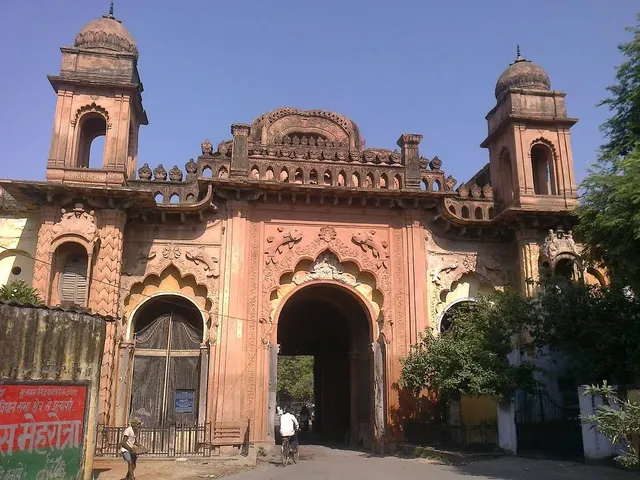
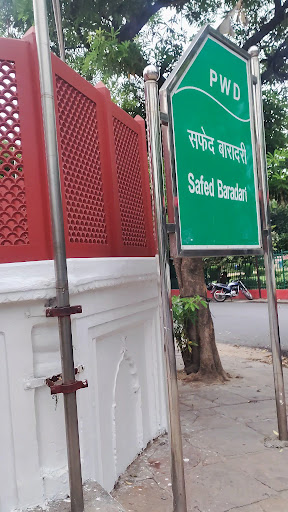
Located in Qaiserbagh, Lucknow, near other historic spots like Chattar Manzil and the Begum Hazrat Mahal Park.
Easily reachable by auto, cab, or rickshaw from Hazratganj or Charbagh Railway Station.
Ample space outside, but no dedicated parking area for visitors.
đ°ïž 2. Timings & Entry
Open roughly from 10:00 AM to 5:00 PM, though hours may vary during events.
Entry Fee: âč20 for Indian nationals, higher for foreign tourists.
Tickets are often available at the gate; no advance booking required for casual visits.
đ 3. Architecture & Design
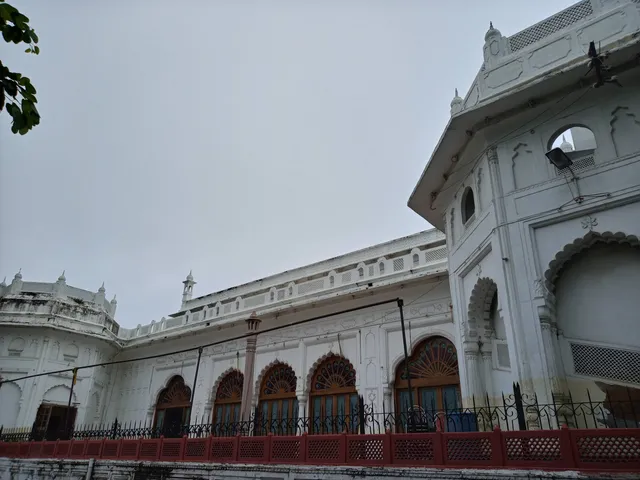
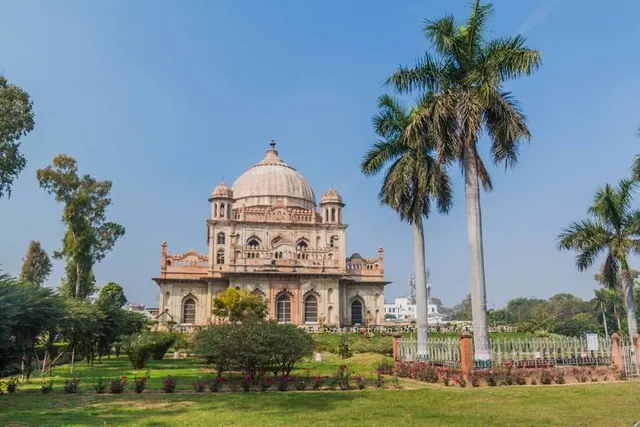
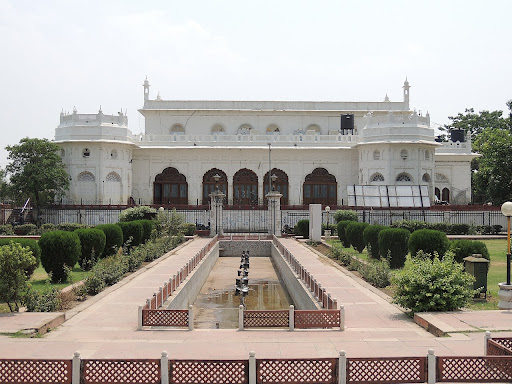
A beautiful white-marble structure built in 1854 by Nawab Wajid Ali Shah.
Traditional Baradari-style architecture with 12 arched doorways, marble flooring, and fine stucco detailing.
A large central hall filled with natural light, chandeliers, and historical statues.
đ 4. Historical Significance
Originally used as a mourning hall during Muharram.
Later served as a petition court under British rule.
Also associated with freedom fighters during the 1857 rebellion.
Still maintained by the British India Association of Oudh (Taluqdar community).
đ§ 5. Basement Crypt (Tehkhana)
A hidden underground chamber (rarely open) that once held religious items and water features.
Sometimes accessible during special festivals or heritage walks like the Sanatkada Festival.
Not always openâcheck in advance or ask the caretaker.
đ 6. Events & Cultural Use
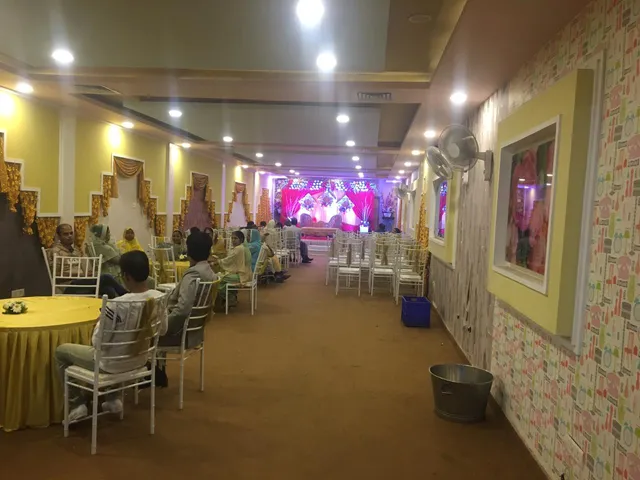
Currently used for exhibitions, weddings, official banquets, and cultural events.
Hosts annual festivals like Sanatkada, classical concerts, and heritage exhibitions.
Occasionally featured in Bollywood films (Umrao Jaan, Tanu Weds Manu).
đż 7. Ambience & Photography
Very peaceful and serene environment, especially in the morning hours.
Great for photography, especially lovers of architecture and history.
Marble backdrop and symmetry make it ideal for portraits and cultural shoots.
đ» 8. Facilities & Maintenance
Basic toilet facilities available during events.
No on-site café or food stall, but eateries are nearby.
The structure is under ASI care, and conservation efforts are ongoing.
Signage and visitor guides are limited, but locals may help with basic history.
â 9. Pros
â Unique white-marble heritage building
â Rich history with cultural significance
â Calm surroundings in central Lucknow
â Great for photography, culture, and events
â Occasionally opens its secret underground crypt
â ïž 10. Cons
â No guided tours or detailed information boards
â Crypt is not always open to the public
â Can be closed during private events without notice
â Limited visitor facilities (e.g., parking,...
   Read moreWhite Baradari (Urdu: ŰłÙÛŰŻ ۚۧ۱ۧۯ۱Û) (meaning 'Palace of Twelve Doors of White Characters') is a white marble-built castle situated in the Kaiser Bagh Mohalla in Lucknow, Uttar Pradesh, which was constructed by Wajid Ali Shah. The white Baradari was built in the year 1845 as the palace of Almighty Wajid Ali Shah, the immediate Nawab of Awadh, and his name was Kars-ul-Aja. This was done for Imam Hussein in Imambara form for Ajapi i.e. Matpursi. [1] According to some other sources, the construction of Nawab was started in 1848, which was completed in 1850. According to him, it was mainly for women living in Haram of Nawab Wajid Ali Shah. White
Picture of White Baradari (Kaiser Bagh Baradari) other names Kaiserbaug Baradari General Details place Kaiser Bagh city Lucknow The nation India Completed 1854 Ownership British Indonesian Association Ovadh Provision Details House house 1 History According to the historians of Nawab Wajid Ali Shah, Syed Mehdi Hassan came back from Iraq with a quote (a sign from Hazrat Hussain's Tomb) which came from Kha-e-Shifa (the land of Shahadat of Hazrat Hussain Clay). Legalization was the therapeutic properties in this theory, due to which it was placed in Karbala Dayanath-ud-Daula. When Nawab Saheb learned this Shifa, he was defeating Hazrat Hussein in his black cloth with his empire. In time, Nawab Wajid Ali ordered his empire to bring white barbarity with the royal procession in this manner and bequeathed the bequest bequeathed Along with this, Nawab gave Mehdi Hassan the title of Khilat and also gave many gifts and land. [3] After the acquisition of Awadh in 1856, the use of Baradari was done by the British in the form of a court to listen to the writings and complaints of people and relative of the Abdullah Nawab. In 1857, the building was used by the Begum Hazrat Mahal, used to be used for the mantras and meetings for the first Indian independence war, 1857 and the Begum of Nawab, Begum Hazrat Mahal. [3] Nearly 1923, it was given by the British Empress to the talukas of Awadh, in the form of patronage of praise and praise, to the Sangh of their name, Ajjuman. The name of this union was later changed to the name of British organization Ov Awadh. Be in control of the...
   Read moreThe Safed Baradari, also known as the Chattar Manzil or the 'White Pavilion', is a historic building located in Lucknow, Uttar Pradesh, India. This architectural marvel is an iconic landmark that reflects the rich cultural heritage of Lucknow and its association with the Nawabs of Awadh.
The Safed Baradari was commissioned by Nawab Ghazi-ud-Din Haider, who ruled Awadh from 1814 to 1827. It was initially constructed as a pleasure pavilion and served as a royal residence and court during his reign. The structure gets its name "Safed Baradari" due to its distinctive white color and design.
The architecture of the Safed Baradari is an exquisite blend of Mughal and European styles, characterized by its spacious halls, arched doorways, and domed pavilions. The building features multiple stories and is adorned with intricate stucco work, ornamental pillars, and elegant balconies, showcasing the artistic craftsmanship of the period.
The most striking feature of the Safed Baradari is its central hall, which was once used for hosting royal gatherings, cultural events, and celebrations. The hall is adorned with exquisite chandeliers, decorative mirrors, and European-style furniture, giving visitors a glimpse into the opulent lifestyle of the Nawabs.
Over the years, the Safed Baradari has undergone restoration and preservation efforts to conserve its historical significance. Today, it serves as a museum managed by the Archaeological Survey of India (ASI), showcasing artifacts, paintings, and memorabilia from the Nawabi era.
Visitors to the Safed Baradari can explore its well-preserved interiors, admire the architectural details, and learn about the cultural heritage of Lucknow through the museum's exhibits. The surrounding gardens and scenic views of the Gomti River add to the charm of this historic site.
Overall, the Safed Baradari is a must-visit attraction in Lucknow for history enthusiasts and architecture aficionados. Its grandeur, historical significance, and cultural legacy make it a fascinating destination that transports visitors back in time to the era of the...
   Read more