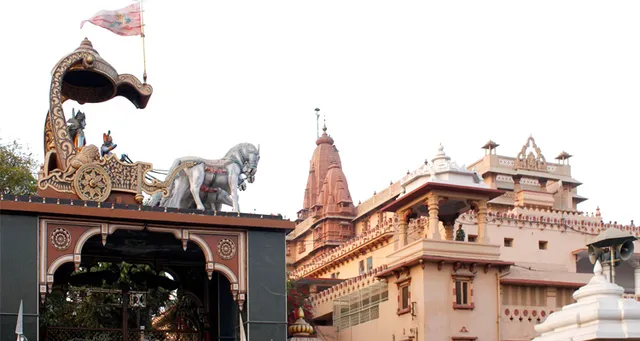
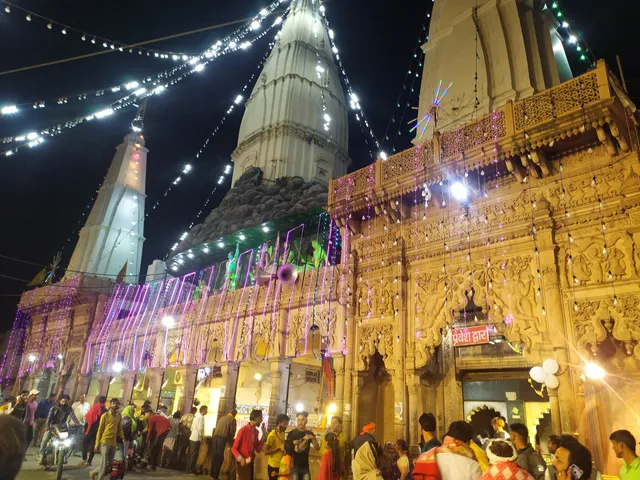
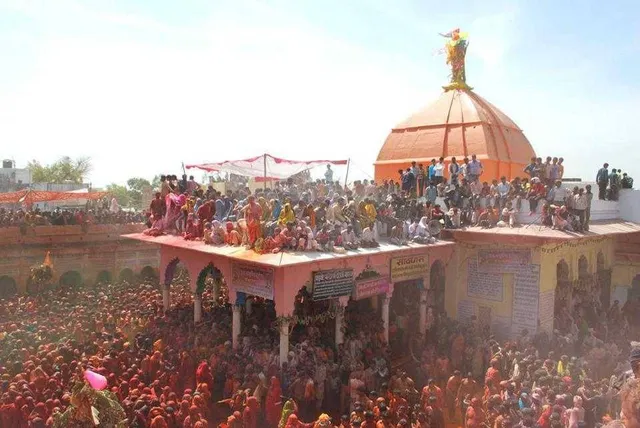
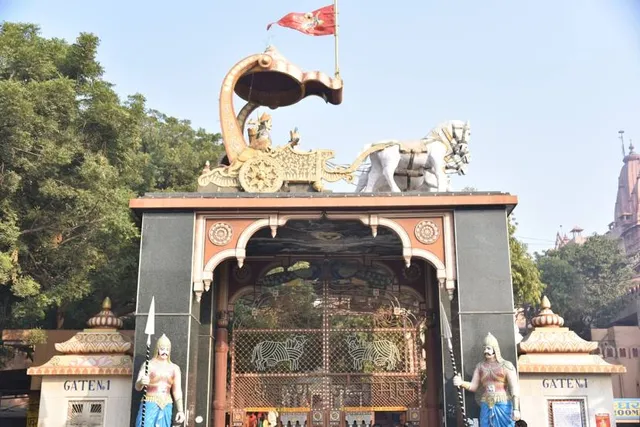
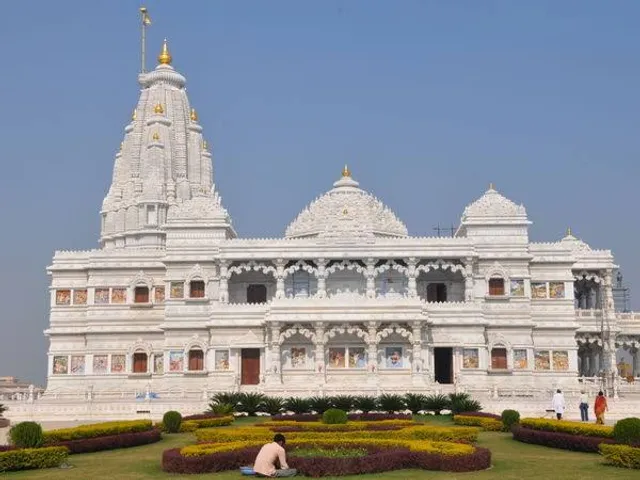
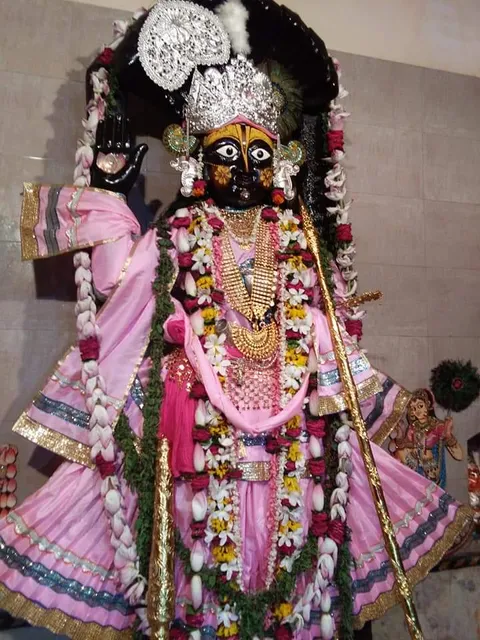
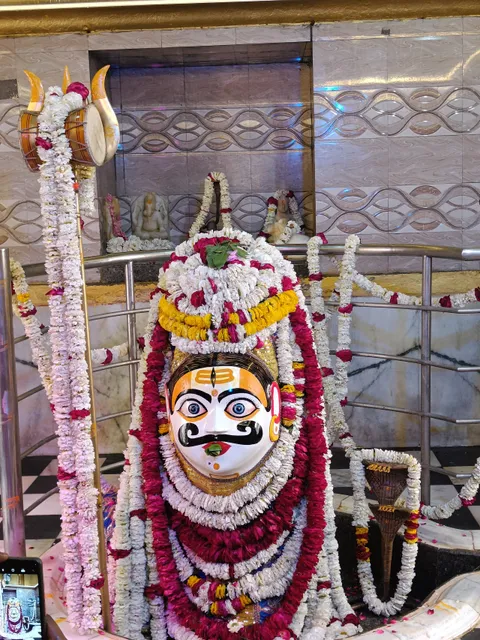
The Shri Krishna Janmasthan Temple Complex in Mathura, Uttar Pradesh, is one of the holiest sites for Hindus, revered as the birthplace of Lord Krishna, the eighth incarnation of Lord Vishnu. Located in the heart of Mathura, the complex is centered around the prison cell where Krishna was born to Vasudeva and Devaki, who were imprisoned by Devaki's brother, King Kansa, due to a prophecy that her eighth child would kill him. The temple holds immense spiritual, historical, and cultural significance, attracting devotees and tourists year-round, especially during festivals like Janmashtami, Holi, Basant Panchami, and Deepavali.
Key Details of Shri Krishna Janmasthan Temple Complex
Location Address: Mathura - Deeg Marg, Near Deeg Gate Chouraha, Janam Bhumi, Mathura, Uttar Pradesh, 281001, India. Distance from Mathura Railway Station: Approximately 1.8 km, a 4-minute walk or a short rickshaw/cab ride. Accessibility: Well-connected by road, rail, and air. The nearest airport is Agra Airport (60 km), and Mathura Junction is the closest railway station. Buses and taxis are available from cities like Delhi, Agra, and Jaipur.
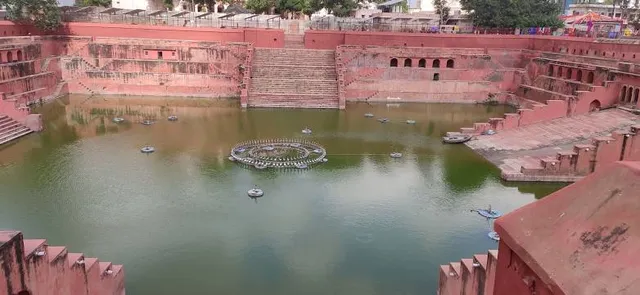
Structure and Shrines The complex houses three main structures and other significant shrines: Keshavdev Temple: Dedicated to Lord Krishna, built south of the Shahi Eidgah mosque. Constructed by Ramkrishna Dalmia in memory of his mother, Jathia Devi Dalmia, with construction starting in 1957 and inauguration in 1958. Garbha Griha Shrine: The sanctum sanctorum, believed to be the exact prison cell where Krishna was born. Features a marble pavilion and an underground cell with a marble slab marking the precise spot of Krishna’s birth. A nearby shrine is dedicated to the eight-handed goddess Yogmaya, located against the rear wall of the Shahi Eidgah. Bhagavata Bhavan: Dedicated to the Shrimad Bhagavata, construction began in 1965 and was completed in 1982. Contains five shrines: Main shrine with 6-foot-tall statues of Radha and Krishna. Shrine of Balarama, Subhadra, and Jagannath (right). Shrine of Rama, Lakshmana, and Sita (left). Garuda Stambha and Chaitanya Mahaprabhu in front of the Jagannath shrine. Hanuman in front of the Ram shrine, plus shrines for Durga and a Shivalinga. The assembly hall’s ceiling, walls, and pillars are adorned with frescoes depicting Krishna’s life, and the circumambulation path has the Bhagavad Gita engraved on copper plates. Other Features: Potra Kund: A large, stepped water tank southeast of the temple, believed to have been used for Krishna’s first bath after birth. A temple for Maa Yogmaya near the prison cell entrance. Additional facilities include an Ayurveda Bhavan, International Guest House, shops, a library, and open spaces for performances. A small cave called Jhankhi depicts scenes from Krishna’s life (entry requires a ticket).
Historical Background Mythological Origin: According to Hindu scriptures like the Mahabharata and Bhagavata Purana, Krishna was born around 3228 BCE in a prison cell in Mathura. His great-grandson, Vajranabha, is believed to have built the first temple at the site nearly 5,000 years ago. Reconstructions and Destructions: Rebuilt in 400 AD under Chandragupta Vikramaditya. Destroyed in 1017 AD by Mahmud of Ghazni. Reconstructed in 1150 AD by Raja Dhrupet Dev Janjua, but destroyed again in the 16th century by Sikandar Lodi. Rebuilt in the 17th century by Raja Veer Singh Bundela during Jahangir’s reign, costing Rs....
Read moreThe Shri Krishna Janmasthan temple complex in Mathura is open to devotees throughout the year, with specific timings and entry restrictions to ensure the smooth management of the large number of visitors. Here are the details:
Timings:
Summer (April to September): 6:30 AM to 9:00 PM
Winter (October to March): 6:30 AM to 8:00 PM
Entry Restrictions:
Entry Fees: There is no entry fee for visiting the Shri Krishna Janmasthan temple complex.
Dress Code: Visitors are expected to dress modestly, covering their shoulders and knees. Traditional Indian attire like sarees, salwar kameez, or kurtas for men are recommended. Shorts, short skirts, and sleeveless tops should be avoided.
Security Checks: Due to the temple's significance and past incidents, security is strict. Visitors must pass through metal detectors, and bags and belongings are subject to inspection.
Prohibited Items: Cameras, mobile phones, electronic gadgets, Remote car key, ear pods, etc, are not allowed inside the temple premises. Lockers are available on chargeable basis to store these items. (ready for long queue here, min 15-20 mins.)
Photography and Videography: Photography and videography are strictly prohibited inside the temple complex.
Special Entry: During major festivals like Janmashtami, the temple sees a massive influx of devotees, and special arrangements might be made, including additional security checks and restricted entry during peak hours.
Best Time to Visit: Early Morning: The best time to visit is early in the morning when the temple opens, as it is less crowded, and you can participate in the morning aarti (prayer ritual).
Avoid Peak Hours: Late morning and evening hours, especially on weekends and public holidays, can be very crowded.
History of Shri Krishna Janmasthan:
Shri Krishna Janmasthan in Mathura stands as a testament to India's rich cultural and religious history. It is not just a site of ancient significance but a living, vibrant center of devotion and spirituality, reflecting the enduring legacy of Lord Krishna in Hindu tradition. As the temple complex continues to evolve, it remains a powerful symbol of faith, attracting devotees and tourists alike, while also navigating the complexities of modern religious and political dynamics.
According to Hindu tradition, Lord Krishna, an incarnation of Lord Vishnu, was born over 5,000 years ago in a prison cell in Mathura, where his parents, Vasudeva and Devaki, were imprisoned by King Kansa. The place where he was born is now known as Shri Krishna Janmasthan or Krishna Janmabhoomi.
The site has been a significant religious center since ancient times. During the reign of King Chandragupta II (around 400 CE), the temple complex was reportedly one of the most prominent shrines dedicated to Lord Krishna. However, the temple has faced several destructions and reconstructions over the centuries due to invasions and religious conflicts.
In the 11th century, Mahmud of Ghazni attacked Mathura and destroyed many temples, including the Krishna Janmasthan. The temple was rebuilt but faced further destruction in 1669 during the Mughal era under Emperor Aurangzeb, who ordered the demolition of the temple. A mosque, known as Shahi Eidgah, was subsequently built on part of the site.
The site has been the focus of legal and political controversies, primarily due to the presence of the Shahi Eidgah mosque adjacent to the temple. Hindu groups have claimed that the mosque was built on the original temple's ruins, leading to demands for the mosque's removal. The dispute has been a sensitive issue, with ongoing legal battles and...
Read moreSri Krishna was born in northern India in approximately 3,228 BCE. The Puranas consider Sri Krishna’s life to mark the passing of the Dvapara age into the Kali Yuga (current age)
The people of Mathura were extremely unhappy with the wicked king Kansa who put his father, king Ugrasen in prison and declared himself the king of Mathura. It was to put an end to his evil ways and other demons that Lord Vishnu decided to take birth on Earth in human form. According to Akashvani (heavenly voice) at the wedding of his beloved sister Devki, Kansa got to know that the eighth child of his sister will take birth to kill him. So, in turn he rushed to kill his sister. Kansa gave up the idea of killing after being assured by Vasudev that he will handover all his children to him. He put them in Prison. Kansa killed all the six infants as soon as they were born. The seventh child (Balram) was saved due to divine intervention, when he was transferred from Devki's womb to that of Rohini's (other wife of Vasudev).
Lord Krishna was born in prison to Devaki and Vasudeva. At the time of his birth, his life was in danger because the tyrant Kamsa was seeking to kill him. It had been foretold that Kamsa would be killed by Devaki’s eighth child. Since Sri Krishna was the eighth child, he was smuggled out of prison to be raised by his foster parents Nanda and Yasoda in Gokula. Nanda lived a simple lifestyle and was a chief in the local Cow-herding community. The young Sri Krishna is often depicted in these days as being a mischievous child, who enjoyed playing pranks and having fun. Some worship Sri Krishna as the ideal child of innocence.
Lord Krishna was born in a prison cell in the captivity of King Kansa. He took birth in divine form with lotus like eyes,his palms bearing the signs of a lotus and discus. He had a swastika sign on his sole. Wearing a yellow colored silk cloth, adorned with precious diamond earrings and a crown made of emeralds. Soon after the birth, a chain of events astonished Vasudev,when he saw the gates of the cell flow open and all the guards fast asleep. He immediately thought of Nand ,his close friend in Gokul and decided to handover his child to him in order to save him from the clutch of Kansa.
The general pooja process begins early in the morning with devotees giving a bath or abhishek to Bal Gopal's idol with gangajal, ghee, water, honey and curd. The idol is then adorned with new clothes (preferably in yellow colour), stone or other precious jewellery. Janmashtami Next, the idol of lord is offered bhog, the contents of bhog may vary. Fruits, kheer, pedha, milk, and milk products are made. There are devotees who offer chappan bhog(56 dishes) to Bal Gopal.
Arti is a ceremony, held to welcome Lord or a saintly person. Auspicious articles like incense and diyas are offered to the lord. Arti is an important ceremony held to mark any kind of religious or spiritual celebration.
Restriction : The area is strictly restricted and nothing is allowed in Garbh Grih (Birth Place). Not even, camera, comb, pen, etc. You can keep your belongings at your own risk in lockers / Clock Rooms near the main gate.
Entry Fee : Its free for all nations...
Read more