Victoria Public Hall
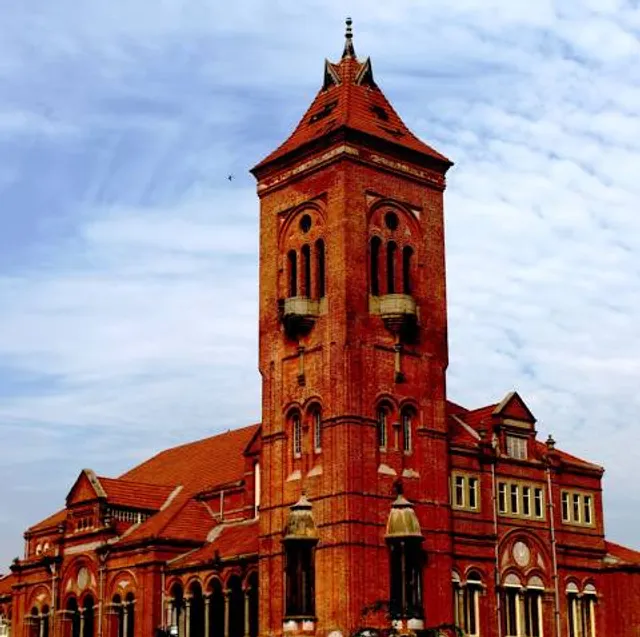
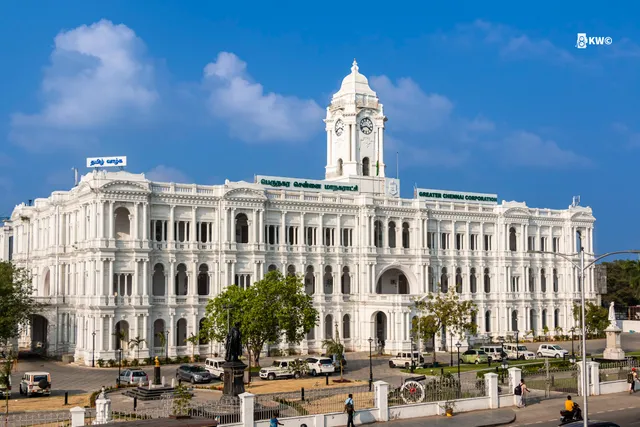
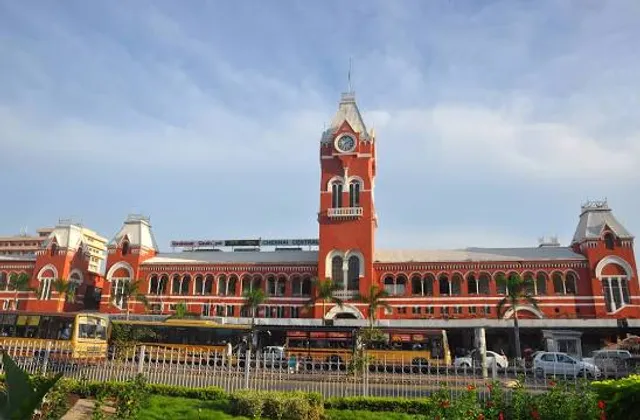
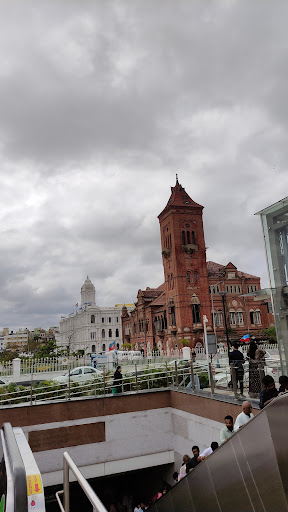
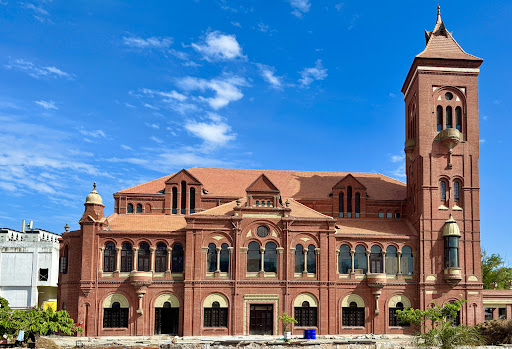
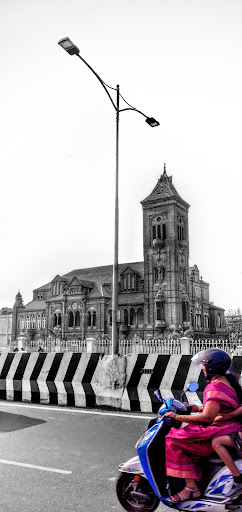
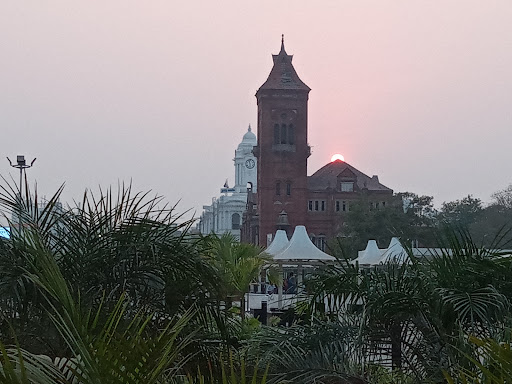
Victoria Public Hall, or the Town Hall, is a historical building in Chennai, named after Victoria, Empress of India. It is one of the finest examples of British architecture in Chennai and was built to commemorate the golden jubilee of Queen Victoria. It served as a theatre and public assembly room in the late 19th century and the early 20th century. It now houses the South Indian Athletic Association Club.
Victoria Public HallTown Hall
General informationTypePublic buildingArchitectural styleIndo-SaracenicLocationPoonamallee High Road, Chennai, IndiaAddressPark Town, Chennai, Tamil Nadu 600 003Construction started1886Completed1888-1890Inaugurated1888-1890Cost₹ 16,425OwnerCorporation of ChennaiManagementVictoria Public Hall TrustTechnical detailsFloor count3Floor area25,883 sq ft (2,000 m2)Design and constructionArchitectRobert Fellowes ChisholmStructural engineerNamperumal Chetty
History
In a meeting held in March 1882 at the Pachaiyappa's Hall in George Town by some leading citizens, the decision to construct a town hall for Madras was taken. This resulted in the mobilisation of a sum of ₹16,425 from around 30 persons who attended the meeting, and a 12-member trust was formed for the execution of the project. The municipal corporationleased a 57-ground (3.14 acres) site in the People's Park to the Victoria Public Hall Trust for 99 years effective from 1 April 1886 at a lease rent of eight annas a ground or ₹ 28 for the property. The then Maharajah of Vizianagaram, Sir Pusapati Ananda Gajapati Raju, laid the foundation stone for the new building on 17 December 1883, who also led a list of 35 donors for the construction work with a contribution of ₹ 10,000. The list included the Travancore Maharajah (₹8,000), Mysore Maharajah, Pudukottai Rajah and former Madras High Court Judge Muthuswamy Iyer (all ₹ 1,000 each) and P.Orr and Sons, a city-based watch company (₹ 1,400). Other contributors included Ramnad Raja Bhaskara Setupati, Zamindar of Ettiapuram and Hadji Abdul Batcha Sahib. It took about five years to complete the construction.
The hall, an example of the Indo-Saracenic architecture, was designed by Robert Fellowes Chisholm (1840-1915) in the Romanesque style and was built by Namperumal Chetty between 1888 and 1890. It was opened to public by Lord Connemara in 1887, although another version suggests that Sir Mountstuart Elphinstone Grant Duff, the governor of Madras during 1886-1890, declared open the hall. In January 1888, a citizens' meeting decided to name the hall after Queen Victoria. The then Municipal Corporation President Sir A.T. Arundale took the initiative.
The hall soon become a venue of important public and social events. Several eminent personalities, including Mahatma Gandhi and Swami Vivekananda, have visited the hall. National leaders like Swami Vivekananda, Gopal Krishna Gokhale, Subramaniya Bharathi and Sardar Vallabhai Patel have addressed meetings in the hall. The pioneers of Tamil play, such as Sankaradoss Swamigal and Pammal Sambanda Mudaliar, have staged their plays at the hall.
The Suguna Vilasa Sabha (SVS), founded in 1891, was most closely associated with the hall. It conducted the first evening drama shows in Madras. In October 1906, the play Kaadalar Kangal was staged at the hall. For the next 30 years, the Sabha remained at the hall and later, built its own theatre on acquisition of 36 grounds next to Christ Church on Anna Salai and now functions only as a social club.
It was here that the first cinema show was held in Chennai. T. Stevenson, proprietor of the Madras Photographic Store, ran some shows that consisted of ten...
Read moreone of Chennai’s oldest and most historically significant buildings, stands as a proud symbol of the city’s colonial-era heritage and cultural legacy. Located near the Government Museum and adjacent to the iconic Connemara Public Library, this heritage structure has recently undergone a much-needed and long-awaited restoration, breathing new life into its grand Victorian architecture.
Heritage & Architecture (5/5): Built in 1887 to commemorate Queen Victoria’s Golden Jubilee, the hall is a fine example of Indo-Saracenic architecture, with its red-brick façade, arched windows, domed roof, and intricate stonework. The ongoing renovation work has been meticulously carried out to preserve its original charm while reinforcing structural integrity. From what is visible during the restoration, great care has been taken to retain period details, including the ornate woodwork, stained glass elements, and decorative columns.
Renovation & Current Status (4/5): As of now, the hall is under renovation by the Archaeological Survey of India (ASI) in collaboration with the Tamil Nadu government. While the site remains closed to the general public, the progress is promising. Scaffolding covers parts of the building, but glimpses of restored sections reveal a renewed grandeur. The surrounding compound has been cleaned up, and protective fencing ensures the preservation of the site during construction.
Cultural Significance (5/5): Victoria Public Hall holds immense historical value — it was the venue for the first session of the Indian National Congress in 1887 and has hosted countless public meetings, literary gatherings, and cultural events over the decades. Its revival is not just architectural but symbolic — a reconnection with Chennai’s intellectual and political past.
Accessibility & Location (4/5): Situated in the cultural hub of Egmore, the hall is easily accessible by public transport, auto-rickshaws, and private vehicles. Its proximity to other landmarks like the Government Museum, Planetarium, and National Art Gallery makes it part of a larger heritage trail. Once reopened, it is expected to become a major attraction for tourists and history enthusiasts.
Future Prospects (4/5): Plans indicate that the restored hall will serve as a multipurpose cultural center — hosting exhibitions, lectures, book launches, and music recitals. If managed well, it could become a vibrant space for art, literature, and public discourse, much like it was in the early 20th century.
Final Verdict: ★★★★☆ (4 out of 5 Stars) Though currently closed for renovation, the respectful and detailed restoration of Victoria Public Hall inspires confidence and hope. It may not yet be fully accessible, but the progress so far earns it a solid 4-star rating for its historical importance, architectural revival, and future potential.
Recommended for: Heritage lovers, history buffs, and cultural enthusiasts. Keep an eye out for its grand reopening — it’s set to reclaim its place as one of Chennai’s most treasured landmarks.
Note: While you can’t go inside yet, a walk around the perimeter offers a glimpse of Chennai’s regal past — and a...
Read moreThe Victoria Public Hall was constructed in 1888 to commemorate Queen Victoria's Golden Jubilee. It was designed by the architect Robert Chisholm in the Indo-Saracenic architectural style, which blends Indian, Islamic, and European influences. The building's grand façade and intricate detailing make it an architectural gem that stands out in the cityscape.
Over the years, Victoria Public Hall has served as a venue for various cultural, social, and political events. It has witnessed numerous concerts, theatrical performances, public meetings, and exhibitions, making it a vibrant center for entertainment and intellectual discourse.
The interior of the Victoria Public Hall is equally impressive, with its spacious halls and elegant décor. The main hall, with its high ceilings, ornate chandeliers, and beautifully crafted pillars, exudes a sense of grandeur and charm. The acoustics of the hall are exceptional, making it a favored venue for musical performances and cultural events.
The significance of Victoria Public Hall extends beyond its architectural and cultural value. It has been a witness to important historical events and has hosted notable personalities from various fields. The hall has been a platform for political speeches, public gatherings, and social initiatives, reflecting the spirit of social change and activism.
In recent years, the Victoria Public Hall has undergone restoration to preserve its historical integrity. Efforts have been made to maintain its architectural features while upgrading its facilities to accommodate modern requirements. The hall continues to host a wide range of events, including concerts, dance performances, conferences, and weddings, keeping its legacy alive.
Visiting the Victoria Public Hall offers a glimpse into Chennai's rich history and cultural heritage. Whether you appreciate architecture, music, or simply want to experience the ambiance of a bygone era, this historic venue is a must-visit. It stands as a testament to the city's enduring cultural legacy and the role it has played in shaping Chennai's...
Read more