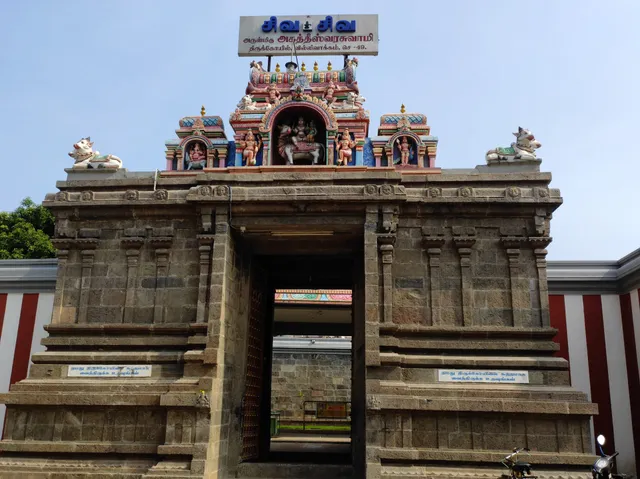
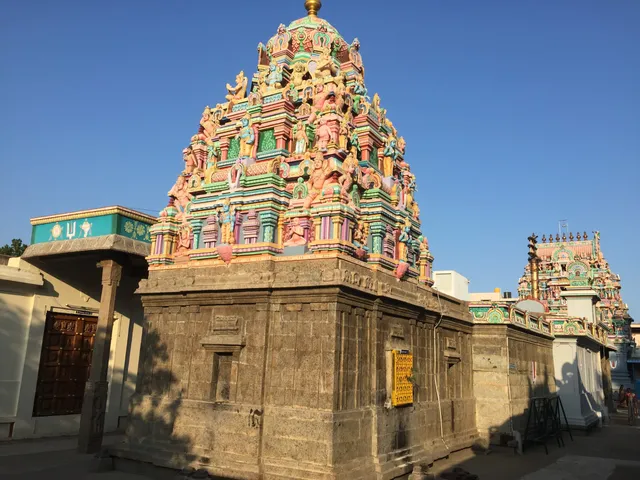
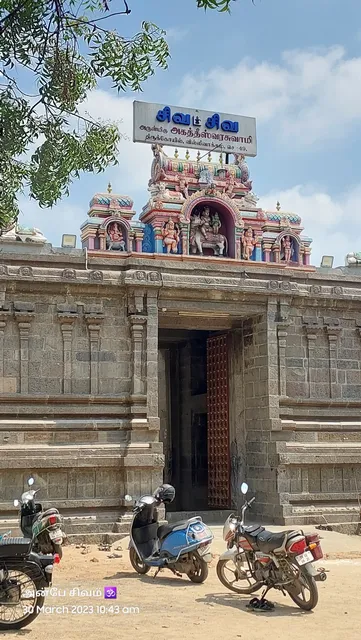
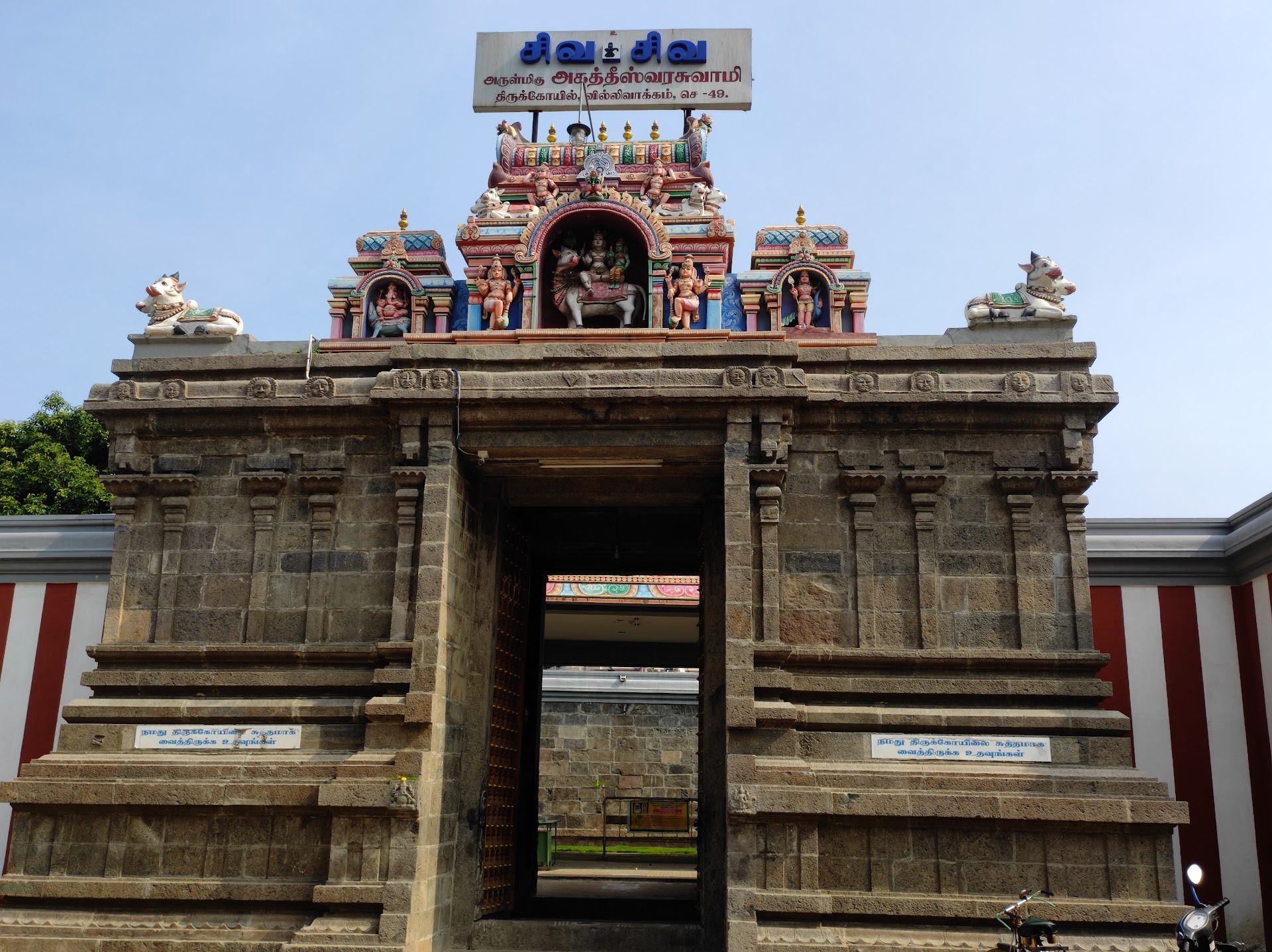
2000 year old Lord Shiva temple worshipped by the great sage Agasthya himself. There is a story behind this temple that goes like this. Two demon brothers by the name ‘Illava’ and ‘Vatapi’ killed innocent lives wherein Vatapi turned into a fruit and was offered to be eaten to unsuspecting people by his brother Illava. After consumption of the fruit by the innocent ones, Illava would beckon his brother to come back who’d tear apart from the stomach of those who consumed him thereby killing people. When these demons tried the same trick on Sage Agasthya and Illava called out to his brother, Sage Agasthya literally digested the demon Vatapi (who was inside Agasthya’s stomach in fruit form) saying’Let Vatapi be digested’, thereby killing him on the spot. The other furious demon brother Illava was also killed by Sage Agasthya. Even though these demons were bad, Sage Agasthya incurred the sin of ‘Brahmahasthi thosham’ - sin acquired by killing someone regardless of their holy or evil nature. It is in this temple that Lord Agasthya was relieved from this sin after he worshipped sincerely. Lord Veerabhathra who is located outside the premises of the main deities (Lord Agastheeshwar - named so since Sage Agasthya worshipped Lord Shiva and Goddess Swarnambigai - meaning Goddess adorned with golden ornaments) guided Sage Agasthya throughout his prayer, hence worshippers are supposed to visit him first before seeing the main deities. Important facts of this temple: The temple was built by 2 kings from 2 dynasties - Chola and Pallava. The Chola king built the karuvarai (inner room) of Lord Shiva which is in the shape of an elephant’s belly bearing a baby elephant. The temple is an important parigaram sthalam for people with Chevai thoshas and budhis in their horoscope. This is the only temple that has Lord Angaraka (planet Mars) situated facing South direction. The only other temple where he’s situated the same way is Vaitheeswaran temple. Rest of the temples, Lord Angaraka is situated usually in North or East direction. This is the only temple that is open during Solar and Lunar eclipses and the column structures inside the temple depict the stages of the eclipses. The aerial view of this temple looks like a hexagon and the calculations used to build this temple are very unique and is open in Aadi month. The Bali peedam (open flat structure located before the kodi maram - the metal pillar connecting a temple to the higher vibrations of the open sky) which is usually present before Lord Nandhi (the guardian of the temple) is present behind him No human marriages are conducted in this temple since this temple relieved Sage Agasthya from Brahmahasthi thosham. (Gajapushpakam)Only the marriage between Gods happen here. Temple is located in Villivakam which was once known as ‘Vilvaranyam’ meaning forest of Vilva trees. Unfortunately, most of the Vilva trees have been cut down for urbanisation. This is the only temple that houses Lord Veerabhadra outside the main premises. There is urchavar (bronze statue) of another Goddess called Mobuli Amman who has a separate temple as well. Her Urchavar was installed here since 200 years ago since she seemed too powerful to be appeased and this was the only way to appease her. Mobuli Amman has 2 sister Goddesses. One is Goddess Baliamman who has a separate temple in a place called Padi which used to be known as ‘Bali’ because of a river Bali that once existed. It seems that when this Goddess was travelling, she was enthralled by the river Bali and decided to settle there. The other sister Goddess of Mobuli Amman is ‘Ellai Amman’ ( Goddess who guards the boundary of a village) who is said to be the main deity guarding Padi which was once a village. The Villivakkam Sivan temple has seen generation of priests and the current generation is the 8th generation conducting prayers to the main deities.
Credit goes to the humble priest ‘Vignesh’ who explained the history of this temple very well and is down to earth despite the vast knowledge...
Read moreThis temple, located in Villivakkam, a part of Chennai City, is conveniently close to both the bus terminus and the railway station. It is believed to be one of the Thevara Vaippu Sthalams sung by Thirunavukkarasu Swamigal. The temple's main deity is Sri Agastheeswarar, with Sri Swarnambigai as the consort. The Moolavar is enshrined under a Gajabrushta Vimanam.The temple's main entrance is from the south, marked by a recently built Mottai Rajagopuram with an arch above. In the outer prakaram, the east entrance houses the Dwajasthambam, balipeedam, and Rishabam. Additionally, there are shrines dedicated to Nagars, Lingas, Vilvambigai, Aadhi Sankarar, and Navagrahas. The inner prakaram features shrines for Surayan, Nandeeswarar (with a Nandhi head), Naalvar, Ganapathy, Urchavars, Kasi Viswanathar, Agasthiyar, Palani Andavar, Lakshmi, Saraswathy, Sri Valli Devasena Subramaniar, Chandikeswarar, Bairavar, and Chandran.At the entrance of the sanctum are Vinayagar and Subramaniar, with large and appealing Dwarapalakas. The koshtam contains deities such as Vinayagar, Dakshinamurthy, Vishnu, Brahma, and Durgai. The sanctum is of Gajabrushta type and built in the Agazhi or moat style due to the raised ground level, with the Moolavar in an elevated position and adorned with nagabharanam.The Ambal Sannadhi is situated in the same prakaram facing south. Lord Shiva permitted Ambal to give darshan to Agasthiyar with gold ornaments, hence Ambal is named Sri Swarnambika. This site is also one of the 108 Sakthi Sthalams. Architecturally, the temple includes a sanctum sanctorum, antarala, ardha mandapam, Maha mandapam, and Mukha mandapam. The sanctum sanctorum is constructed in the Gajaprishta style with two talas, and features intricate carvings on the Open Mukha Mandapa pillars.Historically, the temple contains inscriptions from the Chozha period, indicating its existence for over 1000 years. The original structure was likely built with bricks and later reconstructed with stone during the reign of Kulothunga Chozha. Some inscriptions, found on the inner prakaram walls and the base of Ambal sanctum, are in a poor and unreadable condition. Renovations have unfortunately compromised the temple’s historical integrity.Legend has it that Agasthiyar killed the demons Vilvalan and Vatapi, and with the help of Sri Veerabhadra, he was relieved of the brahmahathi dosha. Hence, Sri Veerabhadra’s sannadhi faces north opposite the south side entrance. Mars is said to have created a spring and worshipped Lord Shiva here, and Naagars are placed around a Neem and Peepal tree on a raised platform, where devotees worship during the Tamil...
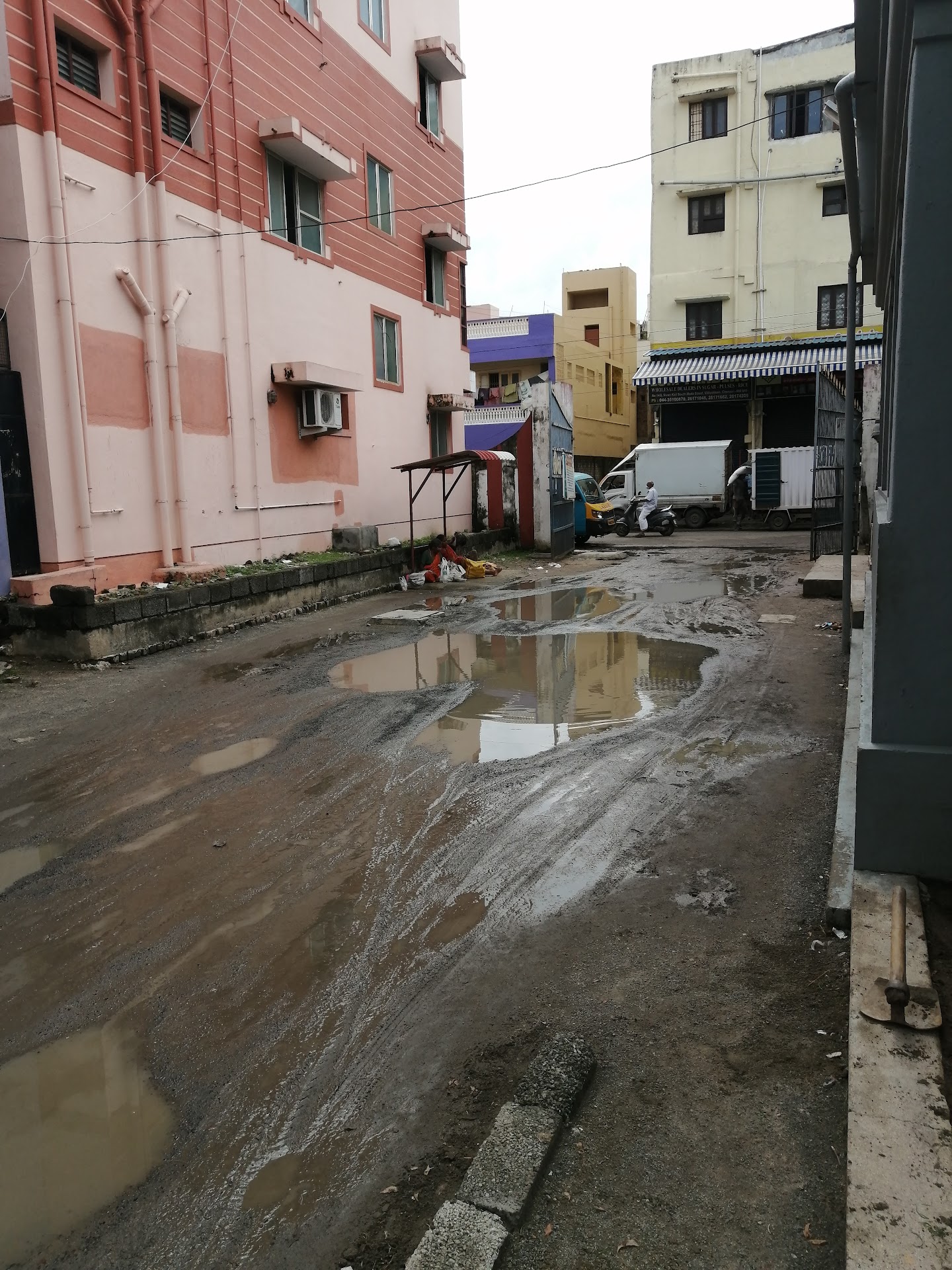
Read moreOne of the Vibe temple in Chennai, Villiwakkam. As sage Agastiyar worshipped lord Shiva, this temple deity lord Shiva named Agatheswarar udanurai Swarnambigai. Aadi Chevvai is very famous here as lord Shiva gave dharshan to sage Agastiyar in this temple. Temple model is Gagaprastham. Has a large tank named Angaraga Theertham. Sage Agastiyar idol is present right back of Lord Shiva along with Kasi Vishwanathar and Visalatchi Amman. Near tank there is a temple for naga's, Angaragan and Vinayagar. And also seperate temple is for Veerabadrar and Kali Amman.. Temple has no gopuram. Has Gosala were the cows were not freed need maintanance. Passage area from the entrance gate to the gopuram is very worstly maintained for which they will charge for parking. In the outer pragaram there is undiyal near the kodikambam don't no for why it was installed, if rains water will fill the undiyal. Temple staffs are very worst and rude to devotees.
*Cons are mentioned with photos only for making...
Read more