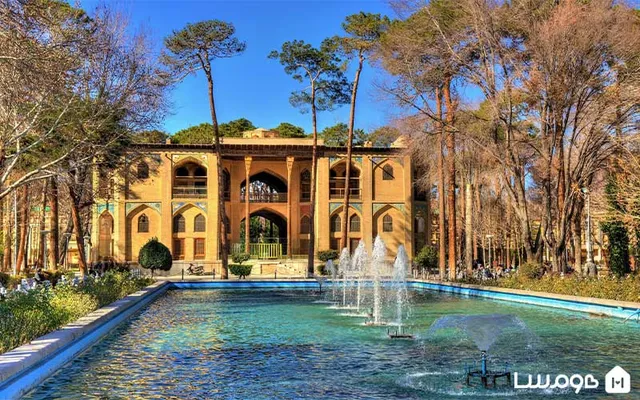
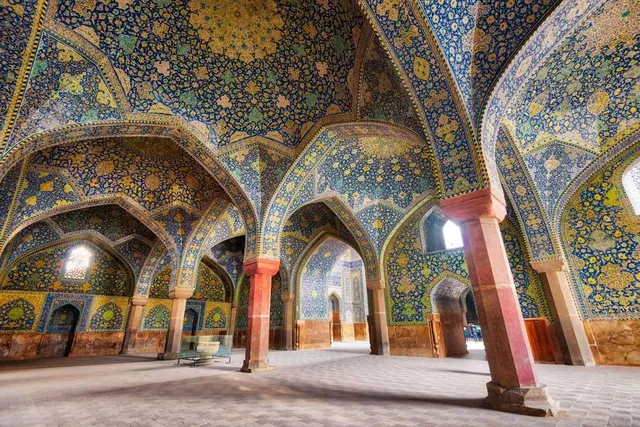
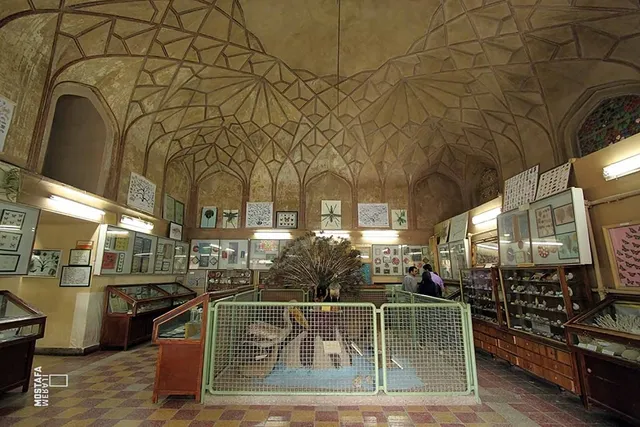
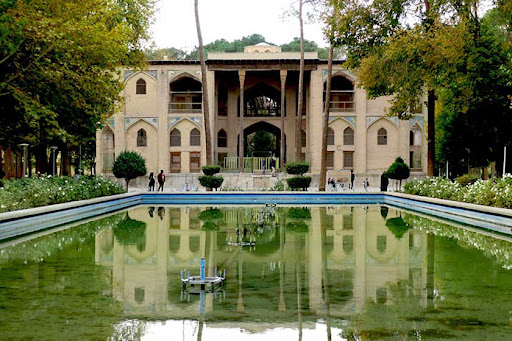
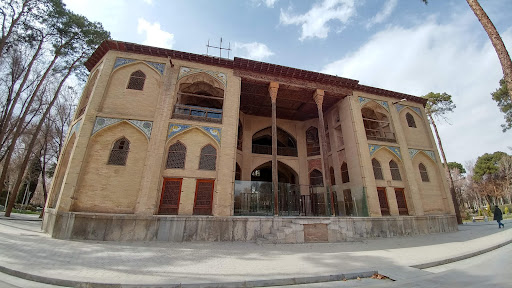
One of the remaining monuments of Safavid Era is Hasht Behesht Palace. Its brilliant architecture along with its design and decoration have made it a legendary palace. It has four different façades each one visible through a particular angle. There is also a garden around this structure from which not much has remained. However, a park has recently been established near the building with modern affiliations. Location of Hasht Behesht Palace One of the two gardens in Chahar Bagh Street (the Four Gardens) is Hasht Behesht Palace and its garden. This spectacular historical structure is located in the western part of Chahar Bagh Street and across from Sheykh Bahaei Street. Reaching here by public transportation is possible by bus. Municipal Bus Station is the closest station to this palace. Other attractions near Hasht Behesht Palace are Naghsh-e Jahan Square, Chehel Sotoun Palace, Sheikh Lotfollah Mosque, Ali Qapu, Qeysarieh Gate (The Grand Bazaar), and Imam Mosque. Consequently, you can consider these sites to visit afterward. History of Hasht Behesht Palace Isfahan owes a great deal to Safavid Era and its kings. Shah Abbas, the first king of Safavid Empire, selected Isfahan as the capital city. One of his decisions to make Isfahan a competent city for his empire was to build up a long street, Chahar Bagh Street (the four gardens), and develop some gardens in it. Sad to say, none of these gardens have remained excluding Chehel Sotoun Garden and Hasht Behesht Garden. The beauty of the garden is not fully left for us to explore however the palace is still a lively monument. The word Hasht Behesht used to mean “The Entrance to Heaven” in the Persian language. Hasht Behesht Palace was built in 1669 and for a long time was called “the most beautiful palace in the world.” In 1964, the garden was conceded to Culture and Art Ministry of Iran. Structure of Hasht Behesht Palace The magnificent tiling of Hasht Behesht Palace includes different kinds of birds, reptiles, and predators paintings on. This mansion has four different façades that despite their similarities are all unique. It may seem that the northern front view is the main façade but the pool in the garden suggests that the main façade is the eastern one. The two-storey palace is built 2 meters above the ground level. The walls of the first floor contain paintings and fascia architecture. The second floor exhibits some rooms, windows, and doors with cachet design. In the middle of the hall, there is a marble pool called “The Pearl Pool”. The design of the pool is in such way that the water seeps through its holes like pearl. This palace was a house to the eight wives of Shah Abbas. Four of them used to live on the first floor and the four others on the second floor. The artistic and glorious decorative design of the building has made the travelers speechless through all...
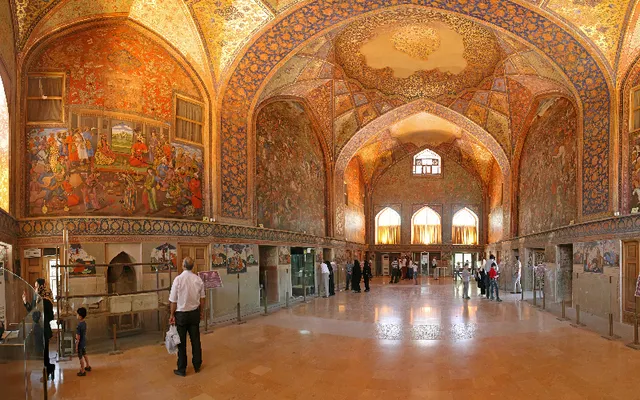
Read morebrilliant architecture along with its design and decoration have made it a legendary palace. It has four different façades each one visible through a particular angle. There is also a garden around this structure from which not much has remained. However, a park has recently been established near the building with modern affiliations. Isfahan owes a great deal to Safavid Era and its kings. Shah Abbas, the first king of the Safavid Empire, selected Isfahan as the capital city. One of his decisions to make Isfahan a competent city for his empire was to build up a long street, Chahar Bagh Street (the four gardens), and develop some gardens in it. Sad to say, none of these gardens have remained excluding Chehel Sotoun Garden and Hasht Behesht Garden. The beauty of the garden is not fully left for us to explore however the palace is still a lively monument. The word Hasht Behesht used to mean “The Entrance to Heaven” in the Persian language. Hasht Behesht Palace was built in 1669 and for a long time was called “the most beautiful palace in the world.” In 1964, the garden was conceded to the Culture and Art Ministry of Iran. The magnificent tiling of "Hasht Behesht Palace" includes different kinds of birds, reptiles, and predators paintings on. This mansion has four different façades that despite their similarities are all unique. It may seem that the northern front view is the main façade but the pool in the garden suggests that the main façade is the eastern one. The two-story palace is built 2 meters above the ground level. The walls of the first floor contain paintings and fascia architecture. The second floor exhibits some rooms, windows, and doors with cachet design. In the middle of the hall, there is a marble pool called “The Pearl Pool”. The design of the pool is in such a way that the water seeps through its holes like a pearl. This palace was a house to the eight wives of Shah Abbas. Four of them used to live on the first floor and the four others on the second floor. The artistic and glorious decorative design of the building has made the travelers speechless through all these years. کاخ و باغ هشت بهشت یکی از معدود کاخ-باغ های به جا مانده از دوره صفویه در اصفهان است. این کاخ در وسط یک باغ بنا شده که امروزه تبدیل به یک پارک شده است و منظره دلنوازی دارد. برای رسیدن به آن می توانید از خیابان چهارباغ بین دروازه دولت و آمادگاه به آن دسترسی پیدا کنید. برای دیدن داخل بنای کاخ باید بلیط تهیه کنید و دسترسی بسیار محدودی نیز خواهید داشت و به طبقات و ایوان های بالایی...
Read moreThe palace is of two storeys and founded on an octagonal base 130 centimetres high. The palace itself is about 14 meters high and is surrounded by four glorious Iwans at the four corners allowing enough light for the inner part of the palace. The central part of the monument has plaster pendentives vaults decorated with frescos and is opened to the four Iwans from the four corners in such a way that the inner part of the monument has a cross-shaped plan. The four sides are designed with different constructional units. Thus including the upper storey there are eight individual patterns. Each of the units has been arranged with separate architectural design and a different inner space, the architect has thus converted the monument into a small labyrinth. On the second floor is a tiny chamber worthy of special mention. Each section of it has been allocated a specific decoration. The Northern Iwan of the palace benefits from a shallow marble pond that is known as the Morvarid (pearl) Pond. The Southern Iwan also has a waterfall process. Built into the rim of the Iwan is a pipe connected to a copper reservoir on the upper floor, which empties into the small lower pond like a waterfall. The rooms of the palace are fully decorated with frescos and mirror work most of which were damaged during the Qajarid era (19th century). Hasht Behest palace has an octagonal plan and great efforts have been made to employ patterns and symbols derived from the number "Eight", in view of the name of the palace. There are eight constructional sections, the central pond is octagonal, the floor has been covered with octagonal bricks and also the outer shell is octagonal, all inspired by this number. In the outer side of the palace, there is much interesting tile work in spandrels, some of which refer to exemplary stories, some containing epic and national symbols, some scenes of the hunting of animals and birds and some show mythical animals such...
Read more