HTML SitemapExplore
logo
Find Things to DoFind The Best Restaurants

Gallipoli Castle — Attraction in Gallipoli

Name
Gallipoli Castle
Description
Nearby attractions
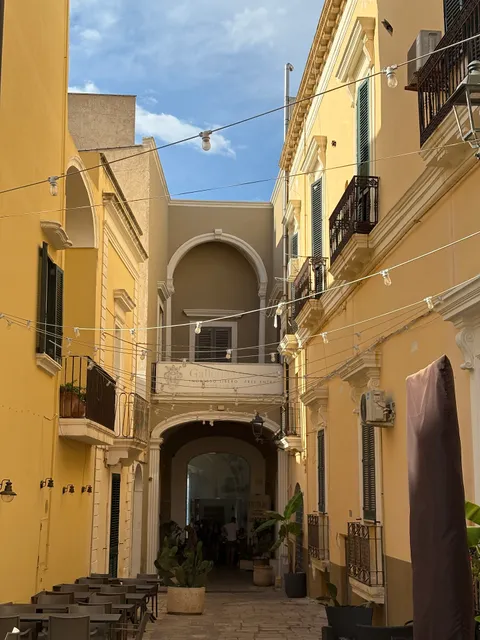
Centro Storico di Gallipoli
Via Duomo, 2-20, 73014 Gallipoli LE, Italy
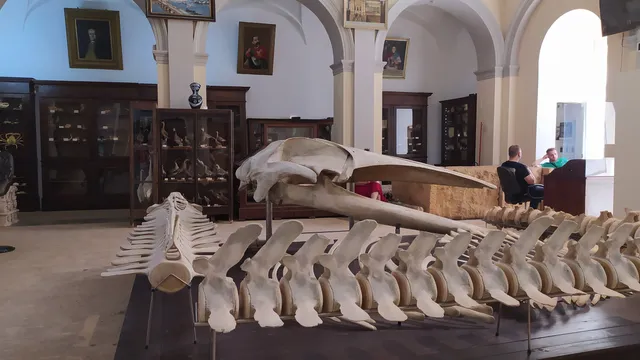
Diocesan Museum of Gallipoli
Via Antonietta de Pace, 51, 73014 Gallipoli LE, Italy
Museo Civico "Emanuele Barba"
Via Antonietta de Pace, 108, 73014 Gallipoli LE, Italy
Bleu Salento
Lungo Mare, Lungomare Marconi, 73014 Gallipoli LE, Italy
Il frantoio del Vicerè: antichi tesori di Gallipoli
Via Santa Maria, 6, 73014 Gallipoli LE, Italy
Frantoio Ipogeo di Palazzo Granafei
Via Antonietta de Pace, 87, 73014 Gallipoli LE, Italy
Radio Norba Cornetto Battiti Live - Gallipoli
Unnamed Road, 73014, 73014 Gallipoli LE, Italy
Marea - Centro di cultura del mare
Riviera Nazario Sauro, 131/A, 73014 Gallipoli LE, Italy
Pigeon Rock
73014 Gallipoli, Province of Lecce, Italy
Nearby restaurants
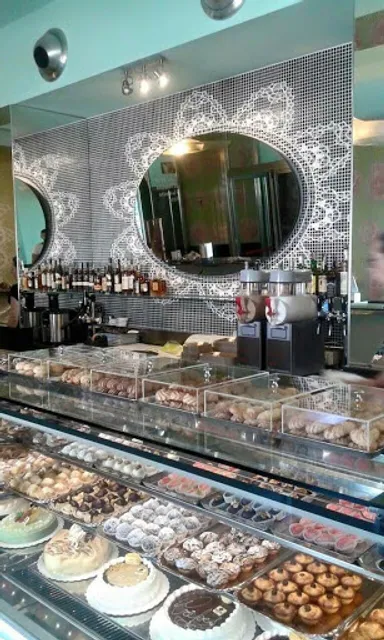
Martinucci Laboratory Gallipoli Centro Storico
Riviera Armando Diaz, 129, 73014 Gallipoli LE, Italy
Costa del Sud
Piazza della repubblica 5 Mercato ittico, 73014 Gallipoli LE, Italy
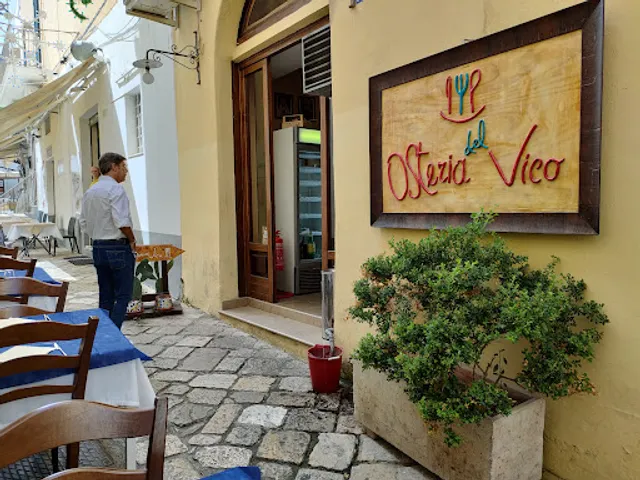
Osteria del Vico
Vicolo Mercato, 1, 73014 Gallipoli LE, Italy
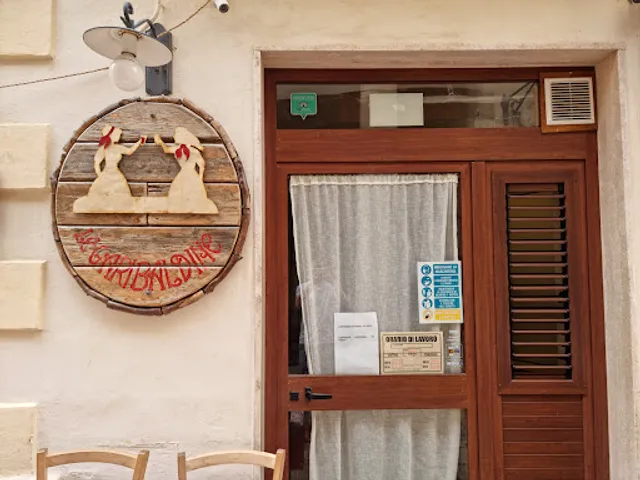
Le Garibaldine
Via XXIV Maggio, 11, 73014 Gallipoli LE, Italy
La Navicula
Via Incrociata, 24, 73014 Gallipoli LE, Italy
Ristorante Pane Olio e Fantasia anche gastronomia ad asporto
Piazza della Repubblica, 8 e, Via Antonietta de Pace, 33, 73014 Gallipoli LE, Italy
Da Clara
Via Antonietta de Pace, 15, 73014 Gallipoli LE, Italy
La Locanda degli Angioini
Riviera Armando Diaz, 119, 73014 Gallipoli LE, Italy
Yellow Scapece
Riviera Armando Diaz, 131, 73014 Gallipoli LE, Italy
Trattoria La Paranza
Largo dogana, 73014 Gallipoli LE, Italy
Nearby hotels
B&B Il Centro Storico
Piazza Imbriani, 3 Ingresso dal mercato coperto, 73014, Piazza Imbriani, 73014, 73014 Gallipoli LE, Italy
Palazzo Mosco Inn - Dimora Storica
Via Micetti, 26, 73014 Gallipoli LE, Italy
Bellavista Club - Caroli Hotels
Corso Roma, 219, 73014 Gallipoli LE, Italy
B&B PalazzoBarba
Via Carlo Micetti, 38, 73014 Gallipoli LE, Italy
Relais Corte Palmieri
Via Roncella, 13, 73014 Gallipoli LE, Italy
B&B Dimora Muzio and Restaurant
Via C. Muzio, 17, 73014 Gallipoli LE, Italy
Palazzo Colombo
Riviera Cristoforo Colombo, 11, 73014 Gallipoli LE, Italy
Il Giardino Della Regina
Via G.B. De, Via de Tomasi, 17, 73014 Gallipoli LE, Italy
B&B Corte Kampánes
Via Zacheo, 8, 73014 Gallipoli LE, Italy
Suite Porta Terra
Riviera Cristoforo Colombo, 3, 73014 Gallipoli LE, Italy
Related posts
Keywords
Gallipoli Castle tourism.Gallipoli Castle hotels.Gallipoli Castle bed and breakfast. flights to Gallipoli Castle.Gallipoli Castle attractions.Gallipoli Castle restaurants.Gallipoli Castle travel.Gallipoli Castle travel guide.Gallipoli Castle travel blog.Gallipoli Castle pictures.Gallipoli Castle photos.Gallipoli Castle travel tips.Gallipoli Castle maps.Gallipoli Castle things to do.
Gallipoli Castle things to do, attractions, restaurants, events info and trip planning
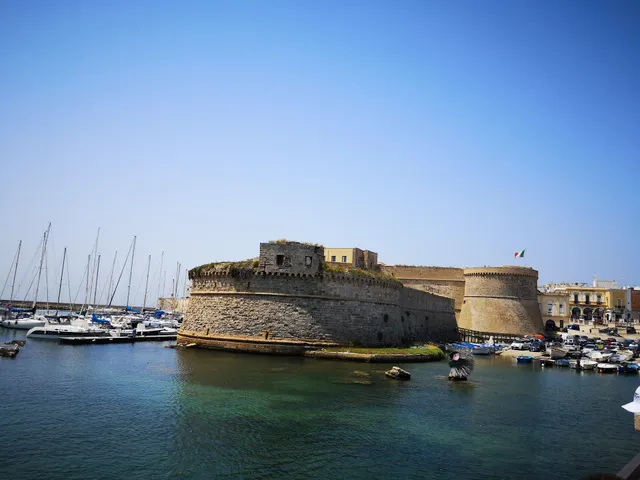
Gallipoli Castle
ItalyApuliaGallipoliGallipoli Castle

Basic Info

Gallipoli Castle

Piazza Imbriani, 73014 Gallipoli LE, Italy
4.4(3.6K)
Open 24 hours
Save
spot

Ratings & Description

Info

attractions: Centro Storico di Gallipoli, Diocesan Museum of Gallipoli, Museo Civico "Emanuele Barba", Bleu Salento, Il frantoio del Vicerè: antichi tesori di Gallipoli, Frantoio Ipogeo di Palazzo Granafei, Radio Norba Cornetto Battiti Live - Gallipoli, Marea - Centro di cultura del mare, Pigeon Rock, restaurants: Martinucci Laboratory Gallipoli Centro Storico, Costa del Sud, Osteria del Vico, Le Garibaldine, La Navicula, Ristorante Pane Olio e Fantasia anche gastronomia ad asporto, Da Clara, La Locanda degli Angioini, Yellow Scapece, Trattoria La Paranza
logoLearn more insights from Wanderboat AI.
Phone
+39 0833 262775
Website
castellodigallipoli.it

Plan your stay

hotel
Pet-friendly Hotels in Gallipoli
Find a cozy hotel nearby and make it a full experience.
hotel
Affordable Hotels in Gallipoli
Find a cozy hotel nearby and make it a full experience.
hotel
The Coolest Hotels You Haven't Heard Of (Yet)
Find a cozy hotel nearby and make it a full experience.
hotel
Trending Stays Worth the Hype in Gallipoli
Find a cozy hotel nearby and make it a full experience.

Reviews

Nearby attractions of Gallipoli Castle

Centro Storico di Gallipoli

Diocesan Museum of Gallipoli

Museo Civico "Emanuele Barba"

Bleu Salento

Il frantoio del Vicerè: antichi tesori di Gallipoli

Frantoio Ipogeo di Palazzo Granafei

Radio Norba Cornetto Battiti Live - Gallipoli

Marea - Centro di cultura del mare

Pigeon Rock

Centro Storico di Gallipoli

Centro Storico di Gallipoli

4.7

(210)

Open 24 hours
Click for details
Diocesan Museum of Gallipoli

Diocesan Museum of Gallipoli

3.8

(28)

Open 24 hours
Click for details
Museo Civico "Emanuele Barba"

Museo Civico "Emanuele Barba"

4.0

(61)

Open 24 hours
Click for details
Bleu Salento

Bleu Salento

4.4

(158)

Open until 12:00 AM
Click for details

Things to do nearby

Authentic Orecchiette Making with local family
Sun, Dec 7 • 6:30 PM
73046, Matino, Puglia, Italy, Italy
View details
Salento Magic Sunset Frisa taste Experience & Tony
Sun, Dec 7 • 5:00 PM
73050, Nardò, Apulia, Italy
View details
Visite guidate con degustazione
Mon, Dec 8 • 10:00 AM
19 Via Roma, 73020 Melpignano
View details

Nearby restaurants of Gallipoli Castle

Martinucci Laboratory Gallipoli Centro Storico

Costa del Sud

Osteria del Vico

Le Garibaldine

La Navicula

Ristorante Pane Olio e Fantasia anche gastronomia ad asporto

Da Clara

La Locanda degli Angioini

Yellow Scapece

Trattoria La Paranza

Martinucci Laboratory Gallipoli Centro Storico

Martinucci Laboratory Gallipoli Centro Storico

3.9

(1.5K)

$$

Click for details
Costa del Sud

Costa del Sud

4.6

(1.1K)

$$

Click for details
Osteria del Vico

Osteria del Vico

4.3

(851)

Click for details
Le Garibaldine

Le Garibaldine

4.6

(836)

Click for details
Get the Appoverlay
Get the AppOne tap to find yournext favorite spots!
Wanderboat LogoWanderboat

Your everyday Al companion for getaway ideas

CompanyAbout Us
InformationAI Trip PlannerSitemap
SocialXInstagramTiktokLinkedin
LegalTerms of ServicePrivacy Policy

Get the app

© 2025 Wanderboat. All rights reserved.
logo

Reviews of Gallipoli Castle

4.4
(3,575)
avatar
4.0
6y

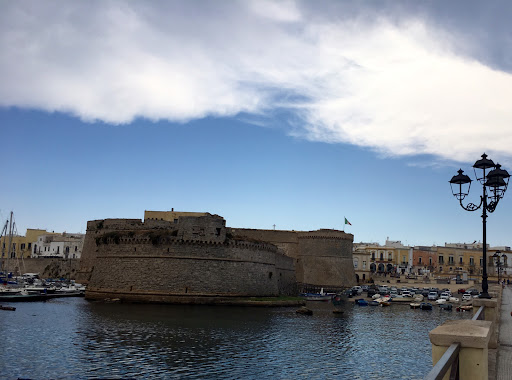
Place to guard the city and the port, once a crossroads of flourishing businesses, it has a quadrangular plan equipped with three circular towers and a polygonal tower. Built after 265 BC as a fortress for legionary housing and defense for the city, it was most likely destroyed or at least severely damaged in the 5th century by the Vandals and the Goths. It was rebuilt during the Byzantine rule and its existence is attested by a letter bearing the year 599 written by Pope Gregorio Magno who congratulated the new Byzantine Byzantine tribune and invited him not to abuse the castle of Gallipoli because it is owned by the Church of Rome. The castle of Gallipoli had only one tower (corresponding to the current polygonal tower) which was connected to the city through a strut structure in turn provided with fortifications and mouths of fire with a drawbridge at the end that connected it to the tower. It resisted the siege of Robert Guiscard of 1055-56 and in 1071 it was occupied by the Normans. During the Nordic presence the castle was inhabited by the Norman healing even if reduced to ruins, and the only reminder of that period is the engraving of the year 1132 on the current front door. Renovated in the first half of 1200 by Frederick II of Swabia, it was even more enhanced by the Angevins in 1320 (always engraved on the entrance door). Between the 15th and 16th centuries, under the dominion of the Angevins and the Aragonese, the castle was subject to substantial modifications: it was isolated from a ditch on all sides and, in 1522, the need to make the defense system become obsolete. , led to the realization of the eastern curtain, the Rivellino. Designed by the Sienese architect Francesco di Giorgio Martini, who worked on behalf of Alfonso II of Naples, it was built to defend the entrance to the city and to prevent a fixed encampment from any enemies that had attacked from the ground. Initially attached to the castle, in the 17th century it was detached from the fortification to add a square tower that was superimposed on the current flag tower, hiding a part of it. Next to the Rivellino another bridge was built that started from the opposite bank, near the church of Santa Cristina, to end up directly in a secondary entrance of the castle and of the same Rivellino. Its remains can still be seen next to the defensive tower of the Rivellino (in stone) and in the access of the latter (in wood).

The tower still houses the original catapults and cannons used to defend the city.

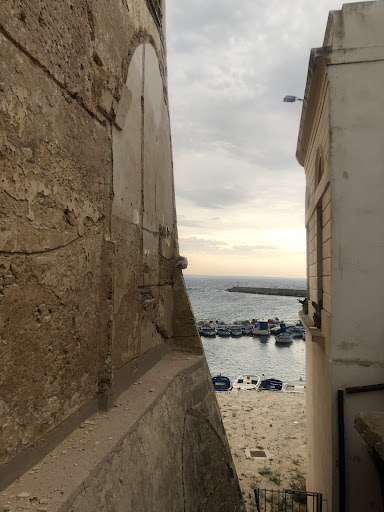
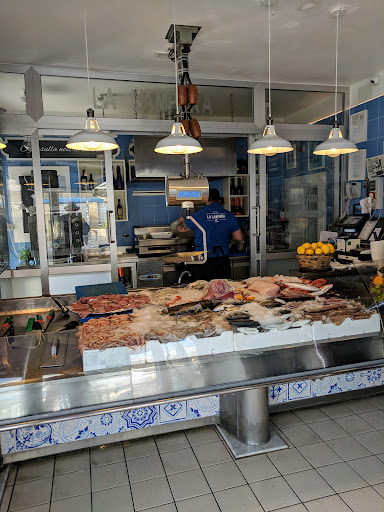
In the sixteenth century, the drawbridge that connected the castle to the city was replaced by a masonry one. The interior houses large rooms with barrel and cross vaults, various tunnels and walkways. The shape of the fortress remained unchanged until the second half of the nineteenth century; between 1870 and 1879 the moat was filled and the façade was covered with the construction of the fish market.

In the various ages they found refuge, among others, Corradino di Svevia (1268), Filippo and Roberto d'Angiò (1306-1327), the Queen of Naples Giovanna II (1414) Ferdinando I (1463) and Isabella of Aragon ( 1495). According to some historians, the Spagnoletto painter Giuseppe Ribera was born in the castle...

   Read more
avatar
5.0
6y

Beautiful old fort, located in the heart of the old town. The fort is simple but you certainly sense the history when you walk the space. Staff at the boutique and where they sell tickets were extremely friendly, knowledgeable and helpful!

They had an art expo when we visited showcasing the history of oil lamps, and the use of olive oil transported via the ports of Gallipoli and how that helped grow this city’s economy, including old lamp and lighting from Dublin to Spain. In addition, certain rooms showed the history of soap factories that formed by taking advantage of the left over raw materials of the olive oil trade. A lot of history on a small exhibit but nicely told.

Bathroom located about 50 feet away between a few cafes and...

   Read more
avatar
1.0
3y

I have no idea how they got this high rating (probably bought it). It's definitely the shortest museum I have ever been to! All thing takes about 25 minutes plus two short movies might be 35, but they charge 5€, no reduced options on the tickets.

If you don't speak Italian expect bad translations, one of the texts is literally Google translate copy-paste that makes no sense. Many English texts are 1/5 of what is written in Italian. Best thing is that they have warning signs, some of them say steep stairs other "step stairs", so they can't even be consistently bad.

Place is a total cash grab, hope they improve but...

   Read more
Page 1 of 7
Previous
Next

Posts

Huykyung “Grace” ByunHuykyung “Grace” Byun
Place to guard the city and the port, once a crossroads of flourishing businesses, it has a quadrangular plan equipped with three circular towers and a polygonal tower. Built after 265 BC as a fortress for legionary housing and defense for the city, it was most likely destroyed or at least severely damaged in the 5th century by the Vandals and the Goths. It was rebuilt during the Byzantine rule and its existence is attested by a letter bearing the year 599 written by Pope Gregorio Magno who congratulated the new Byzantine Byzantine tribune and invited him not to abuse the castle of Gallipoli because it is owned by the Church of Rome. The castle of Gallipoli had only one tower (corresponding to the current polygonal tower) which was connected to the city through a strut structure in turn provided with fortifications and mouths of fire with a drawbridge at the end that connected it to the tower. It resisted the siege of Robert Guiscard of 1055-56 and in 1071 it was occupied by the Normans. During the Nordic presence the castle was inhabited by the Norman healing even if reduced to ruins, and the only reminder of that period is the engraving of the year 1132 on the current front door. Renovated in the first half of 1200 by Frederick II of Swabia, it was even more enhanced by the Angevins in 1320 (always engraved on the entrance door). Between the 15th and 16th centuries, under the dominion of the Angevins and the Aragonese, the castle was subject to substantial modifications: it was isolated from a ditch on all sides and, in 1522, the need to make the defense system become obsolete. , led to the realization of the eastern curtain, the Rivellino. Designed by the Sienese architect Francesco di Giorgio Martini, who worked on behalf of Alfonso II of Naples, it was built to defend the entrance to the city and to prevent a fixed encampment from any enemies that had attacked from the ground. Initially attached to the castle, in the 17th century it was detached from the fortification to add a square tower that was superimposed on the current flag tower, hiding a part of it. Next to the Rivellino another bridge was built that started from the opposite bank, near the church of Santa Cristina, to end up directly in a secondary entrance of the castle and of the same Rivellino. Its remains can still be seen next to the defensive tower of the Rivellino (in stone) and in the access of the latter (in wood). The tower still houses the original catapults and cannons used to defend the city. In the sixteenth century, the drawbridge that connected the castle to the city was replaced by a masonry one. The interior houses large rooms with barrel and cross vaults, various tunnels and walkways. The shape of the fortress remained unchanged until the second half of the nineteenth century; between 1870 and 1879 the moat was filled and the façade was covered with the construction of the fish market. In the various ages they found refuge, among others, Corradino di Svevia (1268), Filippo and Roberto d'Angiò (1306-1327), the Queen of Naples Giovanna II (1414) Ferdinando I (1463) and Isabella of Aragon ( 1495). According to some historians, the Spagnoletto painter Giuseppe Ribera was born in the castle of Gallipoli.
Ava BaiAva Bai
Beautiful old fort, located in the heart of the old town. The fort is simple but you certainly sense the history when you walk the space. Staff at the boutique and where they sell tickets were extremely friendly, knowledgeable and helpful! They had an art expo when we visited showcasing the history of oil lamps, and the use of olive oil transported via the ports of Gallipoli and how that helped grow this city’s economy, including old lamp and lighting from Dublin to Spain. In addition, certain rooms showed the history of soap factories that formed by taking advantage of the left over raw materials of the olive oil trade. A lot of history on a small exhibit but nicely told. Bathroom located about 50 feet away between a few cafes and small shops.
John ThorneJohn Thorne
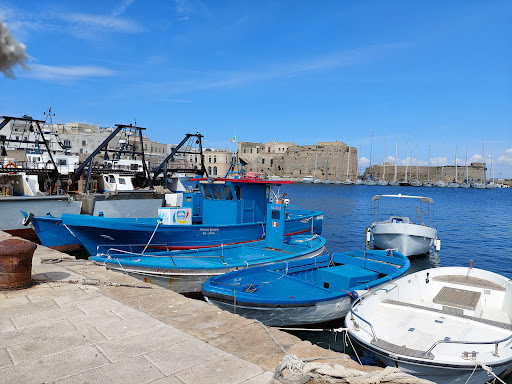
Guardian of the port in ancient times, the castle is on an island connecting the historic old town with modern Gallipoli. The restored castle today is full of retail shops and social gathering places, although a self tour allows insight into its historic function. Fishing boats that work the Gulf of Tarento tie up to the marina below the castle, where fishermen can be seen repairing their nets. Outdoor restaurants nearby serve great seafood, and the island's historic homes, churches and narrow streets make this town a charming destination.
See more posts
See more posts
hotel
Find your stay

Pet-friendly Hotels in Gallipoli

Find a cozy hotel nearby and make it a full experience.

Place to guard the city and the port, once a crossroads of flourishing businesses, it has a quadrangular plan equipped with three circular towers and a polygonal tower. Built after 265 BC as a fortress for legionary housing and defense for the city, it was most likely destroyed or at least severely damaged in the 5th century by the Vandals and the Goths. It was rebuilt during the Byzantine rule and its existence is attested by a letter bearing the year 599 written by Pope Gregorio Magno who congratulated the new Byzantine Byzantine tribune and invited him not to abuse the castle of Gallipoli because it is owned by the Church of Rome. The castle of Gallipoli had only one tower (corresponding to the current polygonal tower) which was connected to the city through a strut structure in turn provided with fortifications and mouths of fire with a drawbridge at the end that connected it to the tower. It resisted the siege of Robert Guiscard of 1055-56 and in 1071 it was occupied by the Normans. During the Nordic presence the castle was inhabited by the Norman healing even if reduced to ruins, and the only reminder of that period is the engraving of the year 1132 on the current front door. Renovated in the first half of 1200 by Frederick II of Swabia, it was even more enhanced by the Angevins in 1320 (always engraved on the entrance door). Between the 15th and 16th centuries, under the dominion of the Angevins and the Aragonese, the castle was subject to substantial modifications: it was isolated from a ditch on all sides and, in 1522, the need to make the defense system become obsolete. , led to the realization of the eastern curtain, the Rivellino. Designed by the Sienese architect Francesco di Giorgio Martini, who worked on behalf of Alfonso II of Naples, it was built to defend the entrance to the city and to prevent a fixed encampment from any enemies that had attacked from the ground. Initially attached to the castle, in the 17th century it was detached from the fortification to add a square tower that was superimposed on the current flag tower, hiding a part of it. Next to the Rivellino another bridge was built that started from the opposite bank, near the church of Santa Cristina, to end up directly in a secondary entrance of the castle and of the same Rivellino. Its remains can still be seen next to the defensive tower of the Rivellino (in stone) and in the access of the latter (in wood). The tower still houses the original catapults and cannons used to defend the city. In the sixteenth century, the drawbridge that connected the castle to the city was replaced by a masonry one. The interior houses large rooms with barrel and cross vaults, various tunnels and walkways. The shape of the fortress remained unchanged until the second half of the nineteenth century; between 1870 and 1879 the moat was filled and the façade was covered with the construction of the fish market. In the various ages they found refuge, among others, Corradino di Svevia (1268), Filippo and Roberto d'Angiò (1306-1327), the Queen of Naples Giovanna II (1414) Ferdinando I (1463) and Isabella of Aragon ( 1495). According to some historians, the Spagnoletto painter Giuseppe Ribera was born in the castle of Gallipoli.
Huykyung “Grace” Byun

Huykyung “Grace” Byun

hotel
Find your stay

Affordable Hotels in Gallipoli

Find a cozy hotel nearby and make it a full experience.

Get the Appoverlay
Get the AppOne tap to find yournext favorite spots!
Beautiful old fort, located in the heart of the old town. The fort is simple but you certainly sense the history when you walk the space. Staff at the boutique and where they sell tickets were extremely friendly, knowledgeable and helpful! They had an art expo when we visited showcasing the history of oil lamps, and the use of olive oil transported via the ports of Gallipoli and how that helped grow this city’s economy, including old lamp and lighting from Dublin to Spain. In addition, certain rooms showed the history of soap factories that formed by taking advantage of the left over raw materials of the olive oil trade. A lot of history on a small exhibit but nicely told. Bathroom located about 50 feet away between a few cafes and small shops.
Ava Bai

Ava Bai

hotel
Find your stay

The Coolest Hotels You Haven't Heard Of (Yet)

Find a cozy hotel nearby and make it a full experience.

hotel
Find your stay

Trending Stays Worth the Hype in Gallipoli

Find a cozy hotel nearby and make it a full experience.

Guardian of the port in ancient times, the castle is on an island connecting the historic old town with modern Gallipoli. The restored castle today is full of retail shops and social gathering places, although a self tour allows insight into its historic function. Fishing boats that work the Gulf of Tarento tie up to the marina below the castle, where fishermen can be seen repairing their nets. Outdoor restaurants nearby serve great seafood, and the island's historic homes, churches and narrow streets make this town a charming destination.
John Thorne

John Thorne

See more posts
See more posts