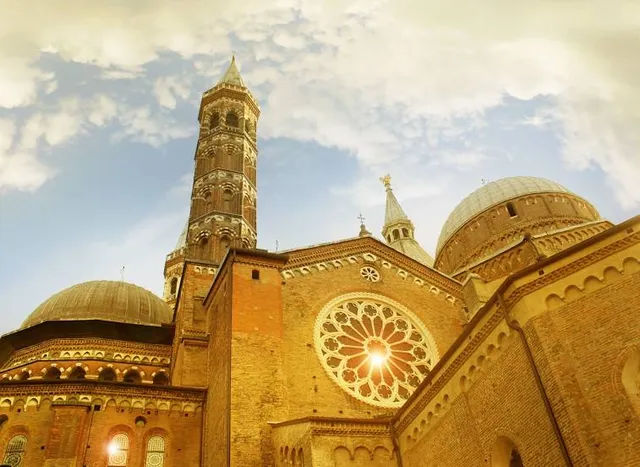
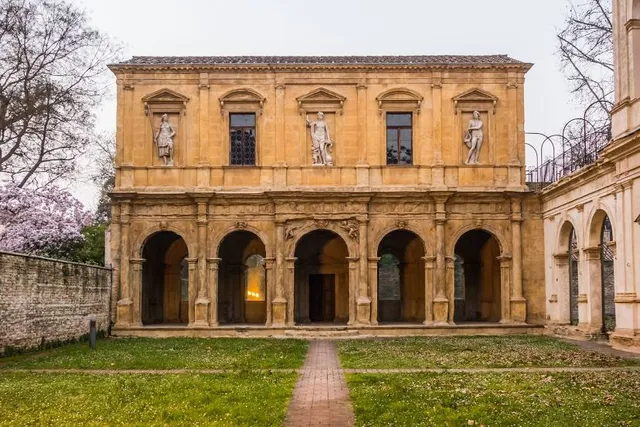
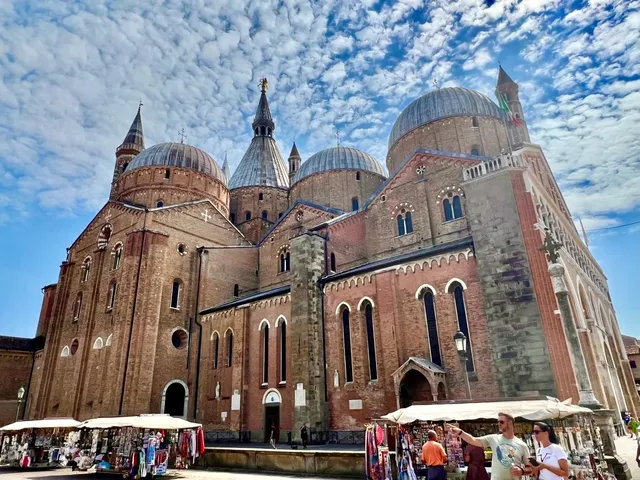
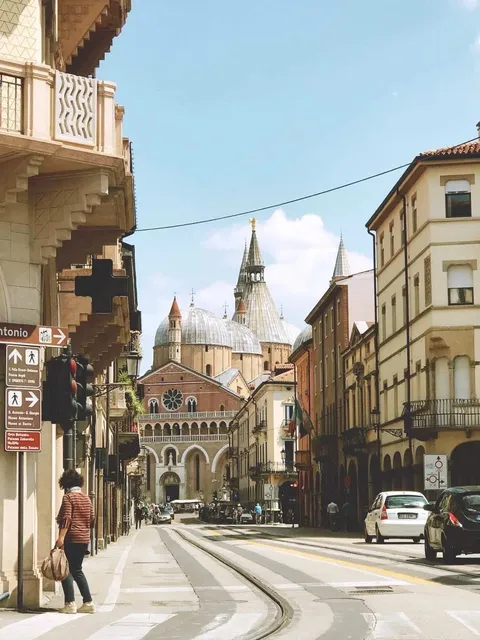
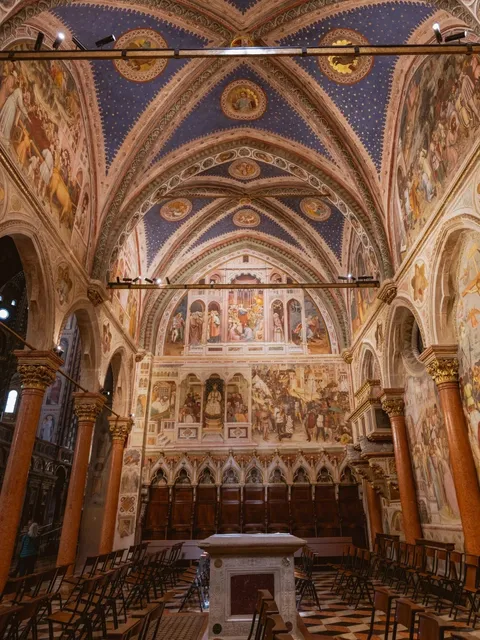
Among the things to visit in Padua, the Basilica of Sant'Antonio cannot be missing, of great value from a spiritual and artistic point of view. The Basilica of Saint Anthony (Italian: Basilica di Sant'Antonio da Padova) is the main monument of Padua, one of the greatest masterpieces of world art and one of the most visited Christian shrines.This great temple of Christianity, which houses the tomb and relics of the little friar (but a great spiritual soul) who came from Lisbon, makes Padua an important destination for religious tourism, attracting over 6 million pilgrims every year. This Magnificent Basilica leaves no one indifferent, both with its dimensions but most importantly with its enchanting beauty. The author of this basilica, whose construction began in 1232 in honor of Saint Anthony of Padua who died in Padua in 1231, is unknown. The main part of the basilica was completed at the end of the 12th century. The basilica has imposing structures in the Romanesque style, while the entire apsidal part, slender with nine chapels in a semicircle, belongs to the Gothic style. The temple was immediately the object of attention and care also by the Municipality of Padua which called the most talented artists to decorate it, starting with Giotto who apparently worked for the Chapter of the Friars in the current homonymous cloister. The architect Camillo Boito realized the three bronze doors (1895). The interior is an ensemble of chef d’oeuvre: a Latin cross with three naves joined up into a half circle behind the grandstand surrounded by nine radial chapels. The memorials of physicians, warriors, prelates, and intellectuals mainly catch our attention. The most beautiful part of the church is the Saint's Chapel. It is assumed that the architect of the Saint's Chapel was T. Lombardo. The greatest Renaissance Venetian sculptors worked on it. Along the walls there are nine marble reliefs depicting events from the life of St. Anthony and his miracles, such as: "St. Antun resurrects a young man" (D. Cattaneo and G. Campagna, 1577), "Resurrection of a drowned girl" (Jakov Sandovino, 1563), "St. Antun resurrects a drowned child" (A. Minello and J. Jansovino, 1534), "The newborn testifies to the mother's innocence" (A. Lombardo, 1505). In the center stands the altar-tomb of St. Anthony, which is the work of Titian Aspetti from the end of the 16th century, and on the sides there are two large silver candlesticks from the 17th century. The Lady's Chapel is interesting, because the Lady's Chapel is the remaining part of the former church of St. Mary, which the Paduan bishop Jakov donated to St. Anton in 1229. There is St. Antun celebrated mass, confessed and preached. He was buried there and his remains were kept there until 1263. The High Altar is one of the most prestigious monuments of the cathedral. It was designed and created between 1443 and 1450 by Donatello, who was as well the author of the gilded bronze sculptures that adorn it. Above the Madonna and Child, sitting on the throne and surrounded by the statues of the Patron Saints of Padua, stands a large crucifix. Donatello also realized the Deposition behind the Altar. Instead, the majestic candelabra with sacred and symbolic representations is a piece of art created by Andrea Briosco (1507-1515). The deambulatory overlooks the nine chapels; the Major Chapel, built in baroque style, holds the so-called Treasure. This Treasure is an ensemble of relics, among which the Saint’s tongue and chin are the most revered. The cloisters in the convent are astonishing: the Cloister of the Novice, the Cloister of the Chapter or the Magnolia, the Cloister of the General, and the Cloister of the Antonian Museum. The Antonian library is on the upper floor of the Cloister of the General. It was founded in the XIII century and now contains over 85.000 volumes, including many manuscripts, some of which date back to the...
Read moreSt. Antony's Basilica, il Santo, is magnificent and extremely powerful place of worship and culture. Very impressive - you really need to step in to catch it, no picture or story could grant you with this experience. The architecture is sometimes weird and I would say very far away from any Renaissance tradition we used to in Italy, but it is so attractive and vivid. A place of piligrimage, St Antony's tomb, locating in a bright marble chapel dedicated to him, is one of the most important Christian shrines of the country - just gaze into people reaching saint's grave with their prays, grieve and joy - it can bring you strong emotions. The chapel is decorated with bas reliefs, some of them crafted by Tullio Lombardi, the one from the famous artistic family. There are another nice chapels. Capella del beato Luca Belludi with frescoes by Giusto de'Menabuoi (his great frescoes could also be found in Padua's Baptistry near Duomo in the city center) and St James Chapel with frescoes by Altichero da Zevio - both cycles are Giottesques, it is nice to watch them after visiting degli Scrovegni to get an imression of Italian art development during XIV century. The high altar has reliefs and statues by Donatello but, at least for me, it was hard to enjoy them due to distance and poor light in that area. Don't pass by the cloisters (there are 3 of them) - very tranquil area (even if there are a lot of people, nobody can bother you there) with an interesting view to the main building with its domes and towers. Probably there would be monks scurrying around, making the place even more authentic. I'd recommend to reserve around 2 hours for this visit to make good communication with the shrine - it...
Read moreThe Pontifical Minor Basilica of Saint Anthony of Padua is one of the main Catholic places of worship in the city of Padua, in Veneto.
Known by the Paduans as simply the Saint, it is one of the largest churches in the world and is visited annually by over 6.5 million pilgrims, making it one of the most revered sanctuaries in the Christian world. However, it is not the cathedral of the city, a title that belongs to the cathedral. In it are kept the relics of Saint Anthony of Padua and his tomb.
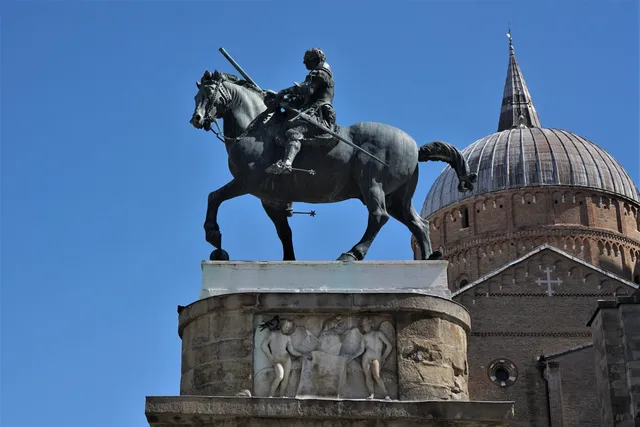
The Piazza del Santo, in front, houses the equestrian monument to Donatello's Gattamelata. Donatello also created the bronze sculptures (Crucifix of the Basilica of the Saint, statues and tiles of various sizes) that Camillo Boito placed on the main altar designed by him.
It has the dignity of a papal basilica. With the Lateran Pacts, the ownership and administration of the Antonian complex were ceded to the Holy See, while remaining territorially part of the Italian State. The current pontifical delegate is Archbishop Fabio Dal Cin, prelate of Loreto and pontifical delegate of the sanctuary of the Holy House. The pastoral government and administrative management of the Basilica of St. Anthony are regulated by the Apostolic Constitution Memorias Sanctorum of Pope John Paul II on 12 June 1993, which defines the tasks and relations between the pontifical delegation, the Franciscan friars and the Veneranda Arca di Sant'Antonio, which since 1396 has functioned continuously as a factory of the Antonian complex (the measures of the basilica are available on the "measures of the interior" page. The basilica is run by the Franciscans of the Order of Friars...
Read more