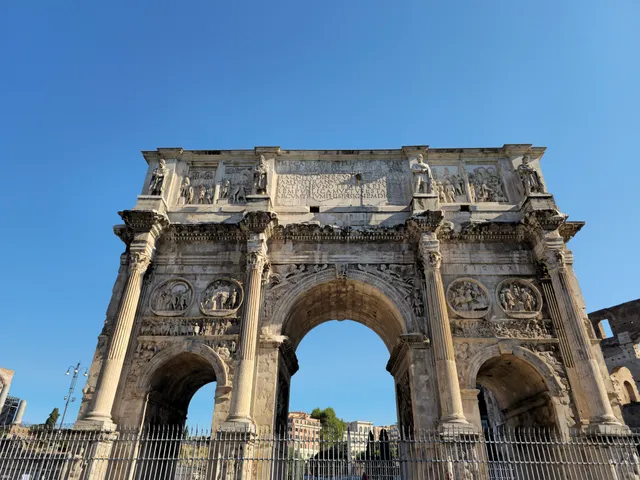
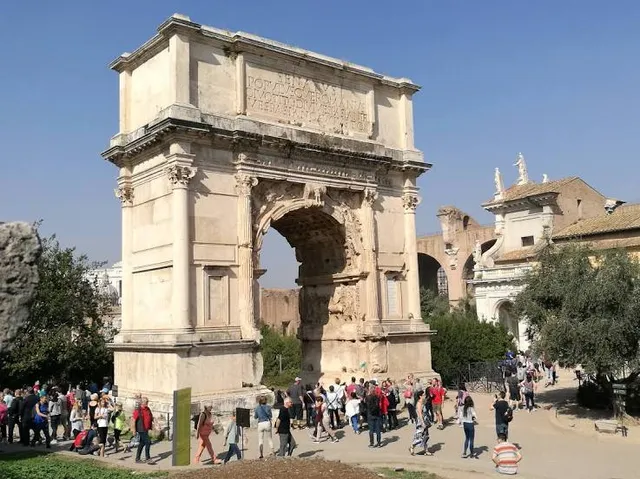
The Arch of Constantine is a sight to behold from our collective human past. The structure is a triumphal arch in Rome, situated between the Palatine Hill and the Colosseum. It was erected by the Roman Senate to commemorate Constantine I's victory over Maxentius at the Battle of Milvian Bridge in AD312. Dedicated in AD315, it is the largest Roman triumphal arch. The arch spans the Via triumphalis, the way taken by the emperors when they entered the city in triumph. Though dedicated to Constantine, much of the decorative material incorporated earlier work from the time of the emperors Trajan (AD98–AD117), Hadrian (AD117–AD138) and Marcus Aurelius (AD161–AD180), and is a composition of earlier works. The last of the existing triumphal arches in Rome, it is also the only one to make extensive use of spolia, reusing several major reliefs from 2nd century imperial monuments, which give a striking and famous stylistic contrast to the sculpture newly created for the arch. This earned it the derisive nickname of Cornacchia di Esopo (English = Aesop's Crow).
L'Arco di Costantino è uno spettacolo da vedere dal nostro passato umano collettivo. La struttura è un arco trionfale a Roma, situato tra il Palatino e il Colosseo. Fu eretto dal Senato romano per commemorare la vittoria di Costantino su Massenzio nella battaglia di Ponte Milvio in AD312. Dedicato in AD315, è il più grande arco di trionfo romano. L'arco si estende la Via Triumphalis, la strada intrapresa dagli imperatori quando entrarono nella città in trionfo. Anche se dedicato a Costantino, gran parte del materiale decorativo incorporato precedente lavoro dal tempo degli imperatori Traiano (AD98-AD117), Adriano (AD117-AD138) e Marco Aurelio (AD161-AD180), ed è una composizione di opere precedenti. L'ultimo degli archi trionfali esistenti a Roma, è anche l'unico a fare ampio uso di spolia, riutilizzando alcuni importanti rilievi di monumenti imperiali 2 ° secolo, che danno un contrasto stilistico suggestivo e famoso per la scultura appena creato per l'arco. Questo è valso il soprannome di derisione Cornacchia di Esopo (inglese = di Esopo Crow).
Der Konstantinsbogen ist ein Anblick aus unserem kollektiven menschlichen Vergangenheit zu schauen. Die Struktur ist ein Triumphbogen in Rom, zwischen dem Palatin und dem Kolosseum. Es wurde von dem römischen Senat errichtet Konstantin I. Sieg über Maxentius in der Schlacht an der Milvischen Brücke in AD312 zu gedenken. Dedicated in AD315, ist es der größte römische Triumphbogen. Der Bogen erstreckt sich über die Via triumphalis, die Art und Weise von den Kaisern genommen, als sie die Stadt im Triumph eingetragen. Obwohl Konstantin gewidmet, eingebaut viel des Dekormaterials arbeiten früher aus der Zeit der Kaiser Trajan (AD98-AD117), Hadrian (AD117-AD138) und Marcus Aurelius (AD161-AD180) und ist eine Komposition aus früheren Arbeiten. Die letzte der bestehenden Triumphbögen in Rom, es ist auch die einzige, der extensive Einsatz von Spolien zu machen, mehrere große Reliefs aus 2. Jahrhundert Kaiser Denkmäler Wiederverwendung, die eine auffallende und berühmte stilistische Gegensatz zur Skulptur neu für den Bogen erstellt geben. Dies brachte er den spöttischen Spitznamen Cornacchia di Esopo (Deutsch = Mäuseäsops Crow).
L'Arc de Constantin est un spectacle à voir de notre passé collectif humain. La structure est un arc de triomphe à Rome, situé entre le mont Palatin et le Colisée. Il a été érigé par le Sénat romain pour commémorer la victoire de Constantin sur Maxence I lors de la bataille du pont Milvius en AD312. Dédié à AD315, il est le plus grand arc de triomphe romain. L'arche enjambe la Via triumphalis, le chemin pris par les empereurs lorsqu'ils sont entrés dans la ville en triomphe. Bien que dédié à Constantine, une grande partie du matériau décoratif incorporé précédemment travaillent à partir du moment de l'empereur Trajan (AD98-AD117), Hadrien (AD117-AD138) et Marc-Aurèle (AD161-AD180), et est une composition d'œuvres antérieures. LLe dernier des arcs de triomphe existants à Rome, il est également le...
Read moreThe Arch of Constantine (Italian: Arco di Costantino) is a triumphal arch in Rome dedicated to the emperor Constantine the Great. The arch was commissioned by the Roman Senate to commemorate Constantine’s victory over Maxentius at the Battle of Milvian Bridge in AD 312. Situated between the Colosseum and the Palatine Hill, the arch spans the Via triumphalis, the route taken by victorious military leaders when they entered the city in a triumphal procession. Dedicated in 315, it is the largest Roman triumphal arch, with overall dimensions of 21 m high, 25.9 m wide and 7.4 m deep. It has three bays, the central one being 11.5 m high and 6.5 m wide and the laterals 7.4 m by 3.4 m each. The arch is constructed of brick-faced concrete reveted in marble.
The three bay design with detached columns was first used for the Arch of Septimius Severus in the Roman Forum (which stands at the end of the triumph route) and repeated in several other arches now lost.
Though dedicated to Constantine, much of the sculptural decoration consists of reliefs and statues removed from earlier triumphal monuments dedicated to Trajan (98–117), Hadrian (117–138) and Marcus Aurelius (161–180).
The arch, which was constructed between 312 and 315 AD, was dedicated by the Senate to commemorate ten years (decennalia[b]) of Constantine's reign (306–337) and his victory over the then reigning emperor Maxentius (306–312) at the Battle of Milvian Bridge on 28 October 312,[3] as described on its attic inscription,[4] and officially opened on 25 July 315. Not only did the Roman senate give the arch for Constantine's victory, they also were celebrating decennia, a series of games that happens every decade for the Romans. On this occasion they also said many prayers. However, Constantine had actually entered Rome on 29 October 312, amidst great rejoicing, and the Senate then commissioned the monument. Constantine then left Rome within two months and did not return till 326.
The location, between the Palatine Hill and the Caelian Hill, spanned the ancient route of Roman triumphs (Via triumphalis) at its origin, where it diverged from the Via sacra. This route was that taken by the emperors when they entered the city in triumph. This route started at the Campus Martius, led through the Circus Maximus, and around the Palatine Hill; immediately after the Arch of Constantine, the procession would turn left at the Meta Sudans and march along the Via sacra to the Forum Romanum and on to the Capitoline Hill, passing through both the Arches of Titus and Septimius Severus.
During the Middle Ages, the Arch of Constantine was incorporated into one of the family strongholds of ancient Rome, as shown in the painting by Herman van Swanevelt, here. Works of restoration were first carried out in the 18th century, the last excavations have taken place in the late 1990s, just before the Great Jubilee of 2000. The arch served as the finish line for the marathon athletic event for the 1960 Summer Olympics. There has been much controversy over the origins of the arch, with some scholars claiming that it should no longer be referred to as Constantine's arch, but is in fact an earlier work from the time of Hadrian, reworked during Constantine's reign, or at least the lower part. Another theory holds that it was erected, or at least started, by Maxentius, and one scholar believed it was as early as the time of Domitian (81–96).
Whatever the faults of Maxentius, his reputation in Rome was influenced by his contributions to public building. By the time of his accession in 306 Rome was becoming increasingly irrelevant to the governance of the empire, most emperors choosing to live elsewhere and focusing on defending the fragile boundaries, where they frequently founded new cities. This factor contributed to his ability to seize power. By contrast Maxentius concentrated on restoring the capital, his epithet being conservator urbis suae (preserver...
Read moreOur visit to the Arch of Constantine was an unforgettable experience, and we highly recommend it to anyone exploring the history of ancient Rome. Located between the Colosseum and the Palatine Hill, the arch stands as one of the most remarkable triumphal arches in the city, celebrating Constantine the Great’s victory over Maxentius at the Battle of Milvian Bridge in 312 AD.
As we approached the arch, we were immediately struck by its sheer size and magnificent reliefs, which depict scenes from Constantine’s victory and other significant moments from his reign. The arch was built to commemorate his military success and symbolize the shift in Roman history, particularly the transition to Christianity as Constantine became the first Christian emperor.
What makes the Arch of Constantine particularly interesting is its blend of older and newer art. The arch is made up of three distinct sections: the central passageway, flanked by two smaller arches. The reliefs on the central arch focus on Constantine’s military achievements, while those on the side panels feature scenes from earlier emperors, particularly Trajan, Hadrian, and Marcus Aurelius. This reuse of earlier sculptures—often referred to as spolia—is a fascinating example of how the Romans repurposed works from the past to glorify the present, a common practice during this period.
The inscriptions on the arch proudly highlight Constantine’s role in the rise of Christianity and his role in securing the empire’s stability. One of the most iconic features of the arch is the eagle perched atop it, symbolizing the Roman Empire’s power. The arch’s architectural style reflects the late Roman Empire’s transition toward a new artistic era, with more symbolic and religious themes becoming prominent.
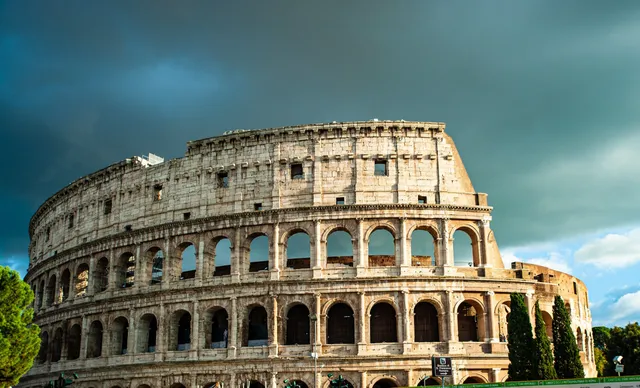
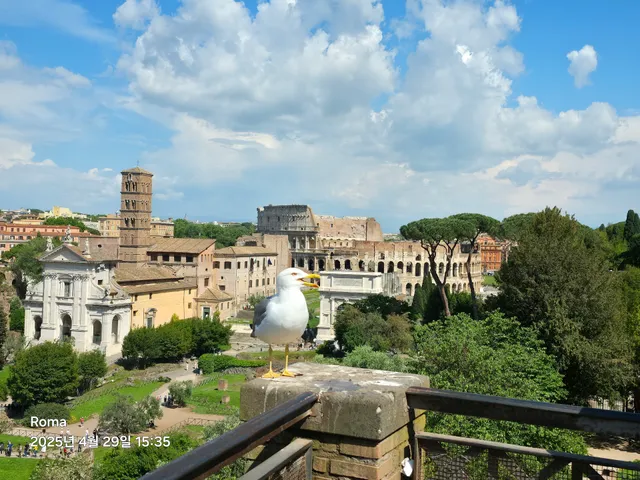
We also appreciated the view of the arch from the Piazza del Colosseo, where it framed the Colosseum in the background, making for a stunning photo opportunity. The Arch of Constantine is in a prime location, so it’s easy to visit while exploring the ancient heart of Rome.
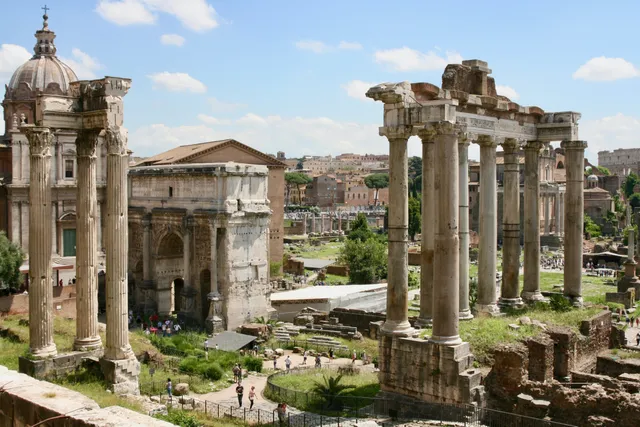
If you’re walking through the Roman Forum or Colosseum, make sure to stop by the Arch of Constantine. It’s an essential piece of Roman history, full of artistic details, political symbolism, and a unique narrative of Rome’s transition from paganism to Christianity. The arch stands as a powerful reminder of Constantine’s legacy and the transformation of the Roman Empire, making it a must-see for anyone...
Read more