HTML SitemapExplore
logo
Find Things to DoFind The Best Restaurants

Kintaikyo Bridge — Attraction in Iwakuni

Name
Kintaikyo Bridge
Description
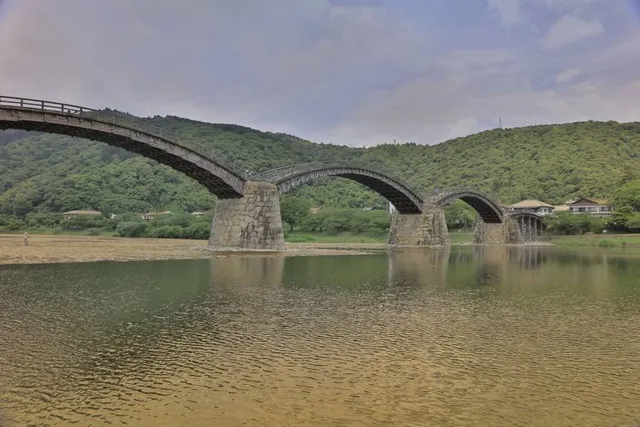
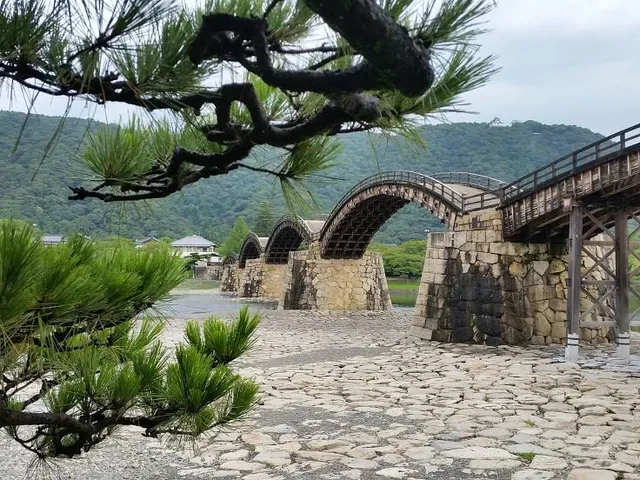
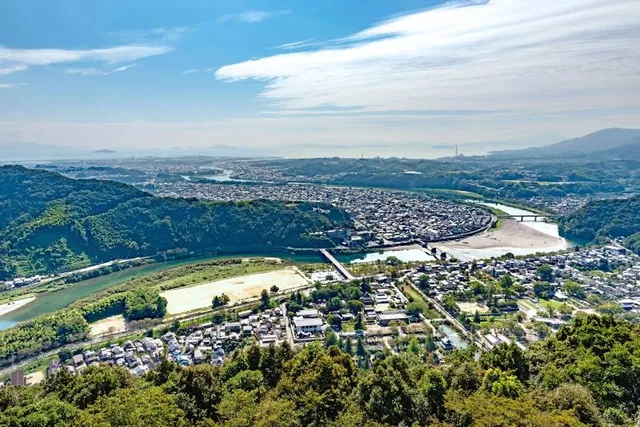
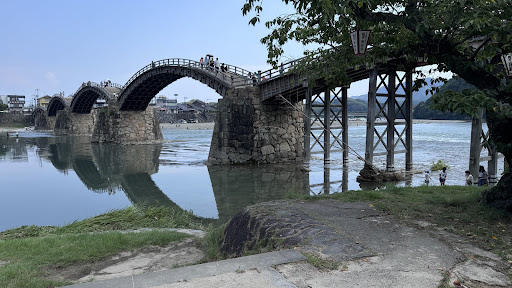
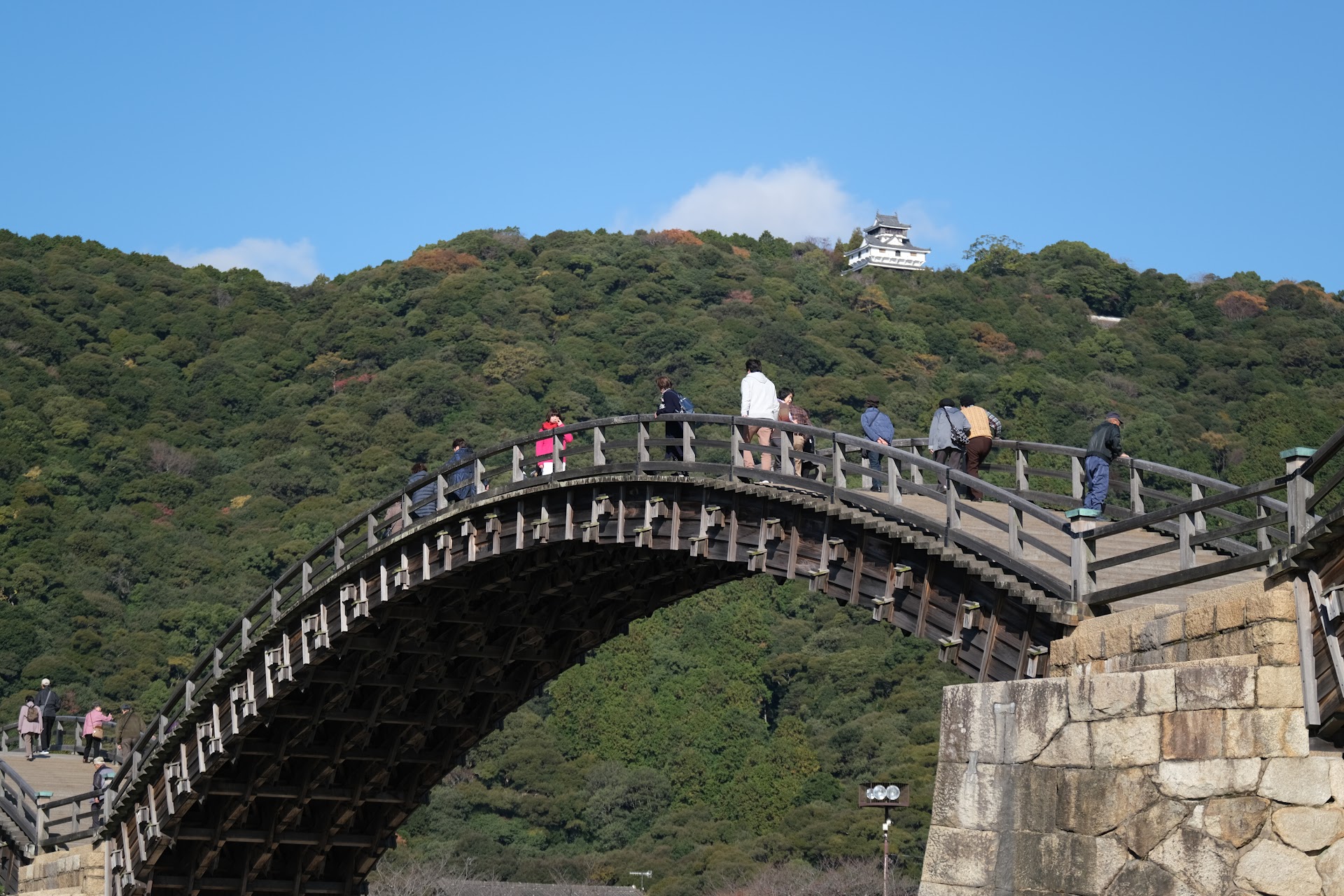
The Kintai Bridge is a historical wooden arch bridge, in the city of Iwakuni, in Yamaguchi Prefecture, Japan. The pedestrian bridge was built in 1673, spanning the Nishiki River in a series of five wooden arches. The bridge is located on the foot of Mt.Yokoyama, at the top of which lies Iwakuni Castle.
Nearby attractions
Kikko Park
2 Chome-6-51 Yokoyama, Iwakuni, Yamaguchi 741-0081, Japan
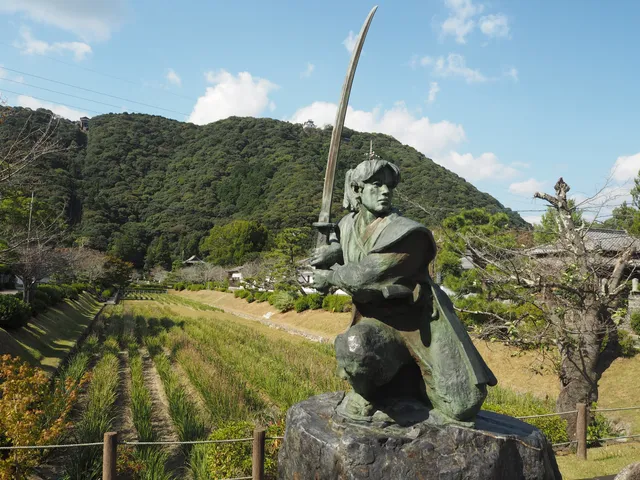
Statue of Sasaki Kojiro
2 Chome-4 Yokoyama, Iwakuni, Yamaguchi 741-0081, Japan
Iwakuni Shirohebi Museum
2 Chome-6-52 Yokoyama, Iwakuni, Yamaguchi 741-0081, Japan
Iwakuni Chokokan Museum (Iwakuni Antiquities Museum)
2 Chome-7-19 Yokoyama, Iwakuni, Yamaguchi 741-0081, Japan
Shinoo Hachimangu Shrine
4 Chome-1-8 Iwakuni, Yamaguchi 741-0062, Japan
The Kikkawa Clan Family Graveyard
1 Chome-10 Yokoyama, Iwakuni, Yamaguchi 741-0081, Japan
Kashiwabara Art Museum
2 Chome-10-27 Yokoyama, Iwakuni, Yamaguchi 741-0081, Japan
Iwakuni Castle
3 Chome Yokoyama, Iwakuni, Yamaguchi 741-0081, Japan
Iwakuni School Education Museum
3 Chome-1-8 Iwakuni, Yamaguchi 741-0062, Japan
Nearby restaurants
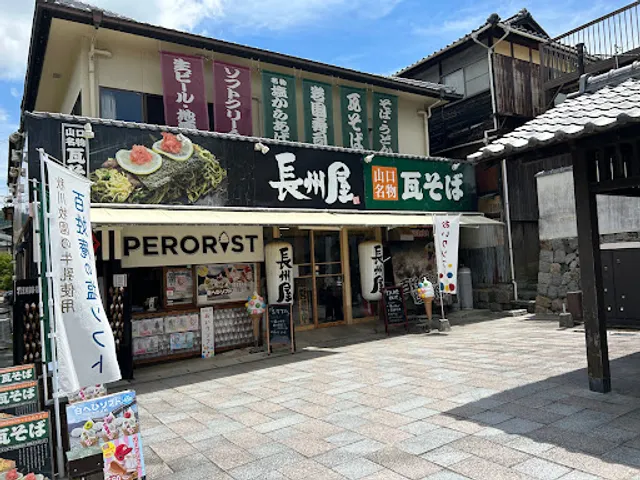
Choshuya Kintaikyo-ten
2 Chome-2-3 Yokoyama, Iwakuni, Yamaguchi 741-0081, Japan
Sakura-no-chaya
2 Chome-3-10 Yokoyama, Iwakuni, Yamaguchi 741-0081, Japan
Kintaikyo Dining Sakura
1 Chome-1-7 Iwakuni, Yamaguchi 741-0062, Japan
Musashi
2 Chome-1 Yokoyama, Iwakuni, Yamaguchi 741-0081, Japan
Tenbo-ichiba
1 Chome-1-42 Iwakuni, Yamaguchi 741-0062, Japan
Musashi
Japan, 〒741-0081 Yamaguchi, Iwakuni, Yokoyama, 2 Chome−2
Tatsumiya
1 Chome-16-1 Iwakuni, Yamaguchi 741-0062, Japan
Syokudo Yucci
2 Chome-17-20 Iwakuni, Yamaguchi 741-0062, Japan
Fugetsudo
2 Chome-16-13 Iwakuni, Yamaguchi 741-0062, Japan
Related posts
Keywords
Kintaikyo Bridge tourism.Kintaikyo Bridge hotels.Kintaikyo Bridge bed and breakfast. flights to Kintaikyo Bridge.Kintaikyo Bridge attractions.Kintaikyo Bridge restaurants.Kintaikyo Bridge travel.Kintaikyo Bridge travel guide.Kintaikyo Bridge travel blog.Kintaikyo Bridge pictures.Kintaikyo Bridge photos.Kintaikyo Bridge travel tips.Kintaikyo Bridge maps.Kintaikyo Bridge things to do.
Kintaikyo Bridge things to do, attractions, restaurants, events info and trip planning
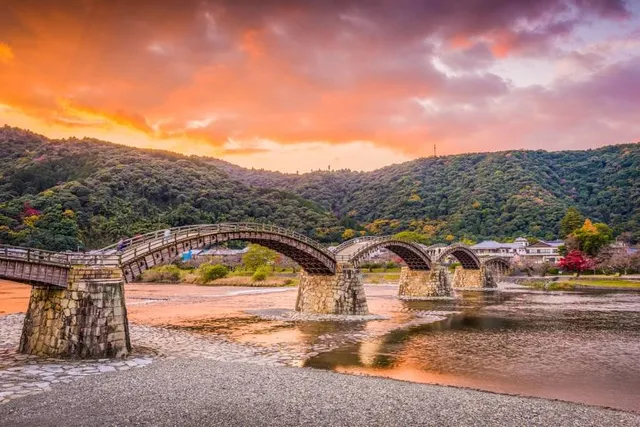
Kintaikyo Bridge
JapanYamaguchi PrefectureIwakuniKintaikyo Bridge

Basic Info

Kintaikyo Bridge

Iwakuni, Yamaguchi 741-0062, Japan
4.3(6.9K)
Open 24 hours
Save
spot

Ratings & Description

Info

The Kintai Bridge is a historical wooden arch bridge, in the city of Iwakuni, in Yamaguchi Prefecture, Japan. The pedestrian bridge was built in 1673, spanning the Nishiki River in a series of five wooden arches. The bridge is located on the foot of Mt.Yokoyama, at the top of which lies Iwakuni Castle.

Outdoor
Cultural
Family friendly
attractions: Kikko Park, Statue of Sasaki Kojiro, Iwakuni Shirohebi Museum, Iwakuni Chokokan Museum (Iwakuni Antiquities Museum), Shinoo Hachimangu Shrine, The Kikkawa Clan Family Graveyard, Kashiwabara Art Museum, Iwakuni Castle, Iwakuni School Education Museum, restaurants: Choshuya Kintaikyo-ten, Sakura-no-chaya, Kintaikyo Dining Sakura, Musashi, Tenbo-ichiba, Musashi, Tatsumiya, Syokudo Yucci, Fugetsudo
logoLearn more insights from Wanderboat AI.
Phone
+81 827-29-5116
Website
kintaikyo.iwakuni-city.net

Plan your stay

hotel
Pet-friendly Hotels in Iwakuni
Find a cozy hotel nearby and make it a full experience.

hotel
Affordable Hotels in Iwakuni
Find a cozy hotel nearby and make it a full experience.

hotel
The Coolest Hotels You Haven't Heard Of (Yet)
Find a cozy hotel nearby and make it a full experience.

hotel
Trending Stays Worth the Hype in Iwakuni
Find a cozy hotel nearby and make it a full experience.

Reviews

Nearby attractions of Kintaikyo Bridge

Kikko Park

Statue of Sasaki Kojiro

Iwakuni Shirohebi Museum

Iwakuni Chokokan Museum (Iwakuni Antiquities Museum)

Shinoo Hachimangu Shrine

The Kikkawa Clan Family Graveyard

Kashiwabara Art Museum

Iwakuni Castle

Iwakuni School Education Museum

Kikko Park

Kikko Park

4.1

(1.1K)

Open until 12:00 AM
Click for details
Statue of Sasaki Kojiro

Statue of Sasaki Kojiro

3.9

(63)

Open 24 hours
Click for details
Iwakuni Shirohebi Museum

Iwakuni Shirohebi Museum

3.9

(734)

Open 24 hours
Click for details
Iwakuni Chokokan Museum (Iwakuni Antiquities Museum)

Iwakuni Chokokan Museum (Iwakuni Antiquities Museum)

4.1

(112)

Open until 5:00 PM
Click for details

Things to do nearby

Enjoy kimono, Tea Ceremony and Calligraphy
Thu, Dec 4 • 10:00 AM
739-0588, Hiroshima, Hatsukaichi, Japan
View details
Single Marine Program - Tokyo Sightseeing Trip
Wed, Dec 3 • 10:00 PM
Iwakuni, Iwakuni, Yamaguchi
View details
Holiday Tree Lighting - Vendor Registration
Sat, Dec 6 • 4:00 PM
Sakura Triangle, Iwakuni, Yamaguchi 740-0037
View details

Nearby restaurants of Kintaikyo Bridge

Choshuya Kintaikyo-ten

Sakura-no-chaya

Kintaikyo Dining Sakura

Musashi

Tenbo-ichiba

Musashi

Tatsumiya

Syokudo Yucci

Fugetsudo

Choshuya Kintaikyo-ten

Choshuya Kintaikyo-ten

3.4

(205)

Click for details
Sakura-no-chaya

Sakura-no-chaya

4.0

(107)

Click for details
Kintaikyo Dining Sakura

Kintaikyo Dining Sakura

4.0

(17)

Click for details
Musashi

Musashi

3.4

(33)

Click for details
Get the Appoverlay
Get the AppOne tap to find yournext favorite spots!
Wanderboat LogoWanderboat

Your everyday Al companion for getaway ideas

CompanyAbout Us
InformationAI Trip PlannerSitemap
SocialXInstagramTiktokLinkedin
LegalTerms of ServicePrivacy Policy

Get the app

© 2025 Wanderboat. All rights reserved.
logo

Reviews of Kintaikyo Bridge

4.3
(6,887)
avatar
4.0
2y

3 guys and a tour guide visiting the area because it was a favorite of our travel agent, who had scheduled and booked the whole trip. Even our tour guide was almost apologetic, saying that she was only taking us there because she was a friend of our travel agent and that she wanted to maintain a positive relationship. We'd visit the area for about an hour and then head to our next destination. You could easily spend hours here. Between the bridge, the views from it, and nearby attractions, even in the blistering heat and humidity of summer we all enjoyed it very much. The presence of two friendly competitor ice cream shops helped a huge amount, too. If ice cream is not your fashion, there are a good selection of restaurants in the area as well. Do be aware that there is a toll to actually crossing the bridge, but it allows crossing once in 1 direction and back in the other direction. Kikko Park and the nearby plant nursery and museum were excellent. The bridge itself can be a little tricky if you're not paying attention. Made (mostly) of wood, the steps are an experience. No step is too high or difficult, but the way the bridge is built, the curvature means that each step is different from the last, and also well-disguised because of the entire bridge looking similar. You could easily bump a toe or stumble down an invisible step if you're not paying adequate attention. However, no bump or stumble is dangerous enough to worry about, so sight-see away. You can see fishermen from the bridge, and if you want you could descend and enter the river yourself, though it does flow with respectable strength and I would recommend some waterproof wear. I wish we had more time to explore the local landmarks as well, however a combination of time limits and rain did cut our visit to almost exactly 1 hour. During winter, the local elevation apparently turns into a ski destination. During the summer, it can apparently be walked, as well, and there's a castle to visit as a reward. You can also use a boat designed for sightseeing if you'd prefer. Local free parking is available if you drive here. If I could change the terms of out visit, I would have preferred to visit around sunrise or sunset. The views would have been excellent, and the temperature would have been less devastating. Also, tourist busses tended to peak around noon, which added the heat of a crowd to the already blistering summer heat of a location that shares a similar latitude...

   Read more
avatar
4.0
15w

Beautiful History, Scenic Views, and a Little Parental Awareness Needed

Kintaikyo Bridge is without a doubt one of Japan’s most iconic wooden bridges and being here in person really drives that home. Built originally in 1673 during the Edo period, it’s famous for its five graceful wooden arches that span the Nishiki River. Designed to withstand frequent flooding, the structure has been rebuilt and maintained through the centuries, with the most recent full reconstruction completed in 1953 after a typhoon destroyed the previous version. Today, it remains a symbol of Iwakuni’s history and craftsmanship.

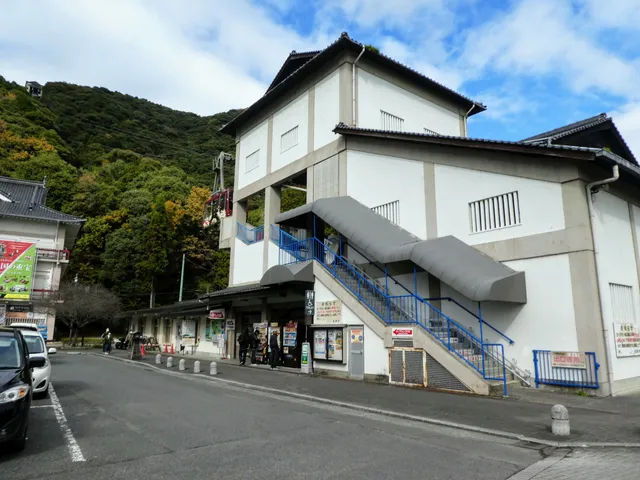
From a visitor’s perspective, crossing the bridge is an experience worth savoring. I especially loved that you can purchase a ticket that allows multiple crossings perfect if you want to go back and forth without feeling rushed. Once across, you can take the ropeway up to Iwakuni Castle on the mountaintop, which adds even more to the outing. The combination of the river, the bridge, the rope car, and the castle gives you a full-day mini adventure in one spot.

The only downside for me was safety awareness. While the bridge is sturdy, the railings are quite low, and I noticed several parents letting their children run freely across it. It’s easy to see how a slip could turn dangerous, so a little more attentiveness would go a long way in keeping everyone safe.

Visitor Tips: • Try to come early in the morning or late afternoon to avoid peak crowds. • Pair your bridge crossing with the ropeway and castle visit for a complete experience. • Spring (cherry blossom season) and autumn (fall foliage) are particularly stunning here.

Overall, Kintaikyo Bridge blends centuries-old engineering, breathtaking scenery, and a touch of adventure. Just watch your step and your kids as you enjoy one of Iwakuni’s most...

   Read more
avatar
5.0
4y

After Iwakuni Castle was completed in 1608 by Kikkawa Hiroie, the first lord of Iwakuni Domain, a series of wooden bridges was built. However, most of them were destroyed by floods several times before the construction of the iconic Kintai Bridge. Afterwards, Kintai Bridge was built by the third lord, Kikkawa Hiroyoshi in 1673. The new stone piers replaced the old wooden ones. Though thought to be flood-proof, the bridge was destroyed by a flood the next year. As a result, the stone piers were redesigned for greater strength, and a special tax was created to maintain the bridge. This maintenance involved periodically rebuilding the bridge: every 20 years for three spans in the middle, every 40 years for two spans that connect to the banks. Consequently, the bridge remained intact for 276 years, until washed away again in a flood from typhoon "Kijia" in 1950. It was in a weakened state at the time, as the Japanese had stopped maintaining the bridge during World War II, and because the year before the typhoon, a large amount of gravel was taken by the United States Marine Corps from the river in the area around the bridge to expand the US Marine Corps Air Station's runway, thus weakening the support. In 1953, the bridge was reconstructed similar to the original, using metal nails made from the same tatara iron used when forging katana to increase its durability. Between 2001 and 2004, all five bridge girders were restored for the first time in 50 years. In 1922 the bridge was declared a...

   Read more
Page 1 of 7
Previous
Next

Posts

Earl JacksonEarl Jackson
Beautiful History, Scenic Views, and a Little Parental Awareness Needed Kintaikyo Bridge is without a doubt one of Japan’s most iconic wooden bridges and being here in person really drives that home. Built originally in 1673 during the Edo period, it’s famous for its five graceful wooden arches that span the Nishiki River. Designed to withstand frequent flooding, the structure has been rebuilt and maintained through the centuries, with the most recent full reconstruction completed in 1953 after a typhoon destroyed the previous version. Today, it remains a symbol of Iwakuni’s history and craftsmanship. From a visitor’s perspective, crossing the bridge is an experience worth savoring. I especially loved that you can purchase a ticket that allows multiple crossings perfect if you want to go back and forth without feeling rushed. Once across, you can take the ropeway up to Iwakuni Castle on the mountaintop, which adds even more to the outing. The combination of the river, the bridge, the rope car, and the castle gives you a full-day mini adventure in one spot. The only downside for me was safety awareness. While the bridge is sturdy, the railings are quite low, and I noticed several parents letting their children run freely across it. It’s easy to see how a slip could turn dangerous, so a little more attentiveness would go a long way in keeping everyone safe. Visitor Tips: • Try to come early in the morning or late afternoon to avoid peak crowds. • Pair your bridge crossing with the ropeway and castle visit for a complete experience. • Spring (cherry blossom season) and autumn (fall foliage) are particularly stunning here. Overall, Kintaikyo Bridge blends centuries-old engineering, breathtaking scenery, and a touch of adventure. Just watch your step and your kids as you enjoy one of Iwakuni’s most treasured landmarks.
Ryo HidaRyo Hida
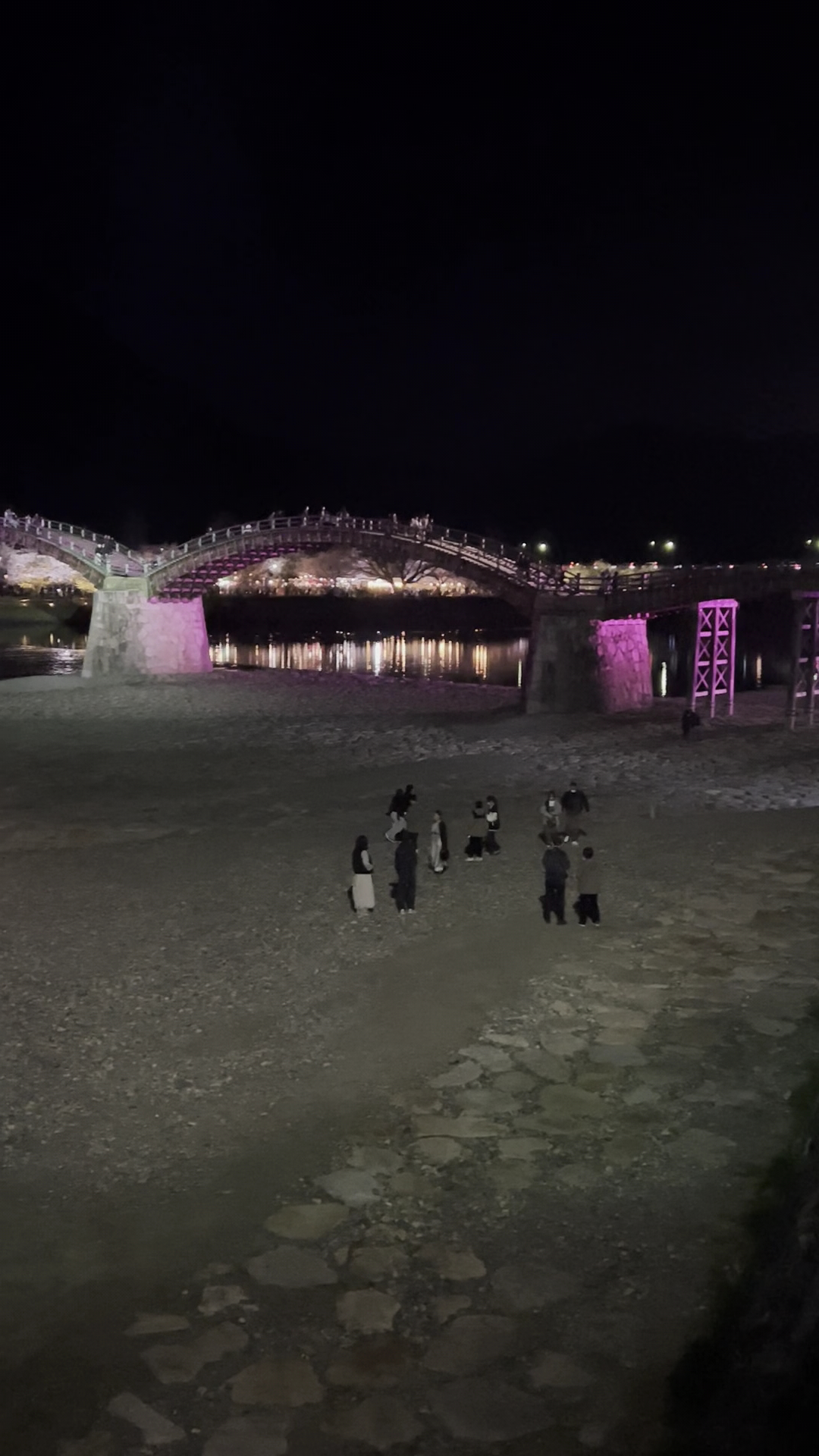
Kintai Bridge, located in Iwakuni, Yamaguchi Prefecture, Japan, is a historical wooden arch bridge built in 1673. It spans the Nishiki River with five elegant wooden arches supported by four stone piers and two wooden piers on the dry riverbed. The bridge is approximately 175 meters long and 5 meters wide, with the middle three spans each measuring 35.1 meters and the end spans 34.8 meters. Remarkably, it was constructed without metal nails, using traditional mortise and tenon joints, and its wooden parts are covered with copper sheets for durability. The bridge's wooden pathway is designed to "float" on its frame, providing protection against floods. Declared a National Treasure in 1922, Kintai Bridge is one of Japan's three most famous bridges and a significant tourist attraction. It is part of Kikkou Park, which also includes Iwakuni Castle, and is especially popular during the Cherry Blossom Festival in spring and when the Japanese maples change color in autumn. The bridge is illuminated every day after sunset, offering a stunning night view. For photography, the bridge is best captured during the cherry blossom season when the surrounding area is in full bloom, creating a picturesque scene. Another excellent spot is from Iwakuni Castle, located on a mountain 200 meters above, which provides a panoramic view of the bridge and the surrounding landscape.
Crumpled NomadCrumpled Nomad
Kintaikyo Bridge in Iwakuni left a lasting impression on me. As I stepped onto its iconic five arches, I felt like I was walking through history. The elegant wooden structure spans the Nishiki River and is a marvel of traditional Japanese carpentry—no nails, just masterful joinery and centuries-old technique. It’s hard to believe the original was built in 1673. Each step across the bridge gave us different views—of the river, the surrounding town, and the intricate wooden craftsmanship beneath our feet. The setting was tranquil, and the gentle rhythm of the bridge’s arches made the walk feel almost meditative. The area around the bridge is just as charming. We saw cherry trees lining the riverbanks and enjoyed the relaxed atmosphere with locals and a few food stalls around. We didn’t go up to Iwakuni Castle that day, but I could imagine how scenic the view would be from up there. There’s a small fee to cross the bridge, but it’s absolutely worth it. This isn’t just a bridge—it’s a symbol of resilience, beauty, and timeless Japanese design. If you’re in the area, don’t miss it.
See more posts
See more posts
hotel
Find your stay

Pet-friendly Hotels in Iwakuni

Find a cozy hotel nearby and make it a full experience.

Beautiful History, Scenic Views, and a Little Parental Awareness Needed Kintaikyo Bridge is without a doubt one of Japan’s most iconic wooden bridges and being here in person really drives that home. Built originally in 1673 during the Edo period, it’s famous for its five graceful wooden arches that span the Nishiki River. Designed to withstand frequent flooding, the structure has been rebuilt and maintained through the centuries, with the most recent full reconstruction completed in 1953 after a typhoon destroyed the previous version. Today, it remains a symbol of Iwakuni’s history and craftsmanship. From a visitor’s perspective, crossing the bridge is an experience worth savoring. I especially loved that you can purchase a ticket that allows multiple crossings perfect if you want to go back and forth without feeling rushed. Once across, you can take the ropeway up to Iwakuni Castle on the mountaintop, which adds even more to the outing. The combination of the river, the bridge, the rope car, and the castle gives you a full-day mini adventure in one spot. The only downside for me was safety awareness. While the bridge is sturdy, the railings are quite low, and I noticed several parents letting their children run freely across it. It’s easy to see how a slip could turn dangerous, so a little more attentiveness would go a long way in keeping everyone safe. Visitor Tips: • Try to come early in the morning or late afternoon to avoid peak crowds. • Pair your bridge crossing with the ropeway and castle visit for a complete experience. • Spring (cherry blossom season) and autumn (fall foliage) are particularly stunning here. Overall, Kintaikyo Bridge blends centuries-old engineering, breathtaking scenery, and a touch of adventure. Just watch your step and your kids as you enjoy one of Iwakuni’s most treasured landmarks.
Earl Jackson

Earl Jackson

hotel
Find your stay

Affordable Hotels in Iwakuni

Find a cozy hotel nearby and make it a full experience.

Get the Appoverlay
Get the AppOne tap to find yournext favorite spots!
Kintai Bridge, located in Iwakuni, Yamaguchi Prefecture, Japan, is a historical wooden arch bridge built in 1673. It spans the Nishiki River with five elegant wooden arches supported by four stone piers and two wooden piers on the dry riverbed. The bridge is approximately 175 meters long and 5 meters wide, with the middle three spans each measuring 35.1 meters and the end spans 34.8 meters. Remarkably, it was constructed without metal nails, using traditional mortise and tenon joints, and its wooden parts are covered with copper sheets for durability. The bridge's wooden pathway is designed to "float" on its frame, providing protection against floods. Declared a National Treasure in 1922, Kintai Bridge is one of Japan's three most famous bridges and a significant tourist attraction. It is part of Kikkou Park, which also includes Iwakuni Castle, and is especially popular during the Cherry Blossom Festival in spring and when the Japanese maples change color in autumn. The bridge is illuminated every day after sunset, offering a stunning night view. For photography, the bridge is best captured during the cherry blossom season when the surrounding area is in full bloom, creating a picturesque scene. Another excellent spot is from Iwakuni Castle, located on a mountain 200 meters above, which provides a panoramic view of the bridge and the surrounding landscape.
Ryo Hida

Ryo Hida

hotel
Find your stay

The Coolest Hotels You Haven't Heard Of (Yet)

Find a cozy hotel nearby and make it a full experience.

hotel
Find your stay

Trending Stays Worth the Hype in Iwakuni

Find a cozy hotel nearby and make it a full experience.

Kintaikyo Bridge in Iwakuni left a lasting impression on me. As I stepped onto its iconic five arches, I felt like I was walking through history. The elegant wooden structure spans the Nishiki River and is a marvel of traditional Japanese carpentry—no nails, just masterful joinery and centuries-old technique. It’s hard to believe the original was built in 1673. Each step across the bridge gave us different views—of the river, the surrounding town, and the intricate wooden craftsmanship beneath our feet. The setting was tranquil, and the gentle rhythm of the bridge’s arches made the walk feel almost meditative. The area around the bridge is just as charming. We saw cherry trees lining the riverbanks and enjoyed the relaxed atmosphere with locals and a few food stalls around. We didn’t go up to Iwakuni Castle that day, but I could imagine how scenic the view would be from up there. There’s a small fee to cross the bridge, but it’s absolutely worth it. This isn’t just a bridge—it’s a symbol of resilience, beauty, and timeless Japanese design. If you’re in the area, don’t miss it.
Crumpled Nomad

Crumpled Nomad

See more posts
See more posts