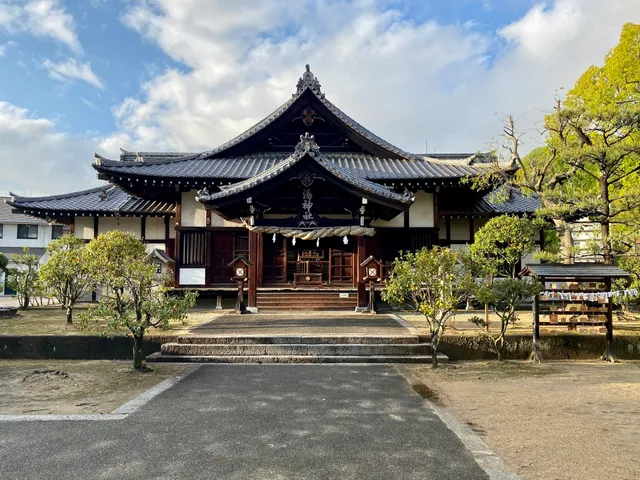
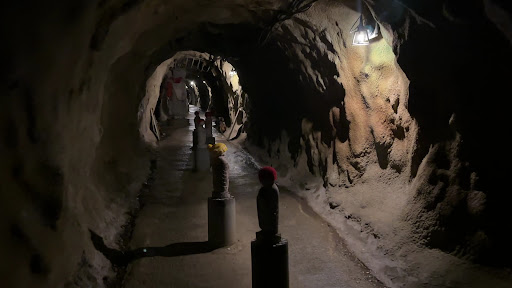
Walking to Ishiteji from Dogo Onsen (up the stairs to Isaniwa shrine and then from the back parking lot of Isaniwa) is the best way to experience this temple (which is temple 51 of 88 on the Henro pilgrimage). We took a detour through the bamboo forest which led us to a creepy abandoned structures in the woods and made for a spectacularly eerie adventure (on a hiking trail that has not been well-maintained and was difficult to follow). When we emerged (at a cemetery) and continued down the road, we reached the inner temple which consisted of a giant golden dome and a haunting statue of an emaciated Buddha. Across the street, hidden behind a giant rock, was the entrance to the cave leading to Ishiteji. If we hadn't known to look out for this cave entrance, it's possible we would have walked right by. We walked through the cave, which was narrow, dank, and dimly lit, and stretched for about 200 metres (not recommended for claustrophobes). What a cool little experience! Once we arrived at Ishiteji, we explored the area a bit. It was peaceful and serene, nothing out of the ordinary and what you would expect for a Shinto shrine in Japan. I did notice that there were thousands of origami chains draped near the structures of the shrine made up of tens of thousands of tiny and colourful origami pieces - very impressive and I can't even imagine how long it took to make all of these. Behind the main building, there was a trail leading to the top of the hill and which should not be missed. If you take it all the way to the top, you can get a breathtaking 360 degree view of Matsuyama. This temple is definitely worth the visit, especially if you walk around and explore all of what...
Read moreThe 51st temple of the 88 Shikoku pilgrimage temple, and known as the national treasure. Admission to the temple is free. At the entrance leading to the temple compound, be sure to look up to the ceiling to appreciate the amazing ancient wooden structure. There are a lot to see in this temple, many parts of the temple to view and appreciate its beauty in it’s ancient space. We spent an-hour here which is clearly not sufficient to explore and really enjoy this treasure. We also managed to stroll through the underground tunnel - a 160-meter-long cave, there are ancient statues are seen displayed along this cave. At the end of long-cave (from the temple compound) you will meet a n ancient stone statue which act like a door for the long-cave and a modern tarred road. During our visit here, people in their white Japanese pilgrimage attire are seen doing their pilgrimage stops to do their worshipping. There’s another dark ‘cave’ to explore - go in calmly and feel the peacefulness while walking through it. At the other side of the temple, you will huge modern statues of various Buddhas. There’s a museum within this buddhist temple compound which housed more than 1,000 treasures, admission is 200 yen (at point of writing this). When opportunity permits, we will surely come back again to this...
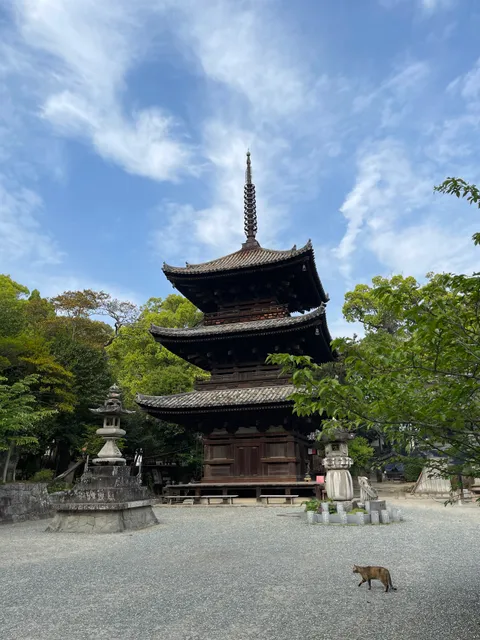
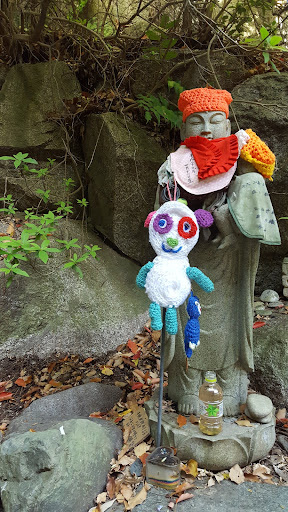
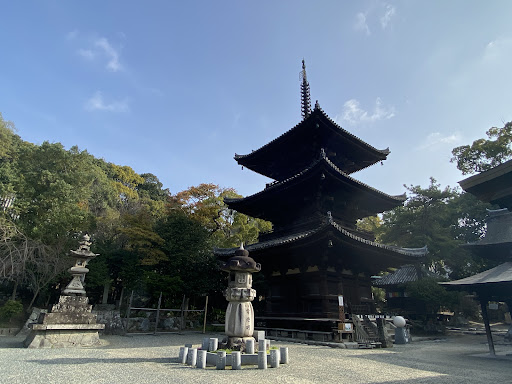
Read moreEl Templo Ishiteji (石手寺) es uno de los templos más fascinantes y peculiares de Matsuyama, en la prefectura de Ehime, Japón. Es el templo número 51 de la famosa Peregrinación de los 88 templos de Shikoku, una ruta budista de 1.200 kilómetros que atrae a peregrinos (conocidos como ohenro-san) de todo el mundo. Aquí te presento cosas y curiosidades de este sitio: Un Punto Clave de la Peregrinación de Shikoku: Templo 51: Es un lugar crucial en la peregrinación. Verás a muchos peregrinos vestidos de blanco, lo que añade una atmósfera especial de devoción y tradición al lugar. Leyenda de Emon Saburo: El nombre del templo, Ishiteji, que significa "templo de la mano de piedra", se basa en la leyenda de Emon Saburo. Se dice que fue el primer peregrino de Shikoku y que, tras una búsqueda infructuosa del monje Kobo Daishi (fundador del budismo Shingon), falleció con una piedra en la mano. La piedra supuestamente se encontró en la mano de un bebé renacido de la familia Kono, y esa piedra fue consagrada en el templo. Una Arquitectura y Elementos Curiosos: Puerta Niomon (Puerta Deva): Es un Tesoro Nacional de Japón, construida en 1318. A ambos lados de la puerta, podrás observar dos sandalias gigantes de paja (waraji). La leyenda dice que tocar estas sandalias puede curar dolores de piernas, un alivio bienvenido para los peregrinos. Pagoda de Tres Pisos: Una hermosa pagoda histórica que es una Propiedad Cultural Importante. Variedad de Estatuas y Ofrendas: El templo está repleto de estatuas de Buda y otras figuras religiosas, muchas de ellas añadidas a lo largo de los años, algunas bastante inusuales y artísticas, desde dragones barrocos hasta budas esqueléticos. Campanario y Urna de Incienso: El aroma a incienso impregna el ambiente, contribuyendo a la sensación de serenidad y espiritualidad. El Fascinante Túnel y el Templo Secreto: El Pasadizo Subterráneo: Una de las características más sorprendentes de Ishiteji es un túnel excavado en la montaña de unos 200 metros de largo. Este pasadizo está lleno de estatuas y representaciones de Budas y deidades, creando una experiencia casi laberíntica y mística. Templo Interior con Cúpula Dorada: Al final del túnel, te encontrarás con un segundo templo, un hall con una llamativa cúpula dorada, que se dice que es única en Japón. Este espacio alberga más estatuas y representa las diferentes formas de Buda, así como estatuas de cada uno de los 88 templos de la peregrinación. Valor Cultural e Histórico: Bienes Culturales Importantes: Además de la Puerta Niomon, muchos edificios y objetos del templo están designados como Bienes Culturales Importantes, lo que subraya su importancia histórica y cultural. El templo posee una de las colecciones más grandes de bienes culturales de todos los templos de la peregrinación de Shikoku. Museo del Templo: Ishiteji cuenta con un museo donde se exponen permanentemente tesoros del templo. Ubicación y Entorno: Cercanía a Dogo Onsen: Ishiteji se encuentra convenientemente cerca de la famosa zona de Dogo Onsen, lo que lo convierte en una visita fácil de combinar con una relajante experiencia en las aguas termales. Ambiente Tranquilo: A pesar de ser popular, el templo mantiene un ambiente tranquilo y contemplativo, rodeado de vegetación, lo que permite a los visitantes sumergirse en su atmósfera única. Ishiteji Temple es un lugar que no solo ofrece belleza arquitectónica y significado religioso, sino también una experiencia peculiar y memorable gracias a sus elementos inusuales y su conexión con la antigua peregrinación. Es un verdadero tesoro escondido...
Read more