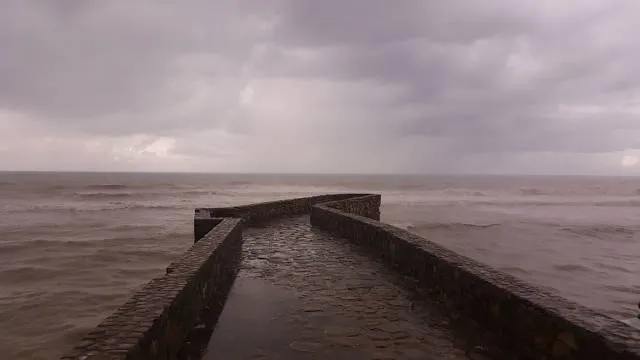
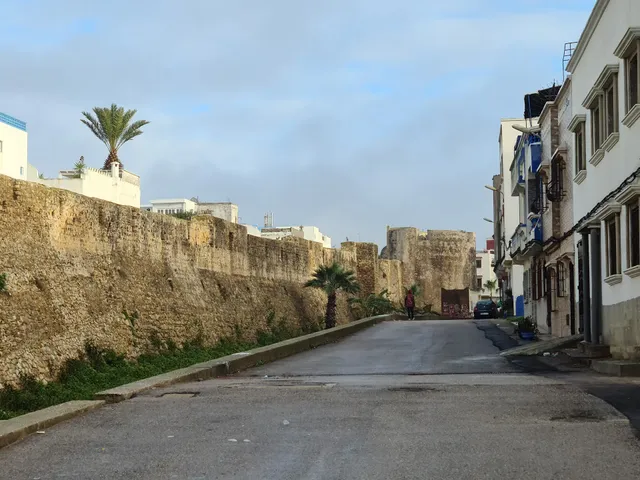
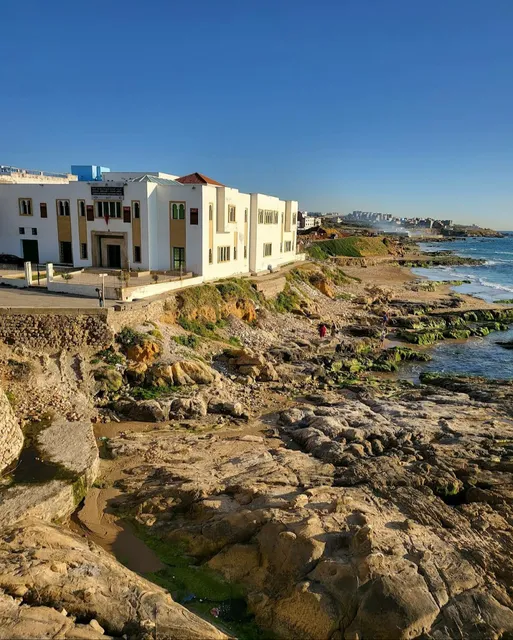
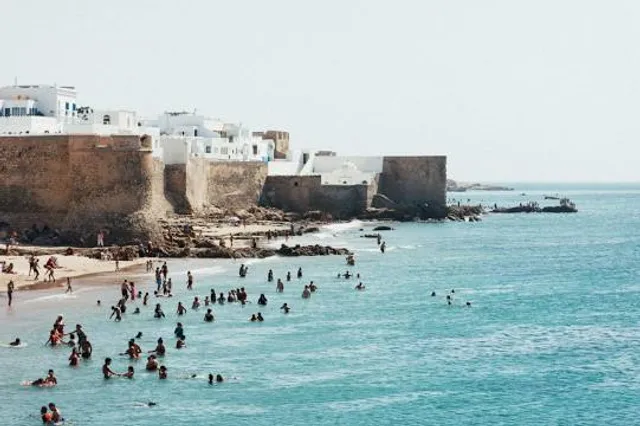
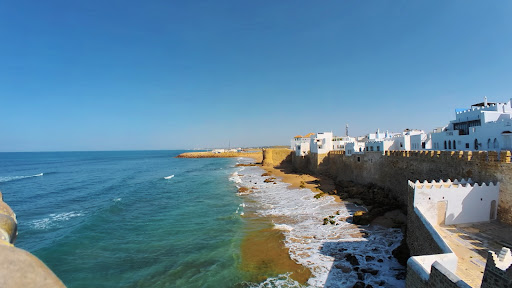
Asilah is a fortified town (Krikia) on the northwest tip of the Atlantic coast of Morocco, about 31 km (19 mi) south of Tangier. Its ramparts and gateworks remain fully intact.
many different cultures have their footsteps here and lots of the architecture is mixed.
--
Town's history dates back to 1500 B.C., when Phoenicians occupied a site called Silis, Zili, Zilis, or Zilil which is being excavated at Dchar Jdid, some 12 km (7.5 mi) NE of present Asilah; that place was once considered to be the Roman stronghold Ad Mercuri, but is now accepted to be Zilil. The town of Asilah itself was partly constructed by the Idrisid dynasty, and Cordoban caliph Al-Hakam II rebuilt the town in 966. The Portuguese conquered the city in 1471 and built its fortifications, but it was abandoned because of an economic debt crisis in 1549. In 1578, Sebastian of Portugal used Asilah as a base for his troops during a planned crusade that resulted in Sebastian's death, which in turn caused the Portuguese succession crisis of 1580. The Portuguese kept hold of the town but in 1589 the Moroccans briefly regained control of Asilah, but then lost it to the Spanish.
In 1692, the town was again taken by the Moroccans under the leadership of Moulay Ismail. Asilah served then as a base for pirates in the 19th and 20th centuries, and in 1829, the Austrians punitively bombarded the city due to Moroccan piracy.
From 1912 to 1956, it was part of Spanish Morocco. A major plan to restore the town was undertaken in 1978 by its mayor, Mohamed Benaissa. Benaissa and painter Mohamed Melehi were instrumental in organizing an art festival, the International Cultural Moussem of Asilah, that starting in 1978 began generating tourism income. It is credited with having promoted urban renewal in Asilah, and is one of the most important art festivals in the country. It played a role in raising the average monthly income from $50 in 1978 to $140 in 2014. The festival features local artwork and music and continues to attract large numbers of tourists.
Asilah is now a popular seaside resort, with modern holiday apartment complexes on the coast road leading to the town from Tangier.The old neighborhoods are restored and painted white, and the wealthy from Casablanca have their...
Read moreQuesta piccola città di mare di origine portoghese custodisce intatti sia le mura che il centro storico. La medina è una fusione di stili arabo e lusitano ed incanta perdersi nei suoi vicoli su cui si affacciano le antiche dimore dai muri bianchi e dalle finestre blu. Il tutto è impreziosito dalle opere di street art che vengono rinnovate ogni anno in occasione del festival dei murales. Potete recarvi qui da Tangeri in grand taxi o in treno, io ho scelto la seconda opzione, c'è un treno che parte da Tangeri gare de ville alle 9.35 ed arriva ad Asilah in 45 minuti, costo 17 dirham. Dalla stazione al centro di Asilah ci sono poi 2,5 km il taxi costa 15 dirham. È sufficiente una mezza giornata per visitare la medina molto bella ma di dimensioni modeste. Se al ritorno non ci sono treni vicino alla grande moschea della nouvelle ville ci sono i Grand taxi per Tangeri costo 20 Dirham. Se prendete il treno delle 9.35 arriverete lì tra i primi e potrete godervi la visita in tutto relax, come succede sempre in Marocco dopo le 11,00 si mettono in moto i gruppi di turisti e...
Read moreArcila or Asilah is a small town that is not very touristy. The medina or old town is decorated with artistic paintings and blue paint (not to be confused with "Chauen" where EVERYTHING is blue). It is worth taking a pleasant walk through the area and approaching the rampart, from which you can see a beautiful landscape shadowed by the rubbish...
Read more