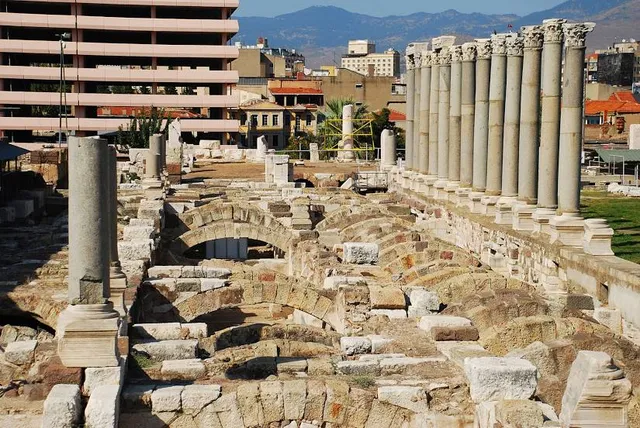
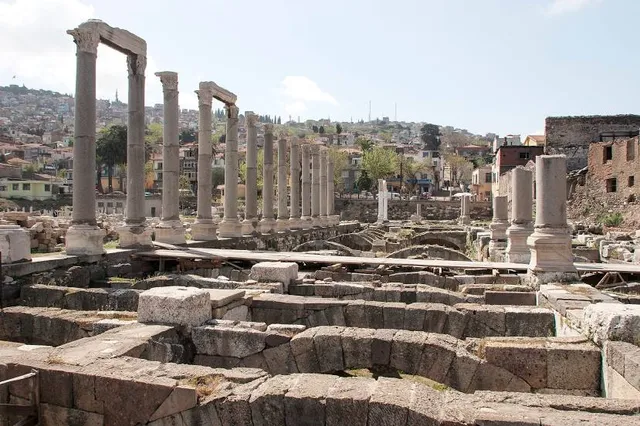
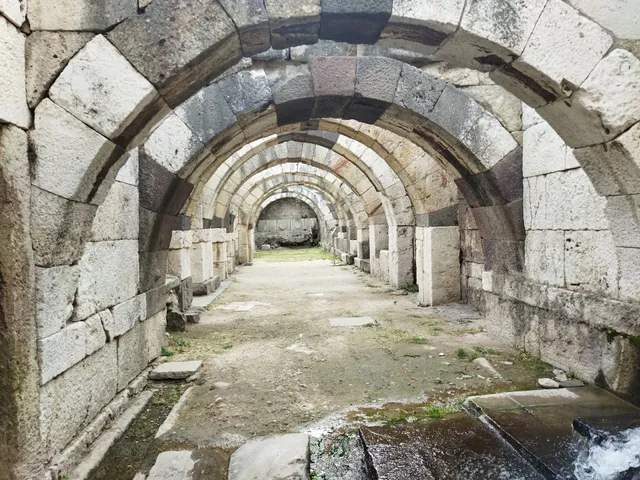
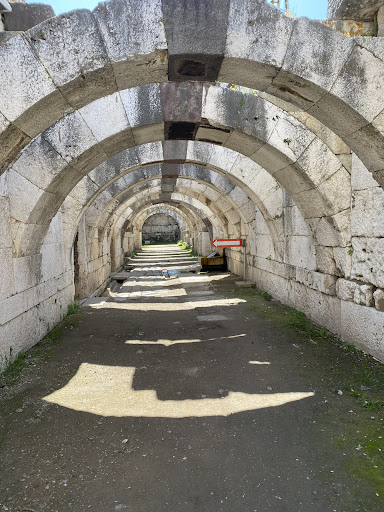
Agora of new Smyrna, moved to Kadifekale by Alexander the Great, welcomes visitors with its great magnificence and beauty as well as its commercial life Assistant Professor Dr. AKIN ERSOY / Ancient City of Smyrna Excavation Chairman Archaeologist ÇAĞDAŞ YILMAZ / Member of Ancient City of Smyrna Excavation Team Smyrna, was moved from its location in Bayraklı to Kadifekale stretching across its north and west slopes (Çankaya-Basmane axis on one side and Kemeraltı-Bahribaba axis on the other), by Antigonos Monophtalmos and Lysimakhos during the Hellenistic period just after Alexander the Great at the end of the 4th century B.C. and in the first half of the 3rd century B.C. In this sense, the Kadifekale-Varyant-Kemeraltı-Çankaya-Basmane circle forms the historical city centre of modern İzmir. There are today only a couple of ruins at certain points left standing relating to ancient Smyrna. The most important of these points is Smyrna Agora, known as Agora Ruins. After İzmir Metropolitan Municipality made expropriation and demolitions in the region, archaeological studies in a section of the city centre were also carried out as well as the agora of the ancient city. Archaeological excavation works at Smyrna Agora, which started in 1932 for the first time, have continued to date at intervals. Subject to these works, the most data relating to the ancient city has been uncovered in this area. Ceramic findings uncovered during drilling excavations in the courtyard region of the Smyrna Agora show that activities in the agora region start as from the initial foundation stage of the city. Even though these findings cannot be supported with architectural findings today, the majority of ceramic findings in question indicate that Smyrna Agora was one of the first urban projects of ancient Smyrna. Drillings performed at courtyard showed that area on which the agora was constructed is sloping from south and east to the north and west side. It is observed that the slope is at least 3 m in every 50 m, whereas level of slope is at least on hills of Kadifekale facing the sea where the agora was constructed. Although current data fails to sufficiently explain how such a construction was built on this slopped area during the end of 4th century and 3rdcentury B.C., it is understood that courtyard area of agora was converted to a terrace having an approximate elevation of 14 m as of sea level during latest 2nd century B.C. and basements were constructed under Basilica on northern side and under West Porch on western side in order to support this terrace. In this design of Agora, Basilica and West Porch’s basement walls looking over courtyard serve also as terrace wall. Windows opening to the courtyard above terrace walls were used to provide lighting and air-conditioning of basements. Designs of agoras during Hellenistic and Roman periods consisted surrounding of courtyard area with stoas all around especially in cities planned on the basis of grid. Hellenistic walls at basements prove that Smyrna Agora was surrounded by at least two stoas on west and north sides. It is observed that these stoas consist of single floor on basement and two galleries exist on both floors. We have not yet had any architectural finding showing that courtyard area of the agora was surrounded with stoas on south and east sides. However, when agora plans of the period are examined, it is thought that stoas were available on these directions, but it is anticipated that contrary to the stoas on other two directions, they had probably no basements. As for Roman era, it is seen that stoas were expanded by making new additions and in parallel to the increasing and improving requirements of the period as can be understood from current West Porch and Basilica structures surrounding the courtyard. Two-storey West Stoa was converted to a three-storey and three-gallery porch, whereas North Stoa was turned to a three-storey and three-gallery Basilica structure having four galleries on basement and three galleries on ground floor and 1st floor where middle...
Read more🏛️ Agora of Smyrna — Where Ancient İzmir Still Breathes
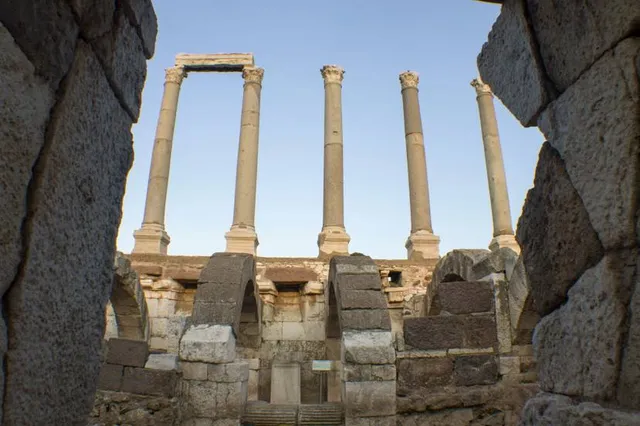
Visiting the Agora of Smyrna felt like stepping through a time portal into the heart of ancient İzmir. Right in the middle of the modern city stands this remarkable archaeological site — a calm, open-air museum surrounded by busy streets and apartment buildings. As I walked through the Roman arches, marble columns, and vaulted basements, I could almost imagine the bustling market life that once filled this space nearly two thousand years ago.
The highlight for me was exploring the underground galleries and cisterns — beautifully preserved and surprisingly quiet, even though the site sits near the city center. You can clearly see how advanced Roman engineering was, with its water channels, arches, and inscriptions carved into stone. There’s also a small open-air section with scattered statues, ancient stones, and explanatory boards that make it easy to visualize what the agora once looked like.
What makes the experience even more special is how modern İzmir wraps around this ancient heart — it’s living proof of how history and daily life coexist here. Standing in the middle of the ruins, with the hum of traffic in the distance, I felt connected to centuries of human stories that unfolded in the same space.
📜 History & Importance
The Agora of Smyrna dates back to the 4th century BCE, originally built by the Greeks and later reconstructed by the Romans after a major earthquake in 178 CE — under the rule of Emperor Marcus Aurelius. It served as the administrative and commercial center of ancient Smyrna (the old name of İzmir).
Excavations have revealed columns, sculptures, inscriptions, and the remains of a basilica, giving historians precious insight into Roman urban planning and daily life. It’s considered one of the best-preserved agoras in the ancient world, alongside Ephesus and Pergamon.
📍 Location & Accessibility
Address: Namazgah Mah., Tarık Sarı Blv., Konak, İzmir, Turkey
Just a 10-minute walk from Kemeralti Bazaar or Konak Square.
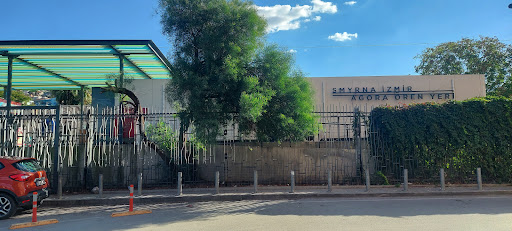
Easily reachable by tram, metro, or taxi (nearest stop: Çankaya). Finding entrance may be tricky sometimes- ask people for help if needed. I had to walk entire periphery to find the gate as most of the people do not understand English in Izmir. The other side of the road is less populated, may not be suitable for non Tukish people.
⏰ Best Time to Visit
Morning (9 AM – 11 AM): Pleasant light for photos and fewer crowds.
Late Afternoon (4 PM – 6 PM): Soft sunlight makes the marble glow beautifully.
Avoid visiting at midday in summer — limited shade and it can get quite hot.
💰 Entry Fee
They accept only TL in cash or credit / debit card. Fee for non Turkish people is 6E (290 TL in 2025). and 100 TL for Turkish nationals. For children less than 6 years , entry is free, Carry their I cards. I am not sure if that is applicable to non Turkish nationals.
⚠️ Tips & Precautions
Wear comfortable shoes — the ground is uneven and rocky.
Bring water, sunscreen, and a hat if visiting in summer.
Allocate 1–1.5 hours to explore fully and read the info boards.
Some parts are under excavation and closed off — stay within marked areas.
I wish there should have been Audio guide. I request tourism government to arrange audio guide at this place also.
Washrooms are available inside.
🚫 Things to Avoid
Avoid climbing on ruins or touching inscriptions — preservation is key.
Don’t expect cafes or facilities inside; grab refreshments before you enter.
Avoid rushing — take time to soak in the silence and historical depth.
⭐ My Verdict
Rating: 9/10 The Agora of Smyrna is a must-visit for history lovers, photographers, and anyone who enjoys connecting with ancient civilizations. It’s smaller than Ephesus but far more intimate — you can explore at your own pace without crowds. A peaceful reminder that İzmir isn’t just a seaside city, but one of the most historically layered places...
Read moreSo this is very interesting place in so many ways. But let’s start with some basics - Agora of Smyrna is an ancient Roman agora, originally buit by Greeks in the 4th century and then rebuilt by Marcus Aurelius after it was destroyed by huge earthquake in year 178. Afterwards it was also used as a graveyard, also in Ottoman times (there are beautiful stones from muslim graves). As the excavation started in 1933 many interesting parts were discovered. Graffiti on the basilica wall is believed to be the world's first crossword. So far so good. Now, the tickets are priced pretty cheap for a wonder as this, but you can see that Izmir is not really paying much of attention to it’s amazing heritage. While this picturesque place is all open-air and you can run around it, it does not get the attention and care it should. Stones are just randomly tossed, no proper explanation and description is given (some small pieces of information are just posted on the boards) and if you wish to sit down and enjoy this marvelous view while drinking a coffee - forget it. The lack of advertising it is almost shocking - put it in any European city and they would literally display it as a must see attraction. It is also crazy close to Kemeraltı bazaar (apparently one of the biggest ooen-air shopping centers in the workd!) - it makes it a fantastic stop before immersing yourself in some shopping ❤️ So said, fully recommend this place - no matter if you live in or visit Izmir, what is left of Agora of Smyrna is breath-taking and worth your time. I hope in the future Izmir city will pay more attention to this wonder, clean it up, add some info and make a tiny place to sit with a tea/coffee and enjoy...
Read more