HTML SitemapExplore
logo
Find Things to DoFind The Best Restaurants

The Centre for Computing History — Attraction in Cambridge

Name
The Centre for Computing History
Description
The Centre for Computing History is a museum in Cambridge, England, established to create a permanent public exhibition telling the story of the Information Age.
Nearby attractions
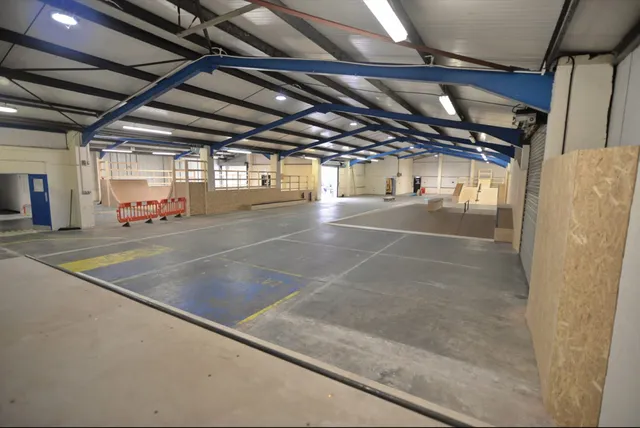
The Warehouse Indoor Skatepark
3 Coldhams Ln, Cambridge CB1 3EP, United Kingdom
Coldham's Common
United Kingdom, Cambridge, United Kingdom
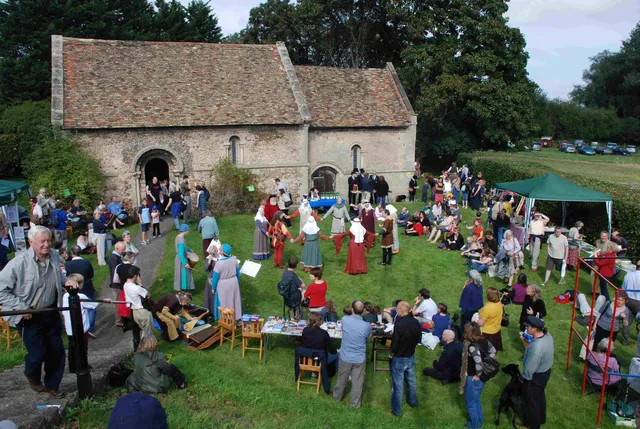
The Leper Chapel of Saint Mary Magdalene
Barnwell Junction, Newmarket Rd, Cambridge CB5 8JJ, United Kingdom
Nearby restaurants
Nando's Cambridge - Retail Park
Unit 11b Newmarket Rd, Fen Ditton, Cambridge CB5 8JL, United Kingdom
The Wrestlers Pub
337 Newmarket Rd, Cambridge CB5 8JE, United Kingdom
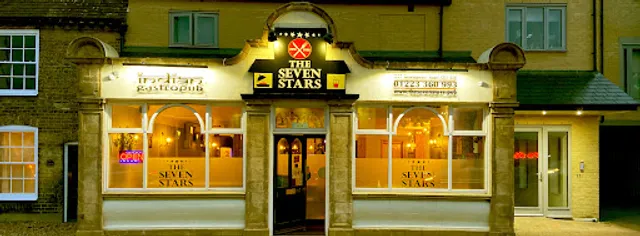
The Seven Stars
249 Newmarket Rd, Cambridge CB5 8JE, United Kingdom
The Corner House
231 Newmarket Rd, Cambridge CB5 8JE, United Kingdom
Pizza Hut
Retail Park, Newmarket Rd, Cambridge CB5 8WR, United Kingdom
The Geldart
1 Ainsworth St, Cambridge CB1 2PF, United Kingdom
Pipasha
529C Newmarket Rd, Cambridge CB5 8PA, United Kingdom
Navadhanya
70 Newmarket Rd, Cambridge CB5 8DZ, United Kingdom
Oscar's Lockdown Pizza @ The Blue Moon
2 Norfolk St, Cambridge CB1 2LF, United Kingdom
Eko Kitchen - African Restaurant
UK, 8 Norfolk St, Cambridge CB1 2LF, United Kingdom
Nearby hotels
Travelodge Cambridge Newmarket Road
180-190 Newmarket Rd, Cambridge CB5 8HF, United Kingdom
Signet Apartments
5, Signet Court, 11 Swanns Rd, Cambridge CB5 8LA, United Kingdom
Autumn House
588 Newmarket Rd, Cambridge CB5 8LP, United Kingdom
Parkview Guesthouse
116 Vinery Rd, Cambridge CB1 3DT, United Kingdom
Angel's (station accommodation)
11A Hooper St, Cambridge CB1 2NZ, United Kingdom
Related posts
Keywords
The Centre for Computing History tourism.The Centre for Computing History hotels.The Centre for Computing History bed and breakfast. flights to The Centre for Computing History.The Centre for Computing History attractions.The Centre for Computing History restaurants.The Centre for Computing History travel.The Centre for Computing History travel guide.The Centre for Computing History travel blog.The Centre for Computing History pictures.The Centre for Computing History photos.The Centre for Computing History travel tips.The Centre for Computing History maps.The Centre for Computing History things to do.
The Centre for Computing History things to do, attractions, restaurants, events info and trip planning
The Centre for Computing History
United KingdomEnglandCambridgeThe Centre for Computing History

Basic Info

The Centre for Computing History

Rene Ct, Coldham's Rd, Cambridge CB1 3EW, United Kingdom
4.8(401)
Closed
Save
spot

Ratings & Description

Info

The Centre for Computing History is a museum in Cambridge, England, established to create a permanent public exhibition telling the story of the Information Age.

Cultural
Entertainment
Family friendly
Accessibility
attractions: The Warehouse Indoor Skatepark, Coldham's Common, The Leper Chapel of Saint Mary Magdalene, restaurants: Nando's Cambridge - Retail Park, The Wrestlers Pub, The Seven Stars, The Corner House, Pizza Hut, The Geldart, Pipasha, Navadhanya, Oscar's Lockdown Pizza @ The Blue Moon, Eko Kitchen - African Restaurant
logoLearn more insights from Wanderboat AI.
Phone
+44 1223 214446
Website
computinghistory.org.uk
Open hoursSee all hours
Sat10 AM - 5 PMClosed

Plan your stay

hotel
Pet-friendly Hotels in Cambridge
Find a cozy hotel nearby and make it a full experience.
hotel
Affordable Hotels in Cambridge
Find a cozy hotel nearby and make it a full experience.
hotel
The Coolest Hotels You Haven't Heard Of (Yet)
Find a cozy hotel nearby and make it a full experience.
hotel
Trending Stays Worth the Hype in Cambridge
Find a cozy hotel nearby and make it a full experience.

Reviews

Nearby attractions of The Centre for Computing History

The Warehouse Indoor Skatepark

Coldham's Common

The Leper Chapel of Saint Mary Magdalene

The Warehouse Indoor Skatepark

The Warehouse Indoor Skatepark

4.9

(40)

Closed
Click for details
Coldham's Common

Coldham's Common

4.5

(161)

Open 24 hours
Click for details
The Leper Chapel of Saint Mary Magdalene

The Leper Chapel of Saint Mary Magdalene

4.5

(31)

Open 24 hours
Click for details

Things to do nearby

Relive Cambridge Universitys ghost stories
Sat, Dec 6 • 5:00 PM
Cambridgeshire, CB2, United Kingdom
View details
Create personal and professional portraits
Sat, Dec 6 • 10:00 AM
Cambridgeshire, CB2 1SJ, United Kingdom
View details
Secret Society of Cambridge: A Detective City Game
Mon, Dec 1 • 12:00 AM
2 Wheeler St, Cambridge CB2 3QB, UK, CB2 3QB
View details

Nearby restaurants of The Centre for Computing History

Nando's Cambridge - Retail Park

The Wrestlers Pub

The Seven Stars

The Corner House

Pizza Hut

The Geldart

Pipasha

Navadhanya

Oscar's Lockdown Pizza @ The Blue Moon

Eko Kitchen - African Restaurant

Nando's Cambridge - Retail Park

Nando's Cambridge - Retail Park

4.2

(876)

$

Click for details
The Wrestlers Pub

The Wrestlers Pub

4.6

(748)

Click for details
The Seven Stars

The Seven Stars

4.6

(293)

Click for details
The Corner House

The Corner House

4.4

(417)

$

Closed
Click for details
Get the Appoverlay
Get the AppOne tap to find yournext favorite spots!
Wanderboat LogoWanderboat

Your everyday Al companion for getaway ideas

CompanyAbout Us
InformationAI Trip PlannerSitemap
SocialXInstagramTiktokLinkedin
LegalTerms of ServicePrivacy Policy

Get the app

© 2025 Wanderboat. All rights reserved.
logo

Posts

Jens RabeJens Rabe
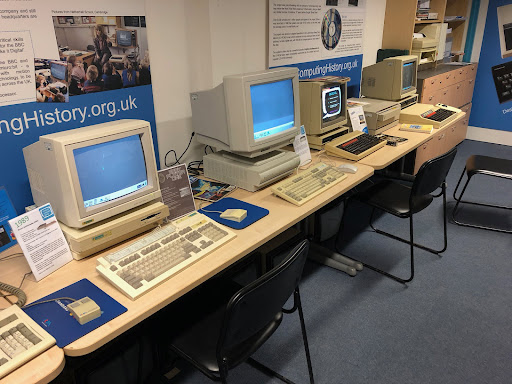
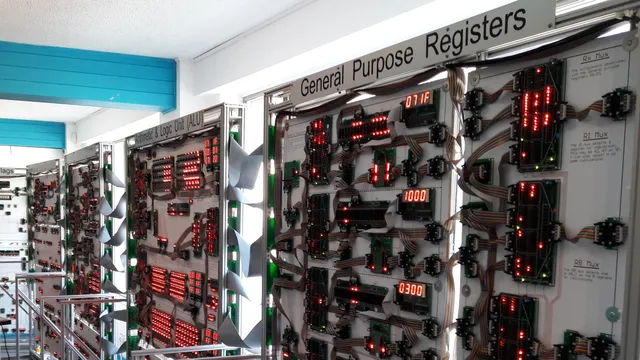
This was by far the best part of my vacation in the UK. It is one of the (unfortunately) rare "hands on" museums - a large number of the exhibits is not locked away in glass cases but completely set up - and the ones which are plugged in and switched on can be used. When entering, you are greeted with a discrete implementation of an 8-bit microprocessor that spans an entire room and can be slowed down so you can actually see it working. The main attraction though is the wide range of primarily home computers and games consoles from the late 1970s until about 2004 - the newest "Wintel" machine I saw was a 486 era Compaq Presario running Windows 3.11 and the latest Mac was a PPC G4 iMac (The "lamp"). They not only have the common computers like Atari 8bit, C64 and the Spectrum, but also uncommon ones like the "Mega PC" which had a Sega Mega Drive built in, Dragon 32, EACA Color Genie and the like. There was no emulation going on (except for one or two arcade machines), and there were no "Fake machines", i.e., with a Raspberry Pi inside the old case. You really used the real things - even with their original CRT monitors or period-appropriate colour or black&white TVs. The information besides the machines was a bit scarce, mainly bits you could also find out by googling, but that is not a problem, since the focus of the museum is really getting you in front of the old machines, play the old games or hack in some BASIC programs. They do have a gallery of the most important and influential people in the history of computers though - there are the portraits of people like Alan Turing on the ceiling with a multimedia presentation about them. Apart from the main hall, there is a late 1970s/early 1980s office with original furniture and a TRS80 set up as a business computer - unfortunately the power switch didn't work on this one on the day of my visit. Furthermore, there was an ensemble of early mainframes and mini computers with the oldest working one being an Elliott 903. This is not hands-on though, but is demonstrated frequently when the volunteers do a guided tour at no extra cost besides general admission fee. Another highlight is the 1980s computer room as it was set up in British schools - with a selection of BBC Micro machines and a big bookcase full of old books on BASIC programming. You could take out a book and type in the programs and pretend it was 1988 instead of 2018. Unfortunately they didn't attach any means of saving your programs - they should at least give you a tape drive and a cassette if you asked. In the same room there are also some Raspberry Pi with Raspbian with which some of the programming courses for children are done. Speaking of which, I attended a "Twine" course just for fun, and although it was done by another person who usually does not teach the programming courses, it was much fun and as a child, you really could learn a lot and get your curiosity kick-started. The friendly staff is also very different from other museums. You don't feel like you are in a museum at all - it feels more like an 1980s/1990s computer club or a retro computing convention - and you can easily lose yourself in talking about fun (or not so fun) anecdotes from the past like becoming the #1 target for bullying when you were interested in those things. If you are interested in technology and computers, and spend a vacation in the vicinity (you can still reach Cambridge quite well from London by train, there are direct connections from King's Cross and Liverpool Street) you should pass on the typical tourist traps like the Dungeon, London Eye or Thorpe Park but rather spend the money on a trip to the CFCH (or two because one day won't be enough if you thoroughly want to test all the computers there). You'll roughly pay the same, as an anytime return ticket from London to Cambridge is £37 and admission is £8 or £12 if you want to attend a course, but have so much more fun.
Clara LotteClara Lotte
A really nice experience as a computer and gaming nerd. Very quiet, we went about midday on Wednesday and we were the only people in there except employees (and one person who I couldn't tell if they was a visitor or staff). We spent about an hour there. A touch small but it really shines though in the interactivity of the museum. EVERYTHING is open for you to play around on (unless it's behind glass). I didn't interact with a lot because some of the CRTs were flickering quite badly, causing eye strain, but still had a good time. A decent section dedicated to gaming and arcades, with some really nicely restored arcade cabinets. Though there was no mention of arcade consoles (NeoGeo, Naomi, Chihiro, etc.) Thought that was a bit strange considering their prominence in gaming and arcades. Though it could be an issue if space and public interest. Overall just a nice place to spend an hour or two even if you have a cursory interest in computing. Worth supporting!
Jacob AmbachJacob Ambach
I discovered this establishment online while planning a trip to Cambridge. I didn’t know quite what to expect, other than learning about the history of computers and technology. Tickets are £12 for adults, which is very reasonable. At first, you enter a small area at the front, and towards the back, there’s a room filled with old-school computers and machines. Then the real magic begins: you step into an interactive section where you can actually play classic gaming consoles like the Nintendo 64, PlayStation 1 and 2, Xbox, and more. As a longtime gamer, I found this place absolutely outstanding. It brought back so much nostalgia! There’s even a mock-up 1970s-style office you can explore. It’s great fun for the whole family, and if you’re a gamer, it’s definitely a must-visit. There’s also a small merchandise section, and a bathroom near the front counter. The staff were friendly and welcoming, which made the visit even better.
See more posts
See more posts
hotel
Find your stay

Pet-friendly Hotels in Cambridge

Find a cozy hotel nearby and make it a full experience.

This was by far the best part of my vacation in the UK. It is one of the (unfortunately) rare "hands on" museums - a large number of the exhibits is not locked away in glass cases but completely set up - and the ones which are plugged in and switched on can be used. When entering, you are greeted with a discrete implementation of an 8-bit microprocessor that spans an entire room and can be slowed down so you can actually see it working. The main attraction though is the wide range of primarily home computers and games consoles from the late 1970s until about 2004 - the newest "Wintel" machine I saw was a 486 era Compaq Presario running Windows 3.11 and the latest Mac was a PPC G4 iMac (The "lamp"). They not only have the common computers like Atari 8bit, C64 and the Spectrum, but also uncommon ones like the "Mega PC" which had a Sega Mega Drive built in, Dragon 32, EACA Color Genie and the like. There was no emulation going on (except for one or two arcade machines), and there were no "Fake machines", i.e., with a Raspberry Pi inside the old case. You really used the real things - even with their original CRT monitors or period-appropriate colour or black&white TVs. The information besides the machines was a bit scarce, mainly bits you could also find out by googling, but that is not a problem, since the focus of the museum is really getting you in front of the old machines, play the old games or hack in some BASIC programs. They do have a gallery of the most important and influential people in the history of computers though - there are the portraits of people like Alan Turing on the ceiling with a multimedia presentation about them. Apart from the main hall, there is a late 1970s/early 1980s office with original furniture and a TRS80 set up as a business computer - unfortunately the power switch didn't work on this one on the day of my visit. Furthermore, there was an ensemble of early mainframes and mini computers with the oldest working one being an Elliott 903. This is not hands-on though, but is demonstrated frequently when the volunteers do a guided tour at no extra cost besides general admission fee. Another highlight is the 1980s computer room as it was set up in British schools - with a selection of BBC Micro machines and a big bookcase full of old books on BASIC programming. You could take out a book and type in the programs and pretend it was 1988 instead of 2018. Unfortunately they didn't attach any means of saving your programs - they should at least give you a tape drive and a cassette if you asked. In the same room there are also some Raspberry Pi with Raspbian with which some of the programming courses for children are done. Speaking of which, I attended a "Twine" course just for fun, and although it was done by another person who usually does not teach the programming courses, it was much fun and as a child, you really could learn a lot and get your curiosity kick-started. The friendly staff is also very different from other museums. You don't feel like you are in a museum at all - it feels more like an 1980s/1990s computer club or a retro computing convention - and you can easily lose yourself in talking about fun (or not so fun) anecdotes from the past like becoming the #1 target for bullying when you were interested in those things. If you are interested in technology and computers, and spend a vacation in the vicinity (you can still reach Cambridge quite well from London by train, there are direct connections from King's Cross and Liverpool Street) you should pass on the typical tourist traps like the Dungeon, London Eye or Thorpe Park but rather spend the money on a trip to the CFCH (or two because one day won't be enough if you thoroughly want to test all the computers there). You'll roughly pay the same, as an anytime return ticket from London to Cambridge is £37 and admission is £8 or £12 if you want to attend a course, but have so much more fun.
Jens Rabe

Jens Rabe

hotel
Find your stay

Affordable Hotels in Cambridge

Find a cozy hotel nearby and make it a full experience.

Get the Appoverlay
Get the AppOne tap to find yournext favorite spots!
A really nice experience as a computer and gaming nerd. Very quiet, we went about midday on Wednesday and we were the only people in there except employees (and one person who I couldn't tell if they was a visitor or staff). We spent about an hour there. A touch small but it really shines though in the interactivity of the museum. EVERYTHING is open for you to play around on (unless it's behind glass). I didn't interact with a lot because some of the CRTs were flickering quite badly, causing eye strain, but still had a good time. A decent section dedicated to gaming and arcades, with some really nicely restored arcade cabinets. Though there was no mention of arcade consoles (NeoGeo, Naomi, Chihiro, etc.) Thought that was a bit strange considering their prominence in gaming and arcades. Though it could be an issue if space and public interest. Overall just a nice place to spend an hour or two even if you have a cursory interest in computing. Worth supporting!
Clara Lotte

Clara Lotte

hotel
Find your stay

The Coolest Hotels You Haven't Heard Of (Yet)

Find a cozy hotel nearby and make it a full experience.

hotel
Find your stay

Trending Stays Worth the Hype in Cambridge

Find a cozy hotel nearby and make it a full experience.

I discovered this establishment online while planning a trip to Cambridge. I didn’t know quite what to expect, other than learning about the history of computers and technology. Tickets are £12 for adults, which is very reasonable. At first, you enter a small area at the front, and towards the back, there’s a room filled with old-school computers and machines. Then the real magic begins: you step into an interactive section where you can actually play classic gaming consoles like the Nintendo 64, PlayStation 1 and 2, Xbox, and more. As a longtime gamer, I found this place absolutely outstanding. It brought back so much nostalgia! There’s even a mock-up 1970s-style office you can explore. It’s great fun for the whole family, and if you’re a gamer, it’s definitely a must-visit. There’s also a small merchandise section, and a bathroom near the front counter. The staff were friendly and welcoming, which made the visit even better.
Jacob Ambach

Jacob Ambach

See more posts
See more posts

Reviews of The Centre for Computing History

4.8
(401)
avatar
5.0
7y

This was by far the best part of my vacation in the UK. It is one of the (unfortunately) rare "hands on" museums - a large number of the exhibits is not locked away in glass cases but completely set up - and the ones which are plugged in and switched on can be used. When entering, you are greeted with a discrete implementation of an 8-bit microprocessor that spans an entire room and can be slowed down so you can actually see it working. The main attraction though is the wide range of primarily home computers and games consoles from the late 1970s until about 2004 - the newest "Wintel" machine I saw was a 486 era Compaq Presario running Windows 3.11 and the latest Mac was a PPC G4 iMac (The "lamp"). They not only have the common computers like Atari 8bit, C64 and the Spectrum, but also uncommon ones like the "Mega PC" which had a Sega Mega Drive built in, Dragon 32, EACA Color Genie and the like. There was no emulation going on (except for one or two arcade machines), and there were no "Fake machines", i.e., with a Raspberry Pi inside the old case. You really used the real things - even with their original CRT monitors or period-appropriate colour or black&white TVs. The information besides the machines was a bit scarce, mainly bits you could also find out by googling, but that is not a problem, since the focus of the museum is really getting you in front of the old machines, play the old games or hack in some BASIC programs. They do have a gallery of the most important and influential people in the history of computers though - there are the portraits of people like Alan Turing on the ceiling with a multimedia presentation about them. Apart from the main hall, there is a late 1970s/early 1980s office with original furniture and a TRS80 set up as a business computer - unfortunately the power switch didn't work on this one on the day of my visit. Furthermore, there was an ensemble of early mainframes and mini computers with the oldest working one being an Elliott 903. This is not hands-on though, but is demonstrated frequently when the volunteers do a guided tour at no extra cost besides general admission fee. Another highlight is the 1980s computer room as it was set up in British schools - with a selection of BBC Micro machines and a big bookcase full of old books on BASIC programming. You could take out a book and type in the programs and pretend it was 1988 instead of 2018. Unfortunately they didn't attach any means of saving your programs - they should at least give you a tape drive and a cassette if you asked. In the same room there are also some Raspberry Pi with Raspbian with which some of the programming courses for children are done. Speaking of which, I attended a "Twine" course just for fun, and although it was done by another person who usually does not teach the programming courses, it was much fun and as a child, you really could learn a lot and get your curiosity kick-started. The friendly staff is also very different from other museums. You don't feel like you are in a museum at all - it feels more like an 1980s/1990s computer club or a retro computing convention - and you can easily lose yourself in talking about fun (or not so fun) anecdotes from the past like becoming the #1 target for bullying when you were interested in those things. If you are interested in technology and computers, and spend a vacation in the vicinity (you can still reach Cambridge quite well from London by train, there are direct connections from King's Cross and Liverpool Street) you should pass on the typical tourist traps like the Dungeon, London Eye or Thorpe Park but rather spend the money on a trip to the CFCH (or two because one day won't be enough if you thoroughly want to test all the computers there). You'll roughly pay the same, as an anytime return ticket from London to Cambridge is £37 and admission is £8 or £12 if you want to attend a course, but have so...

   Read more
avatar
5.0
7y

This is a hidden gem a little off the beaten track but it is well worth making that turn into the industrial estate and following the road around to the unassuming building which, in the it can be guaranteed, holds memories for everyone from days gone by.

I'm there is a charge to get in but this money goes towards maintaining and improving the centre and its exhibits as the employees are volunteers. Eight pounds might seem like a lot when you first enter, but there is so much here that you could easily spend most of the day enjoying yourself.

To say that this centre offers a 'hands-on' experience is an understatement. From the moment you walk through the door you are drawn in by the sounds of Sonic the Hedgehog and Donkey Kong and transported to another time, where computer games were more simple affairs, if somewhat more cumbersome physically, and a joystick and fire button were all you needed to be transported into the Green Hill zone with the Blue Speedster.

The Centre is home to a huge number of games consoles from different eras, from early Pong systems to Mega Drives, Amigas and PlayStations. You can literally sit for hours playing with friends and family, or why not make new friends and challenge another visitor.

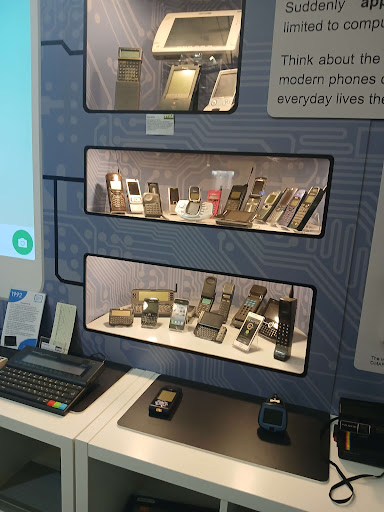
Throughout the Centre you will find attractive and informative display boards with information about what you are looking at. A geek's paradise? Possibly, but if you are less computer literate and didn't spend your childhood waiting for the latest Spectrum game to load then you will definitely learn something too. You will be reunited with old friends in the form of games, computer systems, phones or even the televisions themselves and that sense of familiarity will make you feel at home here.

There is something for all generations too. Some might remember working with machines similar to those in the Seventies Office. Others will recall the early personal computer systems from their primary schools. My parents (in their sixties) loved playing Pong, having owned the system in the seventies; my sister and I (in our thirties) were drawn to Sonic, having grown up with a Mega Drive.

My favourite part of the Centre is the Eighties classroom. My primary school had a couple of BBC Micros that I remember using and spending time here writing basic programs is a joy. I only follow the useful instructions provided in the booklets but it's always rewarding to spend a few minutes typing lines of code to get some colourful text or a sound at the end of it.

You do not have to go near the daunting streets of Central Cambridge to visit the Centre for Computing History. There is plenty of free parking yards from the door and you can buy merchandise from the main desk and snacks and drinks from a small kiosk. There is a wealth of knowledge and history in this place that should be supported and visited time after time- I have been twice and will definitely be back. If you have any sort of interest in computers or computer games then this should...

   Read more
avatar
5.0
2y

Brought my kids here, to get them off their own screens! And show them how things were when I was their age. I think, they quite enjoyed the visit (I certainly did). The layout is good, and the fact that you can try most computers/consoles out is a real bonus.

The only slight negative for me personally, no ACORN ELECTRON anywhere!!!  Even the guy at the reception desk was surprised.  I and quite a few friends grew up with this home computer (we fell into that category in the mid 80's when you ask for Spectrums etc for christmas, and your parents bought an Electron instead because it had "educational value") And it was the same for other owners. I met a new neighbour in the street recently who said his parents did the exact same thing for him.  Admittedly, at that time the school classrooms were full of BBC Micros and to be honest, in my Computer Studies GCSE class, fellow pupils knew I had an Electron and knew they could ask me for 'BBC Basic' help).  I did think I would find one here for sure, being in Cambridge (getting ready to really impress/bore my kids). *Oh well.

Being able to see/play Astro Blaster at the small handhelds/tabletop was something else. I wanted that desperately as a kid, although I did have arguably the even better Astro Wars (also on the same table).  Centipede arcade machine looked/sounded/played great, although I thought there would be more like this because of the pop-up store they had in Grand Arcade last year.

I could easily go back to this place. I think it would be nice though to have some kind of discount for return visit(s) inside 12 months. Leicester Space Museum allows you to visit again for free once within a year. They probably couldn't do this, but some kind of offer might tempt visitors back multiple times.

*I did trawl through all the pictures on the Google listing and there was an Electron set-up with a game on it a few years ago and another one in a display cabinet incl 'Plus 1' back in 2020.  May I suggest, bring one back, load up 'Positron' and let people have a blast!

Overall, an...

   Read more
Page 1 of 7
Previous
Next