There is church service every 1st, 2nd and 3rd Sunday at 11.
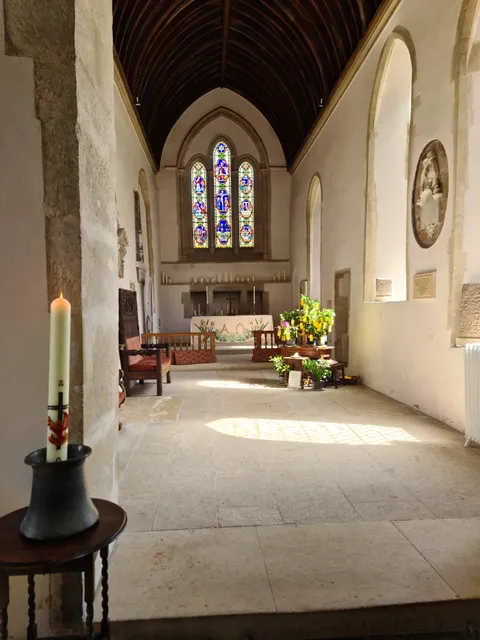
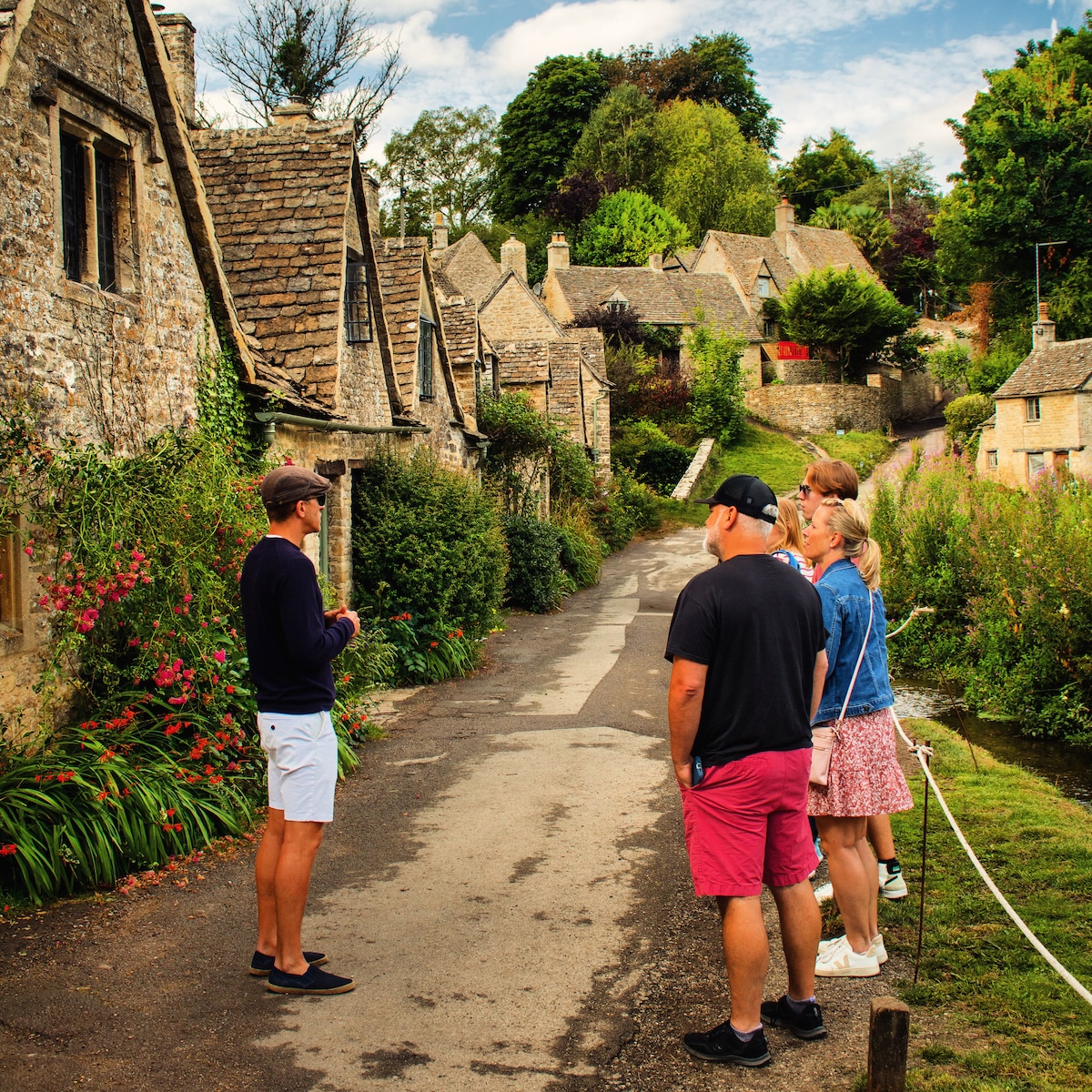
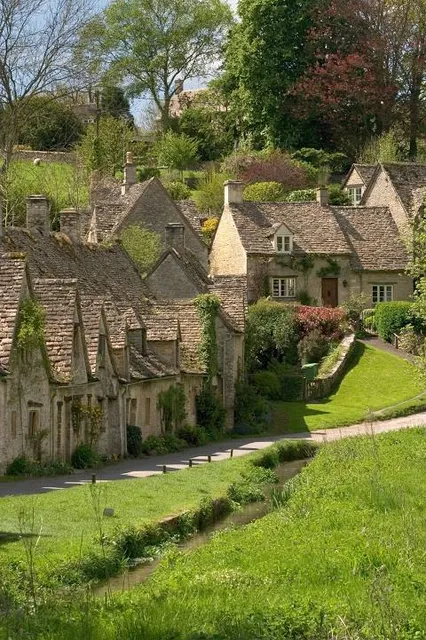
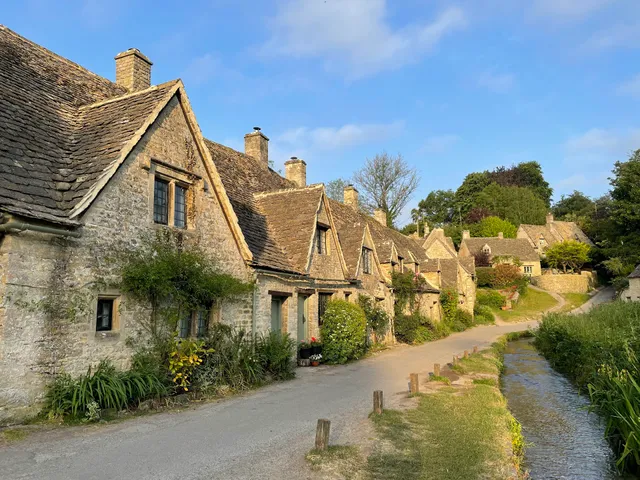
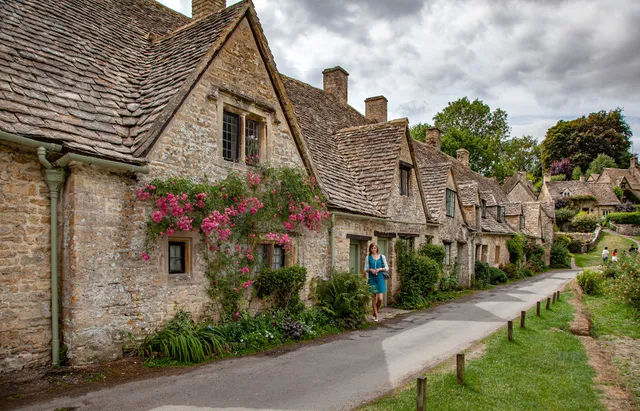
Five minutes away from The Swan and the tourist Arligton Row is this church that was probably built shortly after Bishop Wilfrith of Worcester granted the estate to Earl Leppas and his daughter Beaga (721 - 743 AD). The village became known as Beagan-byrig, or Beaga's enclosure, but over centuries the name gradually turned into Bibury. It was certainly at the time of the Domesday Book in 1086, when the manor and church were owned by St Mary's Priory in Worcester. In 1130 the estate passed to Osney Abbey, near Oxford, and it remained so until the Dissolution of the Monasteries.
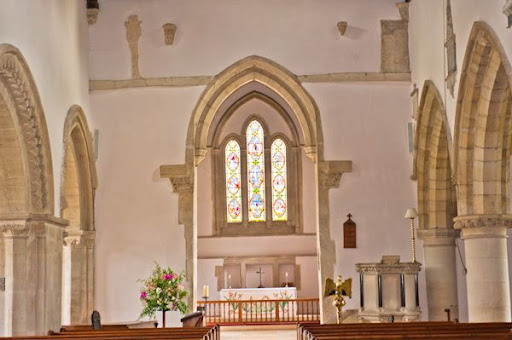
The original Saxon church was quite small, probably consisting of just a nave and small chancel. In the Norman period, the nave was lengthened and aisles added, and in the 13th century, the Gothic chancel arch was inserted to replace the rounded Saxon arch. This gives the current arch its peculiar profile, with Saxon jambs and capitals flanking a pointed arch, which breaks through a Saxon string course high on the wall.
The north door has narrow pillars with carved capitals and there is a narrow caved frieze round the top of the door. Entry is through the south door. Solid Norman round pillars support slightly pointed arches. Some of these have fine chevron carving. The doorway is a beautifully carved piece of Norman craftsmanship, built about 1180. It has a plain tympanum which has been rather oddly cut to create a trefoil pattern over the door, which is now blocked.
In the 15th century the tower was raised and a new timber roof built. A Saxon gravestone has been incorporated into the north wall which you can still see. Four similar Saxon slabs were given to the British Museum, although some other are still kept inside the church.
There is an unusual 13th century square font, supported on four octagonal corner legs and a fifth central leg, each adorned with a pair of trefoil arches; and a medieval glass. The north Chancel wall of the Church is home to a stained glass window which was designed in 1927 by Karl Parsons -associated with the Arts and Crafts movement, also responsible for a glass window at St Giles' Cathedral, Edinburgh-. It was featured in the 1992 Christmas stamp set issued by the Royal Mail. I also found very peculiar a carved priest's chair with carvings of the crucifixion with praying figures on...
Read moreThe first church in Bibury was established in 899. The Anglo-Saxon church was built in the middle to late 11th century with further work in subsequent centuries.
The church was the property of Osney Abbey until the dissolution of the monasteries.
A Victorian restoration was undertaken in 1863 by George Gilbert Scott with further restoration later in the 19th century. The organ was moved to the south aisle in 1920.
The parish is part of the South Cotswold benefice within the Diocese of Gloucester.
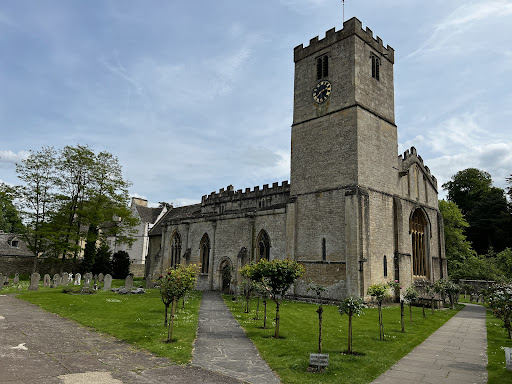
The limestone building has a stone slate roof. It consists of a nave with north and south aisles and a clerestory, chancel and a south porch. The tower arises from the north west corner, supported by buttresses and contains a 15th-century belfry. A Saxon stone grave slab has been incorporated into the north wall. Four similar Saxon slabs were given to the British Museum.
The north doorway was constructed around 1180.
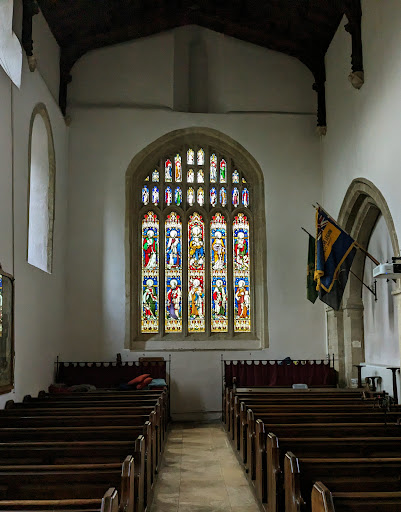
The interior furnishings include a 13th-century font and memorials from several centuries. Unusually the font is square, with the sides carved with arches. The oldest of the stained glass is from the 13th century with more recent work by Thomas Willement and William Wailes. Glass by Karl Parsons installed in 1927 was used on a 1992 Christmas stamp.
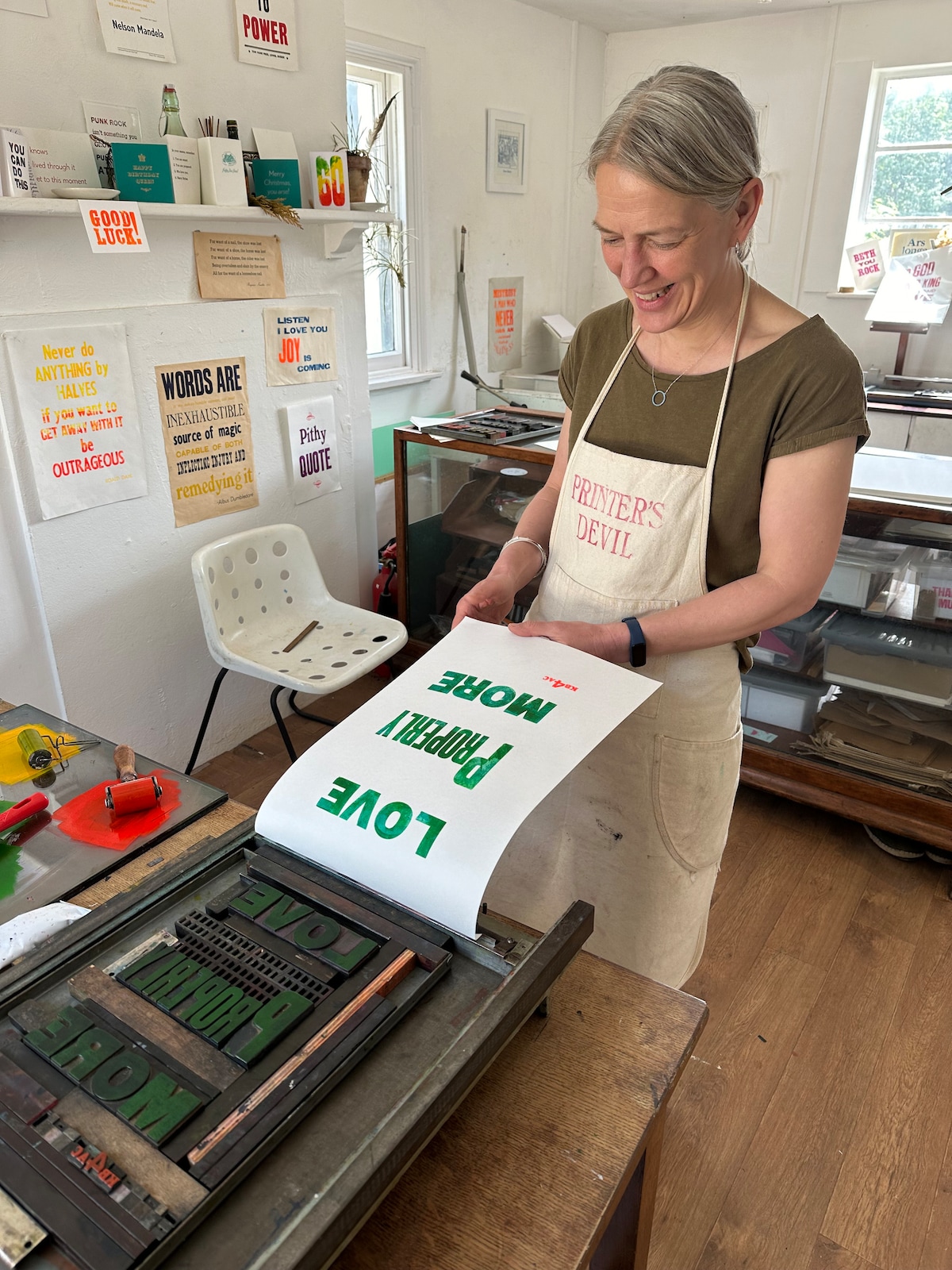
When we visited there was art...
Read moreKościół św. Marii w Bibury to ukryty klejnot w sercu Cotswolds, którego początki sięgają około 899 roku, choć większość obecnej struktury pochodzi z końca XI wieku i późniejszych etapów średniowiecza. W Domesday Book wspomniano, że posiadłość wraz z kościołem została nadana opactwu św. Marii w Worcester, a następnie w 1130 roku przekazana opactwu Osney, które przeprowadziło znaczne rozbudowy przed okresem reformacji. W 1863 roku znany architekt George Gilbert Scott przeprowadził gruntowną restaurację w stylu wiktoriańskim, dodając m.in. ambonę i mównicę. Dalsze prace konserwatorskie miały miejsce pod koniec XIX wieku.
Już od strony Church Road uwagę przyciąga północny portal normański z ok. 1180 roku. Jego łuk zdobi wzór zygzakowaty, a tympanon ma prostą formę wyciętą w kształcie trójliścia. Kapitele udekorowano motywami roślinnymi i liśćmi przypominającymi styl twardolistny, typowy dla późnego romanizmu. Po południowej stronie nawy można prześledzić kolejne etapy rozbudowy – od oryginalnych otworów okiennych w stylu saksońskim, przez XIII-wieczne lancetowe okna, po późniejsze gotyckie dodatki z XV wieku, w tym krenelażowany fryz i okna z maswerkami.
Wewnątrz kościoła zachowały się fragmenty pochodzenia saksońskiego – m.in. pilastry oraz stare płyty nagrobne wmurowane w ściany. Szczególnie interesujący jest łuk tęczowy, łączący nawę z prezbiterium: jego podstawy i imposty są saksońskie, lecz sam łuk został przebity później w stylu gotyckim, naruszając wcześniejszy gzyms. Arkady międzynawowe są zróżnicowane stylistycznie – północna strona to mieszanka form przejściowych z unikatowymi kapitelami w kształcie liści palmowych, muszli i tzw. waterleaf, natomiast południowa strona jest prostsza, z trzema przęsłami w stylu wczesnogotyckim z XIII wieku. Na uwagę zasługuje również piękny XV-wieczny strop z więźbą krokwiową i trzykondygnacyjnym systemem ozdobnych zastrzałów.
Jednym z najciekawszych elementów jest kamienna chrzcielnica z XIII wieku – kwadratowa, wsparta na pięciu kolumnach, z każdej strony ozdobiona parami łuków w stylu trójlistnym – bardzo rzadko spotykany typ w Anglii. W prezbiterium znajduje się wiele wnęk sakramentalnych – trzy pod oknem wschodnim, cztery na ścianie północnej i dwie na południowej – oraz dwie pisciny, co sugeruje, że kościół przechowywał niegdyś liczne przedmioty liturgiczne. Wnętrze zdobią również marmurowe pomniki w kształcie obelisków ku czci rodzin Warneford i Estcourt Cresswell (XVIII w.), a także płyty nagrobne rodziny Coxwell i inskrypcja po łacinie upamiętniająca ks. Benjamina Wynningtona (†1673).
Witraże również zasługują na uwagę – niewielkie fragmenty średniowiecznego szkła zachowały się w jednym z okien w stylu grisaille przy ołtarzu, jednak najpiękniejszym jest okno autorstwa Karla Parsonsa z 1927 roku, znajdujące się w północnej części prezbiterium. Przedstawia ono Madonnę z Dzieciątkiem w otoczeniu bogatych, roślinnych ornamentów i intensywnych kolorów. Witraż ten został w 1992 roku uwieczniony na świątecznym znaczku Royal Mail, ale pozostaje stosunkowo nieznany wśród turystów.
Mimo że Bibury znane jest głównie z malowniczych domków Arlington Row, warto zejść z utartego szlaku i odwiedzić kościół św. Marii – jego wnętrze skrywa ponad tysiącletnią historię, łącząc elementy saksońskie, normańskie, gotyckie, wiktoriańskie i sztuki rzemieślniczej w jedno niezwykłe dzieło...
Read more