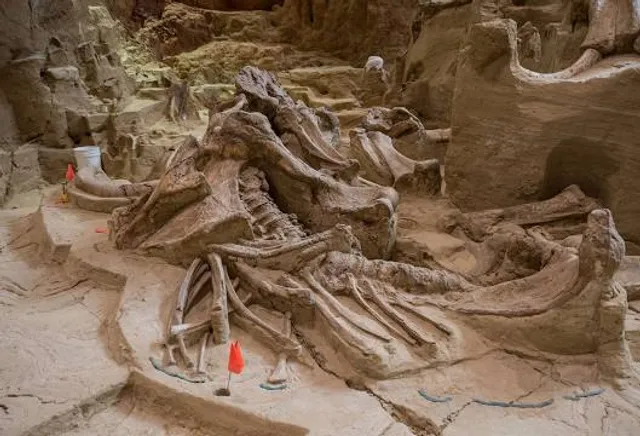
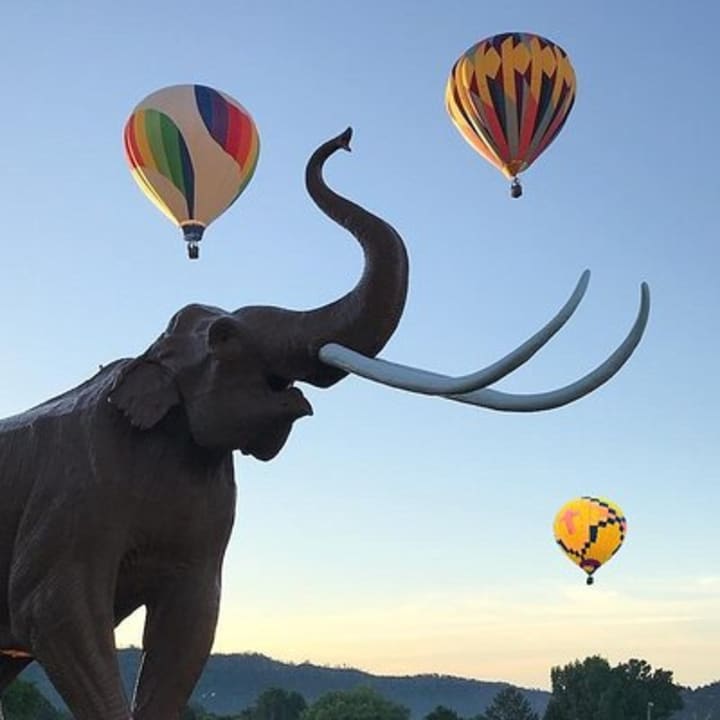
This place is rad. It is a large museum-ish place, that originally started as a dig site back in 1974 or '75, I think it said, when someone discovered mammoth bones. It was a big old sinkhole that lots of mammoths perished in.
So instead of excavating them all and shipping them off to some museum, the palentologist asked the farmer who owned the land if they could excavate it and leave it in situ, as it was, just keep excating and exposing. (I'm paraphrasing what I can remember from this super informative 4 sided exhibit piece that had good explanations and lots of pictures.)
And so they enclosed it with what feels like a massive ark, built a walkway around it, and steps into its many levels, then built a museum around the perimeter, and just keep working on the dig. You can see people working in the lab when you're walking around the dig site.
And then, after exiting the dig site, there are top-museum quality exhibits explaining the science and history of it. So cool. Super freaky giant sloth--check it!
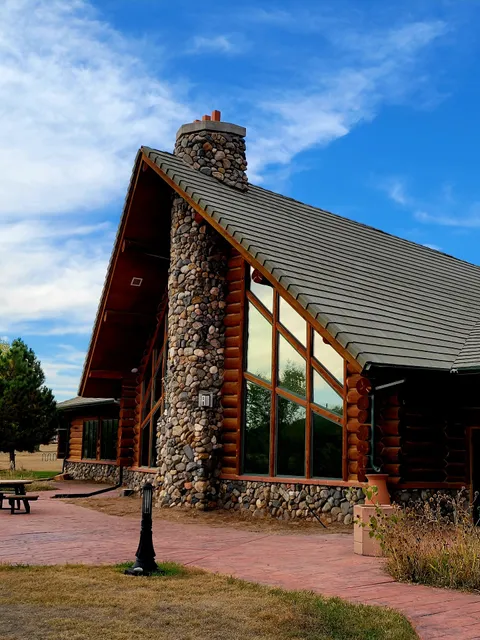
Very friendly staff, who are good at greeting people and saying you can buy your tickets to the exhibit here (so it is clear). There was an electronic sign that said 'restrooms to the right" or something like that, right when you first enter, which is also really helpful.
There is a sluice outside so you can buy variously sized bags of dirt and sieve through your own--also awesome. And you can buy snowcones outside in a little food truck type area to the right of the entrance, and food like corndog bites....
Β Β Β Read moreGreat spot, especially on a rainy day! Love the history of how this came to be. Pros: informative, interesting, interactive. Cons: Not many hands-on elements for the basic tour for young kids other than a small room at the end. Please note - there is a basic entry fee for the self-guided tour and then several different add-on packages. We thought that there was a βdigβ interactive component included, however, itβs additional price and you have to arrive before a certain time and register (we didnβt see this information anywhere on the website or advertising. We would have gladly upgraded to do the family dig, but we arrived after they were done for the day which initially bummed us out). Also do note - this is an active dig site and there were people there working on the dig. They pretty much ignore the visitors so there isnβt much interaction, but theyβre focused and working so we understood. Itβs a self-guided tour, and the tour is informative and matches up well to the signage and flags they have marking the different stops in the dig. I found those really helpful, especially when discussing what was happening with my young son. There are additional exhibits dedicated to other fossils besides the mammoth, which was great to keep it interesting for kids. A staff member we did talk with towards the end was very helpful in recommending similar activities around the area that our family may find interesting, and she spent time chatting with us and telling us even more about animals...
Β Β Β Read moreThe Mammoth Site is an archeological treasure. We went on a whim and it was the best surprise we have ever had traveling. We didnβt know what we were getting into. At the entrance, they donβt really give you a lot of clues.
The real attraction is behind closed doors. When you enter through the doors you will enter into a huge room with a walkway around the site. In the middle, there is a sink hole with bones scattered everywhere as the pictures show.
In addition to the Mammoths, they have uncovered Giant Short Faced Bear, Camel, Llama, Wolf, and smaller animals, fish, and clams.
Kids are also able to participate in a Junior Paleontology Program dig. There is a kid center adjacent to the mammoth site where kids can dig for bones. It is in a building and the dig sites are elevated from the ground so adults can watch from the perimeter while the kids dig with Mammoth Site Staff. The staff were perfect for our kids and brought them along in ways that created very happy memories. Basically, each little was equipped with a bucket, shovel and brush. They were instructed to dig and remove dirt into the bucket. When a bone was discovered they used the brush to expose the bone while being cautious to prevent damage to the artifact. After the bone was uncovered they were then tasked with trying to identify the animal it came from and also to name the bone. We recommend the program if...
Β Β Β Read more