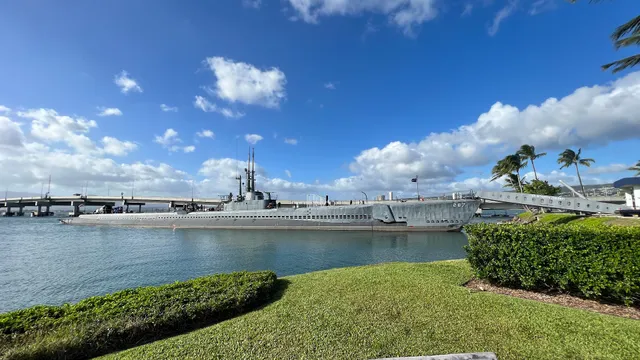
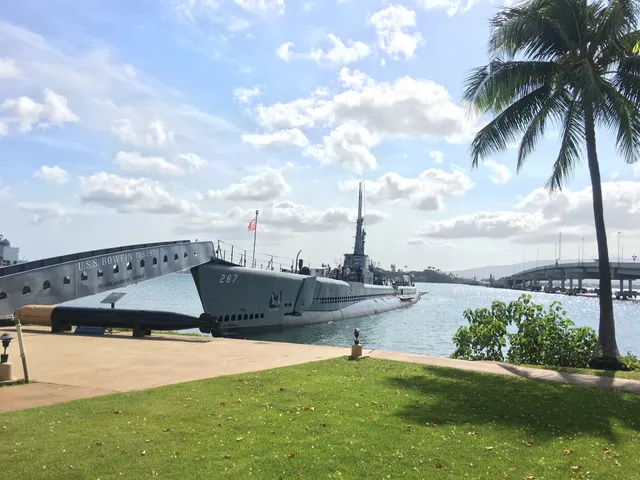
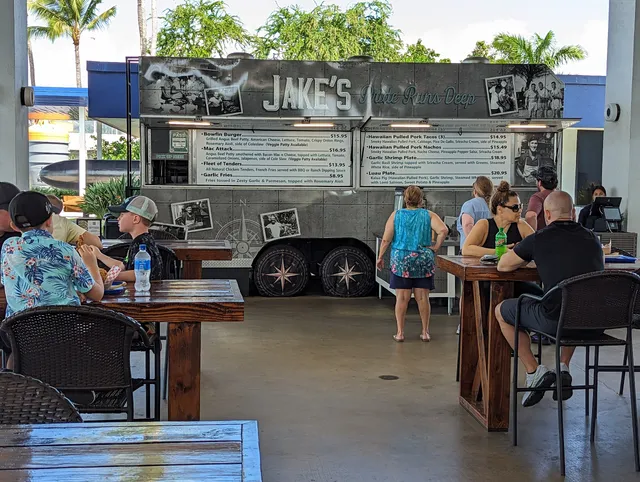
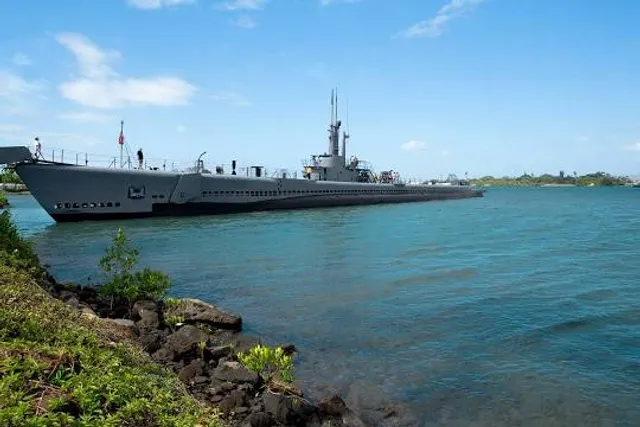
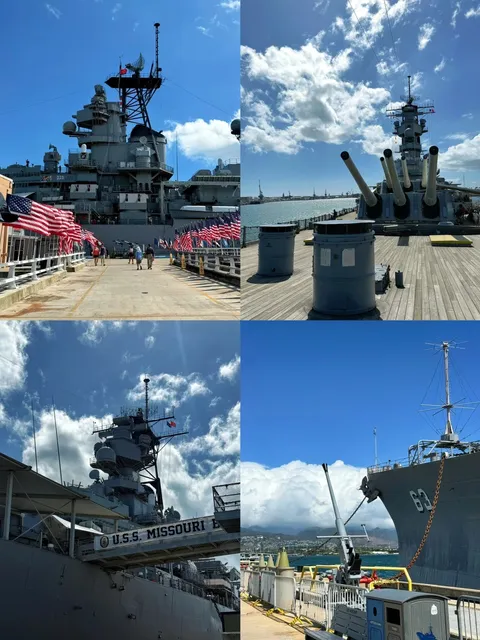
The first thing that strikes you about Pearl Harbor isn't the history—it's the $19.74 chicken plate lunch. At Jake's aboard the USS Bowfin, visitors use smartphone apps to order Hawaiian pulehu chicken while standing inside a 1940s submarine where sailors once ate Navy rations. Welcome to America's most complex memorial site, where historical trauma meets tourism economics.
Pearl Harbor draws 1.5 million visitors annually to what remains simultaneously an active military base, sacred burial ground, and tropical tourist destination. The tensions are immediate: families in flip-flops photograph military hardware while 1,177 sailors remain entombed in the USS Arizona directly below their feet.
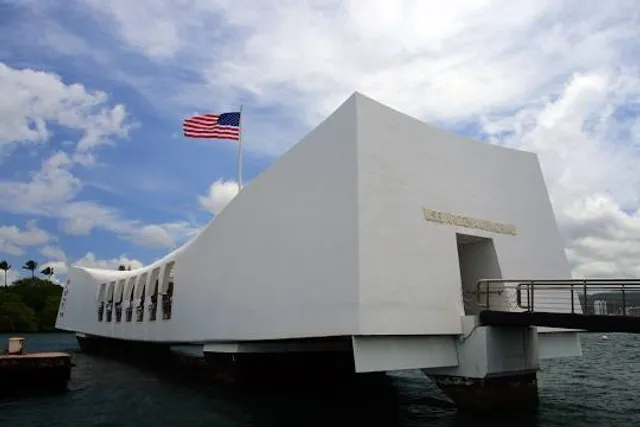
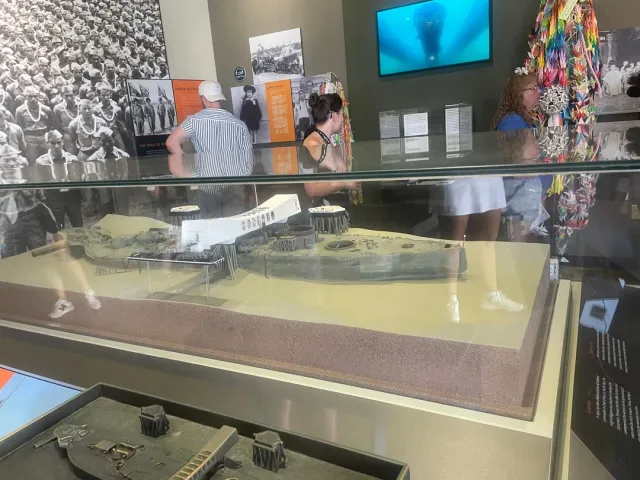
The memorial's origin story reads like fiction. Austrian architect Alfred Preis, who fled Nazi persecution only to be interned after Pearl Harbor, designed the iconic white structure floating above the sunken battleship. His architectural irony—the man imprisoned because of December 7th created its most enduring monument—reflects deeper contradictions defining the site.
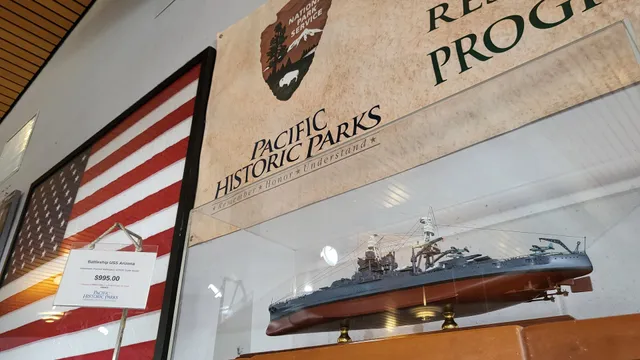
Visitors struggle to maintain reverence while surrounded by coconut palms and resort-perfect beauty that could easily be mistaken for luxury hotel grounds. The memorial's commercial ecosystem reveals America's unique approach to processing historical trauma: gift shops feature $14.95 books about Japanese-American internment alongside Hawaii-themed trinkets.
The USS Arizona continues leaking 1-2 quarts of oil daily—"black tears" that visitors can smell and see as rainbow sheens on the harbor surface. This continuous emanation transforms the memorial from static monument into living memorial where December 7th remains literally present.
Inside the shrine room, the marble wall displays each sailor's name with military rank—"C.L. ECHOLS, JR." and "F. EHRMANTRAUT, JR."—transforming abstract casualties into personal stories. Visitors frequently touch the pristine white marble, creating intimate connections that transcend typical tourist-monument relationships.
The memorial closed 15 months starting in 2018 due to structural cracks, requiring $2.1 million in repairs. Fewer than 50 paid employees serve over 1.5 million visitors annually while NPS groundskeepers maintain tropical landscaping as cargo ships navigate the same harbor waters where the attack occurred.
Access requires $1 reservation fees through Recreation.gov, with tickets filling within minutes during peak season. Security bans all bags, with storage costing $7 per item—reflecting the site's location within an active military installation.
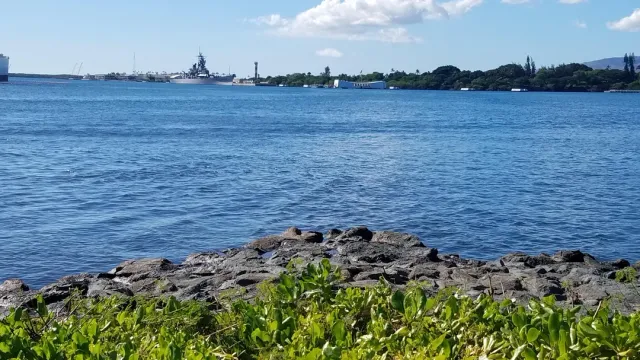
Standing on the memorial provides profound temporal compression—1941 battleship wreckage directly below, 1962 commemorative architecture surrounding you, and 2025 Honolulu high-rises framing the view. This visual telescoping forces contemplation of how dramatically both Pearl Harbor and Hawaii have transformed while the Arizona's casualties remain permanently frozen in time.
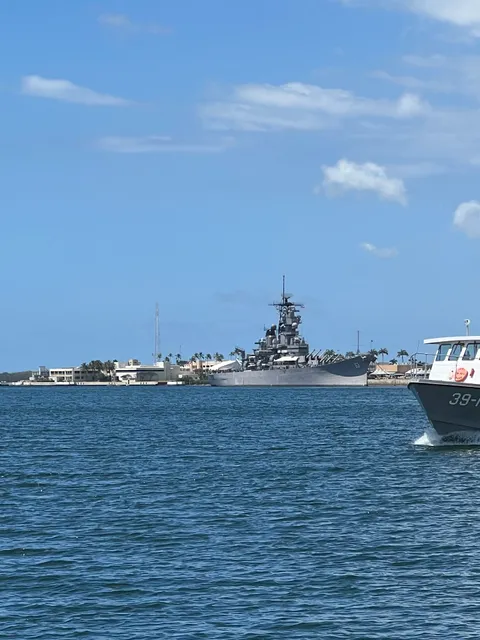
Where else can visitors purchase internment camp narratives while eating submarine sandwiches, then stand over an active gravesite containing 1,100+ sailors while photographing warships against tropical paradise backdrops?
Pearl Harbor succeeds despite its contradictions, creating authentic connections between contemporary visitors and December 7th's sacrifice while navigating democratic access and commercial sustainability. It represents peak American memorial complexity: sacred ground functioning as working military base, tourist destination, active cemetery, and commercial enterprise...
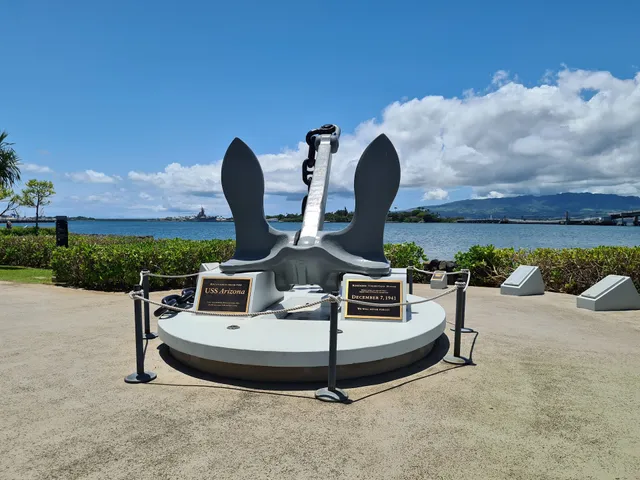
Read moreVisiting Pearl Harbor is not only the USS Arizona, but several other attractions in the area. Pearl Harbor is around 20-30 min drive from Waikiki. First advice, as your day out with family (if visiting all or several attractions) is going to cost you quite a bit, park your car 200-300 m straight ahead from the visitor parking lot. There're free parking spaces by the road beneath the bridge for Ford Island and in front of Restaurant 604. In that way you'll save 7$ parking fee (at least they could give parking for free) The only free attraction in entire complex is actually the USS Arizona and the area around the visitor center (with a 1$ service fee for online reservations I strongly suggest to avoid queuing in the heat). Arrive 1,5 to 2 hours before your scheduled boat time for Arizona. In that way you'll have time to visit the outdoor exhibitions with Arizona anchor and some monuments, and two small free museums. First is explaining the world situation between WWI and WWII and the beginning of WWII. Second one is dedicated to Pearl Harbor attack only. Also, make time to see the 25 min movie at :15h and :45h which is informative for those not acquainted with 7 Dec 1941 events. Doing that you'll better understand what you're about to see when your boat to Arizona departs. Further on USS Arizona read in that separate review. When you came back from USS Arizona free attractions are over. The rest are according to your liking and budget.
Prices of other attractions (which are certainly worth visiting) are the reason I deduct one star, rating 4, as the attractions entry fees are not symbolic, but pretty costly: Bowfin submarine around 25$, Aviation museum around 30$ and the best USS Missouri 35$ Combo ticket for all gives a very small, not worth mentioning discount. Multiply the above with your family members and take a pill. Imo, such outstanding attractions in Pearl Harbor area should be much cheaper (around half the current price) allowing wider crowds to visit them and educate. I will review the above in separate corresponding reviews.
To help you further plan your day, count up to an hour for Bowfin, 1-1,5 hrs for Aviation museum and 2 hours for USS Missouri. Add to that at least an hour for transport with shuttle bus in between museums (private cars are forbidden on Ford island). To sum up, it will take an entire day. Food options are worst at the visitor center, much better on Ford island, specially by the Missouri. Restrooms are everywhere except on...
Read moreThe only reason for the 2 rating is because..NPS, you are better and could do much better. We arrived and had no idea where to go nor what to do. So, I did what I know to do... I approached people in uniform.
I talked with Shawnee first, she's was wearing blue, and i guessed she was a volunteer with a partner. She was kind. She admitted that she did not know what was going on. (That honesty was pure.) Please train her because she's definitely a keeper!
The Interp Ranger at the theater and loading location was helpful. She was our fourth contact. And she told us where to go for our devices.
An older lady wearing blue came out, and at first, I was taken aback and reminded myself that I was indeed at a NPS site. I think her name was Sheryl. I'm not sure...but I believe she was trying to be helpful... but was caught up in the pandemonium of it all. I had to use my Interp inner being to calm her down in order to tell her what my family and I were there to do. At that time, she then listened and responded appropriately. (She was in reactionary mode because there were so many people, and she appeared to be in an internal panic. (Training would help....however prior planning prevents poor performance. And there appeared to be zero communication / training with the partner organization.)
The devices....Great idea, but we really needed an intro on where to find the Interpretive talk #.
There were at least 1,200 people on site. We received a safety briefing when we were on the boat.
It was raining. Maybe the day would have been different if there was more protection from the rain...but hopefully you will review the outside weather plan.
My family and I appreciate the staff present and the volunteers, just please provide training and develop an outdoor weather plan.
P.S. Encourage people to use Recreation.Gov that was indeed thee best method. There was a lady who was extremely angry because she paid $80.00 and the experience was not what she'd hoped for. We paid $10.00, and our primary goal was to see the USS Arizona memorial. Thank you for your care...
Read more