Review for the SC Johnson Tour
Visiting the SC Johnson campus was truly an inspiring experience and one that left me filled with gratitude and awe. The tour itself was wonderfully organized and offered a glimpse into a family and a company that have gone above and beyond in honoring those who help and serve them—better known as their employees.
Hearing about the company’s employee profit-sharing program and their annual celebrations of employee success was truly heartwarming. It’s rare to see a business so deeply committed to its people, but SC Johnson has woven this commitment into its legacy. Their story of refusing to lay off anyone during the Great Depression, ensuring every employee still received a paycheck, is a remarkable testament to their compassion and values. That spirit of care continues today, and it’s inspiring to see it upheld in an age where such loyalty is rare.
The stories of their employees traveling to places like Brazil, the use of planes for innovative purposes, and the sheer joy of celebrating shared success were incredible to hear. SC Johnson’s history is not just about products but about people—and their dedication to preserving that story is evident everywhere you look.
Of course, the primary purpose of the visit was to see the incredible works of Frank Lloyd Wright, and they did not disappoint. Walking through these architectural masterpieces was breathtaking. But what truly surprised me—and touched me—was the overwhelming sense of inclusion, generosity, and commitment that radiates from this family and company. The detail, care, and love they’ve poured into their facilities reflect their respect for their legacy and their employees. It must have been a joy for employees to walk into those spaces daily, surrounded by an atmosphere that balances innovation with history so elegantly.
I also want to thank God for the creation of this remarkable family and the gifts they have shared with the world. From their Ziploc bags that preserve Thanksgiving leftovers to products like Off! that protect us during summer camping trips, their innovations touch countless lives in ways they probably can’t even imagine. For me, their products even help me bring food to the homeless, which feels like an extension of their mission of service and care.
The impeccable cleanliness of the facilities, the remarkable preservation of history, and the outstanding knowledge and friendliness of the tour guides made this visit unforgettable. Their work is truly a reflection of their commitment to excellence and community. SC Johnson’s story—now five generations of leadership and six generations of family involvement—continues to be written, and what a beautiful story it is.
Thank you to God, the Johnson family, and everyone who contributes to this company day in and day out. You’ve not only helped keep America sparkling but have made our lives different and better through your care and creativity. This tour was more than just an opportunity to see a building—it was a chance to see a purpose-driven...
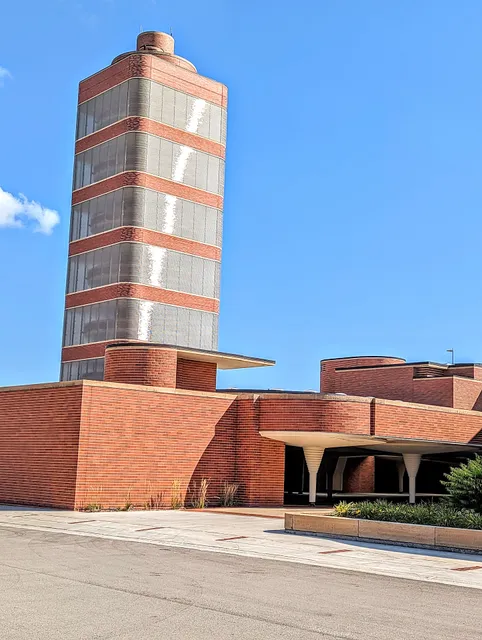
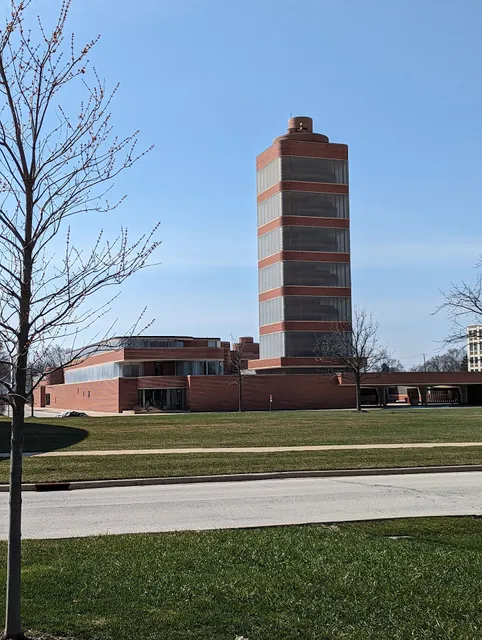
Read moreJohnson Wax Headquarters is the world headquarters and administration building of S. C. Johnson & Son in Racine, Wisconsin. Designed by American architect Frank Lloyd Wright for the company’s president, Herbert F. “Hib” Johnson, the building was constructed from 1936 to 1939. Its distinctive “lily pad” columns and other innovations revived Wright’s career at a point when he was losing influence. Also known as the Johnson Wax Administration Building, it and the nearby 14-story Johnson Wax Research Tower (built 1944–1950) were designated as a National Historic Landmark in 1976 as Administration Building and Research Tower, S.C. Johnson and Son.
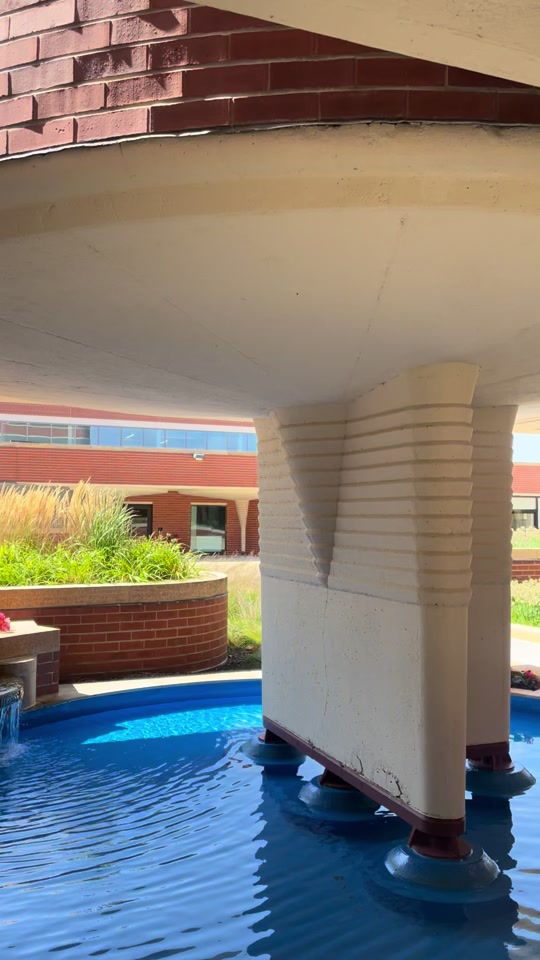
The Johnson Wax Headquarters were set in an industrial zone and Wright decided to create a sealed environment lit from above, as he had done with the Larkin Administration Building. The building features Wright’s interpretation of the streamlined Art Moderne style popular in the 1930s. In a break with Wright’s earlier Prairie School structures, the building features many curvilinear forms and subsequently required over 200 different curved “Cherokee red” bricks to create the sweeping curves of the interior and exterior. The mortar between the bricks is raked in traditional Wright-style to accentuate the horizontality of the building. The warm, reddish hue of the bricks was used in the polished concrete floor slab as well; the white stone trim and white dendriform columns create a subtle yet striking contrast. All of the furniture, manufactured by Steelcase, was designed for the building by Wright and it mirrored many of the building’s unique design features.
The entrance is within the structure, penetrating the building on one side with a covered carport on the other. The carport is supported by short versions of the steel-reinforced dendriform (tree-like) concrete columns that appear in the Great Workroom. The low carport ceiling creates a compression of space that later expands when entering the main building where the dendriform columns rise over two stories tall. This rise in height as one enters the administration building creates a release of spatial compression making the space seem much larger than it is. Compression and release of space were concepts that Wright used in many of his designs, including the playroom in his Oak Park Home and Studio, the Unity Temple in Oak Park, Illinois, the Solomon R. Guggenheim Museum in New York City, and many...
Read moreThe Johnson Wax building is probably one of Frank Lloyd Wright’s crowning achievements. Because of its location, you do have to make somewhat of an effort to tour the building, and I wish SC Johnson understood this and made more of an effort on their part.
I understand that this is still a business and the headquarters of a global conglomerate. Restrictions are prudent, but there could be some additional accommodations:
The tour starts at the Golden Rondel. This is an auditorium used to screen films. The tour guide even mentions the film SC Johnson produced that won an Oscar. Why not screen that for the tour? Instead, we never saw the interior of the Rondel.
No photos of the interior were allowed. Again, understandable. So why is there not a nice photography book produced by SC Johnson, available at the gift shop (which itself left a lot to be desired)?
The tour guide, while well versed in Johnson lore, only knew a bit about Wright and the design and construction of the building. This seems like an opportunity to have some sort of Wright docent for touring duties. I can assure you, the people making the trek to Racine are there for the building, not for the corporate history of Raid.
The building itself was magnificent, and so much more than I expected. The few times we were allowed to simply roam were the high point of the tour. I hope someday SC Johnson will revamp how they present this treasure...
Read more